When an employee takes a drug test at work, it’s not just about whether the sample shows drugs in their system. The real question courts and employers ask is: Can you prove this sample never got mixed up, switched, or tampered with? That’s where chain of custody comes in. It’s the backbone of every legally valid workplace toxicology test. Without it, even the most accurate lab result can be thrown out - and employers could be sued for wrongful termination. This isn’t theory. It’s law.
What Exactly Is Chain of Custody?
Chain of custody (COC) is a paper-and-procedure trail that tracks every single person and location that handles a drug or alcohol specimen from the moment it’s collected to when the final result is reported. Think of it like a security log for your urine sample. Every time someone touches it - the collector, the courier, the lab tech, the Medical Review Officer (MRO) - they sign, date, and note exactly what they did. No exceptions. This isn’t just good practice. For federally regulated industries - trucking, aviation, rail, pipeline, and maritime - it’s mandatory. The Department of Transportation (DOT) requires it under the Mandatory Guidelines for Federal Workplace Drug Testing Programs, published by SAMHSA. If you’re testing employees in safety-sensitive roles, you’re legally bound to follow these rules. And if you don’t? You’re opening yourself up to lawsuits, overturned terminations, and even criminal liability.The Federal Custody and Control Form (CCF): The Heart of the Process
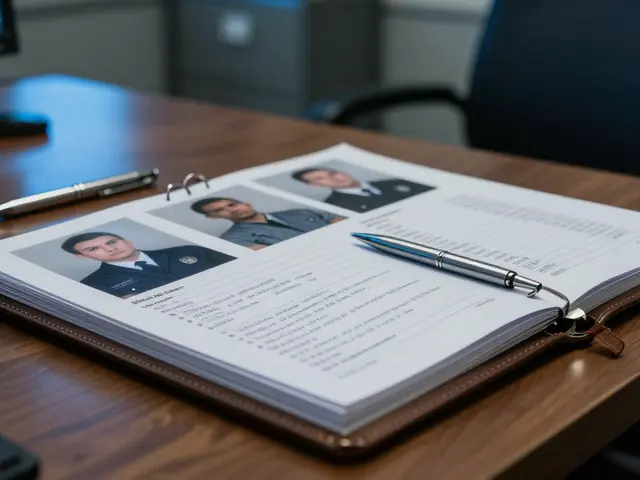
The official document that makes this all work is the Federal Custody and Control Form (CCF). It’s not just a piece of paper. It’s a five-part, government-mandated form that follows the specimen every step of the way. Each copy goes to a different person:- Copy 1 - Goes to the test lab
- Copy 2 - Goes to the Medical Review Officer (MRO)
- Copy 3 - Stays with the collector
- Copy 4 - Goes to the employer
- Copy 5 - Given to the donor (the employee)
How the Chain Works: Step by Step
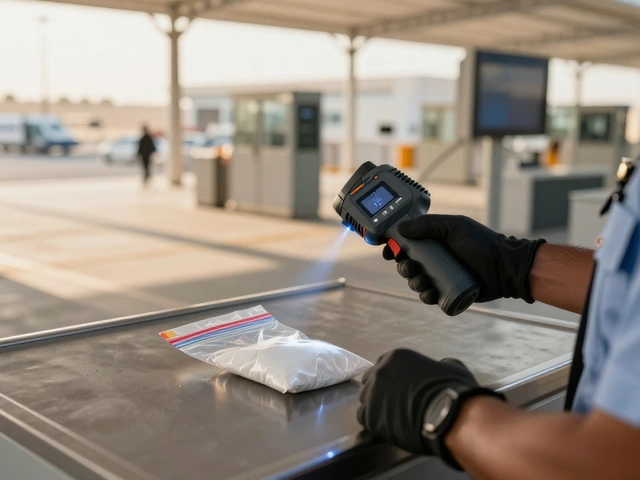
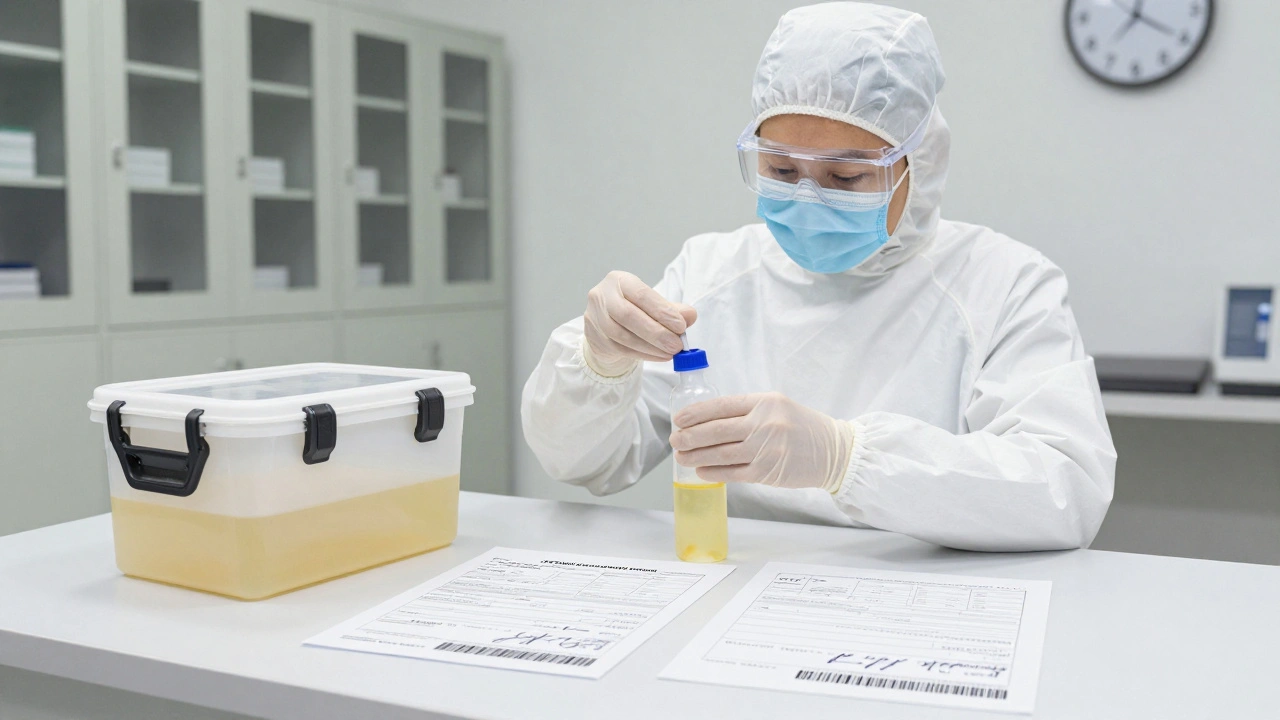
The process starts at the collection site. The donor provides a urine sample under direct observation (or under specific conditions if direct observation isn’t required). The sample is poured into a tamper-proof bottle with a sealed cap. That bottle goes into a sealed plastic bag, which then goes into a sealed shipping container. All of this is documented on the CCF. From there, the specimen moves in one of two ways:- Direct custody: A trained collector personally delivers the sealed specimen to the lab. No stops. No transfers.
- Indirect custody: The specimen is shipped via a certified courier. In this case, the sealed container must be stored in a locked, access-controlled location until picked up. No one else can open it.
Why the Medical Review Officer (MRO) Is the Final Gatekeeper
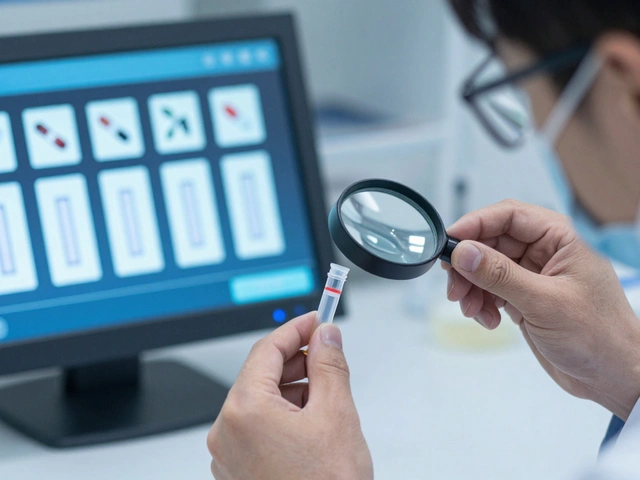
The lab doesn’t decide the final result. That’s the MRO’s job. The MRO is a licensed physician trained in substance abuse. They review the CCF for completeness. Did the collector sign? Was the specimen sealed? Was the reason for testing correctly marked? Did the donor have a chance to explain a positive result? If the CCF is missing information - say, no signature from the transporter, or the collection time is blank - the MRO rejects the test. The employer gets a “verified negative” or “invalid” result. No one gets fired. No one gets punished. The test is void. That’s not a flaw - it’s the system working as designed.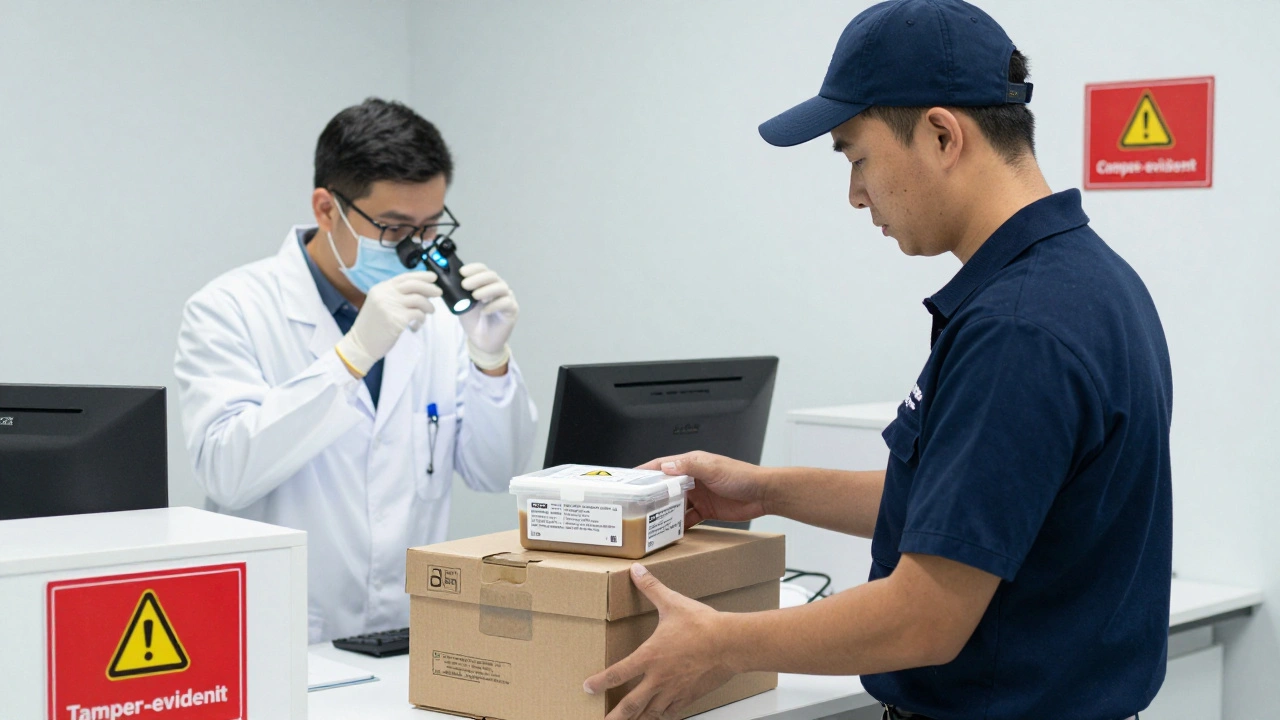
What Happens When the Chain Breaks?
A broken chain of custody isn’t just a paperwork error. It’s a legal disaster. Imagine this: An employee tests positive for cocaine. The employer fires them. The employee sues, claiming the sample was switched. The defense has no signed transfer log between the collector and the courier. The lab can’t prove the specimen they tested was the one collected. The court throws out the case. The employer pays legal fees, damages, and possibly reinstates the employee. This isn’t hypothetical. In 2023, a trucking company in Ohio lost a $1.2 million lawsuit because the CCF had no date stamped for when the sample left the collection site. The judge ruled the chain was incomplete. No one disputed the test result. But without proof of handling, it didn’t matter. Common chain breaks:- Missing signatures
- Unsealed or damaged containers
- Delayed transport (over 72 hours without refrigeration)
- Handoffs to untrained personnel
- Electronic form errors (wrong donor ID, mismatched barcode)
Electronic CCFs Are Coming - But the Rules Don’t Change
As of February 2025, about half of HHS-certified labs use hybrid systems - paper CCFs with digital scans or barcode tracking. But by August 31, 2026, every lab must apply for approval to use a fully digital Federal CCF. Digital systems reduce human error. Barcodes auto-fill donor IDs. Signatures are captured electronically. Transfers are logged in real time. But here’s the catch: the rules haven’t changed. The digital form still needs to capture every piece of data the paper form does. The seal still must be intact. The MRO still must review every field. The donor still gets a copy. The law doesn’t care if the signature is ink or a tap on a tablet. It cares if the process was complete.Why This Matters Beyond DOT
Even if your company isn’t federally regulated, chain of custody matters. Why? Because if an employee challenges a positive test in court - for wrongful termination, discrimination, or privacy violation - the same legal standards apply. Judges don’t care if you’re a small construction firm or a Fortune 500 company. They care if you followed the accepted standard for evidence handling. Many states now require private employers to use the same CCF format as the DOT. Others have adopted SAMHSA guidelines as their default. If you skip chain of custody, you’re not saving time - you’re gambling with your business.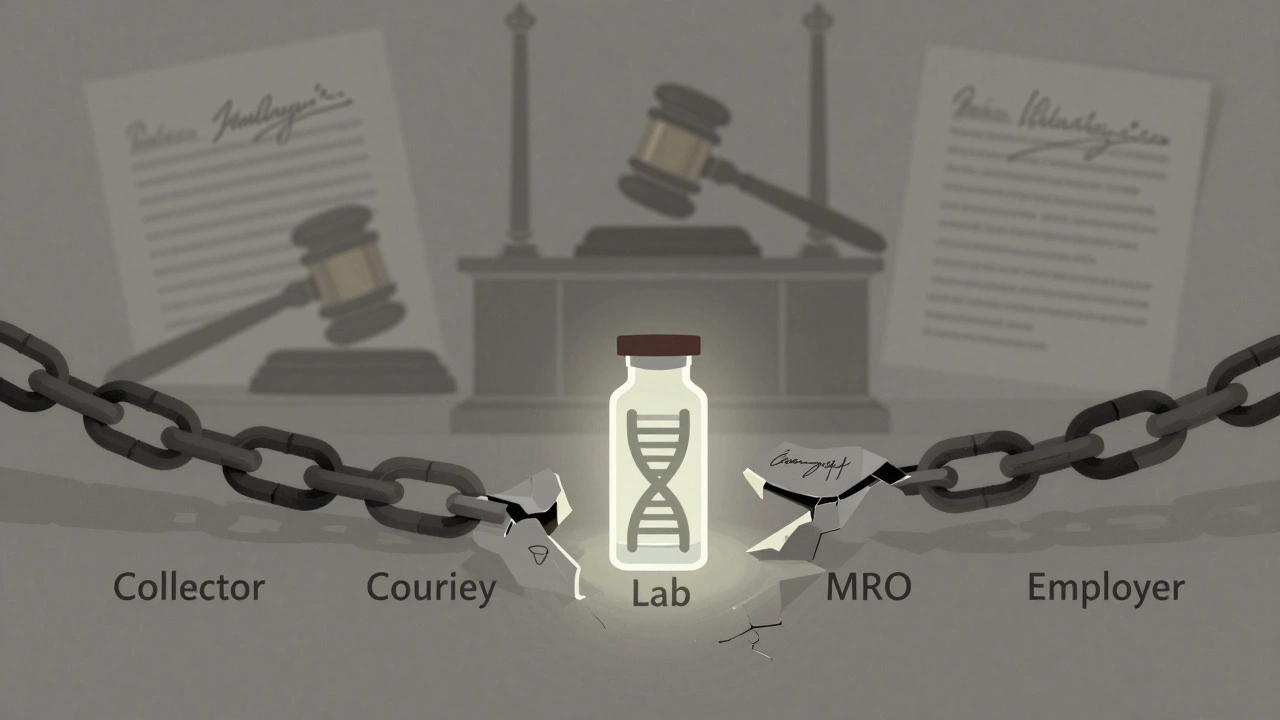
Three Rules to Never Break
No matter what system you use, these three principles are non-negotiable:- Document everything - Every transfer. Every signature. Every seal check. No exceptions.
- Secure everything - Locked cabinets. Controlled access. No unattended specimens.
- Train everyone - Collectors, drivers, lab staff, HR - if they touch the process, they need training. And documentation of that training.
What Happens to the Sample After Testing?
Once the MRO verifies the result, the original specimen is stored for at least six months. The split specimen (the backup) is stored for one year. This gives the donor time to request a retest if they dispute the result. After that, the sample is destroyed according to federal biohazard guidelines. The CCF? It’s archived for at least five years. In some states, it’s seven.Frequently Asked Questions
Can an employee refuse to take a drug test?
Yes, but refusal is treated the same as a positive test under DOT rules. The employer must document the refusal on the CCF, and the MRO will report it as a violation. Refusal can lead to immediate removal from safety-sensitive duties and mandatory return-to-duty procedures before the employee can work again.
What if the donor claims the sample was switched?
The CCF is the only evidence that matters. If the form shows a continuous, unbroken chain - with signed transfers, intact seals, and proper storage - the claim is dismissed. If the form is incomplete or missing signatures, the test is invalidated. That’s why every step must be documented - not for convenience, but for legal defense.
Can a collector collect their own sample?
No. The collector must be a trained, neutral third party who has no personal relationship with the donor. This prevents tampering and ensures impartiality. Even in small companies, someone must be designated and trained as the official collector - never the supervisor or HR manager handling their own test.
Is chain of custody needed for saliva or hair tests?
Yes. While urine is the most common, DOT and SAMHSA guidelines apply to all specimen types. Saliva and hair tests require their own version of the CCF with matching documentation for collection, storage, and transfer. The rules for integrity are the same - just the collection method changes.
What if the lab loses a sample?
If the original sample is lost and the split specimen is also compromised, the test is invalidated. The employer must retest the employee under direct observation. The lab must report the loss to SAMHSA and may lose its certification. This is why labs store split specimens separately - often in different secure locations.