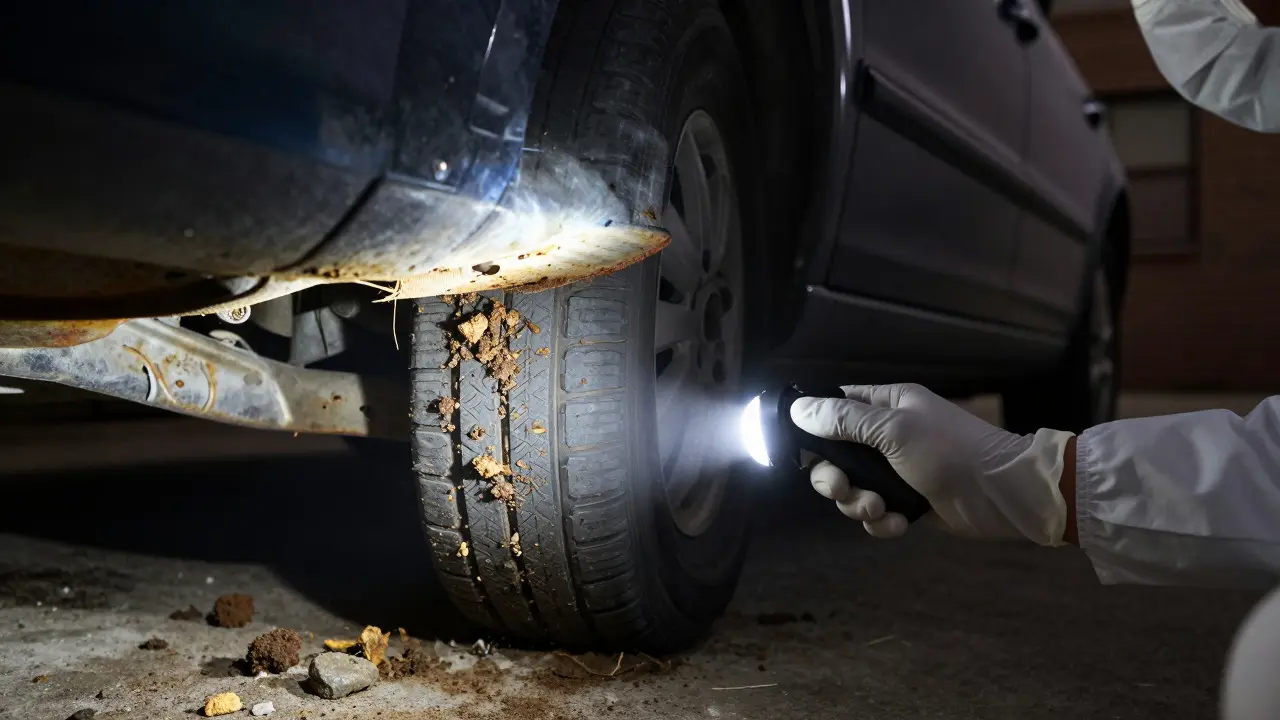
Walk up to a parked sedan in a dimly lit alley, and you might see nothing but rusted metal and cracked glass. But to a forensic examiner, that car is a library. Every scratch, every fiber caught in the door handle, and every speck of soil under the chassis tells a story about where it has been and who was inside. Understanding trace evidence on vehicles is not just about finding dirt; it is about reconstructing events with microscopic precision.
Vehicles are complex machines that interact with their environment constantly. They pick up particles during normal driving, collide with objects during accidents, and carry biological material from passengers. The challenge for investigators is separating the noise of daily use from the signal of a specific incident. This guide breaks down exactly what to look for, how to collect it without contamination, and why the order of operations matters more than you think.
Why Vehicles Are Prime Sources of Trace Evidence
A vehicle is essentially a mobile collection device. Unlike a fixed building or a stationary object, a car moves through different environments, crossing boundaries between roads, fields, urban areas, and waterways. This movement means that trace evidence found on a car can link it to locations miles away from the point of discovery.
The sheer surface area of a vehicle provides countless attachment points. Consider the following high-value zones:
- Undercarriage: Collects mud, gravel, road salt, and vegetation from the route taken.
- Tires and Treads: Retain impressions of surfaces and transfer rubber particles onto other objects.
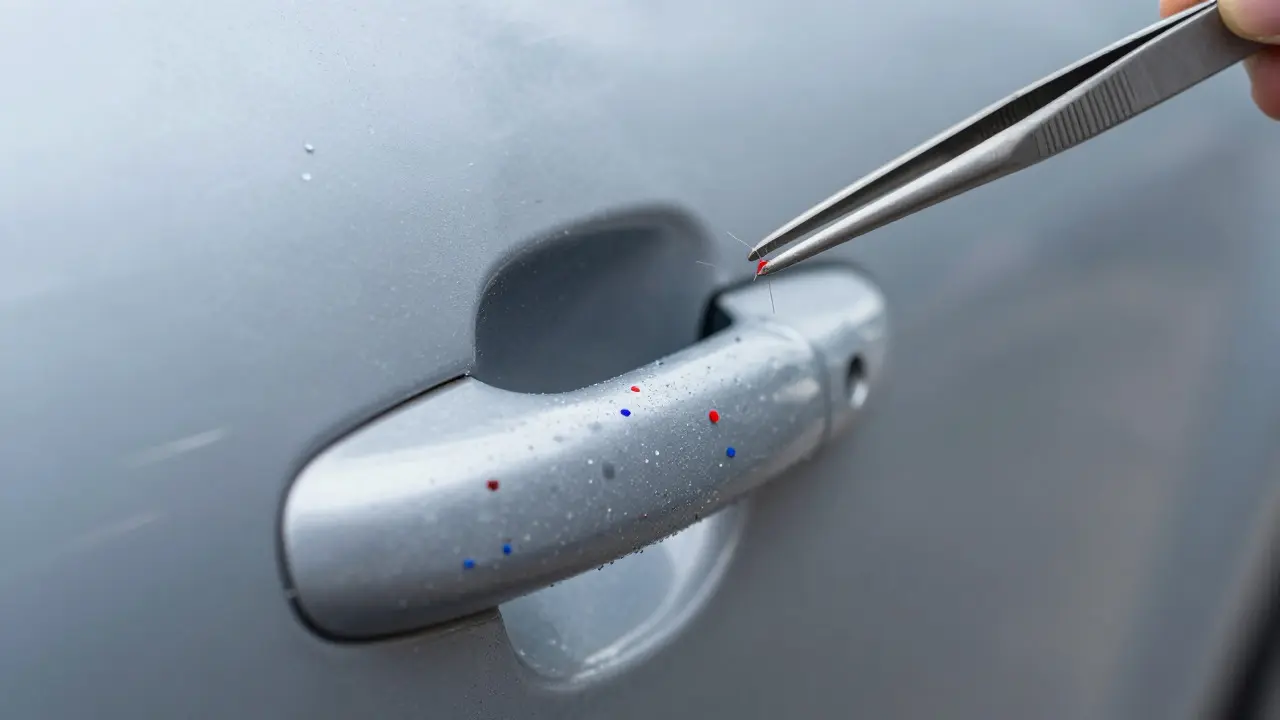
- Doors and Handles: Common contact points for fibers, hair, and skin cells from drivers and passengers.
- Bumper and Fenders: Primary impact zones where paint, glass, and plastic debris accumulate during collisions.
Because these areas are exposed to the elements, preservation becomes critical. Rain can wash away loose soil, while sun exposure can degrade organic materials like DNA. Speed and proper technique are essential to capturing this fragile data.
Identifying Paint and Glass Fragments
In collision cases, paint and glass are often the most definitive links between two vehicles or a vehicle and a victim. When cars bump into each other, layers of paint transfer. These fragments are tiny, often invisible to the naked eye, but they carry unique chemical signatures.
Paint analysis involves looking at the layer structure. Most modern cars have multiple coats: primer, base color, and clear coat. A fragment that includes all three layers is highly valuable because it confirms the source. If you find a red paint chip on a blue car, you need to determine if the red came from the blue car's interior trim or an external object. Microscopic comparison and spectrophotometry help answer this question.
Glass fragments work similarly. Windshields and side windows are laminated or tempered. Laminated glass (common in windshields) consists of two panes of glass bonded by a plastic interlayer. Tempered glass (common in side and rear windows) shatters into small, rounded cubes. The shape of the fracture patterns and the presence of the plastic interlayer help identify which window the fragment came from. Furthermore, glass accumulates dust and contaminants over time. Comparing the chemical composition of the glass and its associated contaminants can link a fragment to a specific pane within a specific vehicle.
| Evidence Type | Typical Location | Key Attributes | Collection Method |
|---|---|---|---|
| Paint Chips | Bumpers, Fenders, Mirrors | Layered structure, unique pigment mix | Tweezers, clean containers |
| Glass Fragments | Body panels, Ground near vehicle | Fracture patterns, refractive index | Fine forceps, labeled vials |
| Fibers | Door handles, Seats, Undercarriage | Dye, weave pattern, material type | Tape lift, vacuum sampling |
| Soil/Gravel | Tire treads, Wheel wells, Chassis | Mineral content, organic matter | Spatula, sealed bags |
| Hair | Steering wheel, Headrests, Door jambs | Medulla pattern, root bulb (DNA) | Tweezers, paper envelopes |
Fibers and Textiles: The Silent Witnesses
Fibers are everywhere. Clothing, upholstery, seatbelts, and even the air conditioning system release microscopic threads. In a hit-and-run case, a single blue nylon fiber found in the crevice of a door lock could be the only physical link to the victim's jacket.
When examining fibers, focus on the dye and the weave. Synthetic fibers like polyester and nylon retain dyes differently than natural fibers like cotton or wool. A forensic textile expert can analyze the cross-section of the fiber under a microscope to determine its origin. For example, a hollow fiber might indicate a specific brand of synthetic fabric used in athletic wear.
Don't ignore the vehicle's interior. Seat covers, headrests, and steering wheels trap hairs and fibers from occupants. If a suspect claims they were never in the car, finding a distinct fiber type that matches their clothing but doesn't match the car's standard upholstery is powerful evidence. Always compare the suspect's clothing against control samples from the vehicle's interior to rule out background contamination.
Soil, Gravel, and Vegetation Debris
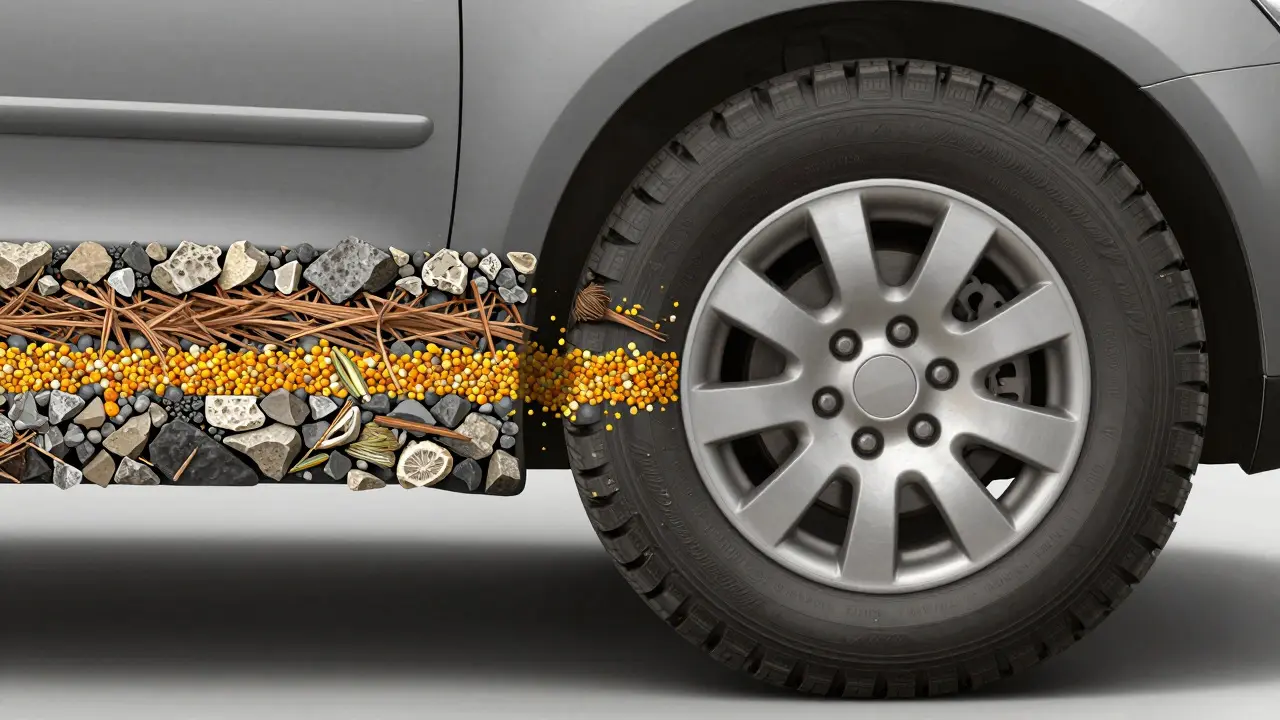
Under the hood and beneath the chassis, a vehicle collects a geological history. Soil samples from tire treads and wheel wells can pinpoint a route. If a car was driven through a specific quarry, it will carry distinctive limestone fragments. If it traveled through a pine forest, it may hold pine needles or resin.
Vegetation debris is particularly useful in rural or wooded areas. Seeds, leaves, and bark fragments stuck to the undercarriage can link a vehicle to a specific trail or field. Pollen grains, though microscopic, are incredibly durable. Palynology, the study of pollen, can date when a vehicle passed through a flowering area. Since plants bloom in specific seasons and regions, pollen profiles act as a timestamp and geographic marker.
Collecting soil requires care. Use a clean spatula to scrape the tread grooves. Seal the sample immediately to prevent moisture loss, which alters the mineral composition. Label the bag with the exact location on the vehicle (e.g., "Left front tire, inner groove"). This specificity allows analysts to correlate the soil profile with known soil maps of the suspected route.
Biological Traces: Hair, Skin Cells, and Fluids
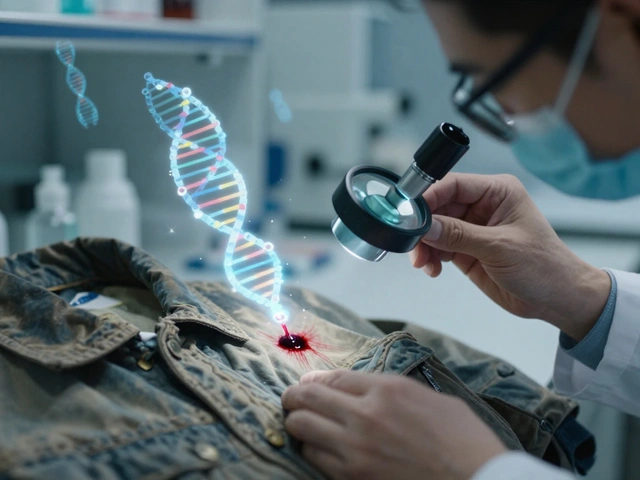
While trace evidence often refers to non-biological materials, biological traces are equally important on vehicles. Hairs, skin cells, blood spatter, and saliva can provide DNA profiles. The steering wheel, gear shift, and door handles are prime spots for touch DNA. Even if no visible blood is present, swabbing these areas can yield nuclear DNA from sweat or sebum.
Hair analysis has evolved. While medullary index comparisons are still used, the real power lies in extracting DNA from the root bulb. If a hair is pulled out rather than broken off, the chance of obtaining a full DNA profile increases significantly. Check the headrests and seat belts for trapped hairs. These areas are less likely to be cleaned regularly, preserving older samples.
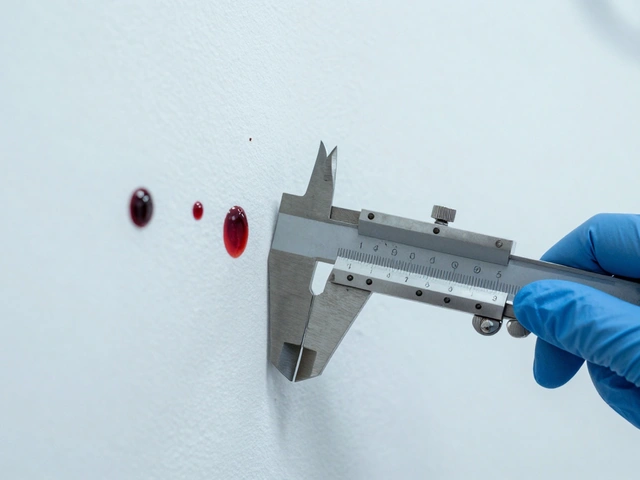
Bloodstains on vehicles are tricky due to vibration and weather. Dried blood changes color and texture. UV light can reveal latent stains that are invisible in daylight. When collecting blood, use sterile swabs moistened with saline. Avoid alcohol-based swabs, which can degrade DNA. Package wet samples separately from dry ones to prevent cross-contamination.
Best Practices for Collection and Preservation
Finding the evidence is only half the battle. How you collect it determines whether it holds up in court. Contamination is the enemy. Your own clothes, gloves, and tools can introduce foreign fibers or DNA.
- Wear Fresh Gloves: Change gloves between different parts of the vehicle to avoid transferring evidence from one area to another.
- Use Clean Tools: Sterilize tweezers and spatulas before use. Keep backup tools in sealed packets.
- Document Before Touching: Take high-resolution photos with a scale ruler included in the frame. Note the lighting conditions and any environmental factors like rain or wind.
- Separate Controls from Samples: Collect blank controls from areas unlikely to contain evidence (e.g., the roof of the car) to prove that your tools didn't contaminate the scene.
- Pack Properly: Use paper envelopes for organic material to allow airflow and prevent mold. Use airtight containers for volatile residues or liquid samples.
Chain of custody is vital. Every time the evidence changes hands, record who took it, when, and why. A break in the chain can lead to exclusion of evidence, regardless of how strong the scientific link is.
Common Mistakes to Avoid
Even experienced examiners make errors. One common mistake is overlooking the driver's side versus the passenger's side. In a left-hand drive country, the driver's door handle will have more wear and potential DNA transfer than the passenger's side. Ignoring this asymmetry can lead to missed connections.
Another error is failing to account for seasonal changes. A vehicle driven in winter will carry snowmelt salts and different soil compositions than in summer. If you compare a spring sample to a winter reference, the results may seem contradictory. Always note the season and weather conditions during collection.
Finally, don't neglect the digital footprint. Modern vehicles store data in Electronic Control Units (ECUs). While not traditional trace evidence, ECU data can corroborate physical findings. For instance, if paint chips suggest a collision at 3 PM, the ECU data might show a sudden deceleration event at that exact time. Integrating physical and digital evidence creates a robust case.
How long does trace evidence last on a vehicle?
It depends on the type. Paint and glass can last indefinitely if protected from extreme heat or abrasion. Fibers can persist for years in sheltered areas like door jambs. Biological material degrades faster, especially in direct sunlight or high humidity. Generally, the sooner you collect it, the better the quality of the analysis.
What is the difference between primary and secondary trace evidence?
Primary evidence is found directly at the scene of the incident, such as paint on the bumper from a collision. Secondary evidence is transferred later, such as soil picked up while driving home after the incident. Both are valid, but secondary evidence requires careful interpretation to distinguish it from background contamination.
Can rain destroy trace evidence on a car?
Yes, heavy rain can wash away loose soil, pollen, and fine dust. However, embedded fibers, large paint chips, and dried bloodstains are more resistant. If rain is expected, prioritize collecting loose particulate matter first. Cover the vehicle with a tarp if possible, but ensure the tarp itself is clean to avoid adding new fibers.
Why is the undercarriage so important for trace evidence?
The undercarriage acts as a magnet for debris from the road. It collects gravel, mud, and vegetation from the entire route the vehicle has taken. Because it is shielded from direct sunlight and wind, evidence there is often preserved longer than on the exterior body panels. It provides a chronological log of the vehicle's journey.
The undercarriage acts as a magnet for debris from the road. It collects gravel, mud, and vegetation from the entire route the vehicle has taken. Because it is shielded from direct sunlight and wind, evidence there is often preserved longer than on the exterior body panels. It provides a chronological log of the vehicle's journey.
Do I need special equipment to collect trace evidence from a car?
Basic tools include nitrile gloves, tweezers, forceps, clean containers, and a camera. For advanced collection, you might use tape lifts for fibers, vacuum samplers for dust, and UV lights for latent stains. While specialized lab equipment is needed for analysis, initial collection can be done with basic field kits if handled carefully.