You walk into a crime scene. The victim is dead. No obvious trauma. No gunshot wound. Just a body on the floor and a half-empty glass of wine. As a forensic investigator, your first instinct might be to look for the needle in the haystack. But what if the needle is actually a common household cleaner mixed with bleach? Or a new designer drug that didn't exist five years ago?
This is where poison control data becomes your best friend. It’s not just about saving lives in emergency rooms; it’s a massive, real-time database of human behavior, chemical availability, and emerging threats. For forensic toxicologists, this data isn’t background noise-it’s the roadmap. It tells you what people are actually taking, how they’re taking it, and what’s showing up in their blood before the coroner even signs off.
The Hidden Link Between Emergency Rooms and Crime Labs
Most people think of Poison Control Centers as places you call when your kid eats laundry detergent. And sure, that happens. But these centers collect millions of calls a year, logging every substance, symptom, and outcome. This creates a unique dataset that law enforcement and forensic labs can tap into. When a spike in calls for a specific synthetic opioid hits the national radar, forensic toxicologists know exactly which compounds to add to their screening panels. They don’t wait for a body to turn up; they anticipate the trend.
Think of it like weather forecasting. If meteorologists see pressure dropping, they warn you about rain. Similarly, if poison control sees a surge in Fentanyl exposures in a specific region, forensic labs adjust their protocols. They start looking for fentanyl analogs that standard tests might miss. This proactive approach saves time and money. You stop running blind tests and start running targeted ones.
What the Numbers Actually Say
Let’s get concrete. According to the American Association of Poison Control Centers (AAPCC), there were over 2 million human exposures reported in recent annual reports. That’s a lot of data points. But here’s the kicker: only a small fraction of those end up in a forensic case. So why does it matter? Because the types of substances change. Ten years ago, prescription painkillers dominated the headlines. Today, stimulants like cocaine and methamphetamine, along with novel psychoactive substances (NPS), are driving the numbers.
| Substance Category | Poison Control Frequency | Forensic Relevance | Key Trend Driver |
|---|---|---|---|
| Synthetic Opioids | High & Rising | Critical | Illicit market contamination |
| Benzodiazepines | Moderate | High | Prescription misuse & polydrug use |
| Cannabis Edibles | Surging | Moderate | Legalization & delayed onset |
| Household Cleaners | Very High | Low (usually accidental) | Intentional self-harm cases |
| Novel Psychoactive Substances | Variable/Emerging | Growing | Rapid chemical innovation |
Notice the disconnect? Household cleaners are called in constantly but rarely drive complex forensic investigations unless suicide is involved. Meanwhile, synthetic opioids might have fewer total calls than cleaning products but account for a disproportionate number of overdose deaths requiring detailed toxicological analysis. This discrepancy is crucial. If you’re building a forensic lab protocol based solely on volume, you’ll miss the big killers.

Spotting New Drugs Before They Hit the Streets
New drugs pop up faster than legislation can keep up. A chemist tweaks a molecule in a basement lab, and six months later, it’s showing up in ER visits. Poison control data acts as an early warning system. When a cluster of patients presents with identical, unusual symptoms-say, extreme agitation followed by rapid cooling-the poison specialists flag it. They identify the substance. Suddenly, forensic toxicologists have a name and a structure to test for.
Consider the rise of Xylazine, often called "Tranq." Originally a veterinary sedative, it started appearing in illicit opioid mixtures. Poison control calls began noting symptoms not typical of pure opioid overdoses, like severe skin lesions and prolonged sedation. Forensic labs used this intel to update their mass spectrometry libraries. Without that early signal from clinical data, many Xylazine-related deaths might have been misclassified or missed entirely in initial screenings.
Regional Differences Matter
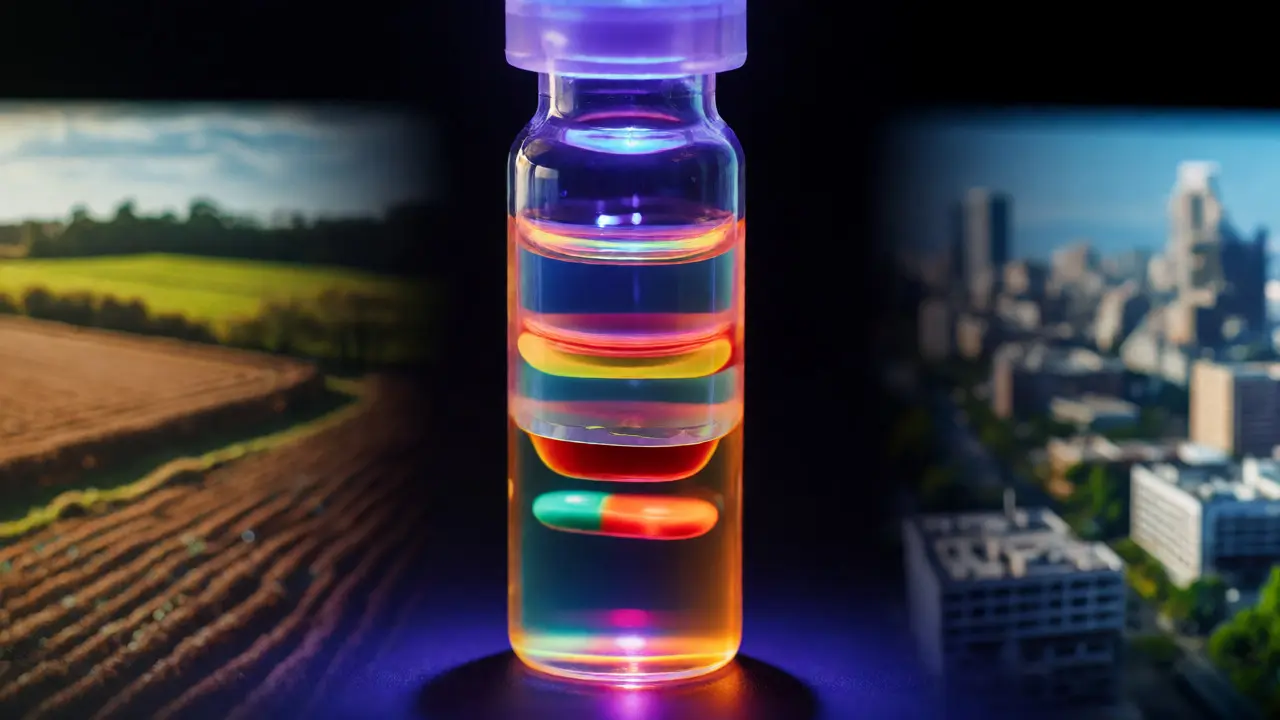
If you live in Portland, Oregon, or anywhere else, geography changes everything. Poison control data is hyper-local. In urban areas, you might see spikes in club drugs or synthetic cannabinoids. In rural communities, agricultural chemicals or prescription meds diverted from local pharmacies might dominate. Forensic testing must reflect this reality. A one-size-fits-all panel fails. Labs in cities need robust screens for novel synthetics. Rural labs might prioritize pesticides and heavy metals.
This regional insight helps investigators narrow down suspects. If a body is found in a coastal town known for high rates of alcohol abuse, but the toxicology screen comes back negative for ethanol, you look elsewhere. Maybe it’s a combination of alcohol and benzodiazepines, a common combo flagged in local poison center trends. Understanding the local baseline prevents false negatives and guides the investigation toward the right questions.
Polypharmacy: The Complication Factor
People rarely take just one thing. Polypharmacy-the use of multiple medications or substances simultaneously-is rampant. Poison control data shows that nearly half of all adult exposures involve more than one substance. This complicates forensic analysis significantly. Was the death caused by the heroin, the benzo, or the alcohol? Or was it the interaction between them?
Forensic toxicologists rely on poison control statistics to understand common combinations. If data shows that users frequently mix stimulants with depressants, labs will specifically test for both classes rather than assuming a single cause. This holistic view reduces ambiguity in cause-of-death determinations. It also highlights the importance of collecting comprehensive samples-not just blood, but urine, vitreous humor, and tissue-to capture the full chemical picture.
How to Use This Data in Your Work
So, how do you actually use this stuff? Here’s a practical checklist for forensic professionals:
- Monitor Local Trends: Don’t just look at national stats. Check your state’s poison center annual reports. What’s spiking in your zip code?
- Update Screening Libraries: If a new substance appears in clinical data, ensure your LC-MS/MS libraries include its metabolites.
- Contextualize Findings: Compare toxicology results against expected population levels. Is the concentration lethal, or is it consistent with recreational use seen in local ER data?
- Collaborate with Clinicians: Talk to your local poison center. They often spot patterns weeks before they hit the news cycle.
Ignoring poison control data means working with outdated maps. The landscape of intoxication shifts rapidly. By integrating clinical surveillance with forensic rigor, you stay ahead of the curve. You catch the subtle signs, identify the hidden toxins, and provide clearer answers in complex cases.
Why is poison control data relevant to criminal investigations?
It provides real-time intelligence on emerging drugs and common substance combinations. This helps forensic labs update their testing panels to detect new threats like synthetic opioids or novel psychoactive substances before they become widespread in fatal cases.
Do poison control centers report all substance exposures to police?
No, most calls are anonymous and confidential. However, aggregated data is published annually. In specific legal cases, records may be subpoenaed, but general trends are derived from de-identified statistical summaries shared with public health and forensic agencies.
How quickly can forensic labs adapt to new drug trends?
Adaptation speed varies. Large labs with advanced mass spectrometry can update libraries within weeks of identifying a new compound. Smaller labs may rely on commercial kits, which can lag by several months until manufacturers release updated assays.
Can poison control data predict overdose deaths?
Not individually, but it predicts population-level risks. Spikes in certain substance exposures often correlate with increased mortality rates in the following months. Forensic teams use this to allocate resources and prioritize training for handling specific types of toxicological evidence.
What is the biggest challenge in using this data?
Data latency and granularity. National reports are often published with a one-year delay. Additionally, distinguishing between intentional poisoning, accidental exposure, and recreational use can be difficult without individual case details, which are protected by privacy laws.