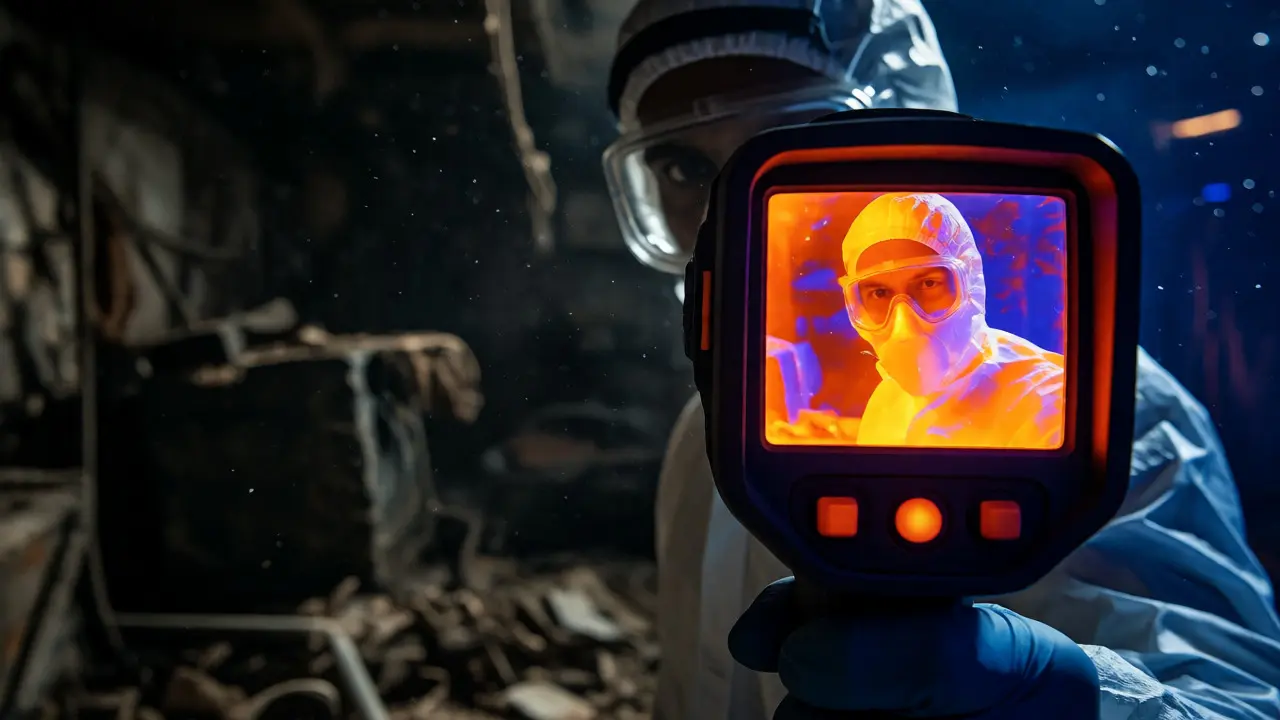
You’re standing in a darkened basement. The flashlight beam cuts through the dust, but it’s useless against the sheer volume of clutter. You know something was left here-maybe a weapon wrapped in plastic, maybe a body buried under six inches of mulch-but visual inspection isn’t cutting it. This is where thermal imaging changes the game. It doesn’t see light; it sees heat. And in forensics, heat tells a story that visible light often misses.
For years, investigators relied on chemical sprays like Luminol to find blood or UV lights for fibers. Those tools have their place, sure. But they are reactive. They require you to already suspect what you’re looking for. Thermal imaging is proactive. It reveals temperature anomalies instantly, allowing you to spot disturbances in soil, recent activity, or hidden objects without touching a thing. If you’re still treating thermal cameras as just "night vision gadgets," you’re leaving critical evidence on the table.
Why Heat Matters in Forensic Science
Everything has a temperature. Or rather, everything exchanges heat with its environment until equilibrium is reached. In a crime scene, this process is rarely uniform. When an object is moved, placed, or removed, it disrupts the local thermal balance. A rock moved from a shaded area to direct sunlight will hold its coolness longer than the surrounding ground. A hole dug in the earth exposes moist subsoil, which cools differently than dry topsoil.
Forensic thermography is the application of infrared (IR) technology to detect these discrepancies. Unlike standard photography, which captures reflected light, thermal sensors capture emitted radiation. This means it works perfectly in total darkness, through smoke, and even through some types of fog. For a search team working at 3 AM after a rainy night, this capability is invaluable. You aren’t fighting shadows anymore; you’re mapping energy signatures.
The Physics Behind the Picture
To use the tool effectively, you need to understand what you’re actually seeing. Thermal cameras don’t measure temperature directly in every pixel; they measure radiance. To get an accurate reading, the camera needs to know two things: the emissivity of the surface and the ambient temperature. Emissivity is a fancy word for how well a material emits heat compared to a perfect blackbody. Human skin, wood, and rubber have high emissivity (around 0.95), meaning they show up clearly. Polished metal, however, has low emissivity. It reflects heat from other sources, like your own body or the sun, creating false hotspots.
| Material | Emissivity Value | Search Implication |
|---|---|---|
| Human Skin | 0.98 | High contrast against most backgrounds; ideal for locating bodies. |
| Water / Moist Soil | 0.96 | Retains cold/heat longer; excellent for detecting disturbed earth. |
| Plastic / Rubber | 0.90-0.95 | Visible if recently handled; may blend with organic matter. |
| Polished Metal | 0.05-0.10 | Reflective; prone to false positives from nearby heat sources. |
| Glass | 0.85-0.95 | Opaque to IR; shows surface temp, not internal contents. |
This data matters because misinterpreting a shiny car bumper as a "hot" object can send you chasing ghosts. Always adjust your camera settings or be aware of reflective surfaces when scanning indoor scenes.
Detecting Disturbed Earth and Buried Evidence
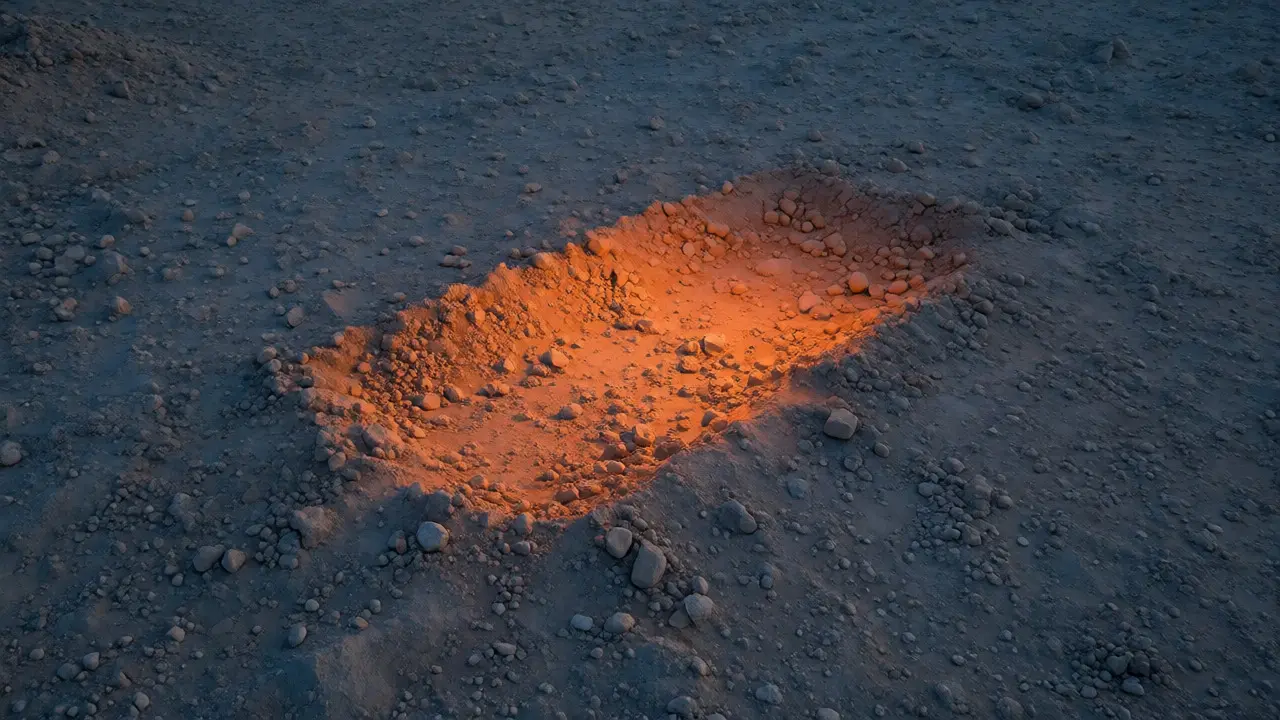
One of the strongest applications of thermal imaging is finding graves or buried caches. Think about the physics: digging a hole mixes different layers of soil. The bottom layer is usually cooler and moister than the top layer. When you fill that hole back in, you create a patch of soil with different moisture content and compaction levels than the undisturbed ground around it.
During the day, the sun heats the surface. At night, the surface cools. Because water has a higher specific heat capacity than dry dirt, moist soil cools slower. On a thermal image taken hours after sunset, a freshly filled grave often appears as a distinct warm rectangle against the cooling background. Conversely, if you dig a fresh hole and leave it open, it might appear colder during the day because the deep earth hasn’t warmed up yet.
Timing is everything here. Searching immediately after rain? The whole ground is wet, so the contrast drops. Wait for the sun to do its work. Search during the "golden hour" of thermal contrast-typically late afternoon transitioning into early evening, or pre-dawn. This is when the differential heating and cooling rates maximize the visibility of subsurface anomalies.
Locating Recent Activity and Footprints
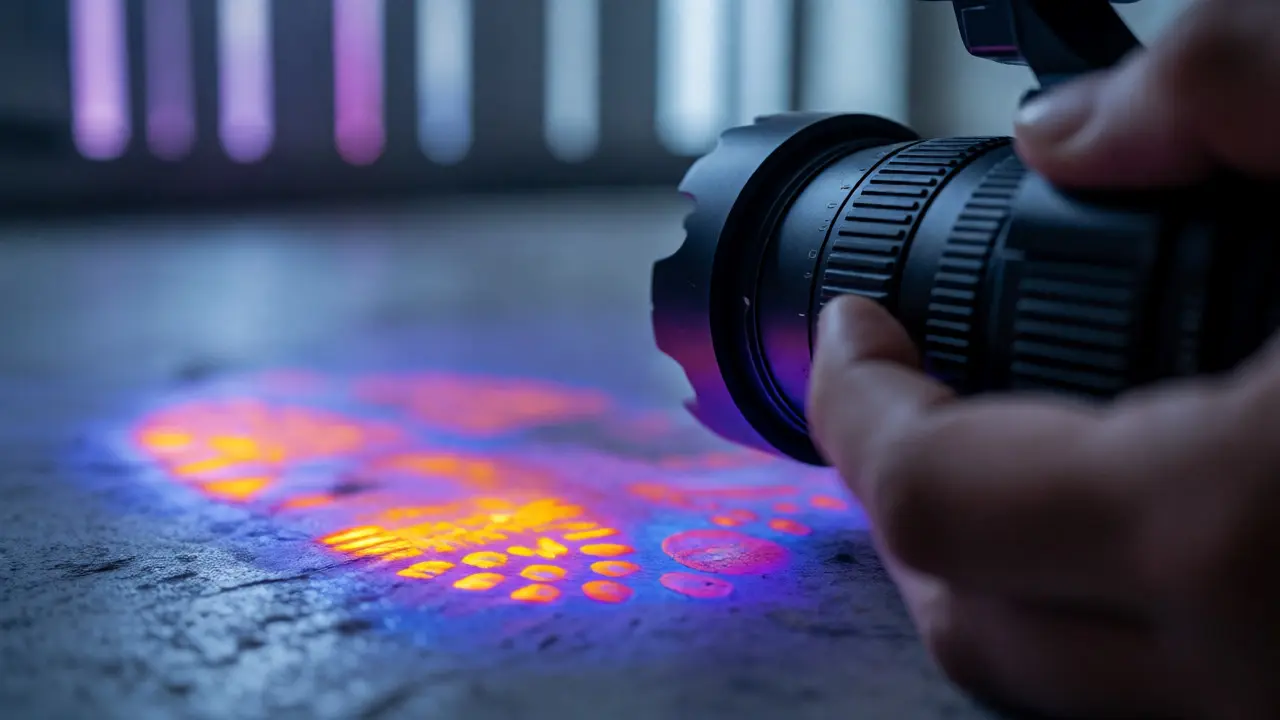
Have you ever walked across a concrete patio and noticed your footprints glowing on a thermal camera minutes later? That’s residual heat transfer. Your boots were warmer than the concrete, and the pressure increased contact, transferring heat. These "footprint trails" fade over time, depending on wind, humidity, and the thermal mass of the surface.
In a crime scene, this helps establish timelines and paths of movement. If you find a trail leading from a window to a tree line, you know exactly where the subject exited. More importantly, if the trail is faint or gone, you know the event wasn’t recent. This contextual data helps narrow down suspects who claim they were there "hours ago" versus those who were there "minutes ago."
- Fresh Trails: High contrast, sharp edges. Indicates activity within the last 15-30 minutes.
- Aging Trails: Blurred edges, lower contrast. Indicates activity 1-4 hours prior.
- No Trail: Could mean no passage, heavy rain washing away heat signatures, or too much time elapsed.
Note that grass is tricky. Grass blades insulate the soil below. Walking through tall grass compresses the blades, reducing insulation and allowing soil heat to escape faster. This often creates a cold footprint signature in grassy areas, opposite to the hot signature seen on pavement.
Indoor Applications: Hidden Rooms and Fluids
Outdoors gets all the glory, but indoors, thermal imaging solves structural mysteries. Investigators often need to find hidden compartments, sealed walls, or missing persons in large buildings. A wall built recently with new studs and drywall will have different air gaps than an original wall. These gaps act as insulation pockets. Over time, the temperature difference between the inside and outside of the building causes these voids to show up as vertical stripes on a thermal scan.
Liquids are another big win. Water leaks behind wallpaper? Thermal sees them. Blood pools? If the room is cold, fresh blood (at body temperature) stands out vividly. Even if the blood has dried, the residue might affect the emissivity or absorbency of the surface, altering how it cools compared to the clean floor. While not definitive proof of blood without chemical testing, it guides you to the exact square inch worth swabbing.
Limitations and Pitfalls to Avoid
Don’t let the tech hype blind you. Thermal imaging has hard limits. First, it cannot see through solid objects. You can’t look through a closed door to see if someone is hiding behind it, unless you’re looking at the door’s surface temperature changing due to radiant heat from the person. Second, weather ruins accuracy. Heavy rain cools everything uniformly, erasing contrast. Wind strips heat from surfaces quickly, making small objects disappear. Fog absorbs infrared radiation, blurring the image.
Also, beware of "thermal inertia." Large objects like cars or boulders take a long time to heat up and cool down. A car parked in the shade might look cold, but its engine block could still be hot hours after shutdown. Misreading this can lead to false assumptions about arrival times. Always corroborate thermal findings with physical evidence. Thermal points the way; it doesn’t convict.
Choosing the Right Gear
If you’re equipping a team, you don’t need military-grade specs, but resolution matters. A 160x120 resolution sensor is barely enough to tell a bush from a body. Aim for at least 320x240, preferably 640x480. Higher resolution allows you to zoom digitally without losing detail, which is crucial when documenting evidence for court.
Look for cameras with manual focus capabilities. Autofocus can hunt for focus points, delaying your scan. Manual focus lets you lock onto a distance and sweep smoothly. Also, ensure the camera saves raw radiometric data (.RSEQ or similar formats). JPEGs lose the precise temperature data per pixel. In court, being able to click on a pixel and say, "This spot measured 14.2°C while the neighbor measured 18.5°C," carries more weight than just showing a color gradient.
Can thermal imaging see through glass?
No, standard thermal cameras cannot see through glass. Glass is opaque to long-wave infrared radiation, which is what most forensic thermal cameras detect. You will see the temperature of the glass surface itself, not what is behind it. However, you can see thermal patterns on the glass caused by condensation or heat transfer from objects touching it.
How long do footprints stay visible on thermal cameras?
It varies wildly based on surface type and weather. On concrete or asphalt, footprints can remain visible for 30 to 60 minutes. On grass, the effect is different (often showing cold spots) and may last longer due to compressed vegetation affecting soil heat loss. Rain, wind, and extreme temperatures will reduce this window significantly, sometimes to just a few minutes.
Is thermal imaging admissible in court?
Yes, but typically as investigative aid rather than conclusive proof. Courts generally accept thermal imagery if the operator is qualified, the equipment is calibrated, and the methodology is documented. It is best used to corroborate other evidence (like DNA found at the thermal hotspot) rather than standing alone as proof of guilt.
What is the best time of day to conduct a thermal search?
The best times are typically late afternoon (just before sunset) and pre-dawn. During these periods, the temperature difference between disturbed soil/objects and the ambient environment is maximized. Midday searches are difficult because the sun heats everything evenly, reducing contrast. Nighttime searches are effective but require careful interpretation of cooling rates.
Can thermal cameras detect drugs or weapons?
Directly, no. A gun lying in the grass looks like grass unless it was recently handled or exposed to sunlight. However, indirect detection is common. Weapons dropped in brush displace foliage, changing the thermal profile of the area. Similarly, drug packages buried in soil alter the moisture and compaction, creating a thermal anomaly. It detects the disturbance, not the object itself.