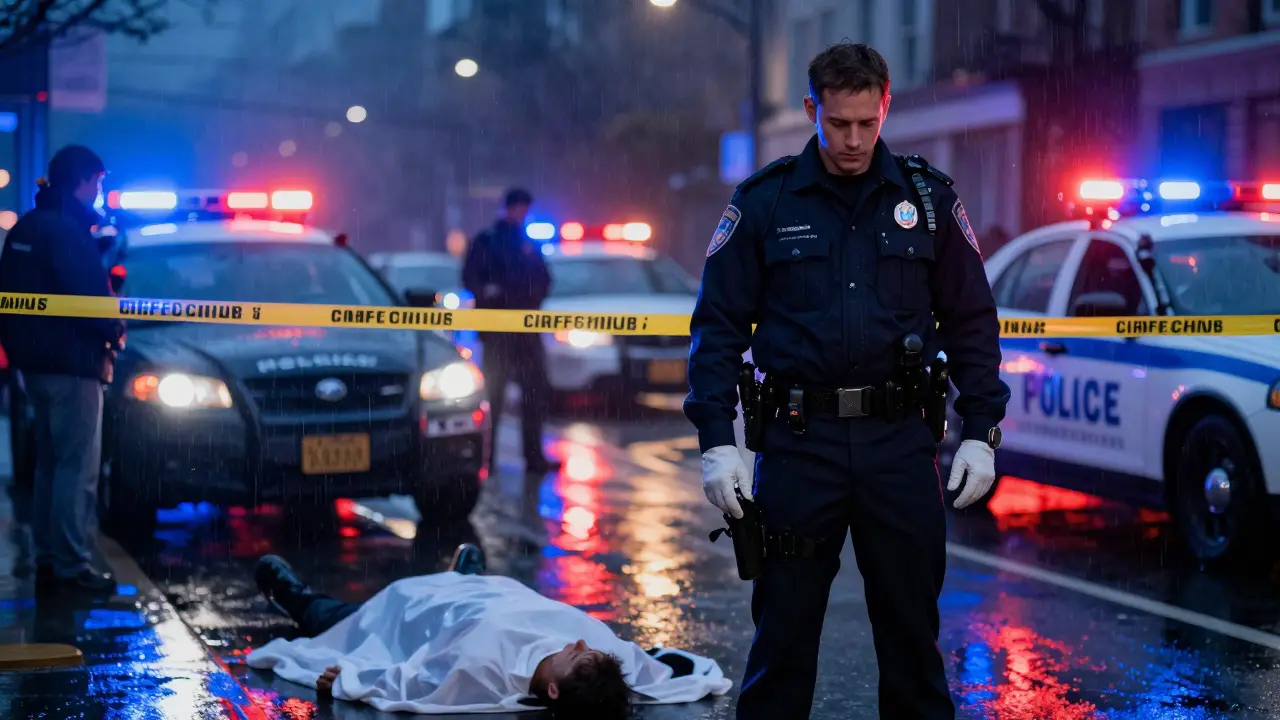
Standing over a body at 2 AM, rain slicking the pavement, you have one job: figure out if someone killed this person, and if so, who. But before you can slap handcuffs on anyone, you need more than a hunch. You need probable cause. It is the legal bridge between a crime scene and a courtroom. Without it, your best suspect walks free, and your case might crumble under appellate review.
Probable cause is not a feeling. It is a specific legal standard that requires enough facts to make a reasonable person believe a crime occurred and the suspect committed it. In homicide cases, where stakes are highest, this threshold is scrutinized heavily by defense attorneys and judges alike. Getting it right means your arrest holds up; getting it wrong means suppression hearings, dropped charges, or worse-a wrongful conviction overturned years later.
The Legal Threshold: What Courts Actually Look For
Under the Fourth Amendment of the U.S. Constitution, an arrest without a warrant must be supported by probable cause. The Supreme Court defined this in Illinois v. Gates (1983) using a "totality of the circumstances" test. This means no single piece of evidence needs to prove guilt beyond a reasonable doubt. Instead, all facts considered together must point to the suspect’s involvement with fair probability.
In practice, this looks like a mosaic. A judge will ask: If I were a reasonable officer, would these facts lead me to believe this person likely committed murder? The answer doesn’t require certainty. It requires likelihood. However, "likelihood" is a high bar when compared to mere suspicion. Suspicion alone justifies a stop or brief detention; probable cause justifies an arrest and search incident to that arrest.
For homicide investigators, this distinction is critical. You can stop a neighbor for questioning based on a tip. But to arrest them, you need corroborated facts linking them to the victim, the weapon, or the motive. The key is objectivity. Your personal belief that John Doe did it isn’t enough. You need external validation through evidence.
Building the Case: Core Evidence Categories
Homicide investigations rely on several pillars of evidence to establish probable cause. Each pillar strengthens the others, creating a web of facts that makes alternative explanations less plausible.
- Physical Evidence: DNA, fingerprints, blood spatter patterns, and ballistic matches. These are hard facts. If the suspect’s DNA is found under the victim’s fingernails, that is powerful. If their gun casing matches the bullet in the victim, that is even stronger.
- Witness Testimony: Eyewitness accounts, hearsay from reliable informants, and statements from family members. While subjective, multiple consistent witnesses can solidify a timeline and place the suspect at the scene.
- Digital Footprints: Cell phone location data, text messages, social media posts, and GPS tracking. In modern homicides, digital evidence often bridges gaps that physical evidence leaves behind. A text saying "I got him" sent five minutes after the call ends is compelling.
- Motive and Opportunity: Financial disputes, domestic violence history, or recent threats provide context. Opportunity is proven through alibi failures-like being seen leaving the scene or having no explanation for a two-hour gap.
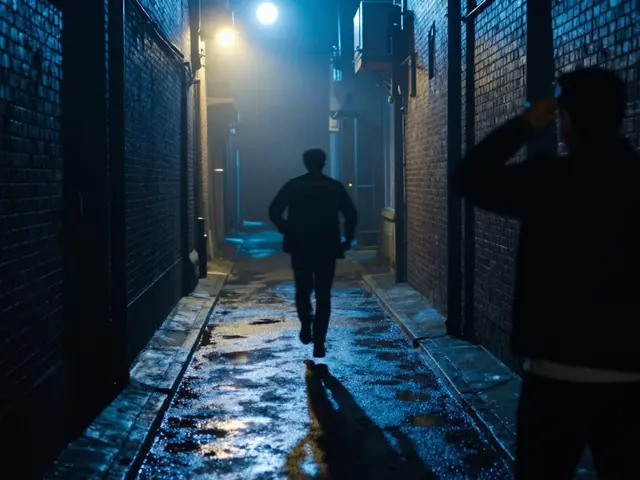
- Suspect Behavior: Flight, lying about whereabouts, or destroying evidence. While circumstantial, behavior can support other facts. Running away from the scene isn’t proof of guilt, but combined with a bloody shirt, it becomes part of the totality.
No single category is usually sufficient on its own. Probable cause emerges from the convergence of these elements. For example, a witness saw the suspect argue with the victim. The suspect’s phone was near the victim’s phone at the time of death. The suspect fled the area. Together, these facts create a strong basis for arrest.
The Role of Forensics in Confirming Links
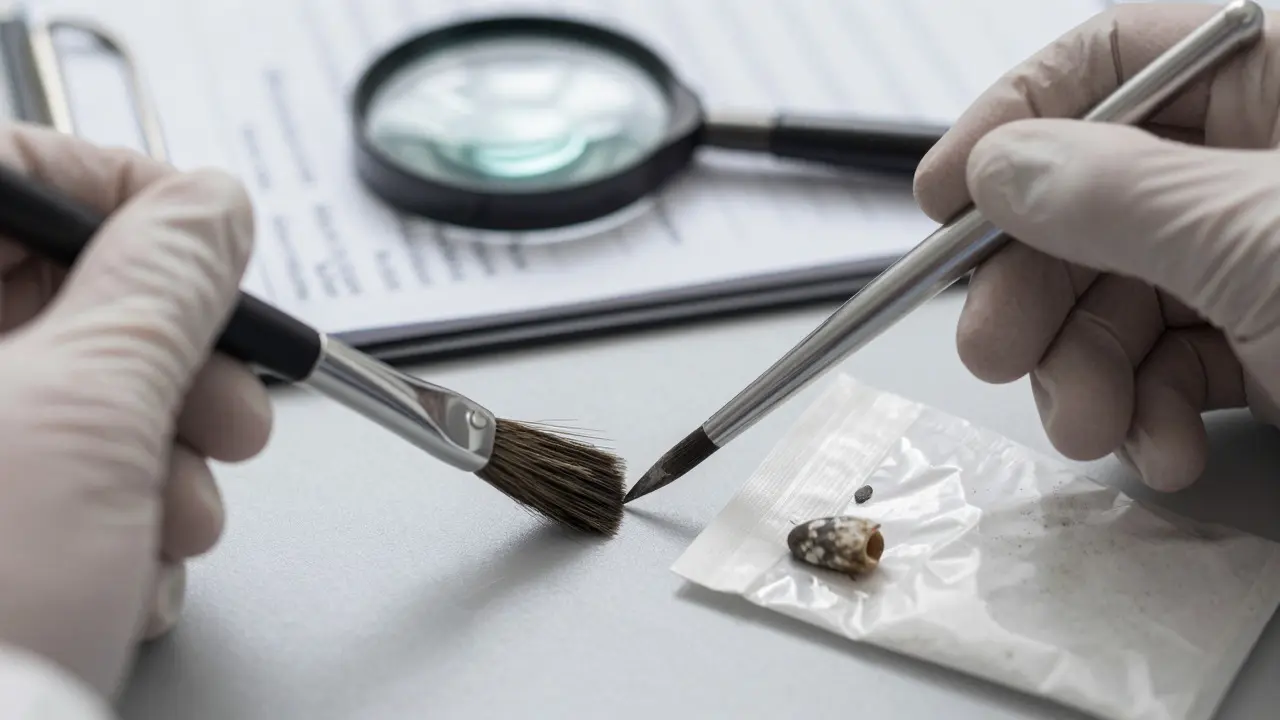
Forensic science transforms observations into admissible facts. In homicide cases, the lab results often serve as the final link in the chain of probable cause. Consider a stabbing case. You find a knife at the scene. It has partial prints. That’s suggestive. But when the lab confirms the prints belong to the suspect, and the wound depth matches the blade length, the connection becomes concrete.
Ballistics works similarly. If you recover a shell casing, and the microscope shows unique striations matching the suspect’s firearm, you have a direct physical link. This type of evidence is difficult for defense attorneys to challenge because it relies on objective measurement rather than human memory.
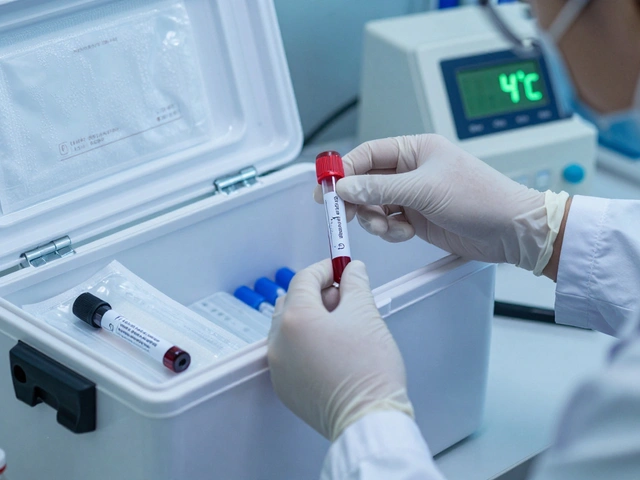
DNA analysis adds another layer. Mitochondrial DNA or STR profiling can connect a suspect to a hair, fiber, or blood drop left at the scene. Even if the DNA is degraded, a match reduces the pool of possible contributors significantly. When combined with witness testimony, forensic matches often satisfy the "fair probability" standard required by courts.

Common Pitfalls That Weaken Probable Cause
Even strong cases fail if procedural errors creep in. Here are the most common mistakes that undermine probable cause in homicide investigations:
- Relying Solely on Informant Tips: An anonymous tip saying "John killed his wife" is weak. Unless the informant provides details only the killer would know (like the position of the body or the type of weapon), it may not meet the reliability threshold established in Crawford v. Washington.
- Ignoring Alibis Too Quickly: If a suspect claims they were at work, verify it. If HR records confirm they were there, the alibi holds. If you arrest them anyway based on a hunch, you risk suppressing evidence found during the search incident to arrest.
- Poor Documentation: If you don’t write down exactly what you observed, when you heard it, and who said it, it’s hard to prove probable cause existed at the moment of arrest. Notes made hours later in the station house are weaker than contemporaneous field notes.
- Overlooking Alternative Explanations: Did someone else have access? Was the scene staged? If you ignore these possibilities, defense attorneys will highlight them. Probable cause requires ruling out reasonable alternatives, not just pointing to the most obvious suspect.
Avoiding these pitfalls requires discipline. Every fact should be documented, every source verified, and every assumption challenged. The goal isn’t to build a perfect case for trial yet; it’s to build a defensible basis for taking the suspect into custody.
Practical Checklist for Investigators
Before requesting an arrest warrant or making a warrantless arrest, run through this mental checklist. It ensures you’ve covered the bases for probable cause:
- Do we have independent verification of the suspect’s presence at the scene?
- Is there physical evidence linking the suspect to the victim or the weapon?
- Have we corroborated witness statements with other data points?
- Does the suspect’s behavior align with guilt (flight, lies, destruction)?
- Have we ruled out accidental death or suicide?
- Is our documentation detailed enough to reconstruct the decision-making process?
If the answer to most of these is yes, you likely have probable cause. If the answers are mixed, consider gathering more evidence before acting. Speed matters in homicide, but accuracy matters more. A delayed arrest is better than a suppressed case.
Comparison of Evidence Strengths
| Evidence Type | Strength Level | Key Limitation | Best Used With |
|---|---|---|---|
| DNA Match | High | Can be contaminated or transferred innocently | Ballistics or Witness Testimony |
| Ballistic Match | High | Requires recovered cartridge/casing | Firearm Ownership Records |
| Cell Phone Data | Medium-High | Signal triangulation has margin of error | Witness Accounts of Argument |
| Eyewitness ID | Medium | Memory can be flawed or influenced | Corroborating Physical Evidence |
| Informant Tip | Low-Medium | Reliability and bias must be assessed | Independent Verification of Details |
This table illustrates why no single piece of evidence is king. The strongest probable cause cases combine at least two different types of evidence that corroborate each other. For instance, a cell phone placing the suspect near the scene, plus a witness seeing them leave, plus a partial print on the weapon, creates a robust foundation.
Frequently Asked Questions
How much evidence is needed for probable cause in a homicide?
There is no fixed number of pieces of evidence. Probable cause depends on the "totality of the circumstances." One strong piece of evidence, like a DNA match on a weapon, might be enough. Alternatively, several weaker pieces, like a witness account, cell phone data, and flight from the scene, can combine to meet the standard. The key is whether a reasonable person would believe the suspect likely committed the crime.
Can probable cause be established without physical evidence?
Yes. Circumstantial evidence can establish probable cause. For example, if a suspect is seen arguing with the victim, is last known to have been with them, flees the area, and is found with blood on their clothes, that combination can support an arrest even without a direct DNA match or eyewitness to the killing act itself.
What happens if probable cause is not established at arrest?
If a court finds that probable cause did not exist at the time of arrest, any evidence found during the search incident to that arrest may be suppressed under the exclusionary rule. This means the evidence cannot be used in trial. The suspect may also file a civil rights lawsuit for false arrest. To avoid this, investigators must document the facts supporting their belief clearly and promptly.
How does probable cause differ from reasonable suspicion?
Reasonable suspicion is a lower standard used to justify a temporary stop or frisk. It requires specific, articulable facts suggesting criminal activity. Probable cause is a higher standard required for an arrest or search warrant. It requires facts that would lead a reasonable person to believe a crime has been committed and the suspect is responsible. You can stop someone on reasonable suspicion, but you need probable cause to arrest them.
Do digital records count toward probable cause?
Yes, digital records are increasingly central to establishing probable cause. Cell phone tower pings, GPS data, text message logs, and social media posts can place a suspect at a scene or reveal motive and opportunity. However, these records must be authenticated and obtained legally. A subpoenaed phone record showing the suspect’s device was active near the victim’s home at the time of death is strong corroborative evidence.