For decades, fire investigation was largely a guessing game based on experience and intuition. Investigators relied on rule-of-thumb patterns to determine what started a blaze, often leading to wrongful accusations or missed causes. That era ended with the introduction of NFPA 921, which is the Guide for Fire and Explosion Investigations published by the National Fire Protection Association. First issued in 1992, it codified the use of the scientific method in determining the origin and cause of fires. Alongside it stands NFPA 1033, which is the Standard for Professional Qualifications for Fire Investigators. Together, these two documents form the backbone of modern forensic fire science.
If you are an investigator, attorney, insurance adjuster, or student entering this field, understanding how these standards work together is not optional-it is mandatory. They define both the methodology you must follow and the qualifications you must hold to be considered competent. Ignoring them can render your findings inadmissible in court.
The Scientific Method as the Core Methodology
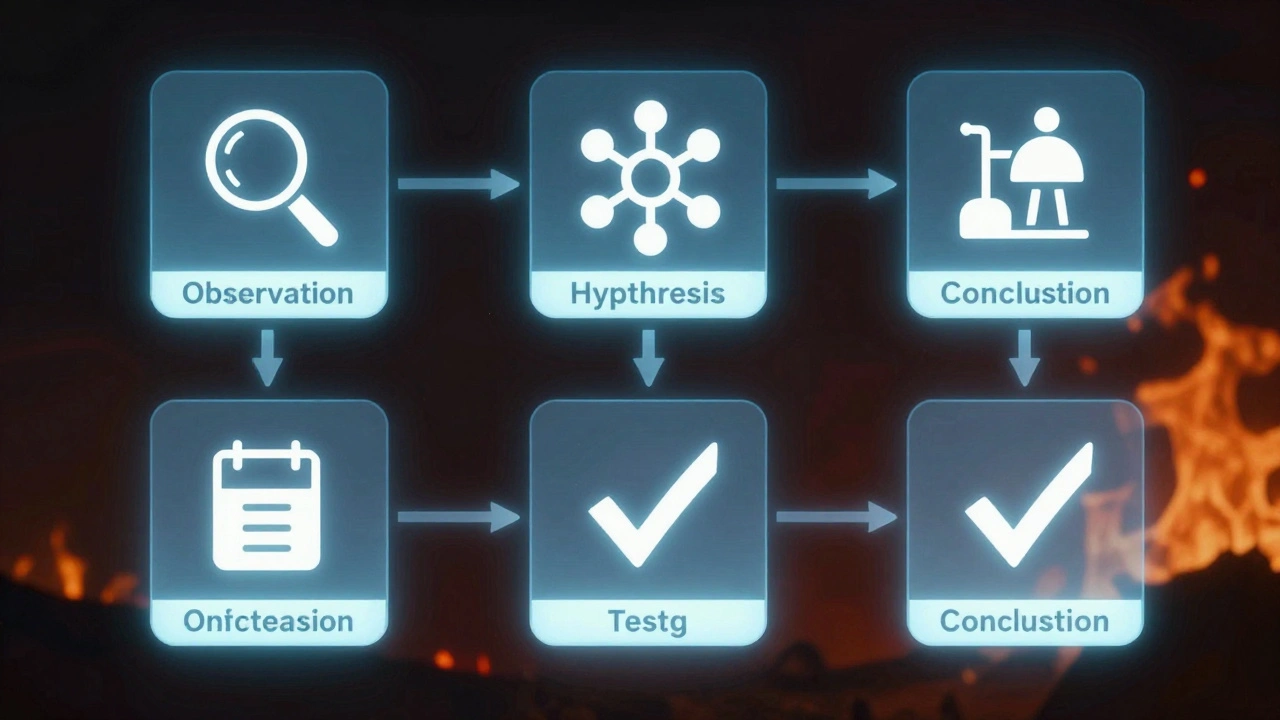
The most significant shift brought by NFPA 921 is the strict application of the scientific method. Before this standard, many investigators used "negative corpus" reasoning-concluding that a fire was arson simply because they could not find another cause. This approach has been explicitly rejected in recent editions of the guide.
Instead, the current process requires a structured seven-step approach:
- Recognize the need: Identify that an investigation is necessary.
- Define the problem: Clearly state what questions need answering.
- Collect data: Gather physical evidence, witness statements, and documentation.
- Analyze the data: Evaluate the collected information for relevance and reliability.
- Develop hypotheses: Create potential explanations for the fire’s origin and cause.
- Test hypotheses: Compare each hypothesis against the data to see if it holds up.
- Select the final hypothesis: Only choose the explanation that is fully supported by positive evidence.
This rigorous process prevents speculation. For example, if an investigator sees burn patterns that look like accelerant damage but lacks chemical analysis to confirm it, they cannot conclude arson. They must continue testing other possibilities until one is proven by data.
Professional Qualifications Defined by NFPA 1033
While NFPA 921 tells you how to investigate, NFPA 1033 defines who is qualified to do it. It outlines the Job Performance Requirements (JPRs) that every certified fire investigator must meet. These include scene examination, evidence collection, interview techniques, and courtroom testimony.
Crucially, NFPA 1033 mandates competence in 16 specific knowledge areas. An investigator cannot just know about fire; they must understand the underlying sciences. These required topics include:
- Fire Science
- Fire Chemistry
- Thermodynamics
- Thermometry
- Fire Dynamics
- Explosion Dynamics
- Computer Fire Modeling
- Fire Investigation Methodology
- Hazardous Materials
- Failure Analysis
- Electricity and Electrical Systems
- Evidence Documentation and Preservation
Note that while the standard lists 16 areas, some overlap in practice. The key takeaway is that an investigator must maintain up-to-date knowledge in all these fields. This requirement pushes agencies and individuals toward continuous education, ensuring that practitioners keep pace with new technologies like lithium-ion battery incidents or solar panel failures.
| Feature | NFPA 921 | NFPA 1033 |
|---|---|---|
| Primary Focus | Methodology and Procedure | Professional Qualifications |
| Current Edition | 2024 | 2022 |
| Key Requirement | Use of Scientific Method | Competence in 16 Knowledge Areas |
| Legal Impact | Determines admissibility of expert testimony | Defines who is qualified to testify |
| Target Audience | All investigators conducting scenes | Candidates seeking certification |
The Legal Weight of These Standards
You might wonder why these guidelines matter so much in legal proceedings. Courts in the United States have elevated NFPA 921 from a voluntary guide to the de facto standard of care. Under the Daubert standard and Federal Rule of Evidence 702, judges act as gatekeepers for scientific testimony. If an expert witness does not follow the methodology outlined in NFPA 921, their testimony can be excluded.
Several landmark cases highlight this reality. In Michigan Millers Mutual Insurance Corp. v. Benfield (1998), the Eleventh Circuit Court described NFPA 921 as a generally accepted standard for fire investigation. Later, in United States v. Hebshie (2010), the First Circuit criticized an arson conviction because government experts relied on outdated pattern interpretations rather than the scientific method required by the guide.
This legal precedent means that deviating from these standards is risky. Attorneys frequently cross-examine experts who fail to cite NFPA 921 or lack the qualifications defined in NFPA 1033. It provides a clear benchmark for reliability.
Training and Certification Pathways
How do you prove you meet these standards? Most professionals pursue certification through organizations like the International Association of Arson Investigators (IAAI) or the National Association of Fire Investigators (NAFI). Both base their credentials-such as the Certified Fire Investigator (CFI)-directly on compliance with NFPA 921 and NFPA 1033.
Typical training involves intensive academies ranging from 40 to 80 hours. These courses cover everything from basic fire chemistry to advanced computer fire modeling using tools like NIST’s Fire Dynamics Simulator (FDS). After initial certification, maintaining competence requires ongoing education. Many agencies mandate 16 to 40 hours of continuing education annually, focusing on emerging risks like electric vehicle fires or wildland-urban interface blazes.
Textbooks such as Kirk’s Fire Investigation and Fire Investigator: Principles and Practice to NFPA 921 and 1033 serve as primary study materials. They translate the dense language of the standards into practical scenarios, helping students apply theory to real-world cases.
Common Pitfalls and Misconceptions
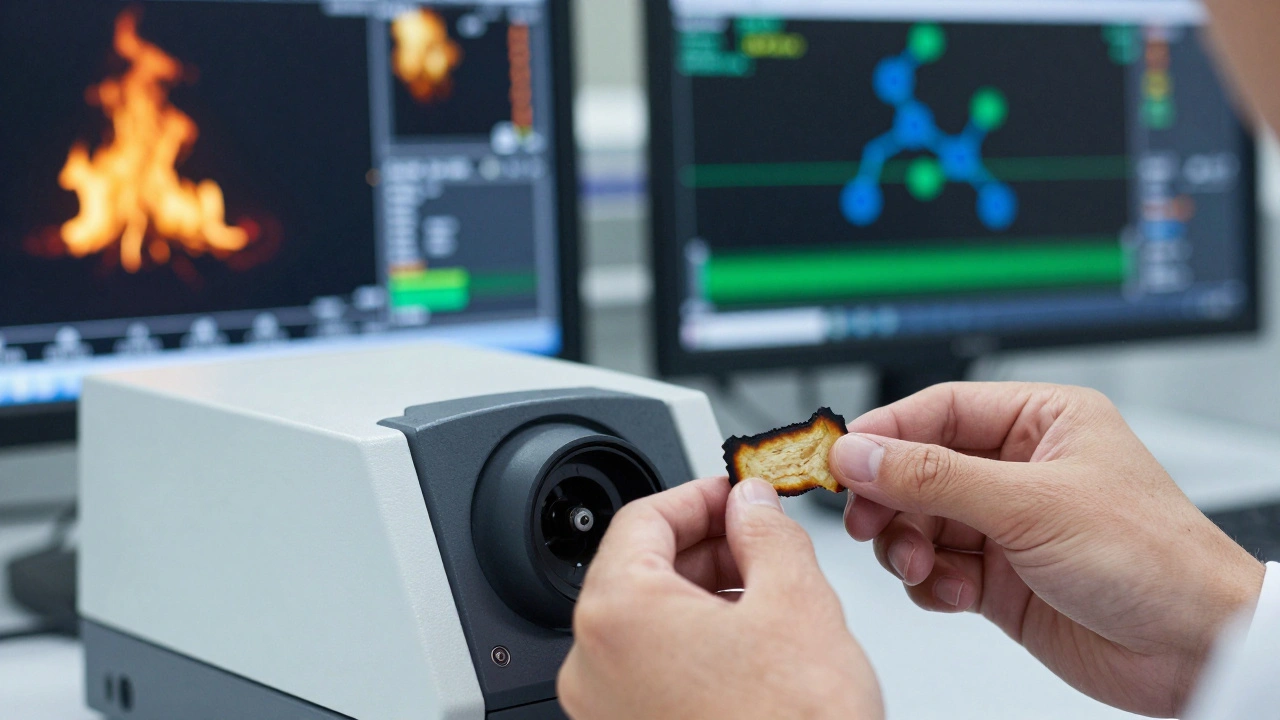
Even experienced investigators stumble when applying these standards. One common error is misinterpreting fire patterns. Older practices often labeled "alligatoring" of wood or V-patterns as definitive signs of accelerants. However, experimental research cited in later editions of NFPA 921 shows that ventilation conditions and fuel loads can create similar patterns without any accelerant present.
Another pitfall is relying too heavily on visual inspection alone. Without corroborating data-such as electrical failure analysis or laboratory tests for ignitable liquids-an investigator cannot definitively rule out natural causes. The rejection of negative corpus reasoning forces investigators to dig deeper, even when the obvious answer seems likely.
Cost and access also pose challenges. While the National Fire Protection Association offers free web-based viewing through its Free Access program, purchasing physical copies or PDFs can be expensive for individual practitioners. Agencies must ensure their teams have current editions, as relying on outdated versions can lead to procedural errors.
Future Trends in Fire Investigation
As technology evolves, so do these standards. The 2021 and 2024 editions of NFPA 921 place greater emphasis on lithium-ion battery incidents and renewable energy systems. With the rise of electric vehicles and home solar installations, investigators face new complexities in determining whether a fault originated in the battery, the wiring, or external factors.
Additionally, digital tools are becoming integral to the process. 3D laser scanning and photogrammetry allow for precise documentation of fire scenes, creating virtual models that can be analyzed long after the physical site is cleared. While NFPA 921 does not prescribe specific software brands, its emphasis on thorough documentation supports the adoption of these advanced technologies.
Internationally, while countries like Canada, the UK, and Australia do not universally mandate NFPA standards, they increasingly reference them as best practices. This global alignment helps streamline investigations for multinational insurance claims and cross-border legal disputes.
What is the difference between NFPA 921 and NFPA 1033?
NFPA 921 is the Guide for Fire and Explosion Investigations, detailing the scientific method and procedures for determining origin and cause. NFPA 1033 is the Standard for Professional Qualifications for Fire Investigators, defining the knowledge, skills, and abilities required to perform those investigations competently. One dictates the 'how,' while the other dictates the 'who.'
Is NFPA 921 legally binding?
Technically, NFPA standards are voluntary unless adopted into local law. However, courts widely treat NFPA 921 as the standard of care for expert testimony. Failing to follow its methodology can result in expert opinions being deemed inadmissible under Daubert challenges.
Do I need a degree to become a fire investigator?
NFPA 1033 does not mandate a specific college degree. It requires a high school education and demonstrated competence in 16 specific knowledge areas. However, many employers and certification bodies prefer or require degrees in forensic science, engineering, or related fields to ensure candidates meet these competency requirements.
What is negative corpus reasoning?
Negative corpus reasoning is the flawed practice of concluding a cause (like arson) simply because all other known causes have been eliminated, without positive evidence supporting the conclusion. NFPA 921 explicitly rejects this method, requiring positive evidence to support any hypothesis.
How often are these standards updated?
NFPA 921 is typically updated every three to four years, with the latest edition being 2024. NFPA 1033 follows a similar cycle, with the current edition being 2022. Investigators should regularly check for new editions to stay compliant with current scientific understanding.