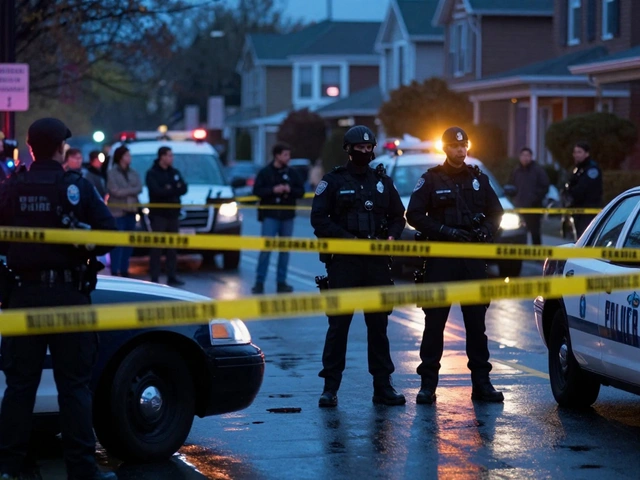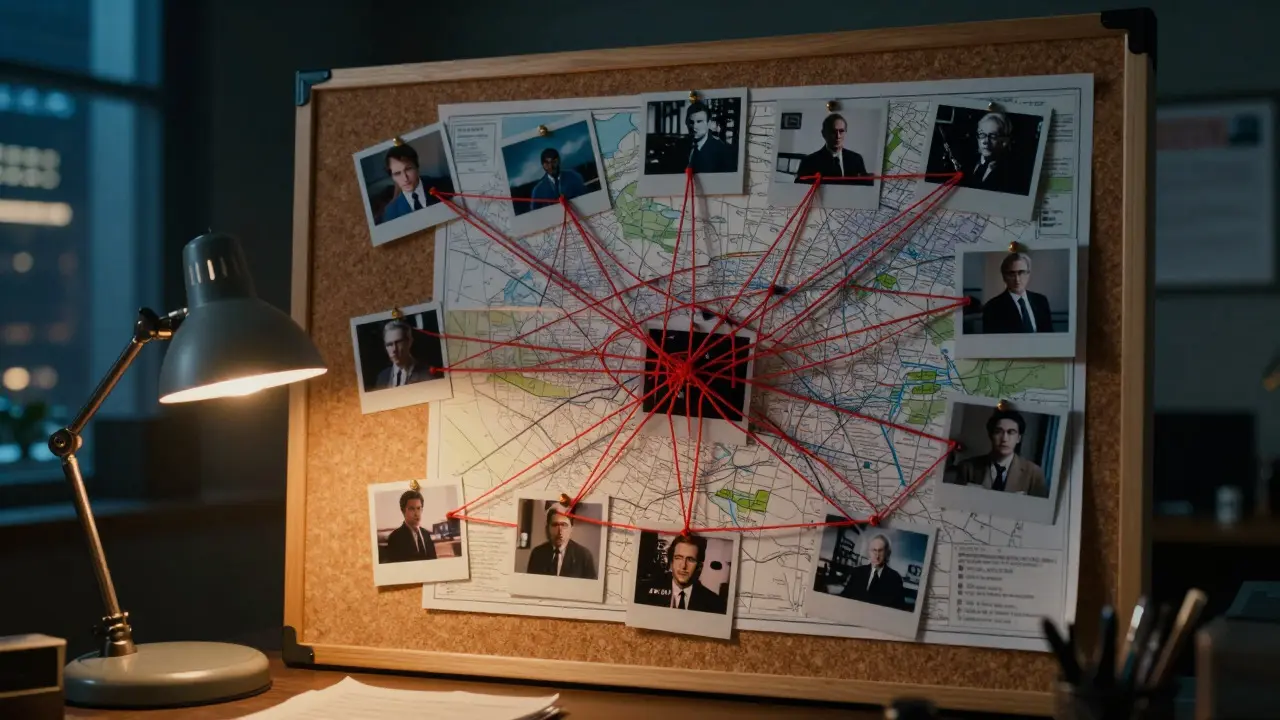
Imagine finding two bodies in different states, years apart. Same cause of death, similar positioning, but no obvious connection on paper. That is the nightmare scenario for investigators dealing with serial killer investigations is the complex process of identifying patterns across multiple crimes to link separate cases to a single perpetrator. Unlike a single homicide, where the focus is on one specific event, here the goal is to stitch together a narrative from scattered clues. The core challenge isn't just solving individual murders; it is recognizing that these murders are parts of a whole.
The stakes are high because time is the enemy. Every day a serial offender remains free is another potential victim. But how do you know if Case A and Case B belong to the same person? It is not always about DNA or fingerprints. Often, it is about behavior, geography, and the subtle details that others miss. This guide breaks down exactly how investigators identify multiple victims and build a case strong enough for prosecution.
Key Takeaways
- Linkage is the critical first step; without proving cases are connected, they remain isolated incidents.
- Victimology helps define the offender's target profile, narrowing down who was at risk and why.
- Geographic profiling uses distance decay principles to predict where an offender might live or work.
- Behavioral consistency (MO) is more reliable than physical evidence for linking cases over long periods.
- Cross-jurisdictional data sharing is essential but often hindered by bureaucratic barriers.
Understanding the Core Challenge: Linking Disparate Events
At its heart, a serial killer investigation is a puzzle where pieces are missing, damaged, or hidden. The central entity here is the crime linkage, which refers to the analytical process of determining whether multiple criminal acts were committed by the same individual. This is distinct from simply solving a crime. You can solve a single murder without ever knowing it was part of a series. But if you fail to link cases, you miss the bigger picture, potentially allowing the offender to continue their spree.
Why is this so difficult? Because human behavior is inconsistent. An offender might kill quickly in one instance and take hours in another. They might use a rope in one case and a knife in another. Investigators must look past the surface-level differences to find the underlying behavioral signature. This requires a shift in mindset from "what happened here?" to "what does this tell us about who did it?"
The Role of Victimology in Pattern Recognition
If the crime scene tells you what happened, victimology tells you who the offender was looking for and why they chose that specific victim. This field analyzes the victim's lifestyle, routines, social circle, and vulnerabilities. For example, if three victims were all female, aged 20-30, worked night shifts at local bars, and lived alone, that is a powerful pattern. It suggests an offender who operates in those specific environments during those specific times.
Victimology also helps rule out unrelated crimes. If two victims share no demographic or environmental similarities, the likelihood of them being linked decreases significantly. However, sophisticated offenders may change their target profile as they gain confidence or as opportunities arise. Therefore, investigators must track changes in victimology over time to see if there is an evolution in the offender's behavior.
| Method | Reliability | Timeframe | Primary Use |
|---|---|---|---|
| Physical Evidence (DNA/Fingerprints) | High | Immediate to Short-term | Definitive proof of presence |
| Behavioral Signature (MO) | Medium-High | Long-term | Linking cases without physical overlap |
| Geographic Profiling | Medium | Strategic | Narrowing suspect search area |
| Victimology Patterns | Variable | Continuous | Defining target profile and risk zones |

Geographic Profiling: Where Does the Offender Live?
Most serial offenders operate within a familiar territory. They feel safe in areas they know well, reducing the stress of committing a crime. geographic profiling is a statistical method used to predict the location of a serial offender's base of operations based on the locations of their crimes. This technique relies on the concept of "distance decay," which states that the probability of a crime occurring decreases as the distance from the offender's home increases.
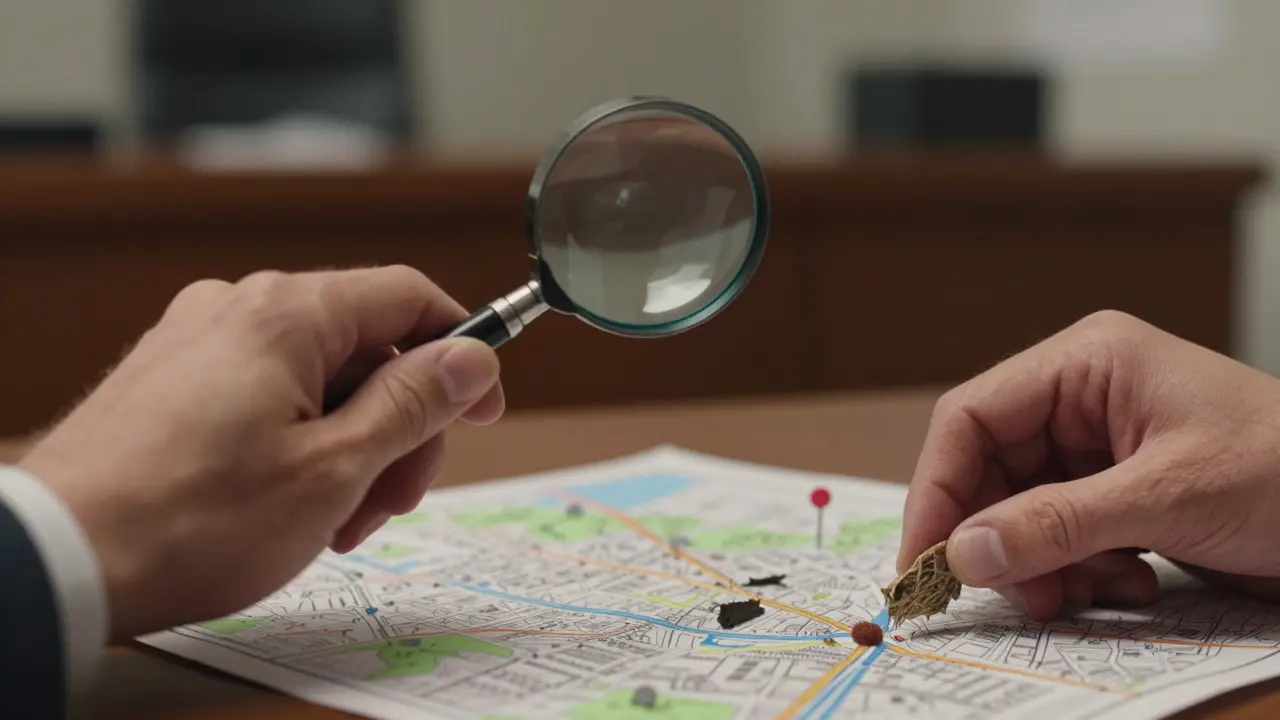
Investigators plot crime scenes on a map and look for a center point where the circles of activity overlap. This doesn't pinpoint a house, but it narrows a city-sized search area to a neighborhood or even a street. In modern investigations, this is combined with cell tower data and digital footprints to create a much tighter net. If an offender commits crimes in three different cities but always returns to a central hub for rest or planning, that hub becomes a primary suspect zone.
Behavioral Analysis and Modus Operandi
It is crucial to distinguish between modus operandi (MO), which is the method an offender uses to commit a crime, often changing due to circumstance, and the behavioral signature, which is the unique set of actions driven by the offender's psychological needs that rarely change. MO includes things like weapon choice, entry method, or time of day. These can vary. If an offender usually uses a knife but finds a rope at the scene, they will use the rope. That is not a new signature; that is adaptation.
The behavioral signature, however, is harder to change. Does the offender stage the body? Do they leave a personal item behind? Do they call the police themselves? Do they check on the body after leaving? These idiosyncrasies are rooted in psychology. When investigators see the same unusual staging or calling pattern across multiple cases, the probability of a single offender skyrockets. This is often the strongest evidence when physical evidence is scarce.
Overcoming Jurisdictional Barriers
One of the biggest practical hurdles in serial killer investigations is fragmentation. Crimes cross county, state, and even national lines. Each jurisdiction has its own database, its own protocols, and sometimes, its own pride. Data silos mean that a detective in Oregon might not immediately see a similar case in Washington unless someone manually checks.
To combat this, agencies increasingly rely on shared databases like the FBI's National Crime Information Center (NCIC) and specialized serial murder databases. However, technology alone isn't enough. Investigators need formal task forces that bring together detectives from all affected areas. These teams share raw notes, not just summaries. Sometimes, the clue that links cases is buried in a detail that wasn't deemed important enough for a summary report. Direct collaboration ensures nothing gets filtered out prematurely.
Building the Prosecution Case
Identifying the link is only half the battle. The other half is proving it in court. Prosecutors need to show that the defendant committed not just one crime, but multiple ones, often using prior bad acts to establish motive, intent, or identity. This requires meticulous documentation of every behavioral match and geographic correlation. Experts in forensic psychology often testify to explain why certain behaviors are rare enough to be considered distinctive to one individual.
The final piece is the confession or direct physical evidence tying the suspect to the later crimes. While behavioral linkage provides the theory, it is physical proof that closes the case. Investigators must maintain parallel tracks: one focused on building the behavioral narrative and another focused on gathering hard evidence. Only when both align does the case become unbreakable.
Frequently Asked Questions
What is the most reliable way to link serial crimes?
While physical evidence like DNA is definitive, behavioral signatures are often the most reliable for linking cases over long periods. Unique, consistent actions that stem from the offender's psychology are harder to replicate accidentally than common tools or methods.
How does victimology help narrow down suspects?
Victimology identifies the specific environment and routine where the offender operates. By analyzing common traits among victims, investigators can limit the suspect pool to people who frequent those locations, work those shifts, or have access to those demographics.
Can geographic profiling identify a specific house?
Rarely on its own. Geographic profiling typically narrows the search area to a neighborhood or sector. It works best when combined with digital data, witness statements, or physical evidence found within that narrowed zone.
Why do serial offenders change their modus operandi?
Offenders change their MO due to learning, opportunity, or increased confidence. As they gain experience, they may refine their methods to be faster or quieter. External factors, such as the type of weapon available or the resistance of the victim, also force adaptations.
How important is cross-jurisdictional cooperation?
It is critical. Serial offenders rarely stay within one jurisdiction. Without sharing raw data and collaborating directly, investigators risk missing key connections. Task forces that unify resources and information flow significantly increase the speed and accuracy of case linkage.