You think you’ve seen it all in the lab. You’ve got your standard panels for cocaine, heroin, methamphetamine, and maybe a few benzodiazepines. Then a sample comes in from a routine traffic stop or an overdose call, and the immunoassay screen lights up like a Christmas tree, but the confirmatory GC-MS run returns a flatline. No match. The substance is there, but it’s not on your list. This isn’t a lab error; it’s the reality of synthetic drug testing in the modern era. We are no longer chasing static molecules. We are chasing moving targets-novel compounds and analogs that chemists tweak by swapping a single atom to dodge legal schedules and evade standard screening protocols.
The Cat-and-Mouse Game of Molecular Design
Why does this happen? It comes down to how drug laws work. Most controlled substance acts define drugs by their specific chemical structure. If a manufacturer takes fentanyl and changes one functional group, they create a new molecule. Legally, it might not be "fentanyl" yet. Chemically, it hits the same receptors with similar-or often stronger-potency. These are Novel Psychoactive Substances (NPS). In the last decade, we’ve seen an explosion of synthetic cannabinoids, cathinones (bath salts), and nitazenes. Each wave brings dozens of variants. One week it’s MDMB-CHMICA; the next, it’s a fluorinated version nobody has named yet. For forensic labs, this means our reference libraries are always playing catch-up. If you don’t have the pure standard in your cabinet, you can’t identify the peak in your chromatogram.
How Immunoassays Fail Against Analogs
Most initial screenings rely on immunoassays. These tests use antibodies designed to bind to a specific shape-the target drug. Think of it as a lock and key. Traditional drugs fit perfectly. But synthetic analogs? They’re like keys filed down slightly differently. Sometimes the antibody still grabs them (cross-reactivity), giving a false positive for a known drug when it’s actually something else. More often, the change is too significant, and the antibody ignores the analog entirely. That’s why relying solely on urine dipsticks is dangerous in today’s landscape. A negative result doesn’t mean "no drugs." It often means "no drugs we know about." To catch these hidden players, you need orthogonal methods that look at physical properties rather than biological recognition.
The Power of High-Resolution Mass Spectrometry
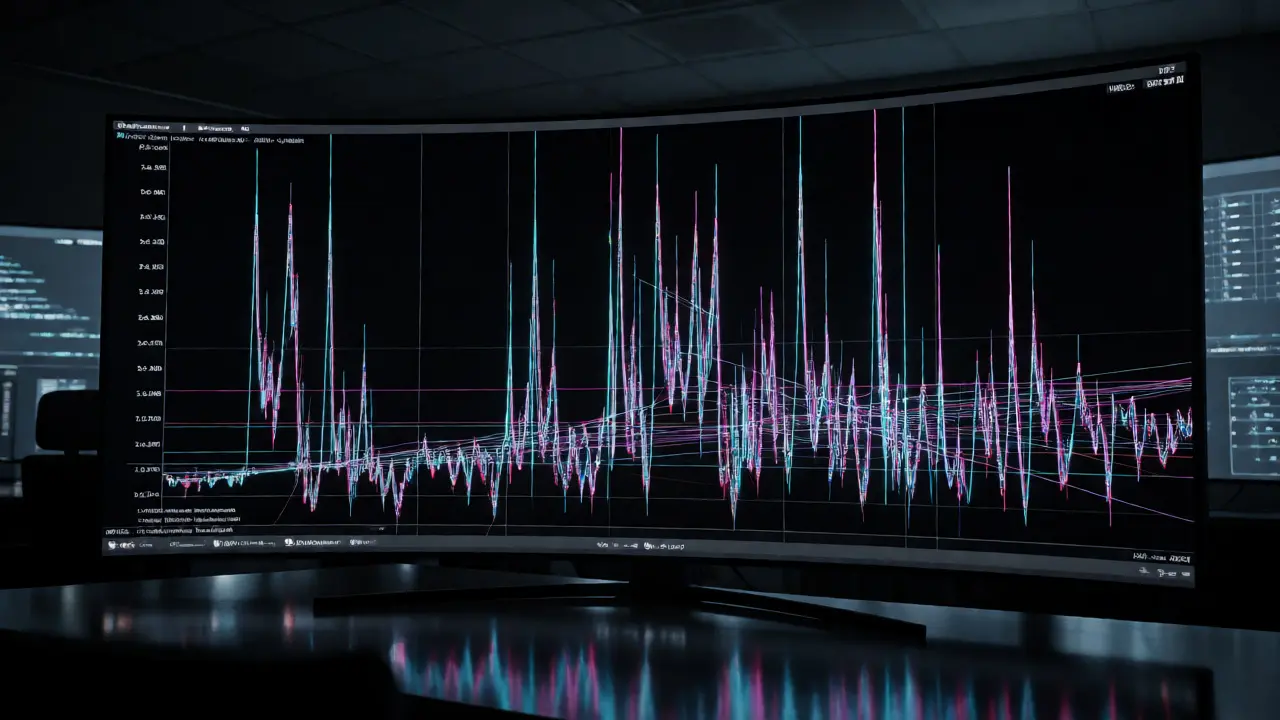
This is where high-resolution mass spectrometry (HRMS) becomes non-negotiable. Unlike traditional quadrupole instruments that scan for pre-selected masses, HRMS captures everything. Instruments like QTOF (Quadrupole Time-of-Flight) or Orbitrap systems measure the exact mass-to-charge ratio of ions with incredible precision. Why does this matter? Because every element has a unique atomic weight. Carbon is 12.0000. Hydrogen is 1.0078. Oxygen is 15.9949. By measuring the exact mass of a fragment, you can calculate its elemental composition. Even if you don’t have the reference standard, you can deduce the formula. If you see a peak with a mass consistent with C21H23N3O2, you know what you’re looking at structurally, even if the name is unknown to you. This allows for retrospective analysis-you can re-scan old data when a new compound becomes famous, finding cases you missed months ago.
Building a Dynamic Reference Library
Technology alone won’t save you. You need data. The biggest bottleneck in detecting novel compounds is the lack of authentic standards. Labs can’t buy pure samples of every new street drug instantly. So, how do you build a library? You collaborate. Networks like the European Monitoring Centre for Drugs and Drug Addiction (EMCDDA) or national poison centers share spectral data. When one lab identifies a new analog using NMR (Nuclear Magnetic Resonance) and MS, they upload the spectra. Your job is to integrate these into your local database. But beware: contamination is real. Many "standards" sold online are mixtures. Always verify purity before trusting a library entry. A dirty standard creates a ghost peak that confuses everyone downstream.
Case Study: The Nitazene Wave
Let’s look at a recent example: nitazenes. These are synthetic opioids developed in the 1950s but abandoned due to side effects. Recently, illicit chemists revived them. Isotonitazene, metonitazene, protonitazene-they are potent, fast-acting, and often mixed with fentanyl or pressed into pills. Standard opiate screens miss them completely. Fentanyl-specific assays might cross-react weakly, leading to underestimation of potency. In Portland, we saw a spike in ER visits where patients presented with classic opioid overdose symptoms but tested negative for fentanyl on rapid tests. Only through LC-MS/MS targeted methods did we identify nitazenes. This discovery changed treatment protocols because some nitazenes require higher doses of naloxone to reverse. Without accurate identification, clinicians were guessing, and patients were suffering.
Practical Workflow for Unknown Detection
If you’re facing an unidentified substance, here’s a practical workflow to follow:
- Step 1: Confirm Presence. Use broad-spectrum immunoassays, but treat results with skepticism. Note any unexpected cross-reactivities.
- Step 2: Extract Efficiently. Synthetic compounds vary widely in polarity. A simple liquid-liquid extraction might miss polar metabolites. Consider solid-phase extraction (SPE) with mixed-mode cartridges to capture both acidic and basic compounds.
- Step 3: Run Non-Targeted Screening. Inject your extract into an HRMS system. Set acquisition to data-dependent mode (DIA or DDA) to fragment every ion above a certain intensity threshold.
- Step 4: Data Mining. Look for clusters of peaks with common structural motifs. Many analogs differ only by a methyl group or a halogen substitution. Grouping them helps spot patterns.
- Step 5: Structural Elucidation. Match your exact mass fragments against theoretical databases like PubChem or ChemSpider. If you find a match, order the standard for confirmation.
| Method | Sensitivity to Analogs | Speed | Cost per Sample | Best Use Case |
|---|---|---|---|---|
| Immunoassay | Low (High False Negatives) | Very Fast | $ | Rapid Triage / Field Testing |
| GC-MS (Targeted) | Moderate (Library Dependent) | Moderate | $$ | Confirming Known Opiates/Stimulants |
| LC-MS/MS (Targeted) | High (For Specific Targets) | Moderate | $$$ | Quantifying Specific New Psychoactives |
| HRMS (Non-Targeted) | Very High (Discovers Unknowns) | Slower (Data Analysis) | $$$$ | Identifying Novel Compounds & Metabolites |
Legal Implications of Analog Identification
Finding a new compound is half the battle. Proving it matters legally is the other half. In many jurisdictions, including Oregon, laws include "analog clauses." These state that a substance is illegal if it is substantially similar to a scheduled drug and intended for human consumption. However, proving "substantial similarity" in court requires expert testimony. You must show that the chemical structure is close enough to predict similar pharmacological effects. This is where your detailed spectral analysis becomes evidence. Don’t just say "unknown." Provide the molecular formula, the fragmentation pattern, and a comparison to the closest known analog. Juries understand logic. If you show them two structures side-by-side with one atom difference, the argument makes sense. Vague reports lead to acquittals.
Future-Proofing Your Lab
The market won’t slow down. As long as there’s demand for altered states, chemists will invent new molecules. To stay ahead, invest in software that uses AI to predict retention times and fragmentation patterns. Tools like Compound Discoverer or Xcalibur now offer predictive algorithms that can suggest identities for unknown peaks based on training sets. Also, prioritize staff training. Technicians need to understand chemistry, not just button-pushing. Recognizing a nitro-group shift or a fluorine substitution on a chromatogram takes experience. Build a culture of curiosity. If a peak looks weird, investigate it. Today’s anomaly is tomorrow’s standard.
What are Novel Psychoactive Substances (NPS)?
Novel Psychoactive Substances (NPS) are synthetic drugs created to mimic the effects of traditional controlled substances while evading current drug laws. They include synthetic cannabinoids, cathinones, opioids, and dissociatives. Unlike traditional drugs, NPS are constantly modified chemically, making them difficult to detect with standard screening methods.
Why do standard drug tests fail to detect synthetic analogs?
Standard immunoassays rely on antibodies that bind to specific molecular shapes. Synthetic analogs often have slight structural modifications (like adding a fluorine atom) that prevent the antibody from binding. Additionally, targeted mass spectrometry methods only look for pre-defined compounds; if the analog isn't in the method's list, it goes undetected.
How does High-Resolution Mass Spectrometry help in identifying unknown drugs?
High-Resolution Mass Spectrometry (HRMS) measures the exact mass of ions with high precision, allowing analysts to determine the elemental composition of a compound. This enables the identification of unknown substances even without a reference standard by matching calculated formulas against theoretical databases and predicting fragmentation patterns.
Are synthetic opioids like nitazenes more dangerous than fentanyl?
Many synthetic opioids, including nitazenes, are significantly more potent than fentanyl. Some are hundreds of times stronger. This increased potency raises the risk of accidental overdose, especially since users may not realize the strength of the substance. Furthermore, standard naloxone doses may be insufficient to reverse nitazene overdoses, requiring immediate medical intervention.
What is the role of analog laws in prosecuting synthetic drug cases?
Analog laws allow prosecutors to charge individuals for possessing or distributing substances that are structurally similar to scheduled drugs, even if the specific compound hasn't been explicitly banned. Forensic experts play a crucial role by providing chemical evidence demonstrating this structural similarity and predicted pharmacological activity.