Imagine this: a suspect walks through a crime scene. They don’t leave a footprint, no blood, no DNA. But their shoes? They shed tiny, invisible threads. These footwear fiber transfers are the silent witnesses that often crack cases wide open. In forensic investigations, these microscopic interactions between shoe soles/uppers and carpets or textiles can link a person to a location with surprising precision. Yet, understanding how these transfers happen-and how to interpret them-is where most mistakes occur.
This isn’t just about finding a blue thread on a red carpet. It’s about understanding the physics of friction, material compatibility, and environmental factors that dictate whether fibers stay, move, or disappear. If you’re working in forensics, law enforcement, or even just curious about how trace evidence works, this guide breaks down the mechanics, the pitfalls, and the practical realities of analyzing footwear-to-textile interactions.
How Footwear Fibers Actually Transfer
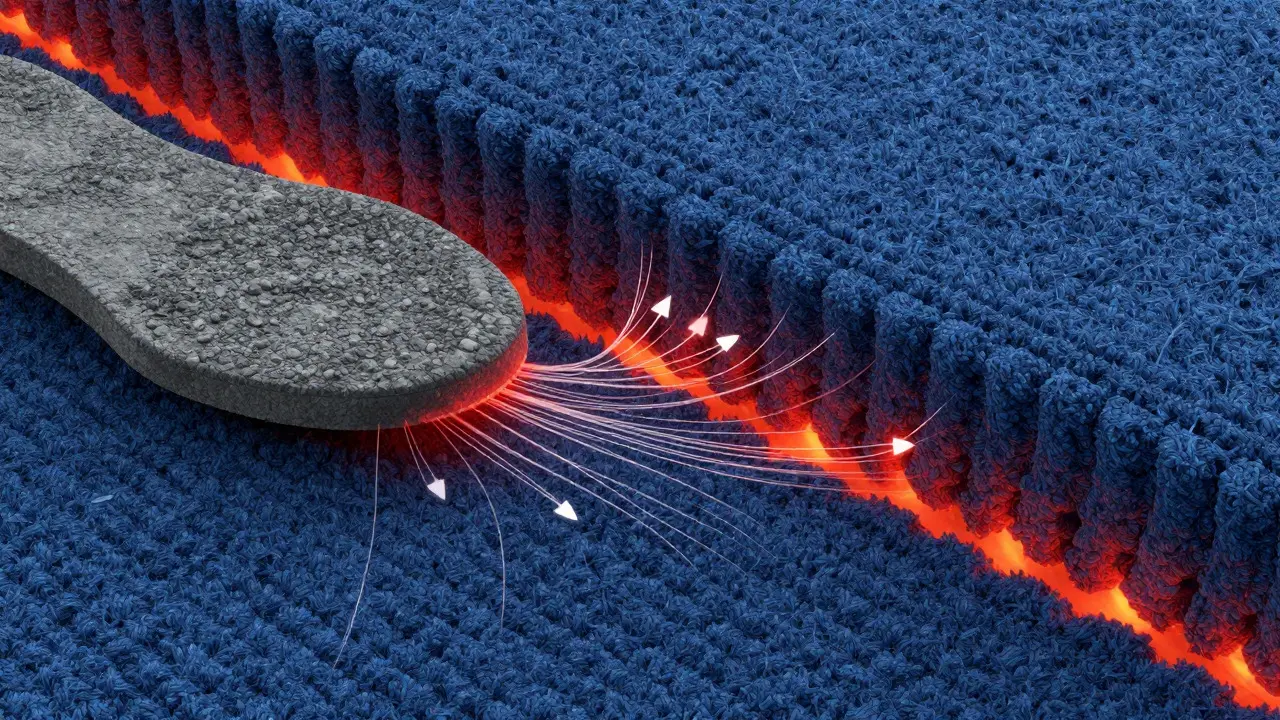
First, let’s clear up a common misconception: fibers don’t just “stick” to everything. The transfer depends heavily on three things: material type, surface texture, and movement dynamics. When a shoe sole presses against a carpet, friction generates heat and mechanical stress. This stress can break loose individual fibers from either the shoe upper (if it’s fabric-based) or the carpet pile. These detached fibers then migrate based on gravity, air currents, or subsequent contact.
Think of it like rubbing two different fabrics together-say, a wool sweater against a cotton shirt. You’ll see lint balls form. That’s the same principle at work, but on a micro-scale. The key difference? In forensics, we’re looking for *directional* transfer. Did the fiber come from the shoe to the carpet, or vice versa? Or did both exchange materials?
- Static electricity: Synthetic fibers (nylon, polyester) generate static charges easily, causing them to cling to surfaces longer than natural fibers.
- Mechanical abrasion: Rougher surfaces (like loop-pile carpets) trap more fibers than smooth ones (like flat-weave rugs).
- Moisture levels: Humidity reduces static charge, making fiber release less predictable but potentially increasing adhesion through capillary action.
Here’s where it gets tricky: not all fibers behave the same way. A leather shoe won’t shed fibers the same way a canvas sneaker does. And a nylon carpet will interact differently with a cotton sock than with a wool blanket. So when you’re collecting evidence, you need to consider the *entire* material ecosystem involved-not just the shoe.
Carpet Types and Their Role in Fiber Retention
Not all carpets are created equal, and their structure dramatically affects how many fibers they retain or release. Loop-pile carpets (like Berber) have a dense, interlocking structure that traps fibers effectively. Cut-pile carpets (like shag or plush) have looser, longer fibers that are easier to dislodge. Flat-weave rugs offer minimal retention-they’re almost like a conveyor belt for fiber transfer.
| Carpet Type | Fiber Retention Level | Common Fiber Sources | Forensic Relevance |
|---|---|---|---|
| Loop-Pile (Berber) | High | Nylon, Olefin | Excellent for retaining suspect fibers; hard to clean completely |
| Cut-Pile (Plush/Shag) | Medium | Polyester, Wool | Fibers easily dislodged by walking; good for directional analysis |
| Flat-Weave (Rugs) | Low | Cotton, Jute | Minimal retention; useful for tracking movement paths |
| Synthetic Blends | Variable | Nylon/Polyester mixes | Complex interactions; requires detailed microscopy |
In practice, investigators often find that loop-pile carpets hold onto foreign fibers for days or even weeks. This makes them ideal for long-term evidence preservation-but also harder to distinguish from background contamination. On the other hand, flat-weave rugs might show clear directional trails if someone walked across them repeatedly, but those traces vanish quickly once vacuumed or cleaned.
Textile Interactions Beyond Carpets
While carpets get most of the attention, other textiles play critical roles too. Upholstery, curtains, clothing, and even vehicle seats can all participate in fiber transfer events. For example, if a suspect sits on a sofa before leaving a scene, their pants may pick up upholstery fibers. Those fibers could then transfer to another surface later-creating a chain of evidence that links multiple locations.
The key here is understanding secondary transfer. Unlike primary transfer (direct contact), secondary transfer happens when fibers move from one object to another via an intermediary. This is where case analysis gets complex. You’re not just asking “Did this fiber come from the shoe?” You’re asking “How did this fiber get here, and what path did it take?”
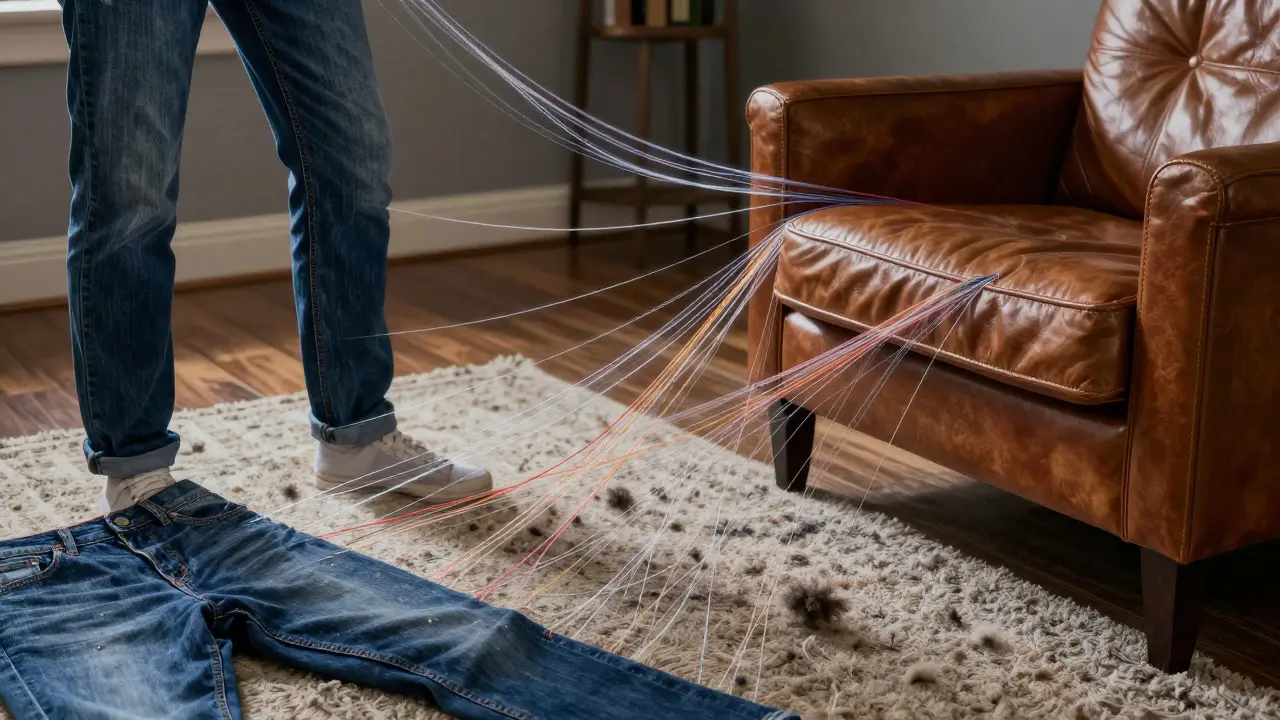
Consider this scenario: A suspect wears denim jeans. They walk across a nylon carpet, picking up synthetic fibers. Later, they sit on a leather chair, transferring some of those nylon fibers to the leather. Now, when you analyze the chair, you’re seeing a mix of original leather debris and transferred nylon fibers. Without careful context, you might misattribute the source.
Collection Techniques That Preserve Integrity
Collecting footwear fiber transfers without contaminating the sample is a balancing act. Too much pressure, and you crush the fibers. Too little, and you miss subtle deposits. Here’s what works in the field:
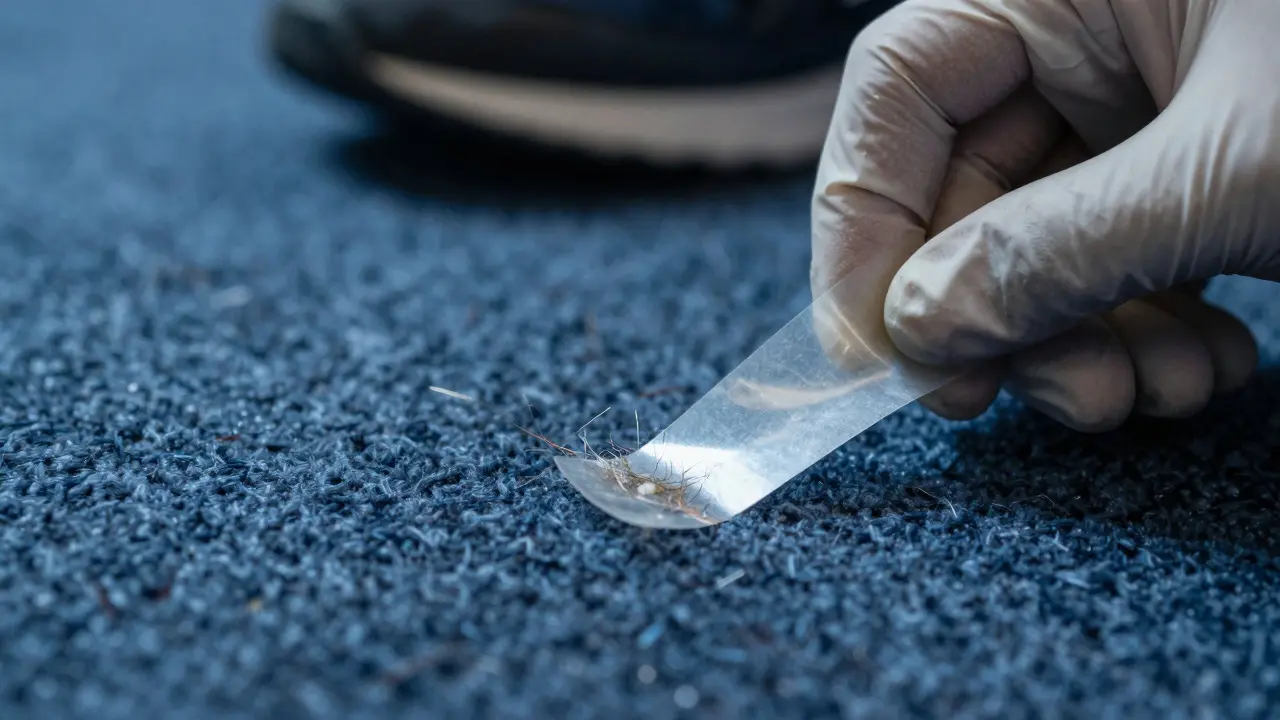
- Tape lifting: Use adhesive tape to lift fibers from flat surfaces. This method preserves fiber orientation and allows for non-destructive initial analysis.
- Brush sampling: Soft-bristle brushes can collect fibers from textured surfaces without damaging them. Best used in combination with tape for comprehensive coverage.
- Vacuum collection: For large areas, a forensic vacuum with a fine filter can capture airborne fibers. However, this method loses spatial context, so use it sparingly.
One pro tip: Always document the exact location where fibers were found. A fiber on the edge of a rug tells a different story than one in the center. Directionality matters. If you can determine which way the fibers were deposited, you can reconstruct movement patterns.
Analyzing Fibers: Microscopy and Chemical Identification
Once collected, fibers go under the microscope. Light microscopy gives you basic info-color, diameter, cross-sectional shape. But to truly identify a fiber, you need more. Polarized light microscopy (PLM) reveals optical properties that help distinguish synthetic from natural fibers. Then there’s Fourier-transform infrared spectroscopy (FTIR), which provides a chemical fingerprint. This is the gold standard for definitive identification.
Here’s a quick comparison of analytical methods:
| Method | What It Reveals | Limitations | Best For |
|---|---|---|---|
| Light Microscopy | Color, size, general morphology | Cannot definitively identify fiber type | Initial screening |
| Polarized Light Microscopy (PLM) | Optical properties, birefringence | Requires training; limited to certain fiber types | Distinguishing synthetic vs. natural |
| Fourier-Transform Infrared Spectroscopy (FTIR) | Chemical composition | Expensive equipment; small sample sizes needed | Definitive identification |
| Scanning Electron Microscopy (SEM) | Surface topography, elemental composition | Time-consuming; requires specialized lab | Complex mixtures, damaged fibers |
Don’t skip the basics. Even if you plan to run FTIR, start with light microscopy. It helps you decide which samples are worth further testing. And remember: context is king. A fiber identified as nylon means nothing unless you know where it came from and how it got there.
Common Pitfalls and How to Avoid Them
Even experienced analysts make mistakes with fiber evidence. Here are the top three pitfalls I’ve seen:
- Ignoring background contamination: Every room has ambient fibers. Dust, pet hair, clothing lint-all contribute to the baseline. Always collect control samples from nearby areas to establish what’s normal.
- Overlooking secondary transfer: Just because a fiber is on a surface doesn’t mean it came directly from the suspect’s shoe. It could have been carried there by a third party or object.
- Assuming uniqueness: Fibers are not unique identifiers like fingerprints. A single nylon fiber doesn’t prove guilt. You need multiple matching fibers, consistent color, and contextual support to build a strong case.
The lesson? Treat every fiber as part of a larger puzzle. One piece alone rarely tells the whole story.
Practical Takeaways for Field Investigators
If you’re out in the field, here’s your cheat sheet:
- Document everything: photos, sketches, notes on weather, humidity, and recent cleaning activities.
- Collect controls: always grab samples from adjacent areas to account for background noise.
- Prioritize high-retention surfaces: loop-pile carpets and upholstered furniture are your best bets for preserving evidence.
- Use layered collection: combine tape, brush, and vacuum methods for comprehensive coverage.
- Think directionally: ask yourself how the fiber got there, not just what it is.
Fiber evidence is powerful, but only if handled with care. Get the details right, and you’ll turn invisible threads into undeniable proof.
How long do footwear fibers last on carpets?
It depends on the carpet type and environment. On loop-pile carpets, fibers can persist for weeks if undisturbed. On flat-weave rugs, they may be gone within hours due to foot traffic and cleaning. Humidity and temperature also affect longevity.
Can fibers transfer from shoes to clothes and back again?
Yes, this is called secondary transfer. Fibers can bounce between surfaces multiple times, creating complex evidence chains. This is why documenting the full sequence of events is crucial.
What’s the best tool for identifying synthetic fibers?
Fourier-transform infrared spectroscopy (FTIR) is the gold standard for identifying synthetic fibers. It provides a chemical fingerprint that distinguishes between nylon, polyester, olefin, and other polymers.
Do natural fibers transfer differently than synthetics?
Yes. Natural fibers like cotton and wool are less prone to static buildup, so they tend to fall off surfaces more easily. Synthetic fibers like nylon and polyester generate static charges, causing them to cling to surfaces longer.
Is one fiber enough to convict someone?
Rarely. Fibers are not unique identifiers. Courts typically require multiple matching fibers, consistent characteristics, and corroborating evidence to establish a strong connection. Context is critical.