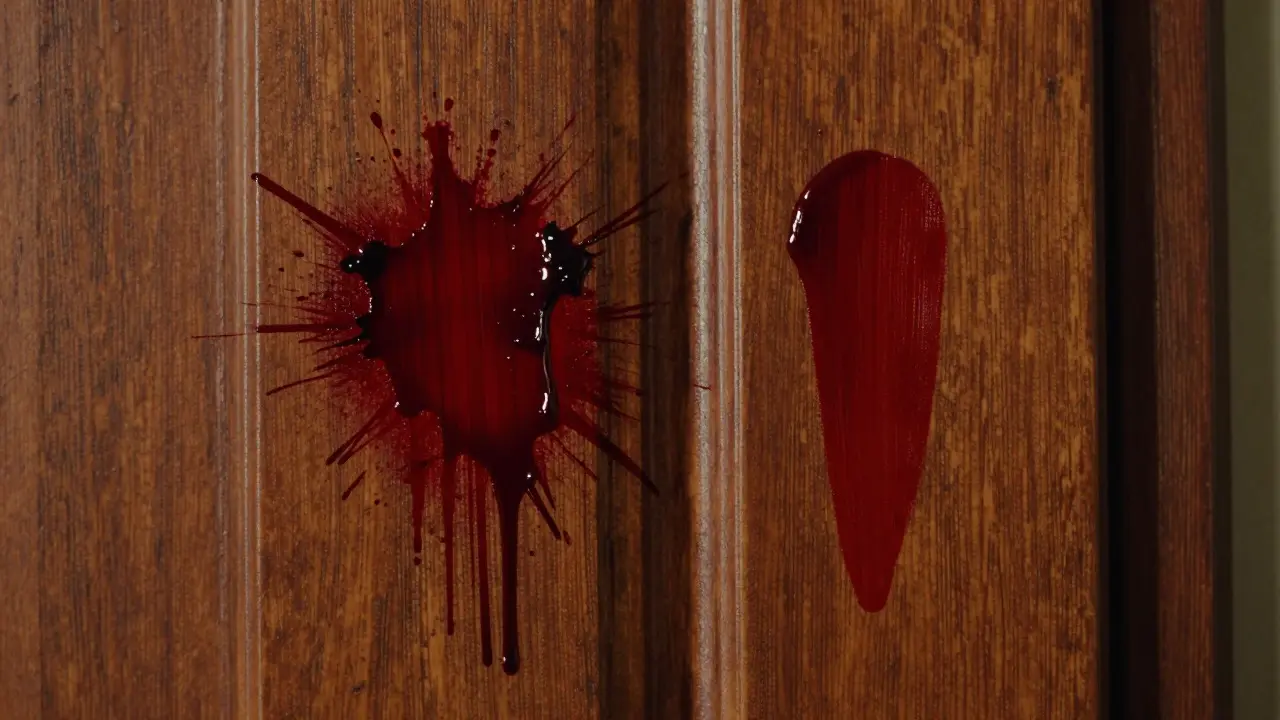
Imagine standing in a crime scene where a red smear stretches across a doorframe. Your first instinct might be to call it a "wipe." But in the world of Bloodstain Pattern Analysis is the scientific discipline that interprets the position, size, and shape of blood stains to reconstruct events. Also known as BPA, this field relies on precise vocabulary to distinguish between different mechanisms of transfer. Confusing these terms can lead to incorrect reconstructions, which is why understanding the difference between a swipe stain is a bloodstain created when an object moves through a pool or puddle of blood, leaving a trail with irregular edges and often a central void and a wipe stain is a bloodstain formed when a blood-covered surface contacts another surface, typically showing directional flow and tapered ends is critical for any investigator.
The distinction isn't just academic pedantry. It changes how you interpret the force involved, the direction of movement, and even the sequence of events. A swipe implies an object moving *through* liquid. A wipe implies a surface carrying blood *across* another surface. Getting this wrong can send a jury down the wrong path about whether a weapon was dragged or swung.
Key Takeaways
- Swipe stains occur when an object passes through pooled blood, creating irregular shapes with potential central gaps.
- Wipe stains happen when a blood-soaked surface rubs against another, showing directional lines and tapering ends.
- Directionality is the primary visual cue: swipes are often non-directional or multi-directional; wipes are strongly directional.
- Misidentifying these patterns can lead to flawed crime scene reconstructions and inaccurate testimony.
- Both are types of contact stains, distinct from passive drops or active blood projections.
Anatomy of a Swipe Stain
A swipe stain is a bloodstain created when an object moves through a pool or puddle of blood, leaving a trail with irregular edges and often a central void forms under specific conditions. Think of dragging a shoe through a puddle of water. The water doesn't coat the entire bottom of the shoe uniformly; instead, it splashes, clings to the tread, and leaves a chaotic mark. In forensics, this happens when a body part, clothing, or weapon moves through a pool of blood on the floor or a surface.
Visually, swipe stains have several tell-tale characteristics:
- Irregular Edges: The borders are jagged or ragged because the object disrupts the fluid's surface tension unevenly.
- Central Void or Gap: Often, there is a clear space in the middle where the object itself blocked the blood, while the edges show the displaced fluid.
- Lack of Directionality: While the overall shape suggests movement, individual components within the swipe may point in multiple directions due to splashing or dripping during the motion.
- Texture Transfer: If the object has a texture (like a tire tread or shoe sole), that pattern may be imprinted into the swipe.
For example, if a suspect drags a chair across a blood pool, the resulting stain will look like a smeared mess with holes where the chair legs didn't touch the blood. This differs significantly from a simple smear.
Anatomy of a Wipe Stain
In contrast, a wipe stain is a bloodstain formed when a blood-covered surface contacts another surface, typically showing directional flow and tapered ends occurs when one surface already covered in blood rubs against another clean or partially wet surface. Imagine wiping your nose with a tissue. The tissue picks up blood from your nose and transfers it onto the tissue in a linear fashion. In a crime scene, this might be a bloody hand brushing against a wall, or a knife blade sliding across a countertop after being coated in blood.
Wipe stains are characterized by:
- Directional Flow: The stain shows a clear start and end point, indicating the direction of movement. One end is usually wider or thicker, and the other tapers off.
- Smooth or Tapered Ends: Unlike the jagged edges of a swipe, wipes often have smoother transitions at the beginning and end of the stroke.
- Uniformity: The width of the stain may remain relatively consistent along its length, depending on the pressure applied.
- Secondary Droplets: Sometimes, small satellite drops appear along the edge of the wipe if the blood was heavy enough to drip during the motion.
If a victim falls and their bloody arm slides along the floor, the resulting mark is a wipe. It tells you the direction they were moving and the angle of their arm relative to the ground.
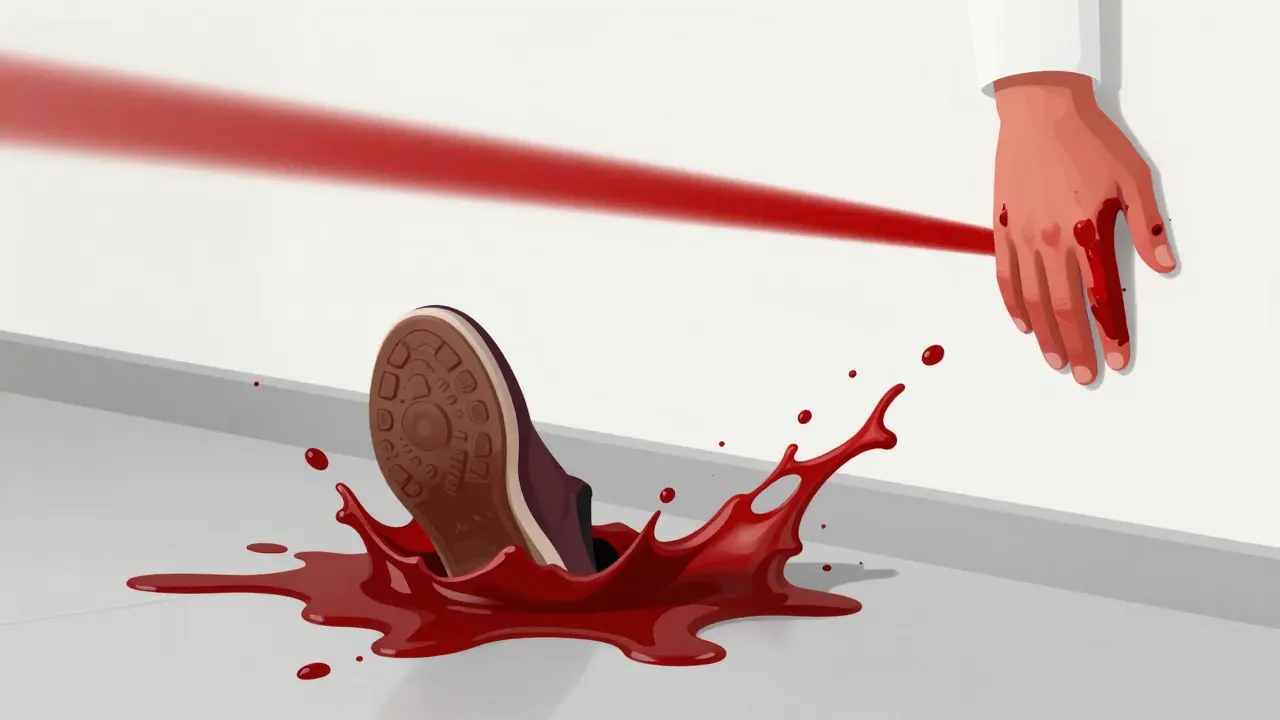
Comparing Swipes and Wipes: A Side-by-Side Look
To make the distinction crystal clear, let's compare the two side by side. The table below highlights the key differences that investigators use to classify these stains in the field.
| Feature | Swipe Stain | Wipe Stain |
|---|---|---|
| Formation Mechanism | Object moves through pooled blood | Blood-covered surface rubs against another surface |
| Edge Quality | Irregular, jagged, or ragged | Relatively smooth or tapered |
| Central Area | Often has a void or gap | Usually solid or continuous |
| Directionality | Weak or ambiguous; multiple vectors possible | Strong; clear start and end points |
| Common Examples | Dragging a body, stepping in a pool | Brushing against a wall, sliding a weapon |
Notice how the formation mechanism is the root cause of all other differences. Because a swipe involves displacement of fluid, you get chaos. Because a wipe involves transfer of existing fluid, you get order.
Why Precision Matters in Courtroom Testimony
When a forensic scientist takes the stand, every word counts. Using "wipe" when describing a "swipe" can mislead the jury about the nature of the action. For instance, if an expert testifies that a "wipe" occurred on a door handle, the jury might imagine someone deliberately smearing blood. If it was actually a "swipe," it might imply that a bloody object was dropped or dragged near the handle, perhaps accidentally.
Courtroom clarity depends on accurate terminology. Judges and juries are not trained in Bloodstain Pattern Analysis is the scientific discipline that interprets the position, size, and shape of blood stains to reconstruct events. They rely on the expert to translate complex visual data into understandable narratives. If the terminology is vague, the narrative becomes weak. Defense attorneys often exploit this ambiguity to create reasonable doubt.
Consider a case where a suspect claims they didn't enter a room. If a large swipe stain is found leading into the room, it suggests something was dragged in. If the expert calls it a "wipe," the defense might argue it was a minor contact, like a sleeve brushing the wall. The semantic shift changes the perceived significance of the evidence.
Common Pitfalls and How to Avoid Them
Even experienced investigators can mix up these terms, especially in high-pressure environments. Here are some common mistakes and how to prevent them:
- Assuming All Smears Are Wipes: Not all smears are created equal. Always check for a central void or irregular edges before labeling a stain a wipe. If there's a hole in the middle, it's likely a swipe.
- Ignoring Surface Texture: Textured surfaces (like carpet or concrete) can obscure the true shape of a stain. Use raking light or UV illumination to reveal hidden details.
- Overlooking Secondary Stains: Small droplets around a main stain can provide clues about the speed and force of the movement. Don't focus solely on the main shape.
- Failing to Document Context: A stain means little without context. Note the height, angle, and surrounding objects. Did the swipe originate from a pool? Was the wipe on a vertical or horizontal surface?
Training matters. Regular practice with simulated bloodstains helps build muscle memory for identifying these patterns. Many forensic labs offer workshops specifically focused on contact stain classification.
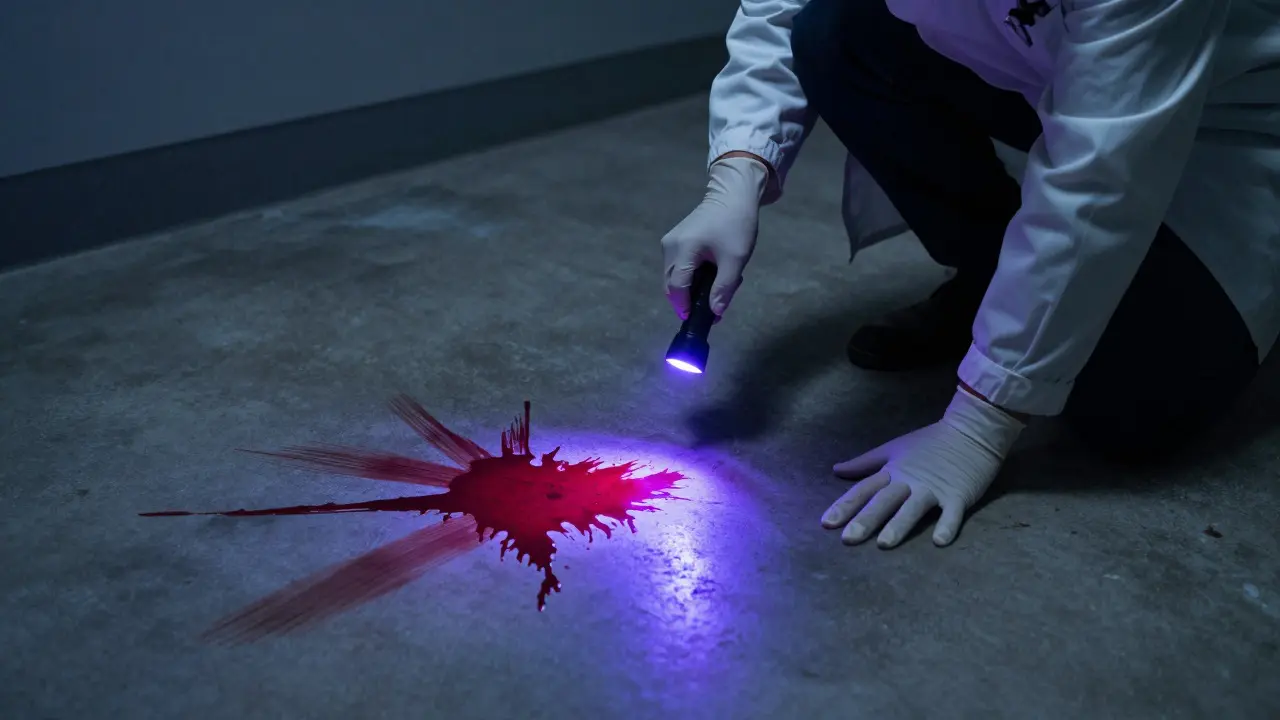
Practical Tips for Field Investigators
When you're on scene, follow these steps to ensure you correctly identify and document swipe versus wipe stains:
- Observe Before Touching: Stand back and look at the stain in natural light. Identify the general shape and direction.
- Check for Pools: Is there a pool of blood nearby? If yes, a swipe is more likely. If no, and the stain is on a dry surface, a wipe is more probable.
- Examine the Edges: Get close. Are the edges jagged (swipe) or smooth/tapered (wipe)?
- Look for Voids: Is there a clear space in the center of the stain? If so, lean towards swipe.
- Photograph with Scale: Always include a scale ruler in your photos. This helps experts later analyze the dimensions and ratios.
- Note the Direction: Use arrows in your notes to indicate the presumed direction of movement. For wipes, this is straightforward. For swipes, note any ambiguity.
Remember, you're not just documenting a stain; you're preserving a piece of the story. Every detail you capture now could be the difference between conviction and acquittal.
Related Concepts in Bloodstain Pattern Analysis
Understanding swipes and wipes is just the beginning. These contact stains fit into a larger framework of Bloodstain Pattern Analysis is the scientific discipline that interprets the position, size, and shape of blood stains to reconstruct events. Other key concepts include:
- Passive Drops: Blood falling under gravity alone. These are round or oval and don't show directional flow.
- Impact Spatter: Blood projected by force (e.g., from a beating). These stains are smaller and often clustered.
- Transfer Stains: When a blood-covered object touches a surface and leaves a partial impression, like a fingerprint but with blood.
- Cast-Off Stains: Blood flung from a rotating object, like a swinging weapon. These form arcs or lines.
Each type provides different information. Passive drops tell you where someone stood. Impact spatter tells you how hard they hit. Cast-off tells you how they swung. And swipes/wipes tell you how things moved across surfaces. Together, they paint a complete picture.
Frequently Asked Questions
What is the main difference between a swipe and a wipe?
A swipe occurs when an object moves through pooled blood, creating irregular edges and often a central void. A wipe occurs when a blood-covered surface rubs against another surface, showing directional flow and tapered ends.
Can a single stain be both a swipe and a wipe?
Rarely, but possible. If an object moves through a pool and then continues to drag across a dry surface, the initial part may show swipe characteristics (irregular, voids) while the latter part shows wipe characteristics (directional, tapered). Experts would describe this as a composite stain.
How do I determine the direction of a swipe stain?
Directionality in swipes is often ambiguous. Look for secondary droplets or splatters that may indicate the path of movement. The presence of a central void can also help infer the object's position, but the exact direction may require additional context from the scene.
Why is terminology important in courtroom testimony?
Precise terminology ensures that the jury understands the mechanism behind the stain. Mislabeling a swipe as a wipe can alter the perceived force, intention, or sequence of events, potentially affecting the verdict.
What tools do forensic scientists use to analyze these stains?
Scientists use cameras with macro lenses, raking lights to highlight texture, UV lamps to detect dried blood, and software for measuring angles and distances. Physical models and simulations are also used for training and demonstration.