Walking into a structure after a fire is like stepping into a crime scene where the building itself has been interrogated. The walls don't just collapse; they tell you where the heat came from. The roof doesn't just char; it reveals how fast the fire spread. If you are new to fire investigation, looking at structural elements can feel overwhelming. But once you learn to read the physical evidence left behind by flames, the story becomes much clearer.
This guide breaks down how investigators analyze damage to walls and roofs. We will look at specific visual cues, common misconceptions, and the logical steps used to determine if a fire was accidental or intentional. You do not need to be a forensic scientist to understand these basics, but you do need to pay attention to details that most people overlook.
Reading the Story on the Walls
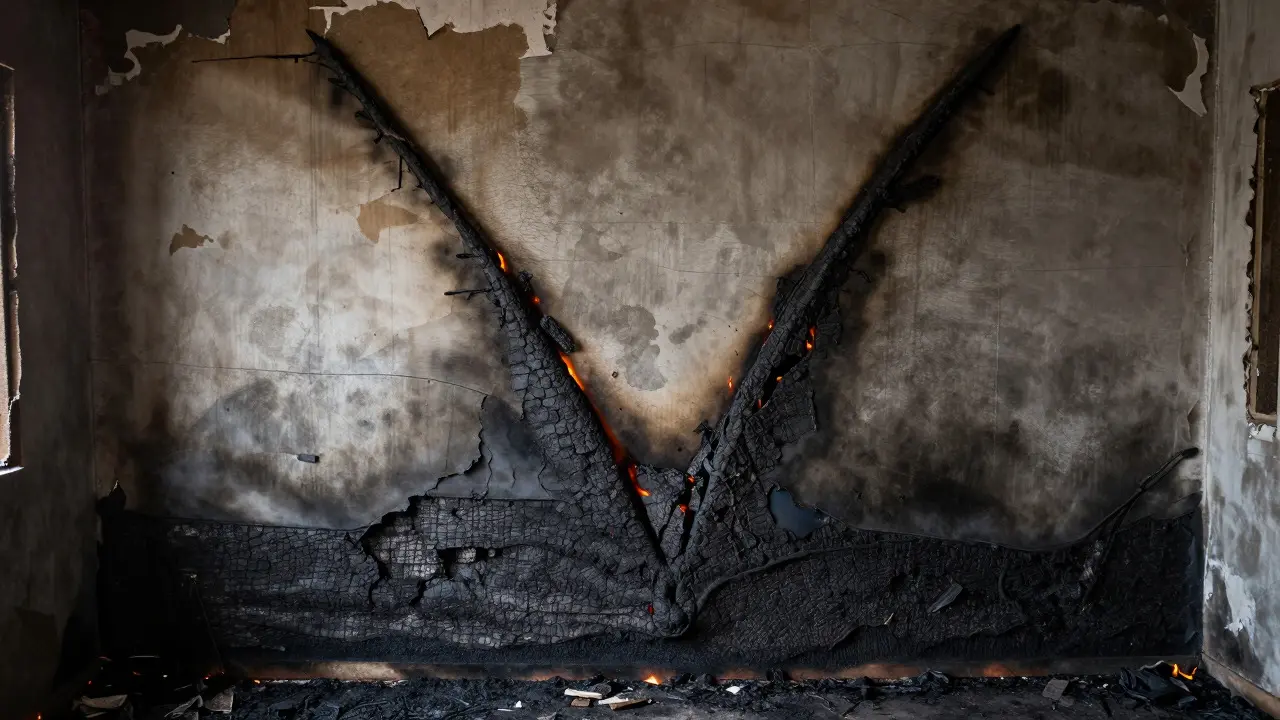
The exterior and interior walls of a building act as the primary record of fire behavior. When investigating structural elements, your first job is to identify the point of origin. This is often done by looking for the deepest V-shaped pattern on vertical surfaces.
V-Patterns are distinctive triangular marks on walls created by rising heat and flame front movement. In a typical room fire, the flame front rises upward, creating a "V" shape with the point indicating the lowest level of the fire source. If you see a deep, narrow V-shape, the fire likely started low, perhaps near the floor. If the V-shape is wide and shallow, the ignition source might have been higher up, like on a shelf or ceiling fixture.
However, walls tell more than just height. They also reveal the intensity of the fire through discoloration. Soot deposition follows the path of smoke. Dark, black soot usually indicates incomplete combustion, which happens in areas with limited oxygen. Lighter, grayish soot suggests complete combustion, often found in well-ventilated areas. Investigators compare these colors to map out airflow paths. If soot lines change direction abruptly, it suggests a draft or an open door that pulled smoke away from its natural path.
Another critical aspect is the condition of the paint and wallpaper. Peeling paint can indicate extreme heat, but it can also result from water damage during firefighting efforts. Distinguishing between thermal peeling and water damage is crucial. Thermal peeling usually starts at the edges and curls inward due to rapid expansion and contraction. Water damage tends to blister and flake in larger, irregular patches. Misinterpreting this can lead to false conclusions about the fire's severity.
Analyzing Roof Structures and Ventilation
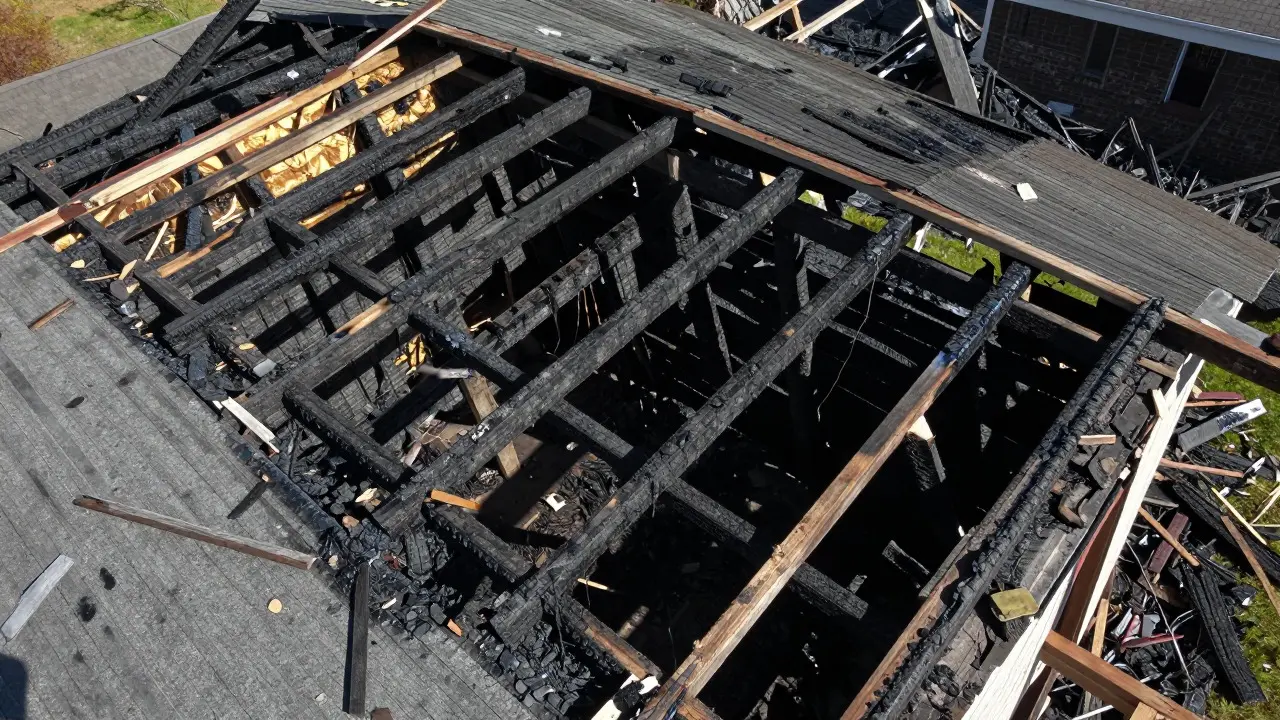
Roofs are complex because they involve multiple layers: shingles, underlayment, decking, and insulation. Each layer reacts differently to heat. In attic fires, the decking (the wood boards) often shows distinct burn patterns that differ from the living space below.
One of the most telling signs on a roof is the presence of "flashover" indicators. Flashover occurs when all combustible materials in a room reach their ignition temperature simultaneously. On the roof, this can manifest as widespread charring across the entire deck, rather than localized damage. If the roof deck is uniformly blackened, it suggests the fire burned hot and fast before being extinguished or burning out.
Investigators also look for ventilation effects. Wind can push flames and heat against one side of the roof, causing deeper damage there. This is known as wind-driven fire behavior. By examining the direction of soot flow on the roof surface, you can infer the wind direction at the time of the fire. This helps correlate weather data with physical evidence.
Additionally, check for signs of forced entry or tampering near roof penetrations like chimneys, vents, or skylights. Arsonists sometimes use accelerants poured through these openings. Look for dripping residues or unusual scorching around these points. The absence of such signs does not rule out arson, but their presence raises significant red flags.
Distinguishing Accidental Fires from Arson
The core question in any fire investigation is whether the fire was accidental or intentional. Structural damage provides clues, but rarely gives a definitive answer on its own. It must be combined with other evidence, such as witness statements and chemical analysis.
In accidental fires, damage patterns usually align with the location of the ignition source. For example, a kitchen fire will show the heaviest damage around the stove or oven. An electrical fire will show pitting and melting near wiring outlets. These patterns are consistent and explainable by the physics of the situation.
In contrast, arson often presents inconsistencies. You might find multiple points of origin that don't connect logically. Or, you may see damage patterns that suggest the fire was fueled by liquids. Accelerant fires tend to burn hotter and faster than ordinary trash or furniture fires. This can result in deeper charring and more extensive structural failure than expected for the size of the initial fuel load.
Here is a simple comparison to help visualize the differences:
| Feature | Accidental Fire | Arson (Accelerant) | |
|---|---|---|---|
| Origin Point | Single, logical location (e.g., appliance) | Multiple or illogical locations | |
| Burn Depth | Proportional to fuel load | Often deeper due to high-intensity accelerants | |
| Soot Pattern | Follows natural convection currents | May show erratic flow due to liquid splashing | |
| Residue Traces | Absent or minimal hydrocarbon traces | Presence of gasoline, kerosene, or other ignitables | |
| Structural Failure | Gradual weakening over time | Rapid collapse due to intense heat spikes |
The Role of Modern Technology in Analysis
While visual inspection is the foundation of fire investigation, technology enhances accuracy. Thermal imaging cameras can detect residual heat signatures in walls and roofs long after the fire is out. These images help map the path of the fire even when visible damage is obscured by debris or water damage.
Laboratory analysis plays a huge role too. Samples of soot, charred wood, and debris are sent to labs for Gas Chromatography-Mass Spectrometry (GC-MS). This technique identifies specific chemical compounds. If investigators suspect arson, they look for ignitable liquid residues (ILRs). Finding ILRs in a structural element, like a beam or drywall, strongly supports the theory of an intentional fire.
Furthermore, computer modeling software can simulate fire spread based on the structural layout of the building. By inputting variables like window placement, door orientation, and material types, investigators can test hypotheses. Did the fire behave as expected? Or did it deviate in ways that suggest external intervention?
Common Pitfalls to Avoid
Even experienced investigators make mistakes. One common error is assuming that all dark stains are soot. Sometimes, rust, mold, or old grease can mimic fire damage. Always verify with touch tests or UV light if possible. Another pitfall is ignoring the impact of firefighting operations. High-pressure water streams can wash away evidence, create false burn patterns, or displace debris. Document the arrival time of firefighters and their actions carefully.
Also, beware of confirmation bias. If you believe a fire was accidental, you might overlook subtle signs of arson. Conversely, if you suspect arson, you might interpret normal wear and tear as suspicious. Stay objective. Let the physical evidence speak for itself. Cross-reference every observation with independent data sources.
Practical Steps for Field Investigators
When arriving at a scene, follow a systematic approach to ensure no detail is missed. Here is a checklist to keep in mind:
- Secure the Scene: Prevent contamination from rain, wind, or unauthorized personnel.
- Document Everything: Take photos from multiple angles before touching anything. Use a scale for close-ups of burn patterns.
- Map the Structure: Create a floor plan marking windows, doors, and major fixtures. Note the direction of smoke flow.
- Inspect Vertical Surfaces: Look for V-patterns, soot gradients, and paint peeling. Record the depth and width of these marks.
- Examine the Roof: Check for uniformity of charring, ventilation damage, and signs of forced entry.
- Collect Samples: Gather charred materials, soot samples, and potential residue spots for lab analysis.
- Interview Witnesses: Ask about smells, sounds, and visibility prior to the fire. Compare their accounts with physical evidence.
By following these steps, you build a solid foundation for your analysis. Remember, the goal is not to guess but to reconstruct the events using hard evidence. Every scratch, stain, and scorch mark is a piece of the puzzle.
Frequently Asked Questions
How deep should a V-pattern go to indicate a floor-level fire?
There is no fixed depth, but generally, the point of the V should align with the suspected ignition source. If the fire started on the floor, the V-point should be near the baseboard. Deeper penetration into lower wall sections confirms this. However, always consider the angle of the flame front and air supply.
Can water damage mimic fire damage on walls?
Yes. Water can cause paint to peel and wood to warp, similar to thermal effects. To distinguish them, look for the texture. Thermal peeling is usually crisp and curled, while water damage is soft, swollen, and often accompanied by mineral deposits or mold growth. Lab testing can confirm the cause.
What does a uniform black roof deck indicate?
A uniformly black roof deck often indicates a flashover event or a very intense, prolonged fire. It suggests that the heat reached the roof evenly from below, implying a large fuel load or good ventilation throughout the structure. This is less common in small, localized accidental fires.
Why is soot color important in fire investigation?
Soot color indicates the efficiency of combustion. Black soot means incomplete combustion (lack of oxygen), while gray or white soot indicates complete combustion (plenty of oxygen). Mapping these colors helps investigators understand airflow patterns and where the fire was most active.
How do accelerants affect structural damage compared to natural fuels?
Accelerants like gasoline burn hotter and faster than wood or paper. This results in deeper charring, more severe structural weakening, and potentially rapid collapse. The damage is often more concentrated and intense than what would be expected from the amount of visible fuel remaining.