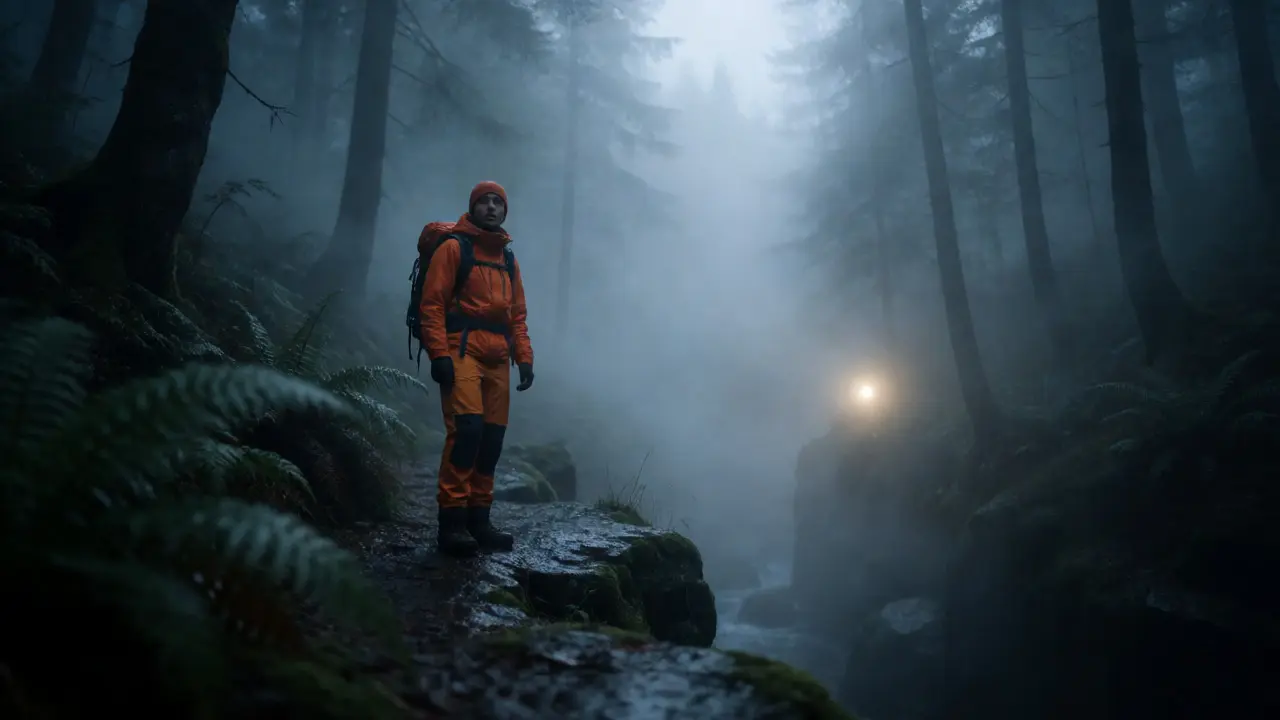
You’re three hours into a hike in the Gorge when the fog rolls in. Your buddy slips on wet rock and vanishes from sight. No phone signal. Just you, the cold, and a growing knot of panic. Who do you call? What happens next? And how does a team find one person in thousands of acres of dense forest before hypothermia sets in?
This isn’t just about finding lost hikers. Search and Rescue (SAR) is a coordinated effort to locate and recover people who are missing or in distress. It’s a complex dance of logistics, technology, and human intuition that spans land, air, and water. When someone goes missing, time is the enemy. Every minute counts, but chaos helps no one. Effective coordination turns scattered resources into a focused net.
The Golden Hour and Initial Response
In emergency management circles, they talk about the "Golden Hour." While this term often refers to trauma care, in SAR, it marks the critical window where the probability of finding a missing person alive drops sharply after the first few hours. Why? Because exposure kills faster than hunger or thirst. A child lost in autumn woods or an elderly person wandering near a riverbank doesn’t have days-they have hours.
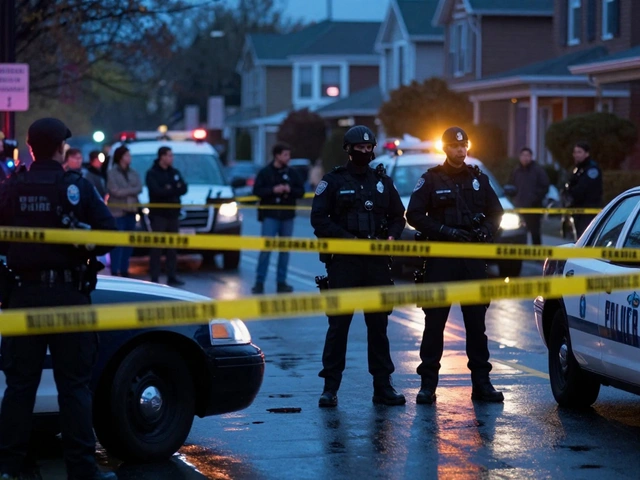
The moment a report comes in, the clock starts. But before boots hit the ground, there’s a flurry of activity at the Incident Command Post. This is where Incident Command System (ICS) takes over. ICS is a standardized hierarchy used by fire departments, police, and military worldwide. It ensures that when ten different agencies show up-sheriff’s deputies, volunteer firefighters, state police, private drone operators-they speak the same language and follow the same chain of command.
Who leads the charge? Usually, local law enforcement has primary jurisdiction for missing persons cases. They secure the scene, interview family members, and define the initial search area. But law enforcement alone rarely has the manpower or specialized gear for large-scale wilderness searches. That’s where the coordination begins.
Land Search Operations
Most missing persons cases start on foot. The goal here is coverage without duplication. You can’t just send hundreds of volunteers into the woods; they’ll miss spots or walk in circles. Instead, planners use specific patterns.
- Grid Search: The most common method. The area is divided into sectors, each assigned to a team. Teams move in parallel lines, maintaining visual contact with neighbors. If one person stops, everyone stops.
- Hasty Search: Used in the first hour. Small teams run to high-probability areas-trail intersections, road edges, obvious shelters-to catch low-hanging fruit.
- Containment: For areas like islands or valleys, rescuers set up perimeters to ensure the subject hasn’t left the zone.
Technology plays a huge role here, but it’s not magic. GPS trackers help track team positions, ensuring no gaps in coverage. However, batteries die, and signals bounce off canyon walls. Experienced searchers still rely on old-school skills: reading animal tracks, noticing broken branches, and listening for faint calls. A well-trained dog handler with a K9 unit can cover ground faster than ten humans, but dogs need breaks and careful handling to avoid false alerts.
Aerial Support: Eyes in the Sky
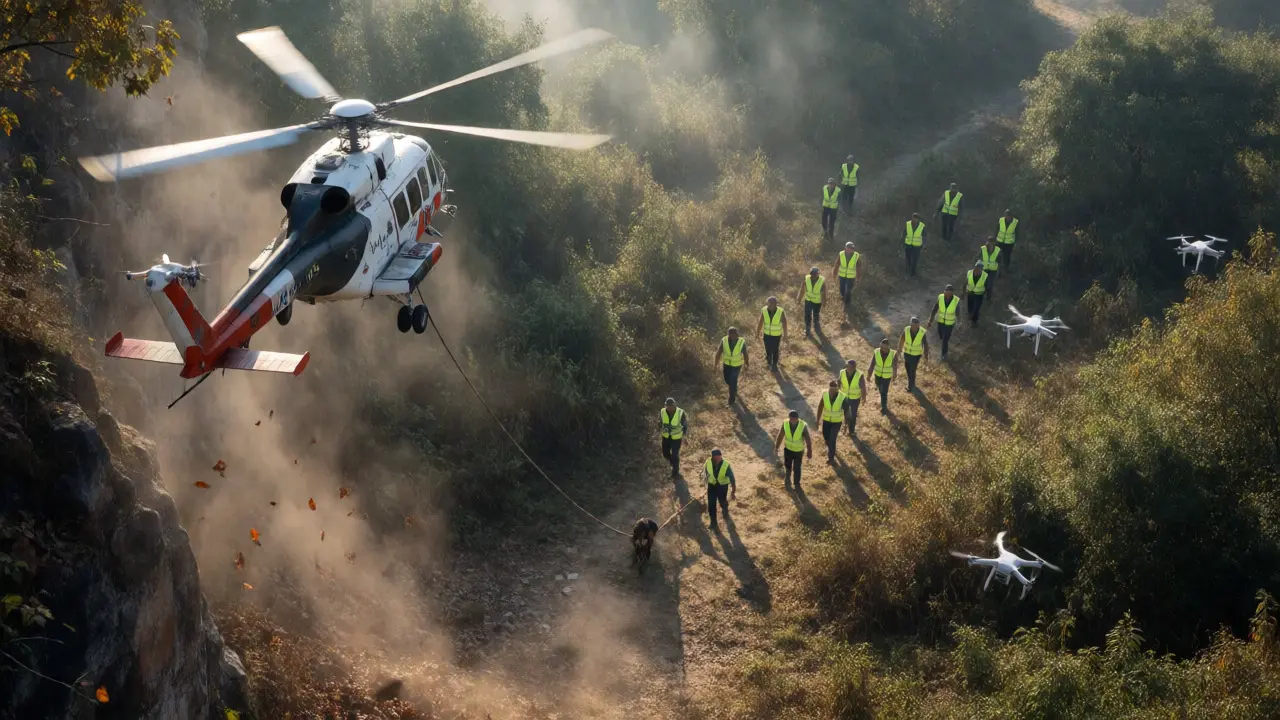
If the terrain is rugged or the search area is vast, you look up. Helicopters and fixed-wing aircraft provide a perspective impossible to achieve from the ground. But air support isn’t just about having a pilot; it’s about integration.
Pilots don’t fly randomly. They work closely with the Ground Team Leader. Before takeoff, the leader defines the "search box"-the exact coordinates to scan. Pilots use thermal imaging cameras (FLIR) to spot heat signatures against cooler backgrounds. In Oregon’s damp forests, this works best during temperature inversions, usually early morning or late evening.
| Platform | Best Use Case | Limitations | Cost Factor |
|---|---|---|---|
| Helicopter | Hovering, hoist rescue, tight valleys | Noise scares victims, expensive fuel | High |
| Fixed-Wing Plane | Covering large flat areas quickly | Cannot hover, requires runway | Medium |
| Drone (UAV) | Cliff faces, hazardous zones, night vision | Battery life limits range, weather sensitive | Low |
Drones have changed the game recently. Unlike helicopters, they’re quiet and can fly under tree canopies in some cases. They’re perfect for checking steep ravines where sending a human climber is too risky. But drones have short battery lives-often 20 to 30 minutes. Coordination means rotating multiple drones seamlessly so there’s never a gap in aerial surveillance.
Water Rescue Dynamics
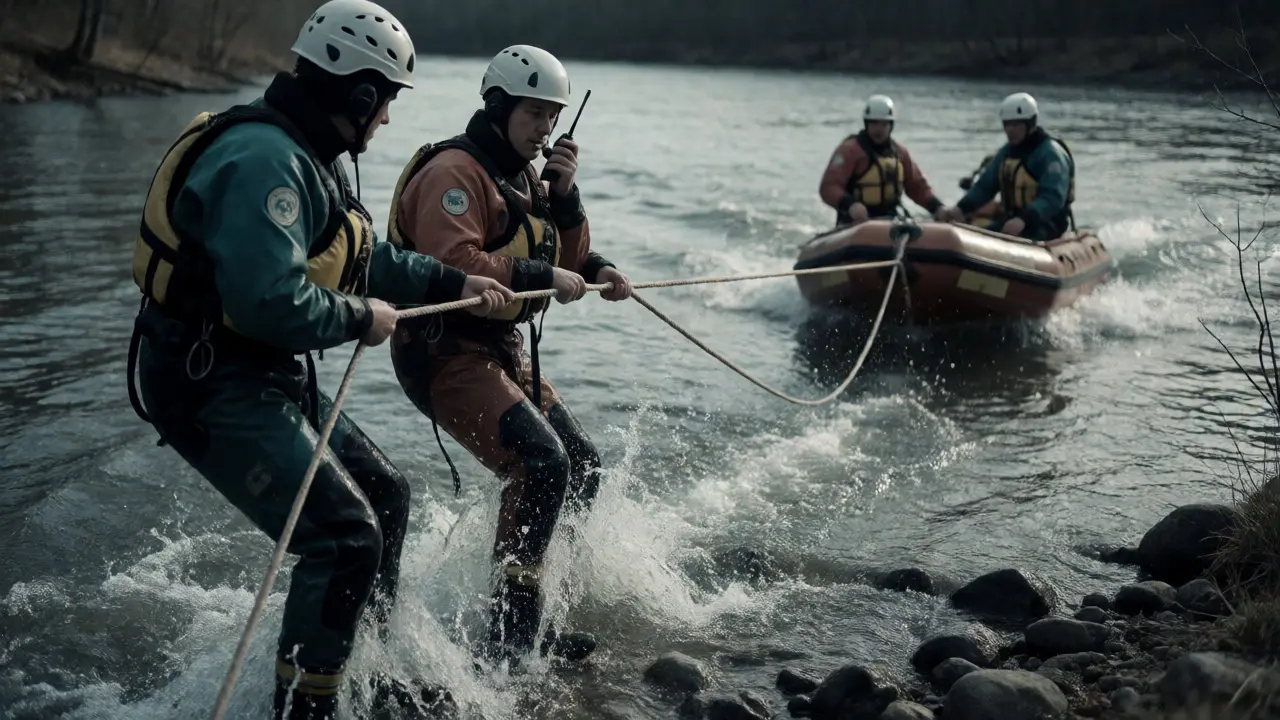
Water adds a deadly variable. Currents move bodies farther and faster than expected. A person swept downstream might be miles away within an hour. Swiftwater Rescue requires different tactics than land searches.
First responders assess the flow rate. High water means debris, which makes boat access dangerous. Sometimes, the safest way to search is from the bank using binoculars and sonar equipment. Sonar units mounted on boats can detect submerged objects, but they struggle in shallow, rocky rivers where echoes confuse the screen.
Boat crews work in pairs. One person scans the surface; the other watches the banks. They communicate constantly via radio. If a body is spotted, they don’t rush. They mark the location with a buoy, then circle back upstream to approach safely. Rushing downstream into a strainer (a log jam underwater) can trap the rescue boat itself.
The Human Element: Volunteer Management
Behind every successful SAR mission is a mountain of paperwork and coffee. Most SAR teams rely heavily on volunteers. These are everyday people-teachers, plumbers, nurses-who train hard and respond fast. But managing them is tough.
Fatigue leads to mistakes. A tired searcher might overlook a bright red jacket against green ferns. Coordinators enforce strict shift limits. Typically, land teams work four-hour shifts followed by rest periods. Volunteers must sign liability waivers, pass background checks, and prove physical fitness. It’s not glamorous work. You’re walking through mud in the rain, calling out names, hoping for a response.
Family involvement is another tricky aspect. Relatives often want to join the search. While their motivation is understandable, they can disrupt operations. Untrained civilians entering the search grid can trample evidence or cause confusion. Good coordinators keep families informed but separate, providing updates through a dedicated liaison officer rather than letting them roam free.
Communication Protocols and Technology
If radios fail, the search stalls. Redundancy is key. Teams carry primary digital radios, backup analog handhelds, and sometimes satellite messengers for remote areas without cell service. Everyone uses standard phraseology. "Copy," "Roger," "Wilco"-these aren’t just movie tropes; they prevent miscommunication over static-filled channels.
Data flows back to the command post in real-time. Modern systems allow searchers to drop GPS pins directly onto a shared map. If a team finds a footprint, they tag it. Other teams see it instantly and adjust their path. This live feedback loop prevents redundant searching. Without it, two teams might spend hours looking at the same empty ridge while missing the valley below.
Interoperability remains a challenge. Police radios might not talk to fire department repeaters. Pre-planned interoperability channels solve this, but they require constant testing. During multi-agency drills, these connections are verified to ensure they work when it actually matters.
Post-Search Analysis and Recovery
Finding the person is only half the battle. Extrication can be harder than discovery. Pulling an injured hiker from a cliff face or a drowning victim from icy rapids requires specialized rigging and medical expertise. Paramedics often accompany technical rescue teams to stabilize patients immediately upon contact.
Once the operation ends, the debrief begins. Every SAR mission generates data. How long did it take to mobilize? Where were the communication breakdowns? Did the dog alert correctly? This analysis refines future protocols. Agencies share lessons learned across regions. A tactic that worked in the Cascades might save lives in the Rockies.
For families, the aftermath brings closure-or grief. Clear communication from authorities helps process the outcome. Whether the result is a safe return or a recovery, professionalism and empathy define the final step of the coordination chain.
How long does a typical search and rescue operation last?
It varies widely based on terrain and conditions. A simple trail mishap might resolve in under two hours. Complex wilderness searches involving large areas or difficult access can last several days. Urban searches may conclude quickly if the person is found nearby, while ocean searches can extend for weeks depending on currents and visibility.
Do I have to pay for search and rescue services?
In many US states, including Oregon, basic SAR services provided by public agencies are free to the rescued individual. However, if private contractors or specialized helicopter evacuations are required, costs may apply. Some outdoor insurance policies cover these expenses. Always check your specific policy details before heading into remote areas.
What should I do if I get lost while hiking?
Follow the S.T.O.P. rule: Stop, Think, Observe, Plan. Stay put if you realize you’re lost; moving blindly increases distance from your starting point. Try to make yourself visible with bright clothing or mirrors. Conserve energy and stay hydrated. If you have a whistle, blow three blasts periodically-a universal distress signal.
How do search dogs find missing persons?
Dogs use scent discrimination. Handlers present a scent article (like a shirt worn by the missing person). The dog isolates that unique odor among thousands of others in the environment. They follow the scent cone downwind. Different breeds excel in different terrains; Bloodhounds are great for old trails, while Border Collies are agile in rough brush.
Can drones replace human searchers entirely?
No. Drones are powerful tools for covering large areas and accessing hazardous spots, but they lack the sensory nuance of humans and dogs. They can’t smell, hear faint cries as effectively, or navigate dense underbrush easily. SAR relies on a hybrid approach, combining tech efficiency with biological adaptability.