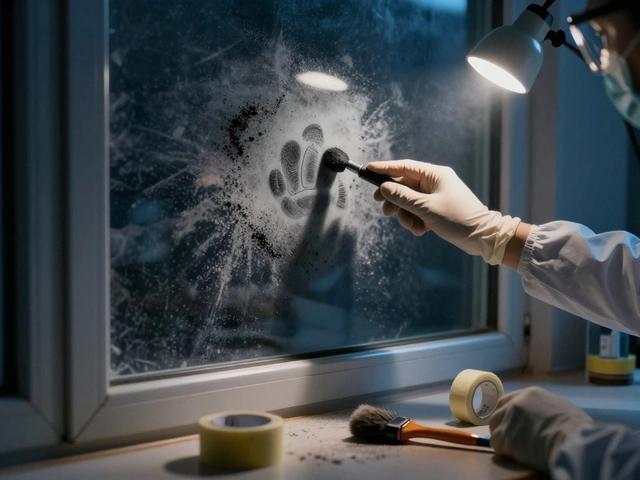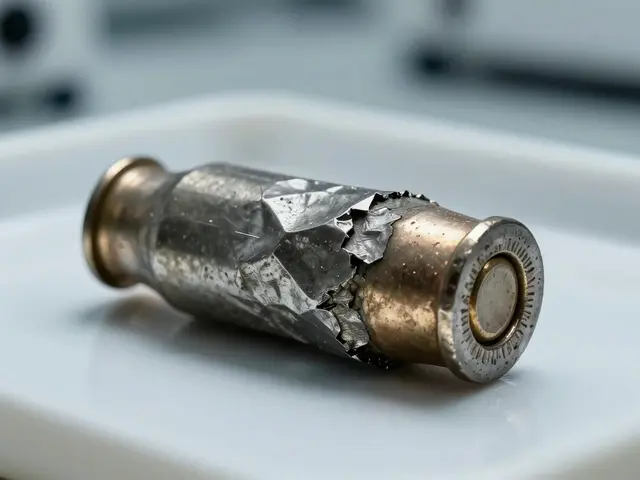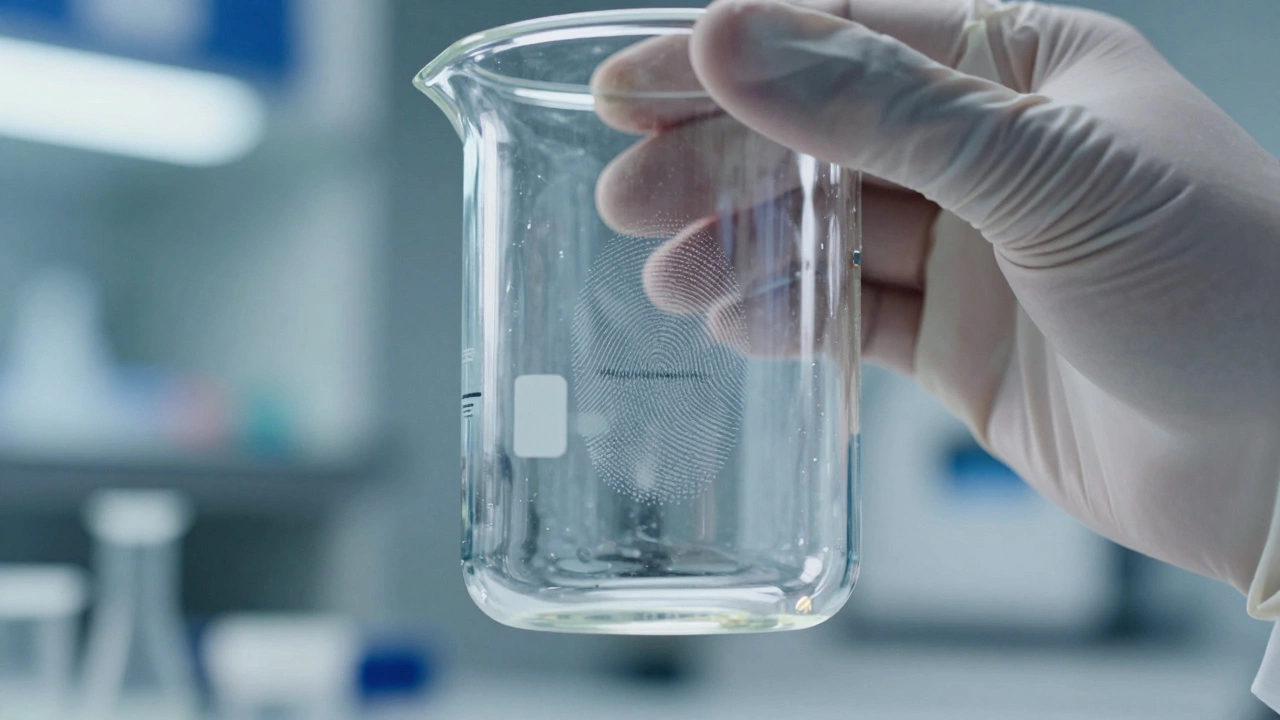
Imagine this: you are a seasoned fingerprint examiner. You have processed hundreds of crime scenes. Your reputation is spotless. But today, as you dust for prints on a glass beaker, your own fingerprint-left there during yesterday’s lunch break-is transferred to the evidence. Suddenly, that innocent mark becomes a suspect’s potential alibi or, worse, a source of confusion in court. This is examiner-induced latent contamination, a silent threat that undermines the very foundation of forensic justice. It isn’t just about dirty hands; it’s about systemic failures in protocol, environment, and human behavior that turn investigators into accidental polluters of their own cases.
The Anatomy of Contamination: How Examiners Become the Problem
Examiner-induced contamination occurs when forensic professionals inadvertently introduce foreign fingerprints, biological materials, or trace evidence into samples they are supposed to analyze. Unlike random environmental contamination, this type originates from the people tasked with preserving truth. The risk escalates in high-volume labs where examiners handle multiple cases daily without adequate decontamination breaks. Research shows that even microscopic skin cells can carry enough DNA or ridge detail to create false matches if not properly controlled.
The danger lies in invisibility. A contaminated surface doesn’t look different until chemical enhancement reveals overlapping patterns. By then, the damage is done. Courts rely on the assumption that evidence remains untouched from collection to analysis. When an examiner’s own latent prints appear alongside those of a suspect, credibility crumbles. Defense attorneys exploit these gaps, arguing that chain-of-custody breaches invalidate results entirely.
Building Defenses: Decontamination Zones and PPE Protocols
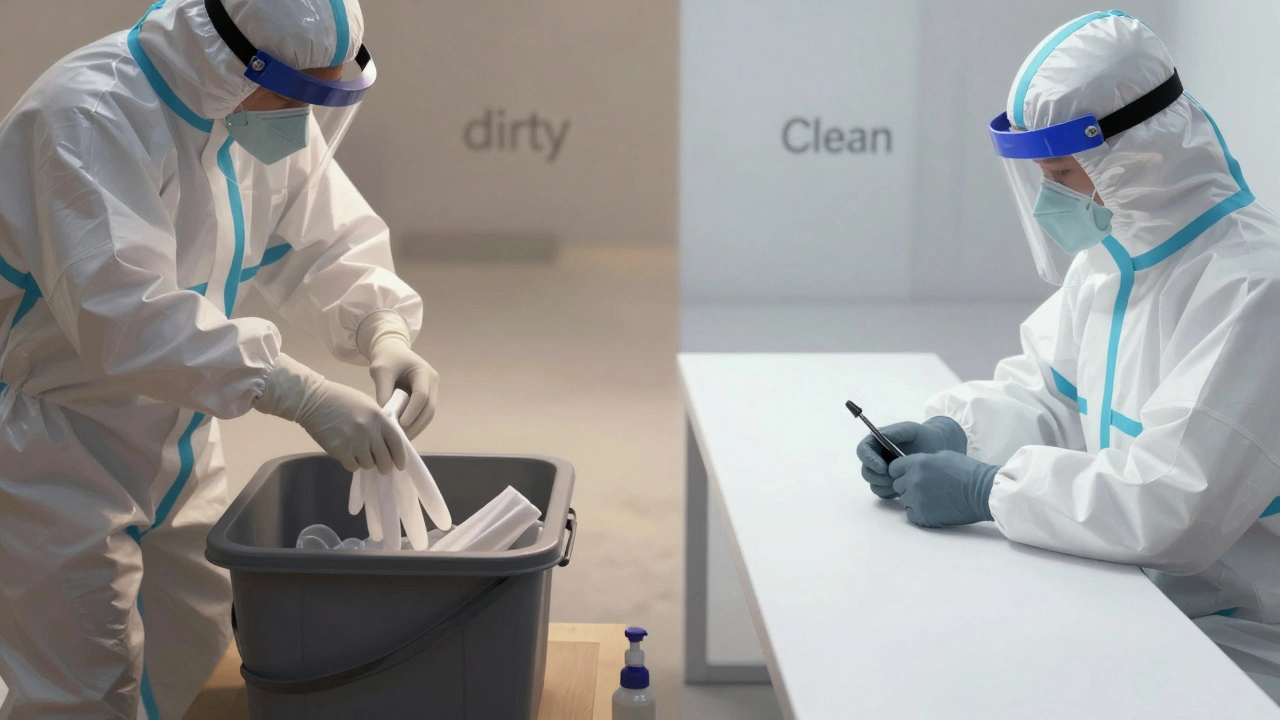
Preventing contamination starts before any tool touches evidence. Crime scene investigators must establish decontamination zonesdesignated safe areas where equipment and personal protective equipment (PPE) are cleaned, removed, and discarded to prevent cross-scene transfer. These zones act as buffer barriers between active investigation sites and clean operational spaces. At a residential burglary scene, the decon zone might be a corner of the garage. In complex multi-scene investigations, separate zones for each location prevent involuntary evidence transfer.
In laboratory settings, decontamination happens repeatedly throughout the workday. Work surfaces, tools, and gloves require cleaning after every case. Laboratories must implement strict policies: no food or drink near processing areas, mandatory glove changes between samples, and dedicated utensils for specific chemical techniques. Purchasing reagents from single-source vendors ensures purity, reducing variability that could mask contamination sources.
- Establish physical separation between dirty and clean zones
- Require full-face shields and nitrile gloves during all handling
- Log PPE usage times to track exposure windows
- Use UV lights to detect residual contaminants on surfaces
- Maintain air filtration systems rated HEPA H14 or higher
Evidence Sequencing: Order Matters More Than You Think
Not all evidence types demand equal care. Some degrade faster than others under chemical treatment. That’s why standard protocols dictate a precise order for collecting and analyzing materials at crime scenes:
- Trace materials like fibers and hairs
- Biological fluids such as blood or saliva
- Tool marks and footwear impressions
- Visible fingerprints
- Latent patterns requiring powder or chemical enhancement
This sequence protects sensitive evidence from being overwhelmed by more robust forms. For example, applying ninhydrin-a common developer for latent prints-to untreated paper first might destroy fragile ink residues needed for document examination. Similarly, using cyanoacrylate fuming too early can obscure underlying biological traces. Proper sequencing minimizes interference while maximizing recovery rates across all evidence categories.
ACE-V Process Vulnerabilities and Cognitive Bias Risks
Latent print examination follows the widely accepted ACE-V methodologyAnalysis, Comparison, Evaluation, and Verification framework used globally to assess fingerprint suitability and match likelihoods. While structured, this process introduces unique vulnerabilities. During the Analysis phase, examiners decide whether a print warrants comparison. If cognitive bias influences judgment-say, believing a suspect already fits other evidence-they may skip rigorous checks, increasing contamination risks through rushed procedures.
Cognitive bias affects decision-making subtly but profoundly. An examiner who expects a certain outcome might unconsciously ignore anomalies or fail to follow decontamination steps meticulously. Studies indicate that fatigue, stress, and inadequate training amplify these biases. To combat them, facilities should adopt blind review processes where secondary analysts evaluate findings independently, unaware of initial conclusions.
| Source Category | Specific Risk Factor | Mitigation Strategy |
|---|---|---|
| Personal Hygiene | Skin cell shedding onto evidence | Mandatory double-gloving and face masks |
| Equipment Reuse | Cross-contamination via shared brushes | Dedicated kits per technique/vendor batch |
| Environmental Conditions | Poor ventilation spreading airborne particles | HEPA filters + negative pressure rooms |
| Cognitive Fatigue | Rushed protocols due to workload pressure | Mandatory rest periods + peer reviews |
Chain of Custody Integrity: Protecting Chemical Evidence
Chemical evidence demands extra vigilance because improper storage accelerates degradation and contamination. Narcotics, explosives, and toxic substances must remain sealed in tamper-evident containers within climate-controlled vaults. Humidity fluctuations alone can alter molecular structures, rendering tests inconclusive. Any sign of mishandling opens doors for defense challenges.
Leakage poses another major threat. Containers left open during transport expose contents to ambient pollutants. Even minor spills inside storage units contaminate adjacent items. Facilities need regular inspections of sealing mechanisms and humidity monitors. Digital logging systems help track access histories, ensuring accountability at every stage.

Training Gaps and Competency Verification Needs
Despite standardized operating procedures, variations persist among examiners’ practices. Data from institutions like the Houston Forensic Science Center reveal inconsistencies in latent print processing despite identical guidelines. Why? Because competency verification often lacks depth. Annual refresher courses don’t replace continuous assessment.
Effective training programs incorporate simulated scenarios mimicking real-world pressures. Examiners practice under time constraints, noisy environments, and limited resources. Performance metrics focus not only on accuracy but also adherence to decontamination routines. Peer evaluations catch deviations early, fostering culture-wide improvement rather than individual correction.
Future-Proofing Forensic Practices
As technology advances, new methods emerge for detecting minute contaminants. Mass spectrometry now identifies trace chemicals invisible to traditional microscopy. AI-assisted image recognition flags suspicious overlaps automatically. Yet no system replaces disciplined habits. Investing in infrastructure upgrades alongside behavioral reforms creates resilient frameworks capable of adapting to evolving threats.
Ultimately, avoiding examiner-induced latents requires treating contamination prevention as integral-not optional-to forensic science. Every step, from scene arrival to final report submission, carries responsibility. Those committed to excellence understand that trust built today safeguards tomorrow’s verdicts.
What causes examiner-induced latent contamination?
It occurs when forensic workers unintentionally transfer their own fingerprints, skin cells, or other biological material onto evidence during processing. Causes include poor hygiene, reused equipment, insufficient decontamination, and cognitive biases leading to lax protocol adherence.
How do decontamination zones reduce contamination risk?
Decontamination zones isolate potentially contaminated gear and clothing from clean workspaces. They ensure thorough cleaning/removal of PPE before entering sterile areas, preventing cross-scene transfers and maintaining evidentiary integrity.
Why does evidence sequencing matter in contamination control?
Sequencing prioritizes delicate evidence types before applying harsh chemicals or powders. Processing trace materials first avoids destroying fragile components later required for comprehensive analysis, minimizing loss and contamination overlap.
Can cognitive bias lead to contamination errors?
Yes. Biased expectations cause examiners to overlook procedural details, rush through steps, or neglect decontamination. Blind reviews and independent verifications mitigate bias impacts by introducing objective oversight layers.
What role does chain of custody play in preventing contamination?
Proper chain of custody ensures evidence stays sealed, logged, and stored correctly throughout its lifecycle. Tamper-evident packaging and restricted-access facilities minimize unauthorized handling, protecting against both intentional and accidental contamination.