Imagine finding a crucial piece of evidence at a crime scene-a bloodstain on a shirt or a hair follicle on a jacket. You bag it, label it, and send it to the lab. But what if that evidence has already started rotting away before it even reaches the microscope? In forensic science, time isn’t just a factor; it’s an enemy. DNA sample degradation is the biochemical breakdown of genetic material into smaller fragments over time, rendering it useless for identification. This process doesn't happen overnight, but it happens faster than most people realize. If you are handling biological evidence, whether for a legal case, a paternity test, or personal curiosity, understanding how quickly DNA dies is the difference between getting an answer and getting nothing.
The Biology of Decay: Why DNA Breaks Down
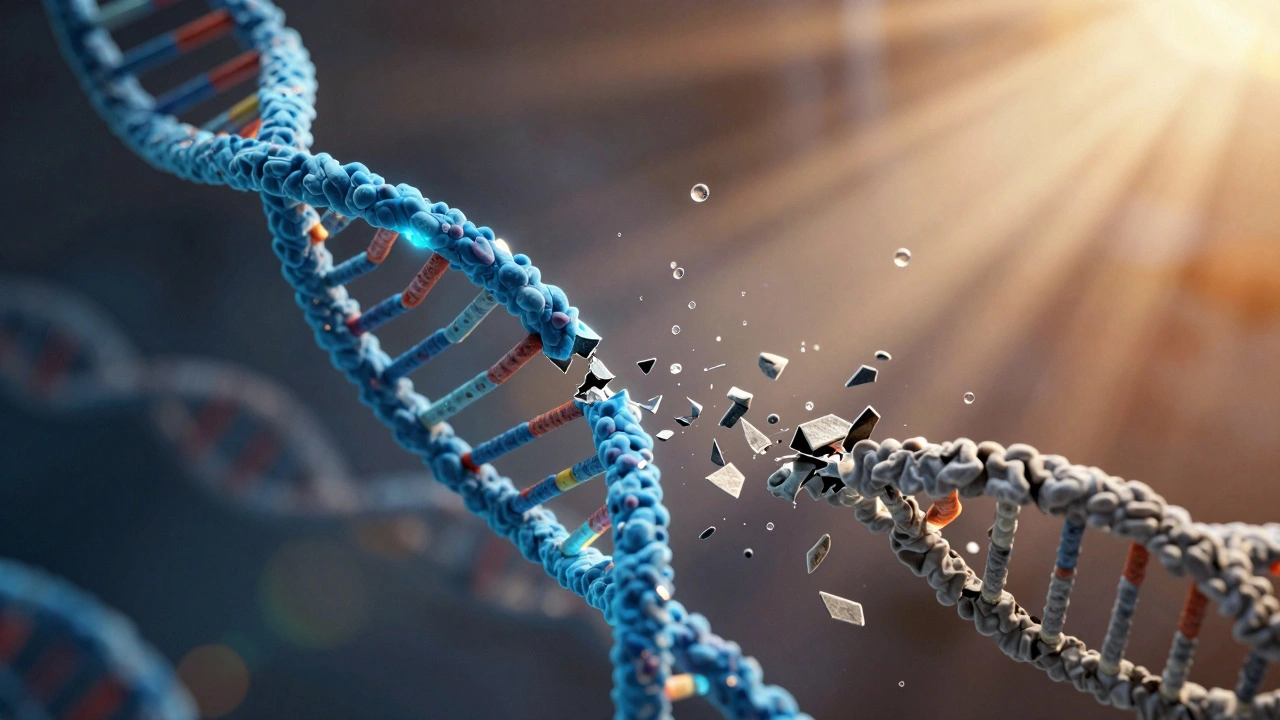
DNA isn’t indestructible. It’s a long, fragile chain of molecules held together by chemical bonds. Think of it like a zipper. Over time, that zipper starts to snap apart. According to research from QIAGEN, a leading biotechnology company, four main mechanisms drive this destruction:
- Hydrolysis: Water molecules sneak in and cleave the phosphodiester bonds in the DNA backbone. This happens fastest in acidic conditions.
- Enzymatic Degradation: DNases-enzymes naturally present in cells or introduced by bacteria and mold-chew up the DNA strands.
- Physical Shearing: Rough handling, vigorous mixing, or repeated freeze-thaw cycles physically fracture the DNA molecules.
- Adsorption: DNA sticks to the walls of storage tubes, reducing the amount available for testing.
But biology is only half the story. The environment plays the starring role in accelerating these processes. Sunlight (specifically UV radiation), heat, and humidity act as turbochargers for decay. When you leave a sample out in the sun or store it in a damp basement, you aren’t just waiting for results-you’re actively destroying them.
How Long Does DNA Last? A Timeline by Sample Type
Not all DNA samples are created equal. Some degrade in days; others survive for centuries. The longevity depends heavily on the source material and how it was stored. Here is what the data from providers like Validity Genetics tells us about real-world timelines:
| Sample Type | Ideal Storage | Viability Duration | Risk Factors |
|---|---|---|---|
| Buccal Swab (Cheek Cells) | Dry, Room Temp | Up to 6 months | Moisture, bacterial growth |
| Buccal Swab (Refrigerated) | Cool, Dry | Over 1 year | Condensation, power failure |
| Hair with Root | Dry, Cool | Years | Root loss, humidity |
| Hair Shaft (No Root) | Any | Minimal/None | Lack of nuclear DNA |
| Dried Blood Stains | Dry, Cool | Several Years | Mold, heat exposure |
| Semen/Saliva on Fabric | Air-dried, Paper Envelope | Weeks to Months | Washing, sunlight, moisture |
| Bones and Teeth | Protected Environment | Decades to Centuries | Extreme heat, soil acidity |
Notice the pattern? Dryness is king. The University of British Columbia conducted a study on DNA stability that found samples stored at room temperature without proper drying totally evaporated within six months, with visible degradation appearing by month nine. This highlights a critical point: if your sample isn’t dry, it won’t last.
The Forensic Nightmare: Interpreting Degraded Results
When DNA degrades, it doesn’t just disappear. It breaks into smaller pieces. This creates a specific problem for forensic analysts using Short Tandem Repeat (STR) analysis-the standard method for identifying individuals. The National Institute of Justice (NIJ), which trains forensic professionals, explains that degradation affects larger DNA fragments first.
In a healthy DNA profile, the peaks on an electropherogram (the graph showing DNA markers) are roughly even in height. But when degradation occurs, those peaks slope downward from left to right. The larger STR loci fail to amplify because the DNA strands are too short. The NIJ notes that this "downward slope" is the hallmark of degradation. If the sample is severely degraded, the peaks become so low they merge into background noise, resulting in a complete failure to generate a profile.
This is particularly tricky in mixed samples-like a struggle where two people’s DNA is present. One person’s DNA might be fresh, while the other’s is degraded due to environmental exposure. Analysts must untangle these differing degradation rates, which can complicate interpretation and weaken the evidentiary value in court.
How to Stop the Clock: Best Practices for Preservation
You can’t stop time, but you can slow down the decay. Whether you are a crime scene investigator, a lawyer preserving evidence, or someone conducting a private relationship test, follow these rules derived from QIAGEN protocols and Validity Genetics guidelines:
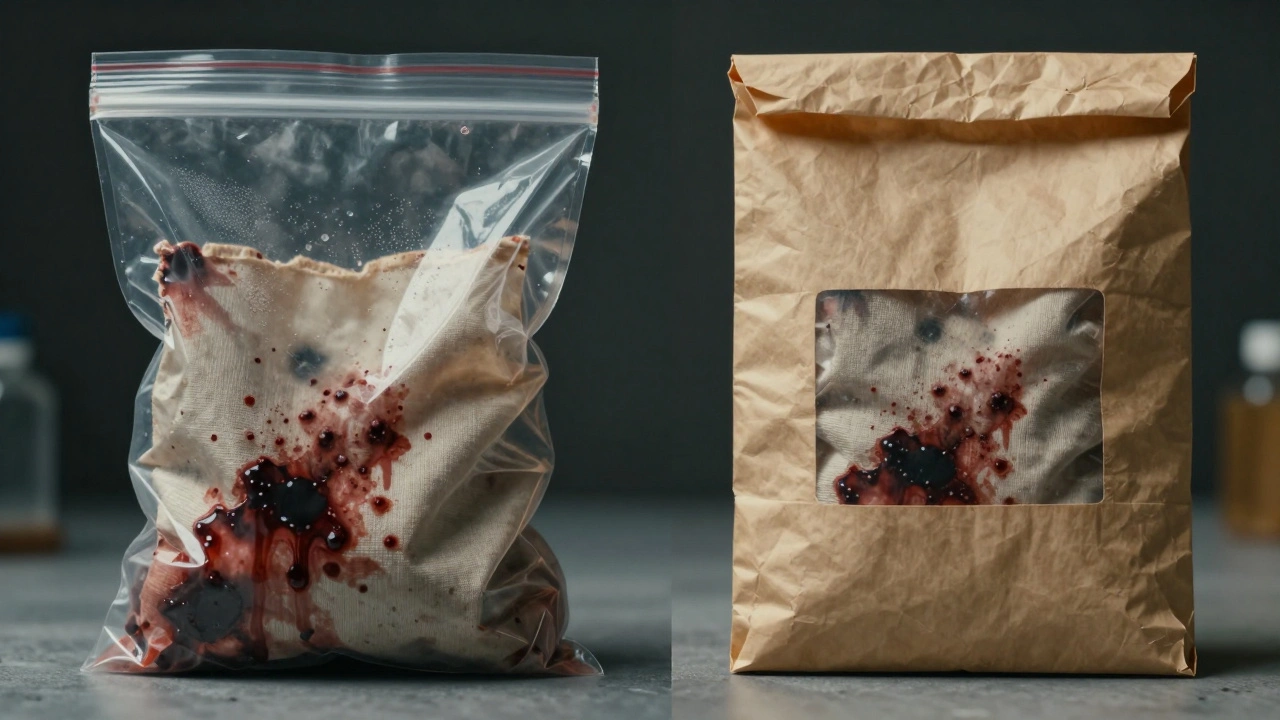
- Air-Dry Everything: Never seal a wet sample. Moisture breeds bacteria and mold, which eat DNA. Let swabs, bloodstains, and fabrics air-dry completely before packaging.
- Use Paper, Not Plastic: This is the most common mistake. Plastic bags trap moisture and create a greenhouse effect for bacteria. Always use paper envelopes or breathable containers. Paper allows residual moisture to escape.
- Keep It Cool and Dark: Store samples in a cool, dry place away from direct sunlight. UV radiation breaks DNA bonds rapidly. For long-term storage, refrigeration (for buccal swabs) or ultra-low freezing (-30°C to -90°C for purified DNA) is ideal.
- Avoid Freeze-Thaw Cycles: If you must freeze samples, do it once. Repeated thawing and freezing cause physical shearing of the DNA strands. Aliquot (divide) your samples into smaller portions so you only thaw what you need.
- Prevent Contamination: Use nuclease-free tips and tubes. Keep work areas clean. Even trace amounts of enzymes from your own skin or breath can degrade the sample.
For field collections, such as infidelity tests involving used tissues or clothing, the window is narrow. These non-standard samples are fragile. Handle them minimally, avoid washing them, and get them to a lab as soon as possible. Processing times for these complex samples often take 5-7 business days due to the extra extraction steps required.
What Happens When DNA Is Too Old?
If a sample is severely degraded, does that mean the case is dead? Not necessarily. Modern forensics has adapted. Techniques like probabilistic genotyping allow analysts to interpret partial profiles from degraded samples that would have been rejected years ago. Additionally, mitochondrial DNA (mtDNA) testing can sometimes succeed when nuclear DNA fails, though it offers less individual specificity.
However, there are limits. As noted by the National Center for Biotechnology Information (NCBI), even ancient DNA recovered from thousands-year-old remains is invariably degraded. While we can extract sequences, the error rates are higher, and the information is incomplete. In modern forensic contexts, a highly degraded sample might yield a partial match, which is far less conclusive than a full profile. It shifts the burden of proof and requires more corroborating evidence.
Frequently Asked Questions
Can DNA be extracted from a hair shaft without the root?
Generally, no. Hair shafts contain very little nuclear DNA, which is what is used for standard forensic identification. They may contain mitochondrial DNA, but this is inherited maternally and cannot uniquely identify an individual. For reliable results, you need the hair follicle (root).
Why shouldn't I put DNA samples in plastic bags?
Plastic traps moisture. Even if a sample looks dry, residual humidity gets trapped inside the bag, creating a perfect environment for bacteria and mold to grow. These microorganisms produce enzymes that rapidly degrade DNA. Paper envelopes allow the sample to breathe and stay dry.
How does sunlight affect DNA evidence?
Ultraviolet (UV) radiation from sunlight causes photochemical damage to DNA, breaking the chemical bonds that hold the molecule together. Exposure to direct sunlight can significantly accelerate degradation, making samples collected outdoors more vulnerable than those kept indoors.
What is the best way to store a buccal swab for a paternity test?
Allow the swab to air-dry completely after collection. Place it in the provided paper envelope. Store it in a cool, dry place at room temperature for up to 6 months. For longer storage, refrigerate it, but ensure it is sealed in a way that prevents condensation.
Can degraded DNA still be used in court?
It depends on the quality of the remaining profile. Partial profiles can be admitted as evidence, but their weight may be challenged. Experts must explain the degradation patterns (such as peak height drop-off) to show that the results are reliable despite the breakdown. Severely degraded samples with no amplifiable regions cannot be used.