Traditional stringing is a manual technique used in bloodstain pattern analysis to determine the origin of a blood droplet by connecting multiple points with physical strings. While effective for simple scenarios, it becomes cumbersome, time-consuming, and prone to human error when dealing with complex scenes or high volumes of data. As forensic laboratories move toward digital workflows, investigators are increasingly turning to modern alternatives that offer greater precision and efficiency.
This article explores two primary technological replacements for traditional stringing: laser projection systems and computer-based software algorithms. We will examine how these methods work, their specific advantages over physical strings, and where they might still fall short. By understanding the mechanics behind these tools, you can better decide which approach suits your laboratory's needs and case requirements.
The Limitations of Traditional Stringing
To understand why alternatives are gaining traction, we first need to look at what makes traditional stringing difficult. The method involves placing pins on the floor or walls at the location of individual blood drops. Strings are then tied to these pins and pulled taut until they intersect at a single point in three-dimensional space. This intersection represents the area of convergence, from which the angle of impact can be calculated to find the area of origin.
- Physical Constraints: In large rooms or outdoor scenes, stretching long strings across obstacles like furniture or debris is physically demanding.
- Human Error: Slight misalignments in pin placement or tension in the string can shift the convergence point significantly, leading to inaccurate results.
- Documentation Challenges: Capturing the exact position of the string intersection for court reports requires careful photography and measurement, which is often subjective.
- Time Consumption: For patterns with dozens or hundreds of droplets, manually tying and adjusting strings can take hours.
These limitations highlight the need for methods that reduce physical manipulation and increase mathematical consistency.
Laser Projection Systems: Visualizing Convergence
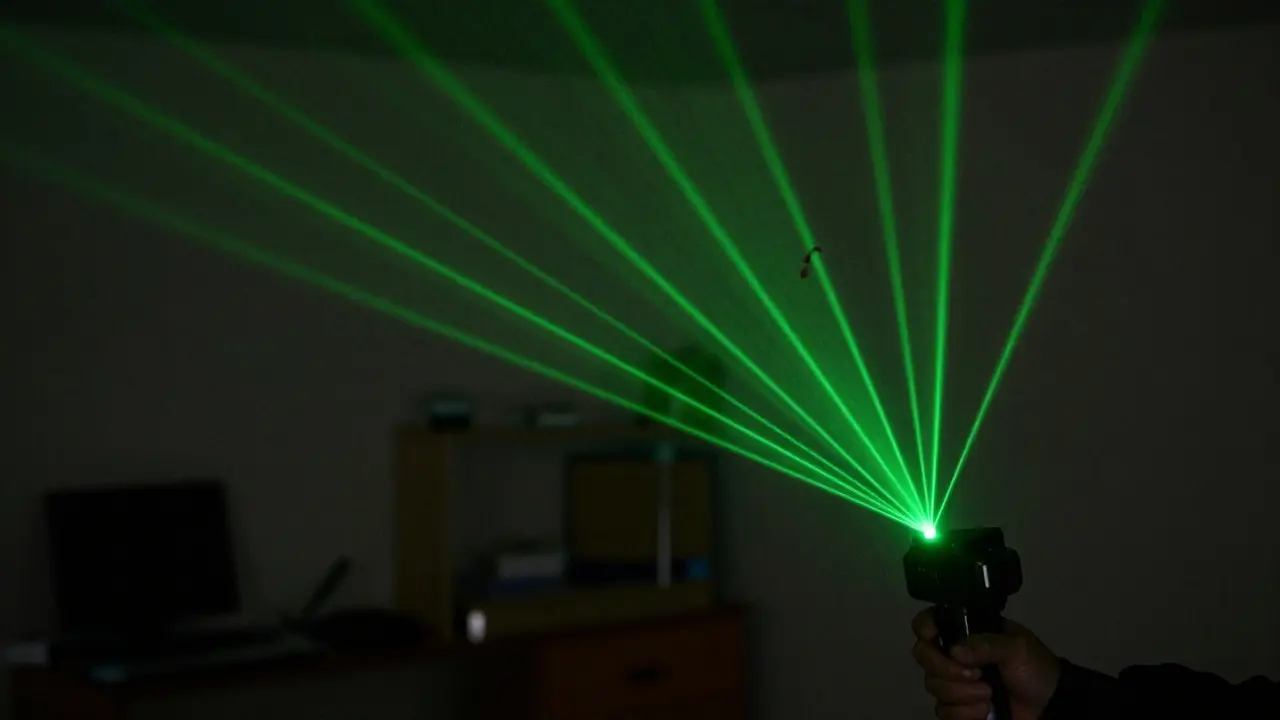
Laser projection systems are portable devices that project lines of light onto surfaces to simulate the paths of blood droplets without using physical strings. Instead of tying knots, an investigator uses a handheld laser unit or a tripod-mounted device to aim beams at the base of each blood drop. When multiple beams are aimed correctly according to the angle of impact, they visually converge in mid-air or on a surface, indicating the origin.
There are generally two types of laser tools used in this context: single-beam pointers and multi-beam projectors. Single-beam units require the user to manually adjust the angle for each drop, while more advanced multi-beam projectors can emit several lines simultaneously, allowing for quicker visual assessment of complex patterns.
The primary benefit of laser projection is its non-invasive nature. You don't need to drill holes for pins or leave adhesive marks on walls. This is particularly useful in crime scenes where preservation of evidence is critical. Furthermore, lasers provide immediate visual feedback. If a beam doesn't align with the others, it’s easy to see the discrepancy instantly, whereas with strings, you might miss a slight deviation until you step back and look at the whole setup.
However, laser systems have their own quirks. They are highly sensitive to ambient light. In a brightly lit room or under strong sunlight, the red or green laser beams may become invisible, rendering the tool useless. Additionally, laser projection is largely a qualitative tool; it shows you *where* the convergence is, but it doesn’t automatically calculate the precise coordinates. You still need to measure the distance and height to document the findings formally.
Software-Based Algorithms: Digital Precision
While lasers offer visual aid, Bloodstain Pattern Analysis (BPA) software is computer programs that use trigonometric calculations to determine the area of origin based on digital measurements of blood droplets. These programs range from simple calculator apps to sophisticated 3D modeling suites that integrate with photogrammetry data.
The core function of BPA software is to replace the mental math and manual string adjustments with automated calculations. The workflow typically looks like this:
- Data Collection: The investigator measures the width and length of selected blood droplets to calculate the angle of impact.
- Input: These angles, along with the XY coordinates of each drop’s base, are entered into the software. Modern systems allow this via direct input or by scanning photographs with known scale references.
- Calculation: The software uses vector geometry to project lines backward from each drop. It calculates the intersection of these vectors in 3D space.
- Output: The program provides the X, Y, and Z coordinates of the area of origin, often with a confidence interval or error margin.
Popular commercial and open-source tools include specialized modules within broader forensic CAD packages as well as standalone applications designed specifically for BPA. Some advanced software even allows for reverse engineering, where you input a hypothetical origin point to see if it matches the observed pattern, which is incredibly useful for courtroom demonstrations.
The advantage here is repeatability. Unlike a string setup that might sag or shift, a digital calculation remains constant unless the input data changes. This objectivity strengthens the scientific basis of the testimony. Moreover, software can process far more data points than a human can manage with strings, reducing statistical bias.
Comparing the Methods: A Practical Overview
Choosing between traditional stringing, laser projection, and software depends on the resources available and the complexity of the case. The table below summarizes the key differences.
| Feature | Traditional Stringing | Laser Projection | Software-Based BPA |
|---|---|---|---|
| Precision | Low to Medium (dependent on operator) | Medium (visual only) | High (mathematical) |
| Speed | Slow | Fast (for visualization) | Very Fast (after data entry) |
| Cost | Minimal (pins, string) | Medium ($500 - $2,000 per unit) | High (License fees $1,000+) |
| Documentation | Difficult (photos required) | Moderate (video/photo of beams) | Easy (digital reports/charts) |
| Light Sensitivity | None | High (beams hard to see in light) | None |
| Best Use Case | Simple patterns, low-budget labs | Rapid scene assessment, training | Complex cases, expert testimony |
Notice that no single method is universally superior. A common hybrid approach is to use laser projection for initial scene evaluation to get a rough idea of the origin, and then switch to software for final documentation and court-ready calculations. This combines the speed of visual confirmation with the rigor of digital math.
Implementation Tips for Forensic Teams
If you are considering moving away from exclusive reliance on stringing, here are some practical steps to ensure a smooth transition.
Validate Your Tools. Before using any new laser or software system on a casework file, run validation tests. Compare the outputs of the new method against a known standard (like a controlled spray test). Document any discrepancies. Courts appreciate knowing that your equipment has been tested and calibrated.
Standardize Data Entry. The biggest bottleneck in software-based BPA is data entry. If you are typing in coordinates manually, errors creep in quickly. Invest in digital measuring tools or photogrammetry setups that can export coordinate data directly into your BPA software. This eliminates transcription errors and speeds up the process.
Train on Hybrid Workflows. Don't discard stringing entirely. It remains a valuable teaching tool for trainees to understand the underlying physics. However, for operational casework, train your analysts to use lasers for quick checks and software for final reports. This dual-competency ensures that if technology fails (e.g., dead battery, software crash), you still have a fallback plan.
Consider Environmental Factors. Remember that lasers struggle in bright light. If you frequently work in outdoor scenes or poorly lit basements, consider infrared lasers or rely more heavily on software, which is unaffected by lighting conditions.
Future Trends in Digital BPA
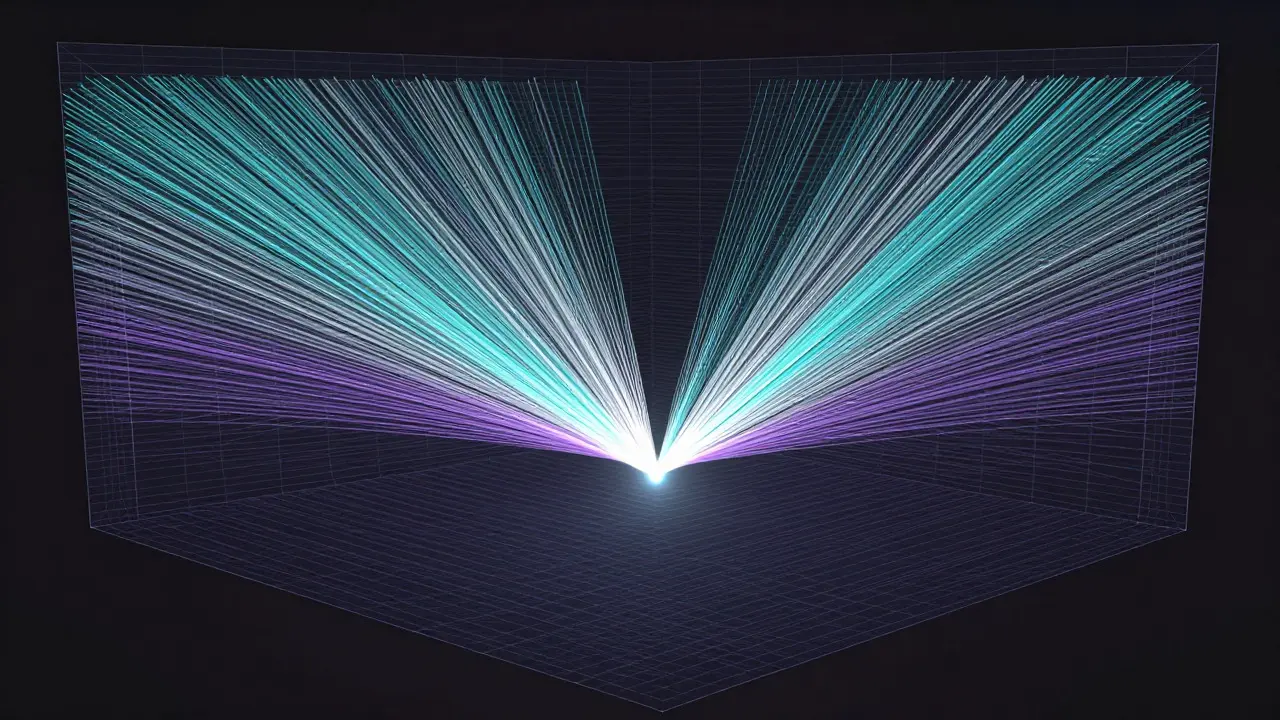
The field is moving toward full automation. Emerging technologies involve using smartphone cameras with augmented reality (AR) overlays. Imagine pointing your phone at a bloodstain, and the app instantly calculates the angle of impact and projects a virtual line in real-time. Companies are already developing AR glasses that could overlay these trajectories directly onto the investigator's view, effectively merging the visual immediacy of lasers with the computational power of software.
Additionally, machine learning algorithms are being trained to recognize bloodstain shapes and estimate angles automatically from photos. While not yet fully autonomous, these AI-assisted tools are becoming reliable enough to suggest starting values for manual verification, further reducing the time spent on basic calculations.
Frequently Asked Questions
Is stringing obsolete?
Not entirely. Stringing is still useful for simple patterns, training purposes, and situations where electronic equipment might fail or be unavailable. However, for complex cases requiring high precision and efficient documentation, it is being replaced by laser and software methods.
Which is more accurate: lasers or software?
Software is generally more accurate because it relies on mathematical calculations rather than visual alignment. Lasers provide a good visual approximation, but the final determination of the origin point usually requires the precision offered by software algorithms.
Do I need special training to use BPA software?
Yes. While the software handles the math, the user must correctly identify droplets, measure dimensions accurately, and input data properly. Incorrect input leads to incorrect output (garbage in, garbage out). Training should focus on both the software interface and the fundamental principles of bloodstain dynamics.
Can laser projection be used in bright daylight?
It is difficult. Standard red or green lasers are often washed out by strong sunlight. In such environments, software-based methods or indoor assessments are preferred. Some high-powered blue lasers exist but are less common and more expensive.
How do courts view software-generated results?
Courts generally accept software results if the methodology is validated and the analyst can explain the process. The key is transparency. Showing the raw data inputs and the algorithmic logic helps establish reliability. Many experts now prefer presenting digital models in court as they are clearer and more reproducible than physical string setups.