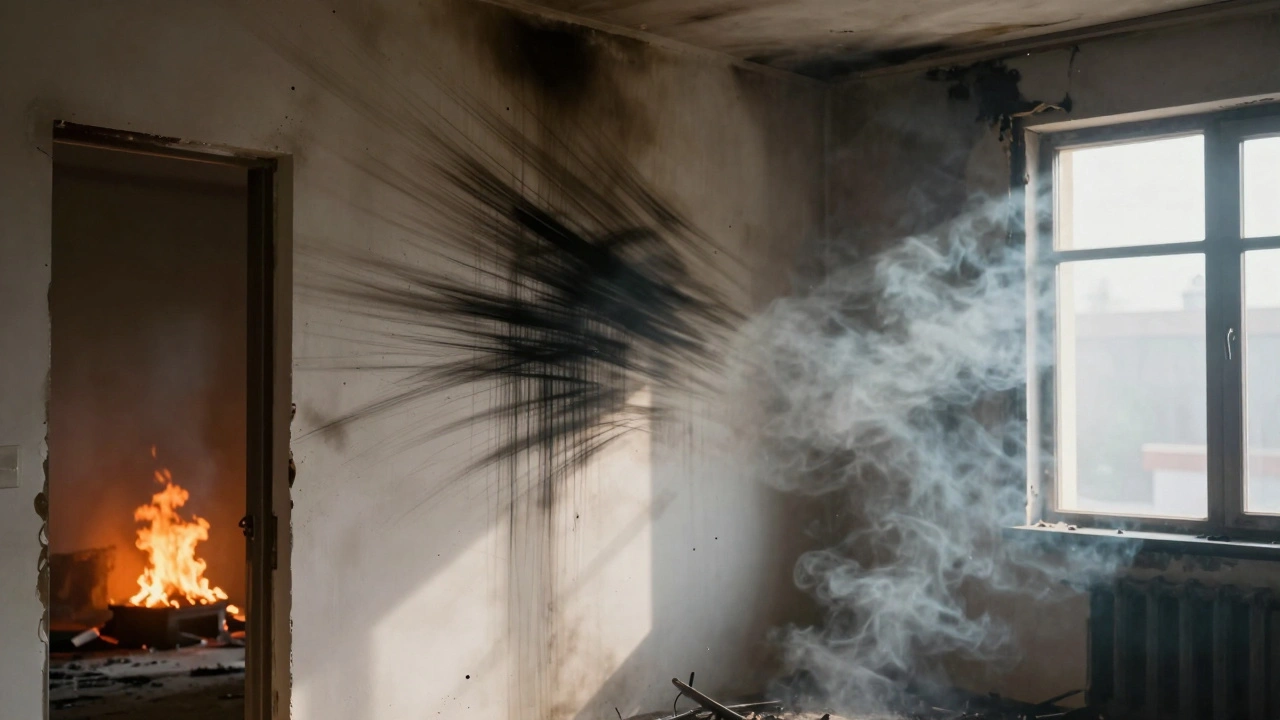
Have you ever walked into a room after a fire and noticed that the black soot on the walls looks like it’s flowing in one direction? It isn’t just random mess. Those dark streaks are actually a map of the air moving through the building during the blaze. For decades, fire investigators relied heavily on burn patterns to find where a fire started. But modern research has shown us something crucial: ventilation-air coming in through doors or windows-drives smoke and soot in ways that can completely fool traditional methods.
Understanding ventilation-driven traces is no longer optional for accurate fire reconstruction. If you misread these airflow signatures, you might point the finger at an accelerant or multiple ignition points when there was only one. This article breaks down how smoke moves, why soot sticks where it does, and how you can use this physics-based knowledge to cut through the noise of a chaotic scene.
The Physics of Soot: Why It Travels Far and Wide
To understand where soot ends up, we first need to look at what soot actually is. In simple terms, soot consists of tiny particles of elemental carbon created by incomplete combustion. These aren’t big, heavy chunks that fall straight down like ash. Instead, they are incredibly small.
Research indicates that primary soot particles have diameters typically between 10-50 nanometers. These cluster together to form aggregates roughly 0.1 to 1 micrometer in size. Because they are so light, their settling velocity is often measured in millimeters per second. That means gravity barely affects them compared to the force of moving air.
If you have even a slight draft in a room, these particles will ride that current rather than drop to the floor. They stay suspended in the air as part of the PM2.5 fraction (particles ≤2.5 µm). This physical reality explains why soot can travel hundreds of meters indoors before depositing. The pattern you see on a wall tells you about the air currents, not necessarily the proximity to the flame.
Buoyancy vs. Ventilation: The Battle for Flow Paths
In the early stages of a fire, heat is the main driver. Hot gases rise because they are less dense than the cooler air around them. This creates a buoyant plume that pushes smoke upward until it hits the ceiling, then spreads horizontally. This forms a stratified layer of smoke near the top of the room.
However, once openings appear-whether from broken windows, open doors, or HVAC systems-the rules change. Air rushes in to feed the fire, creating high-velocity jets. Studies from the UL Firefighter Safety Research Institute (FSRI) show that opening a single door or window can shift gas velocities to several meters per second at doorway levels.
This transition marks the shift from a fuel-controlled fire to a ventilation-controlled fire. When oxygen becomes the limiting factor, the introduction of fresh air doesn't just make the fire burn hotter; it redirects the flow of smoke. The smoke no longer just floats; it streams. It shoots toward exhaust openings, carrying soot with it in concentrated bands. This creates directional staining that aligns with the path of least resistance for the air, which is often far from the actual origin of the fire.
Hidden Highways: Concealed Voids and Ceiling Plenums
One of the most misleading aspects of ventilation-driven traces involves concealed spaces. Many buildings have voids above suspended ceilings or below raised floors. You might assume that if a fire is in Room A, the soot damage will be heaviest in Room A. But that’s not always true.
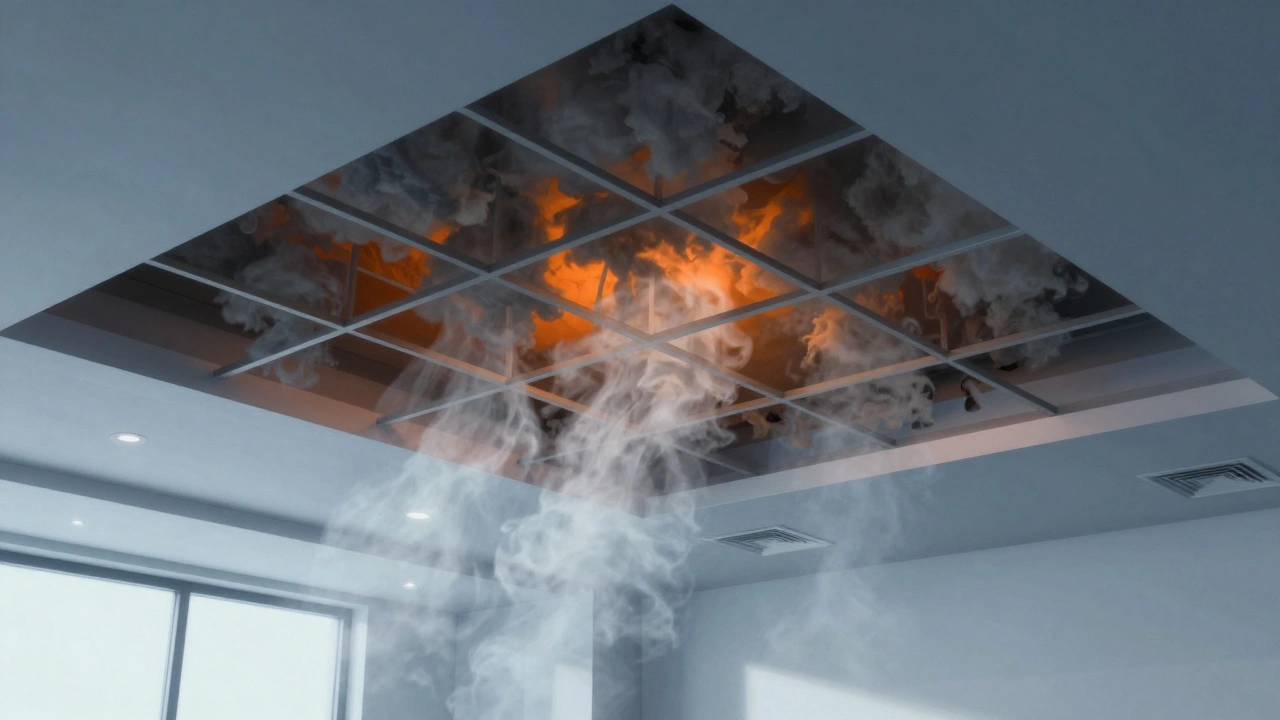
National Bureau of Standards (NBS) studies conducted decades ago demonstrated this clearly. In tests involving suspended ceilings, researchers found that smoke entered the ceiling plenum through small gaps around tiles and light fixtures long before flames broke through. Once inside the plenum, pressure differences drove the smoke across the entire building.
The result? Heavy soot accumulation in rooms far away from the fire origin, specifically around ceiling penetrations, diffusers, and grid lines. An investigator looking only at the visible damage might conclude the fire started in those distant rooms. But the truth is, the ceiling void acted as a hidden highway, redistributing smoke based on pressure gradients rather than direct flame contact.
| Factor | Traditional Burn Pattern View | Ventilation-Driven Trace Reality |
|---|---|---|
| Primary Driver | Heat intensity and duration | Airflow velocity and direction |
| Soot Location | Closest to ignition source | Along flow paths (doors, vents) |
| Clean Areas | Indicates lack of fire | Shielded from high-velocity jets |
| Pattern Shape | Radial or uniform | Directional, V-shaped, or linear |
The Modern Fire Problem: Speed and Synthetics
We cannot ignore how building materials and furnishings have changed. Older homes used cotton, wool, and wood. Modern interiors are packed with plastics, foams, and synthetics. FSRI experiments in the early 2010s highlighted a stark difference: modern contents can transition from ignition to flashover in under five minutes.
This speed changes everything for ventilation dynamics. In a legacy home, a fire might grow slowly, allowing natural stratification. In a modern home, the rapid release of energy creates intense pressure differentials almost instantly. If a firefighter opens a door too early, or if a window fails due to heat stress, the resulting venting event supercharges the smoke movement.
The US National Institute of Justice (NIJ) warns that these ventilation actions can alter burn patterns enough to mislead investigators. A clean-burn area near an inlet might look like an unburned zone, while heavy charring along an outflow path might look like an accelerant trail. Without understanding the timing of ventilation events, you risk interpreting flow-path signatures as evidence of arson.
Electronics and Corrosion: The Silent Evidence
Soot doesn’t just stain walls; it destroys electronics. The US Nuclear Regulatory Commission (NRC) reviewed literature showing that smoke particles deposit on insulating surfaces, changing surface resistivity. This can lead to leakage currents or short circuits even if the temperature never gets high enough to melt the plastic casing.
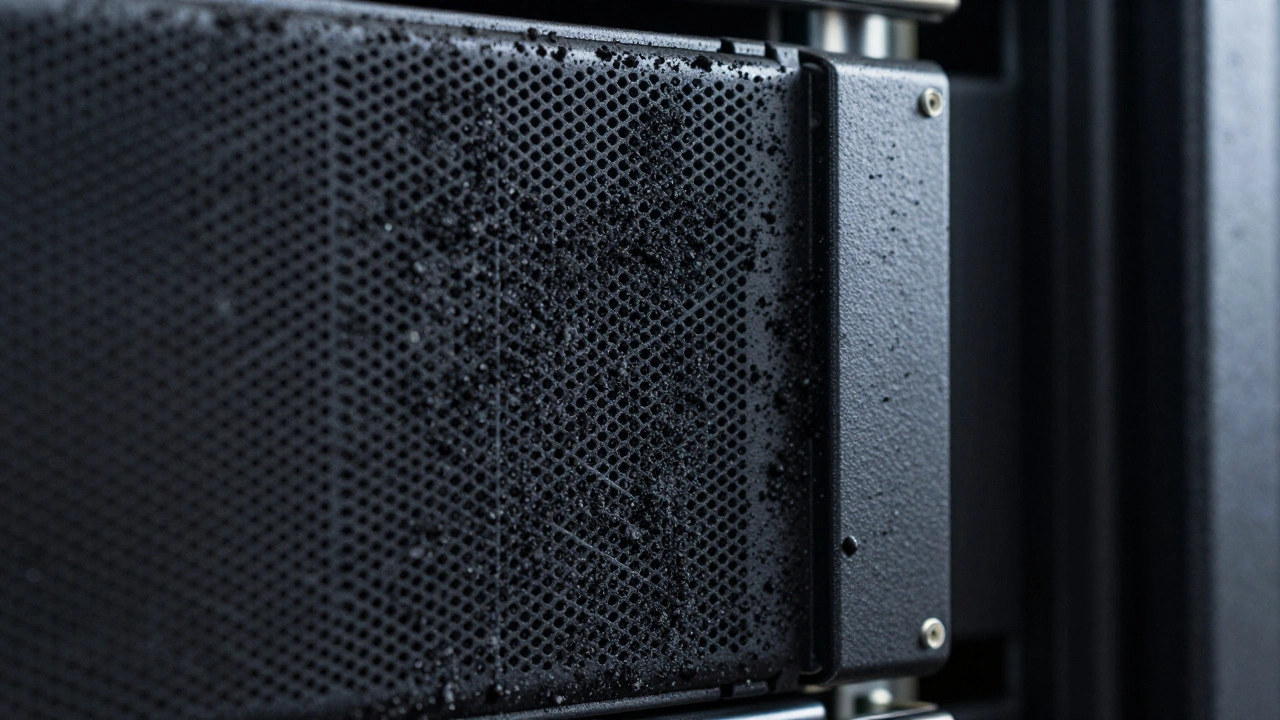
Here’s the key for investigators: deposition efficiency depends on airflow. Soot-laden smoke transported by HVAC flows or pressure-driven ventilation leaves visible dark films on cabinets, circuit boards, and connectors. Crucially, these deposits often appear on the intake sides of equipment enclosures or around filter housings where turbulence is highest.
If you see heavy soot contamination on the front of a server rack but the back is clean, don’t assume the fire started in front of the rack. Look at the airflow. The ventilation system likely pulled smoke into the intake, leaving a trace that reveals the direction of the air stream during the incident.
Modeling the Invisible: CFD and Design Guidance
Engineers use Computational Fluid Dynamics (CFD) to predict smoke movement before a fire even happens. The Smoke Control Association (SCA) issued guidance in June 2021 emphasizing that accurate modeling requires resolving specific flow features: the thermal plume, the smoke layer interface, and jets from supply and extract vents.
Why does this matter to an investigator? Because real fires behave according to these same physical laws. If a CFD model predicts that smoke will back-layer down a corridor due to a specific vent configuration, you should expect to see corresponding soot traces in a real-world scenario. The SCA notes that inappropriate boundary conditions in models can lead to erroneous predictions of which doors become inlets or outlets. Similarly, in a real investigation, failing to account for the actual state of doors and windows (open vs. closed) leads to incorrect interpretations of soot distribution.
The goal of smoke control design is often to maintain a clear layer of at least 2 meters above floor level. When this fails, the soot deposition patterns reflect exactly where the tenable conditions were lost. By reverse-engineering these patterns using fluid dynamics principles, you can reconstruct the ventilation state of the building at the time of the fire.
Practical Steps for Interpreting Traces
So, how do you apply this on the ground? Here is a checklist to help you separate ventilation artifacts from true origin indicators:
- Map the Openings: Document every door, window, and vent. Note which were open, closed, or failed. Identify potential inflow (low points) and outflow (high points) paths.
- Look for Directionality: Are the soot stains linear or V-shaped? Do they point toward a window or door? Radial patterns suggest proximity to heat; linear patterns suggest airflow transport.
- Check Concealed Spaces: Inspect ceiling plenums and wall cavities. Heavy soot around light fixtures or diffusers may indicate spread through voids, not direct exposure.
- Analyze Electronics: Check the orientation of soot on equipment. Intake-side contamination reveals airflow direction independent of heat damage.
- Consider Timing: Did firefighters ventilate the structure early? Late-stage ventilation can create new burn patterns that overwrite early-stage evidence.
By integrating these steps, you move beyond guesswork. You start seeing the scene not as a static picture of destruction, but as a frozen moment in a dynamic fluid process.
What causes V-shaped burn patterns if not accelerants?
V-shaped patterns are often caused by ventilation-driven flows. As hot smoke rises and hits the ceiling, it spreads outward. If there is a low inlet (like a door) and a high outlet (like a window), the airflow creates a wedge of cleaner air near the inlet and heavier soot deposition along the path of the smoke jet. This mimics the look of an accelerant pour pattern but is actually a signature of air movement.
How does closing a door affect soot deposition?
Closing a door significantly limits smoke spread. FSRI research shows that closed rooms experience much lower temperatures and lighter, more diffuse soot staining compared to open rooms, even if they are adjacent to the fire compartment. The door acts as a barrier to the high-velocity flow paths that carry the majority of soot particles.
Why is soot found in rooms far from the fire origin?
Soot particles are extremely small (PM2.5 range) and light, allowing them to remain suspended in air for long periods. They can travel through concealed voids like ceiling plenums or via HVAC systems driven by pressure differences. This allows soot to deposit in remote areas, creating misleading evidence of fire spread.
Can ventilation create false evidence of arson?
Yes. Opening a window or door during a ventilation-limited fire can rapidly intensify combustion and redirect heat and smoke. This can produce clean-burn areas near inlets and heavy charring along outflow paths. If investigators interpret these later-formed patterns as originating from multiple ignitions, they may incorrectly conclude arson occurred.
What role do ceiling plenums play in smoke movement?
Ceiling plenums act as hidden conduits. Smoke can enter these voids through small gaps around tiles or penetrations well before flames breach the ceiling. Pressure differences then drive the smoke across the building, leading to heavy soot accumulations near leakage paths such as light fixtures and diffusers in rooms far from the fire source.