Why Your Shotgun Might Be Missing (Even When You're Not)
You aim perfectly. You follow the target. You pull the trigger. And yet, the clay shatters inches to your left, or worse, doesn't break at all because you missed the vital area by a hair's breadth. It’s frustrating, especially when you know your fundamentals are solid. The problem likely isn’t your eye-hand coordination; it’s the invisible relationship between your shotgun, a firearm designed to fire a shell containing multiple projectiles called shot, your ammunition, and the choke tube installed in the barrel.
Most shooters assume that if they buy a "Modified" choke and load standard #7.5 shot, the gun will perform exactly as advertised on the box. That assumption is dangerous. Every shotgun behaves differently due to manufacturing tolerances, barrel length, and even the specific brand of wad used in the cartridge. Shot pattern testing is the only way to know where your pellets actually land versus where you think they do. Without this data, you are essentially guessing with every shot.
The Core Metrics: What You Need to Measure
Pattern testing isn't just about seeing if you hit the target. It’s a systematic evaluation of three distinct metrics: point of impact, pattern percentage, and pattern quality. Understanding these separates guesswork from precision shooting.
- Point of Impact (POI): This is the center of your shot group relative to where you were aiming. Ideally, the densest part of the pattern should align with your sight picture. Some shooters prefer a slightly high POI for hunting birds that fly upward, while trap shooters might want it dead-center. If your POI is consistently low or off to one side, your gun may have a bent barrel or improper mounting, but more often, it’s just how that specific gun shoots.
- Pattern Percentage: This measures density. It tells you what fraction of the total pellets landed within a specific circle. A higher percentage means a tighter group, which is better for long-range targets but risky for close ones.
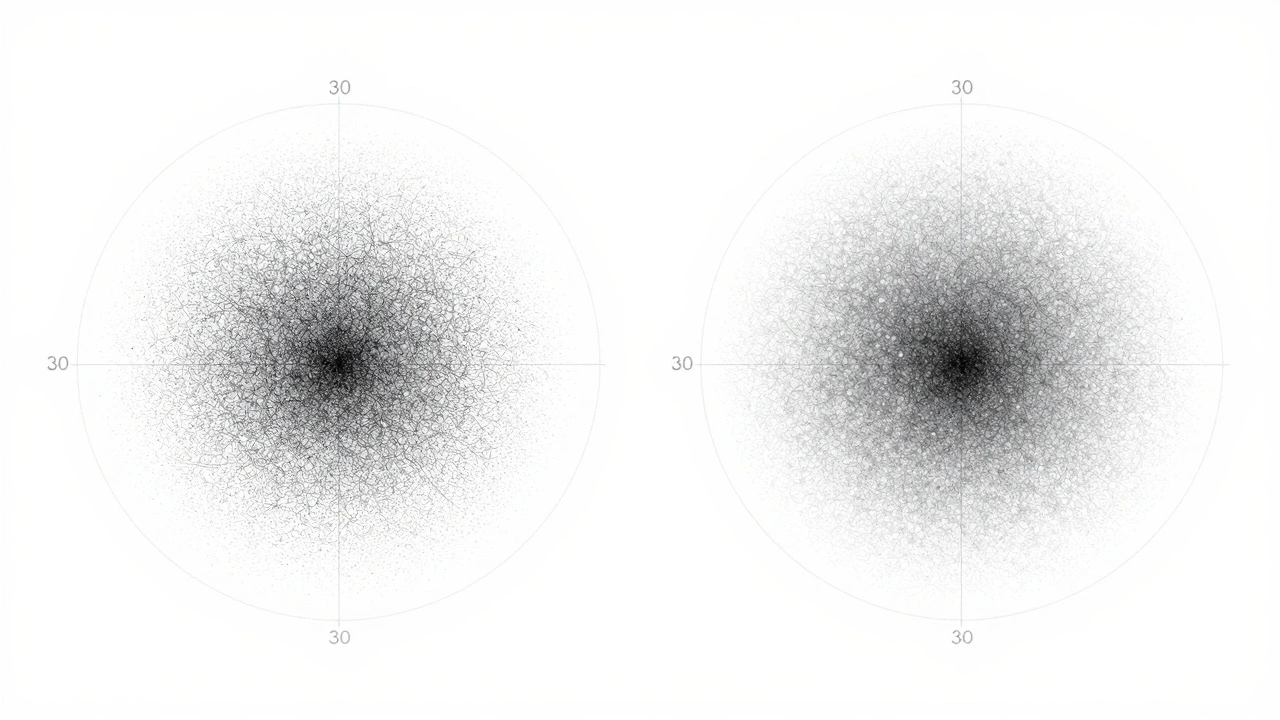
- Pattern Quality: This is the most overlooked metric. Two guns can both achieve a 60% pattern, but one might have an even, cloud-like distribution, while the other has a dense bullseye with empty gaps around the edges. Gaps are where game birds escape. Quality refers to consistency and lack of holes.
Setting Up the Test: The 30-Yard Standard
To get reliable data, you need a consistent baseline. The industry standard distance for pattern testing is 30 yards. This distance serves as the universal reference point because it allows you to accurately measure spread without the pattern becoming too diffuse or too tight to analyze effectively.
Here is how you set up the test properly:
- Secure the Target: Use a large sheet of white paper (at least 40x40 inches) mounted securely behind a backstop. Ensure there is no wind blowing the paper, as this can skew results.
- Mark the Center: Place a small black dot in the exact center of the paper. This is your aiming point.
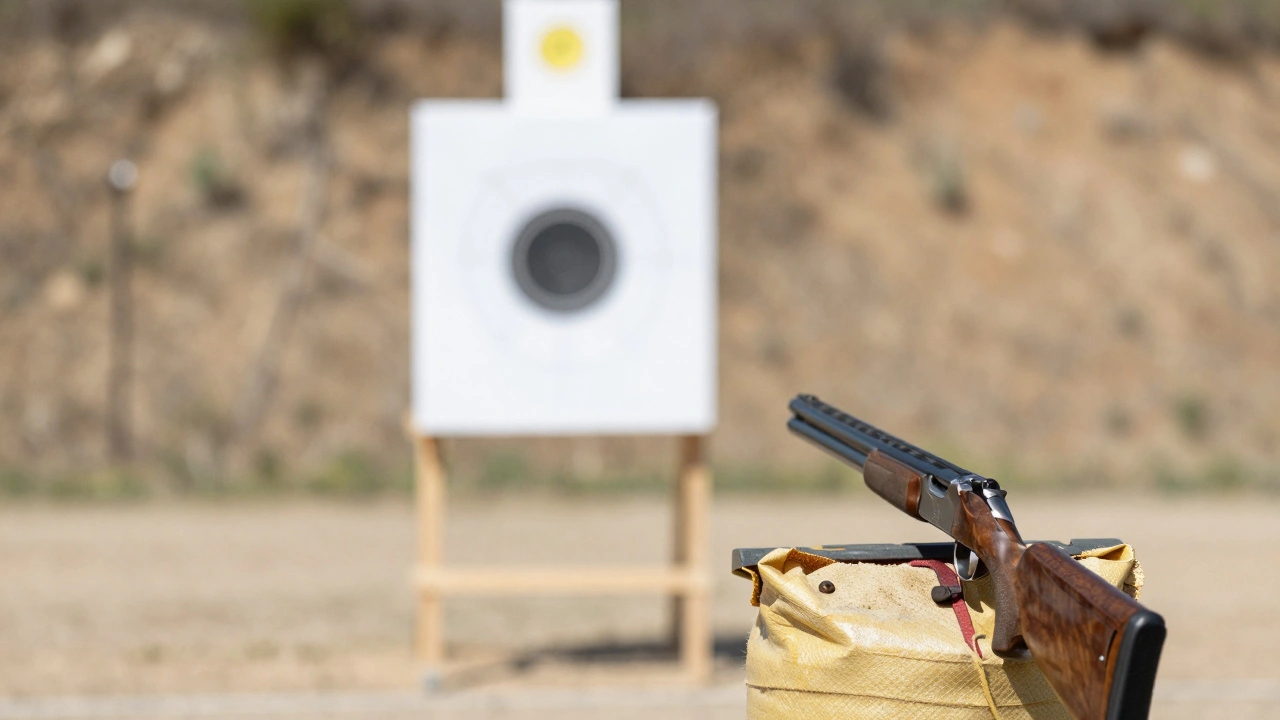
- Position Yourself: Set up a bench rest or use a sandbag support to hold the shotgun steady. You want to eliminate human error. The goal is to see how the gun shoots, not how well you shoot.
- Fire the Round: Aim directly at the black dot and fire. Do not chase the target; hold steady.
- Draw the Circle: Once fired, find the densest concentration of pellet strikes. Draw a 30-inch circle around this center point. Note: Do not draw the circle around the black dot unless the densest cluster is exactly on the dot. The circle must surround the actual pattern center.
After drawing the circle, count every single pellet inside it. Then, calculate the percentage. For example, if your cartridge contains 280 pellets (typical for a 1-ounce #6 load) and you count 170 pellets inside the circle, your pattern percentage is approximately 61%. This number helps you identify your choke's performance. A 61% pattern at 30 yards typically indicates a Half or Improved Cylinder choke behavior, regardless of what the tube says.
Choke Influence: Controlling the Spread
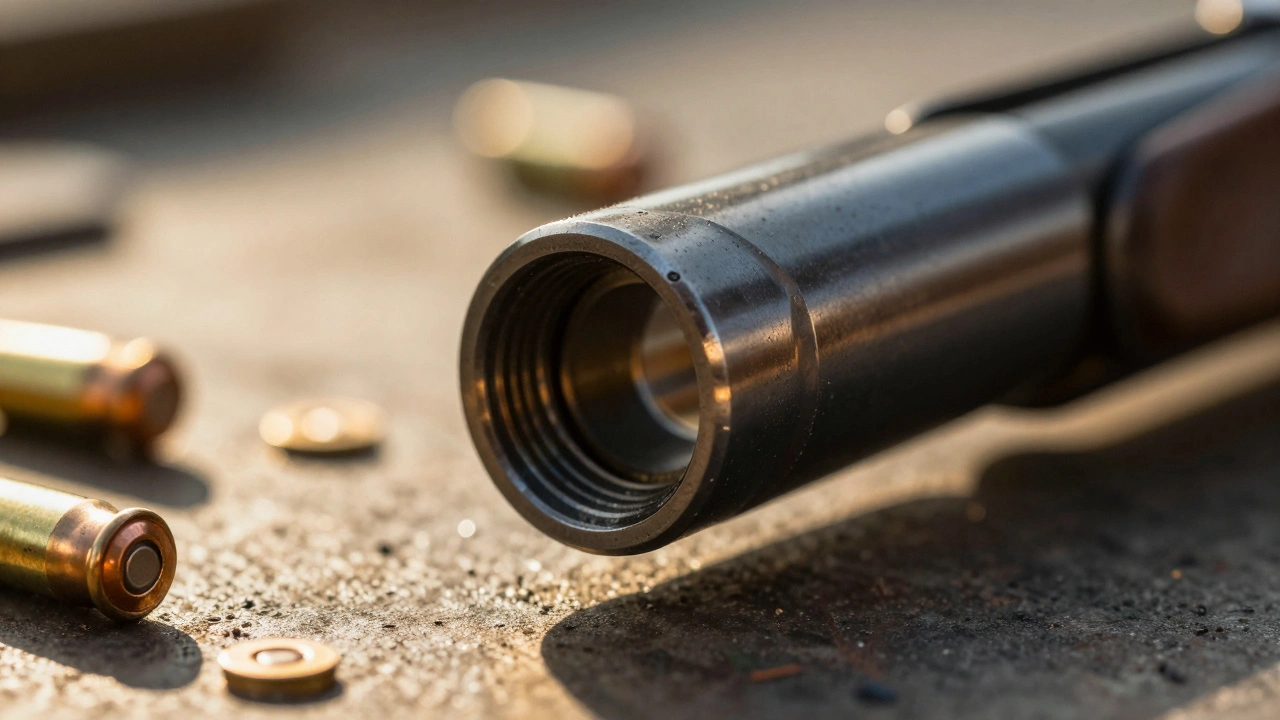
The choke is the constriction at the end of the shotgun barrel. Think of it like the nozzle on a garden hose. A wide-open nozzle (Cylinder) lets water spray out quickly, covering a large area but losing pressure and distance. A narrow nozzle (Full Choke) restricts flow, keeping the stream tight and focused over longer distances.
In shotguns, chokes control how fast the pellet spread expands radially as distance increases. Here is how different chokes generally perform at 30 yards, though actual results vary by gun:
| Choke Type | Approximate Pattern % | Best Use Case |
|---|---|---|
| Cylinder | 40-50% | Close-range hunting (<15 yards), home defense |
| Improved Cylinder | 50-60% | Upland birds, sporting clays (close stations) |
| Modified | 60-70% | Duck hunting, general field use (25-35 yards) |
| Full | 70-80%+ | Trap shooting, long-range waterfowl (40+ yards) |
The key insight here is that chokes don't just tighten the pattern; they affect pellet flight. A properly matched choke ensures pellets exit the muzzle smoothly. If the choke is too tight for the shot size, or if the velocity is too high, pellets can deform or tumble upon exiting. Tumbling pellets scatter erratically, creating "fliers"-pellets that land far outside the main pattern. These fliers ruin pattern quality and can be dangerous to bystanders.
Ammunition Variables: Why Brand Matters
You might think that any 12-gauge #7.5 shot is interchangeable. It is not. The interaction between the shotshell, the wad, and the choke is complex. Different manufacturers use different plastic formulations for their wads and varying levels of lubrication. Some wads are stiff; others are flexible. A stiff wad might push through a Modified choke cleanly, while a softer wad might mushroom slightly, altering the effective constriction.
High-velocity loads are particularly tricky. They generate more pressure and speed, which can cause lead pellets to flatten against each other during acceleration. Deformed pellets fly poorly. If you switch from a standard-speed load to a magnum load without re-patterning, you might find your pattern becomes patchy with large holes. Always test the specific brand and batch of ammunition you plan to use. Premium ammunition often yields better patterns, but only if it matches your gun’s characteristics.
Practical Application: Hunting vs. Competition
Your pattern testing goals change depending on whether you are hunting or competing. In competitive clay shooting, such as Trap or Skeet, targets are predictable in distance. Trap shooters often engage targets at 40 to 50 yards. At these distances, a Full or Extra-Full choke is common to ensure enough pellets remain in the kill zone. However, you must still pattern at 30 yards to establish a baseline, then extend the test to 40 or 50 yards to verify that the pattern hasn't become too thin or developed a hole in the center.
For hunters, the scenario is dynamic. Upland bird hunting often involves shots under 30 yards. Here, a tight choke is a liability. If you use a Full choke at 20 yards, the pattern might be so dense that it destroys the bird's meat or misses entirely if the bird moves laterally. An Improved Cylinder or Modified choke provides a wider, more forgiving pattern. Waterfowl hunters dealing with flying ducks at 35-40 yards need the density of a Modified or Full choke to ensure lethal hits on small vitals.
If you own an over/under shotgun, you have a tactical advantage. You can pair different chokes, such as Improved Cylinder in the bottom barrel for closer shots and Modified in the top barrel for longer ones. Pattern testing both barrels independently ensures you know exactly what each one delivers.
Troubleshooting Common Pattern Issues
If your patterns look bad, don't immediately blame the gun. Check these variables first:
- Fliers: If you see pellets scattered far outside the 30-inch circle, check your shot size. Lead shot in steel-shot chokes can cause deformation. Also, ensure your choke isn't clogged with residue.
- Off-Center Patterns: If the pattern is consistently left or right, check your stance. Are you flinching? Even on a bench rest, if the gun isn't aligned perfectly parallel to the target, the pattern shifts. Re-check your alignment.
- Patchy Distribution: If the center is dense but the edges are empty, your choke might be too tight for the shot size, or the velocity is causing pellet distortion. Try a softer recoil load or a different shot hardness.
Document everything. Keep a log of the date, weather conditions, ammunition brand, choke type, distance, and resulting percentage. Over time, you’ll build a database of what works best for your specific setup.
How often should I pattern my shotgun?
You should pattern your shotgun whenever you change ammunition brands, switch choke tubes, or make significant modifications to the gun (like new sights or stocks). Additionally, it is good practice to re-pattern annually, especially before hunting season, to account for wear on the choke or changes in available ammunition batches.
Does barrel length affect shot pattern?
Barrel length primarily affects muzzle velocity and recoil, not the pattern itself. The choke tube, located at the muzzle end, is the primary factor controlling spread. However, a longer barrel allows the shot column to stabilize slightly more before exiting, which can marginally improve consistency, but the difference is usually negligible compared to choke and ammo choices.
What is the ideal pattern percentage for hunting?
The Sporting Shooters' Association of Australia recommends demanding at least 70% pattern density at the effective optimal kill distance. For most hunting scenarios, this means ensuring that at least 70% of your pellets land within a 30-inch circle at your typical engagement range. This density ensures enough hits to ethically take game while maintaining a reasonable margin for error.
Can I pattern indoors?
No, patterning requires a safe outdoor environment with a proper backstop to catch stray pellets. Indoor ranges are not equipped to handle the spread of shotgun pellets, and doing so poses severe safety risks to yourself and others. Always pattern outdoors in a controlled area.
Why does my pattern look different than my friend's same gun?
No two shotguns are identical. Manufacturing tolerances in the barrel bore, choke cut, and headspace can vary. Additionally, differences in ammunition lots, wad design, and even minor variations in how the gun is held or supported during the test can result in different patterns. Always trust your own pattern tests rather than assuming your gun performs like another model.