Imagine holding a rusty pistol where the serial number is completely gone. To a casual observer, it’s just scrap metal. But to a forensic examiner, that missing number is a critical gap in the evidence chain. Serial number restoration is the process of recovering obscured or erased manufacturer markings on firearms using chemical or physical techniques. It’s not magic; it’s applied metallurgy and chemistry. If you’re dealing with a case involving a recovered weapon, understanding how these marks are made and how they can be brought back is essential for accurate identification.
The goal isn’t just to make numbers visible; it’s to do so without altering the original manufacturing characteristics. This distinction matters because the way a mark was originally created-whether by stamping, engraving, or laser etching-determines which restoration method will work best. Using the wrong technique can destroy the very evidence you’re trying to preserve.
Why Serial Numbers Disappear
Before jumping into solutions, you need to know why the problem exists. Serial numbers usually vanish due to three main factors: corrosion, intentional erasure, or mechanical wear.
- Corrosion: Rust eats away at the surface layer of steel. Over time, the oxide layer becomes thicker than the depth of the stamped number, effectively burying it.
- Intentional Erasure: Criminals often use grinding wheels, acid baths, or Dremel tools to remove numbers to avoid traceability. This creates a "ghost" image-a subsurface deformation that remains even after the top layer is removed.
- Mechanical Wear: High-friction areas, like the breech face or slide rails, can smooth out shallow engravings over years of use.
Understanding the cause helps you pick the right tool. If rust is the culprit, you might need aggressive cleaning. If someone ground it off, you need methods that look beneath the surface rather than just scrubbing the top.
Chemical Restoration Methods
Chemical methods rely on reactions between the metal and specific solutions to reveal contrast. The most common approach involves nitric acid-based etchants, such as Berghman’s solution or Regal No. 1.
Here is how the process typically works:
- Cleaning: Remove loose rust and debris with acetone or alcohol. Any dirt left under the chemical will create false patterns.
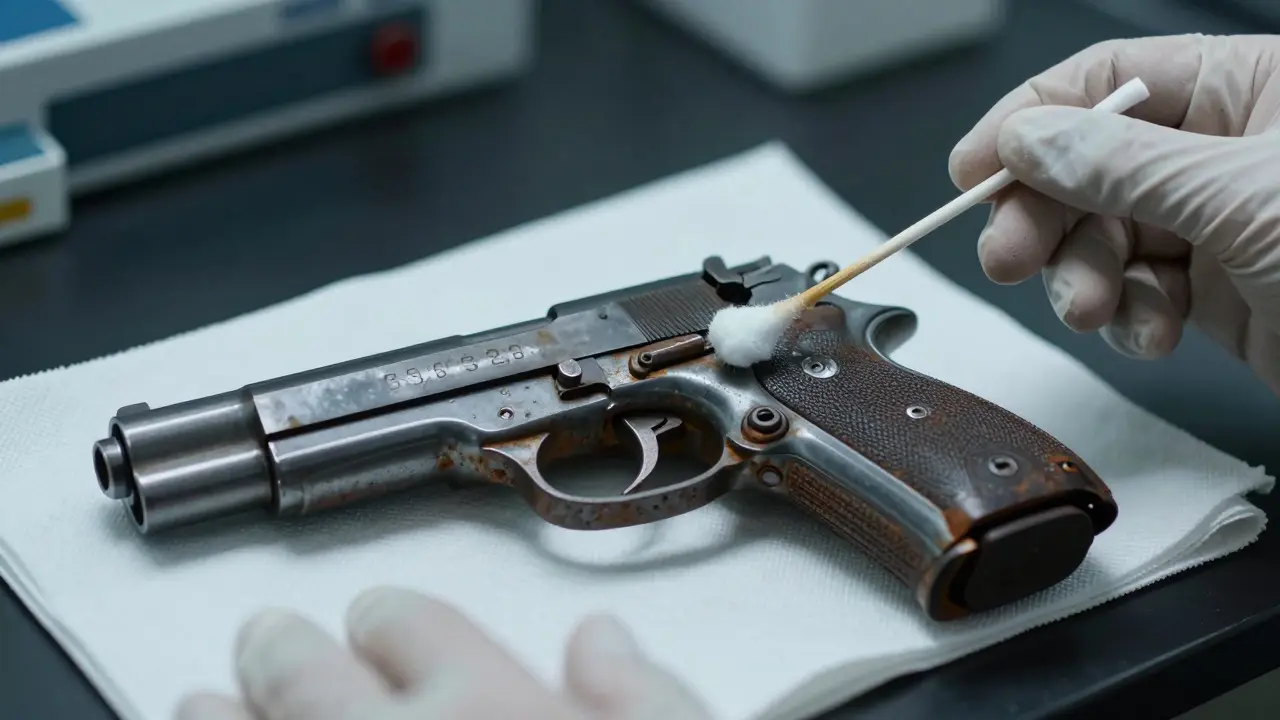
- Application: Apply the etchant with a cotton swab or brush. You want a thin, even coat.
- Reaction Time: Wait for the metal to darken. Stamped areas often react differently than the surrounding un-stamped metal due to work-hardening during the original stamping process.
- Neutralization: Rinse thoroughly with water or a neutralizing agent to stop the reaction.
- Drying: Dry immediately to prevent new rust from forming.
The science behind this is work hardening is a metallurgical process where metal becomes stronger and harder after being deformed. When a factory stamps a serial number, it displaces metal. That displaced area has a different crystal structure than the rest of the frame. Acids attack these two areas at different rates, creating visual contrast. However, if the metal was annealed (heated) after stamping, this difference disappears, making chemical methods less effective.
Magnetic Particle Inspection (MPI)
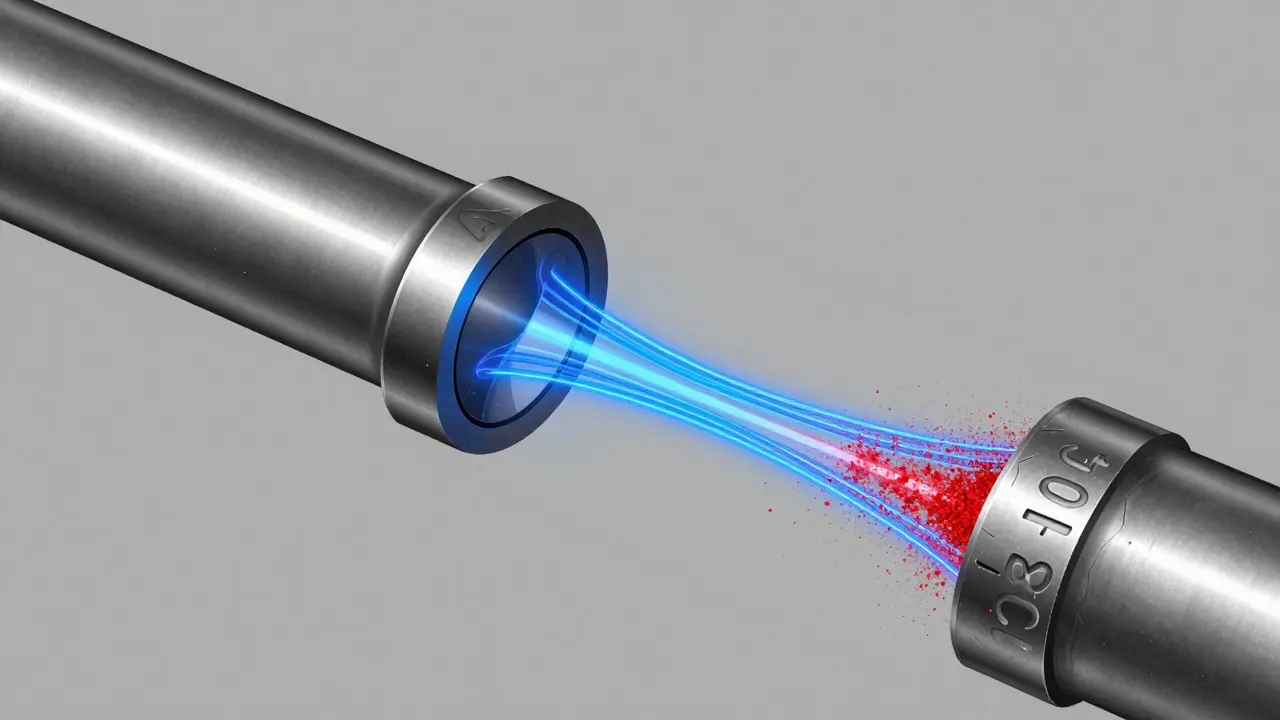
When chemicals fail, magnetism steps in. Magnetic Particle Inspection is a non-destructive testing method that uses magnetic fields to detect surface and near-surface flaws in ferromagnetic materials. Most firearm frames are made of steel, which is ferromagnetic, making them perfect candidates for MPI.
How does it work? You place the firearm part in a strong magnetic field. The original stamping created stress lines in the metal. These stress lines disrupt the uniform flow of magnetic flux. Where the flux leaks out of the surface, it attracts fine iron particles suspended in oil or dry powder. These particles form a pattern that mirrors the hidden serial number.
This method is powerful because it doesn’t require removing material. It looks at the internal structure of the metal. Even if the surface was ground down millimeters deep, the stress lines from the original stamp often remain intact below the surface. This makes MPI ideal for cases where the serial number was intentionally erased with abrasive tools.
| Feature | Chemical Etching | Magnetic Particle Inspection |
|---|---|---|
| Best For | Rust-covered surfaces, intact stamps | Ground-off numbers, deep erosion |
| Material Requirement | Most metals (steel, brass, aluminum) | Ferromagnetic metals only (steel, cast iron) |
| Invasiveness | Slightly invasive (removes microscopic layer) | Non-invasive |
| Cost | Low (chemicals are cheap) | High (requires specialized equipment) |
| Risk of Damage | Medium (acid can corrode if misused) | Low (no contact with reactive substances) |
Choosing the Right Method
You rarely have a choice between one or the other; you often use both. A standard forensic workflow starts with the least invasive method first. If the serial number is merely obscured by rust, try chemical etching. It’s quick, cheap, and effective. If that fails, move to MPI.
Consider the material of the firearm. Aluminum alloys, common in modern semi-automatic pistols, are not ferromagnetic. This means MPI won’t work on an aluminum frame. For these, you’re limited to chemical methods or advanced imaging techniques like X-ray fluorescence. Conversely, a solid steel revolver frame is a prime candidate for magnetic inspection.
Also consider the age of the firearm. Older firearms were often hand-engraved or deeply stamped. These deep marks survive erosion better than the shallow, high-speed automated stamps used in mass production today. Deep marks are easier to restore chemically because there is more volume difference to exploit.
Common Pitfalls to Avoid
Even experienced examiners make mistakes. Here are the most common ones:
- Over-etching: Leaving acid on too long can eat through the ghost image, destroying the contrast you’re trying to find. Test on a small, inconspicuous area first.
- Poor Cleaning: Dirt trapped in the recesses of the number will look like dark spots when you apply the etchant, leading to false readings.
- Ignoring Material Type: Trying to use MPI on stainless steel or aluminum is a waste of time. Check the alloy composition before starting.
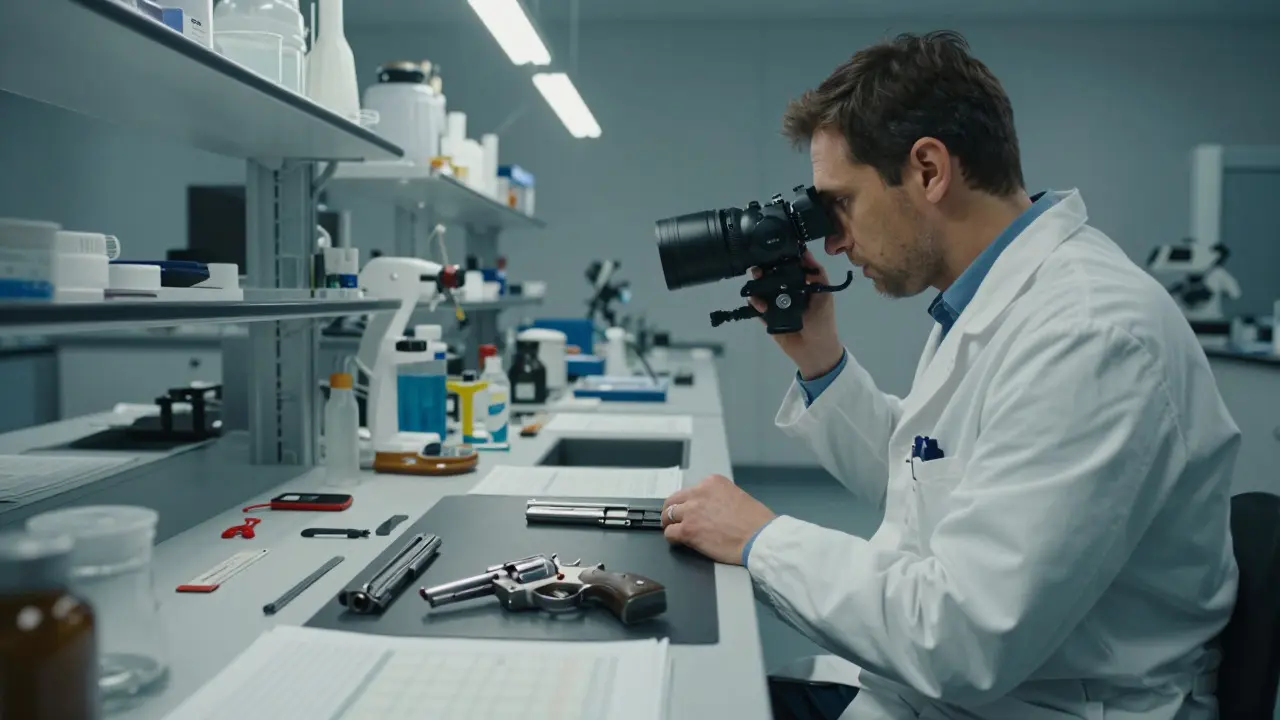
- Lack of Documentation: Every step must be photographed. If you don’t document the process, the restored number may be challenged in court as altered evidence.
Documentation and Legal Admissibility
Restoring a serial number is only half the battle. The other half is proving it’s authentic. Courts are skeptical of any modification to evidence. Your documentation must show that the restoration revealed existing features, not created new ones.
Use macro photography at every stage. Capture the initial state, the application of the reagent, and the final result. Include scale bars in every photo. If you use MPI, photograph the magnetic field setup and the direction of the current. This level of detail demonstrates scientific rigor and helps defense attorneys understand that the process was objective, not subjective.
Consult with your lab director or legal counsel before applying any destructive method. In some jurisdictions, removing even a microscopic layer of metal requires prior approval to ensure the chain of custody remains unbroken.
Frequently Asked Questions
Can you restore a serial number on a stainless steel firearm?
Yes, but not with magnetic methods. Stainless steel is generally non-magnetic (or weakly magnetic), so Magnetic Particle Inspection is ineffective. You must rely on chemical etching or advanced optical techniques like profilometry to reveal the subsurface deformations.
Is nitric acid safe to use on all types of gunmetal?
Not always. Nitric acid is excellent for carbon steel but can aggressively attack aluminum and brass if not properly diluted or neutralized. Always perform a spot test on a hidden area to check for adverse reactions before treating the entire serial number area.
What happens if the serial number was laser engraved instead of stamped?
Laser engraving melts and vaporizes the metal surface, creating a pit rather than a displacement. Chemical etching works well here because the melted edges react differently to acids. However, if the laser was used to erase a previous number, the underlying structure might be too damaged for easy recovery, requiring deeper analysis.
How long does the restoration process take?
Simple chemical etching can take anywhere from 5 minutes to an hour depending on the severity of the rust. Magnetic Particle Inspection is faster, often taking under 10 minutes per side, but requires time to set up the magnetic yokes and clean the surface beforehand.
Do I need special certification to perform these tests?
For forensic admissibility, yes. While anyone can buy etchant, courts expect the person performing the test to be qualified in forensic ballistics or materials science. Certification in Non-Destructive Testing (NDT) Level II is highly recommended for those using magnetic or ultrasonic methods regularly.