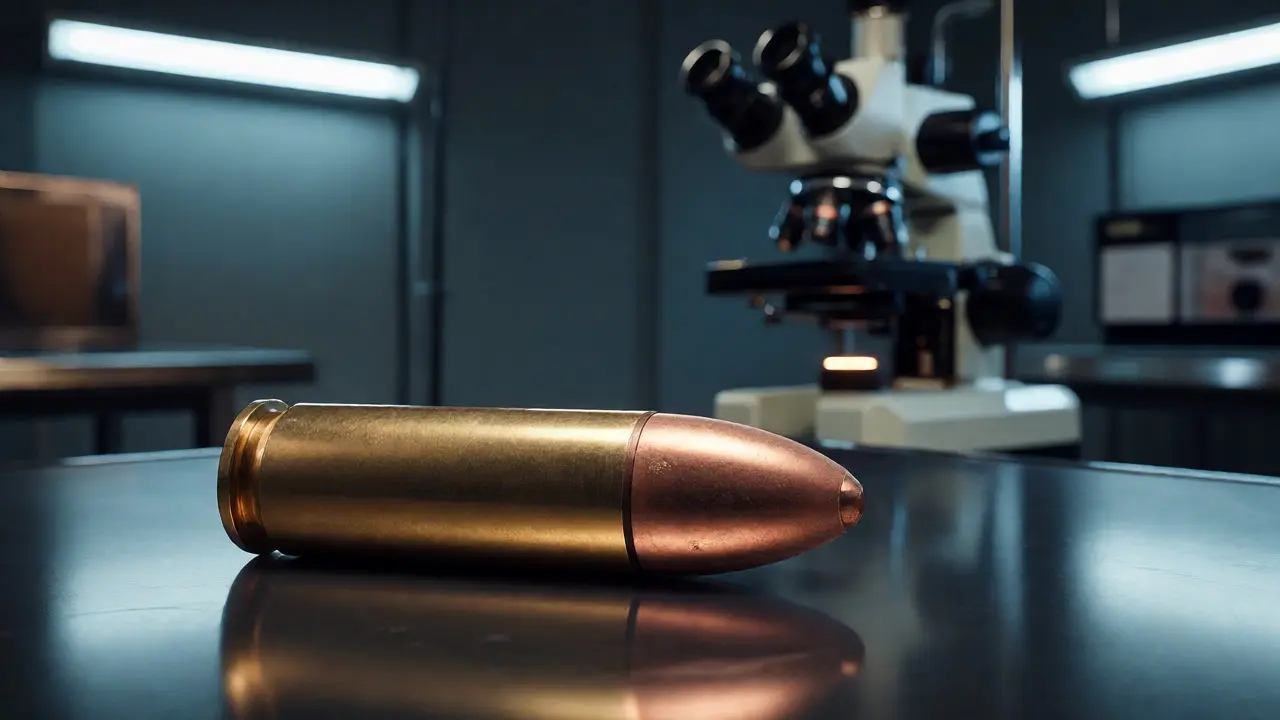
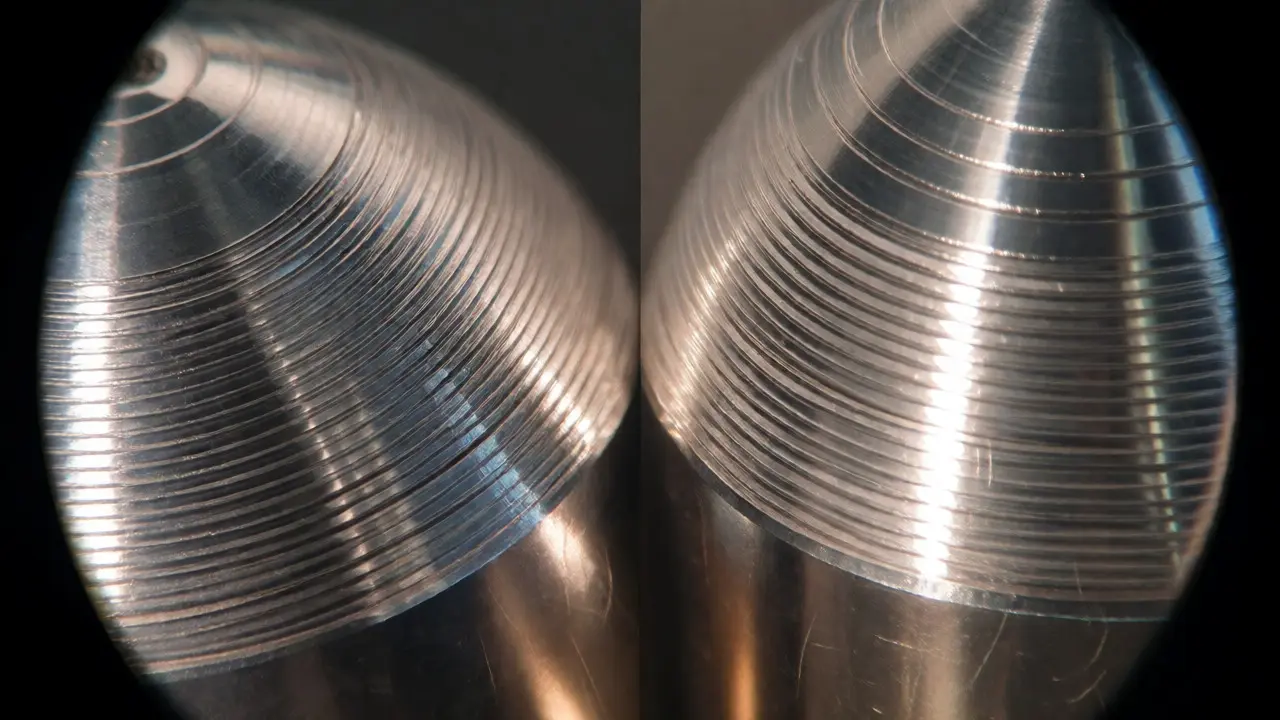
You pick up a spent cartridge casing at a crime scene. It looks like every other brass shell you have seen in movies or at the range. But under a microscope, it tells a unique story. That story is written in tiny scratches called striae. These microscopic imperfections are the fingerprints of a firearm, and decoding them is the heart of bullet comparison and striation analysis.
If you have ever wondered how detectives link a specific gun to a specific bullet, you are asking about one of the oldest and most debated techniques in forensics. It is not magic. It is physics, manufacturing defects, and careful observation. Let’s break down exactly how this works, where it fails, and why it remains a cornerstone of criminal investigations today.
The Quick Summary: What You Need to Know
- The Core Concept: Every firearm barrel leaves unique microscopic marks on a bullet as it passes through. These are called striations.
- The Tool: A comparison microscope allows experts to view two bullets side-by-side to match these patterns.
- The Limitation: Modern firearms with polygonal rifling (like some Glocks) produce fewer distinct striations, making matching harder.
- The Controversy: The technique relies heavily on examiner judgment, leading to debates about its scientific objectivity.
- The Standard: The National Integrated Ballistic Information Network (NIBIN) helps link cases but does not provide a definitive "match" on its own.
Why Bullets Have Fingerprints
To understand striation analysis, you first need to understand how a gun fires. When you pull the trigger, an explosion pushes a bullet down the barrel. This isn’t a smooth slide. The inside of a traditional barrel has grooves cut into it, known as rifling. These grooves spin the bullet for stability, much like a football spiral.
Here is the critical part: no two barrels are identical. During manufacturing, cutting tools create microscopic random variations on the surface of the barrel. Maybe a diamond-tipped cutter skipped slightly, or a polishing wheel left a faint scratch. These irregularities are unique to that specific barrel. As the soft lead or copper-jacketed bullet travels down the barrel, it gets pressed against these walls. The bullet takes on the exact pattern of those microscopic scratches.
This process creates what forensic scientists call individual characteristics. Unlike class characteristics, which tell you the type of gun (like caliber or number of grooves), individual characteristics point to one specific weapon. Think of it like this: Class characteristics tell you the car was a 2015 Ford Mustang. Individual characteristics tell you it was that specific red Mustang with the dent in the bumper.
How the Comparison Microscope Works
You might think you could just look at two bullets with a magnifying glass. You can’t. The details are too fine. For decades, the gold standard has been the comparison microscope. This device connects two separate microscopes via an optical bridge, allowing an examiner to see two objects simultaneously in a single field of view.
The process is meticulous. First, the examiner cleans the evidence bullet and a test-fired bullet from the suspect gun. They place both on rotating stages. By turning the knobs, they align the ridges and valleys of the rifling marks. If the lines line up perfectly across multiple sections of the bullet, it suggests a match.
But here is where human skill comes in. Lighting matters. Angle matters. The condition of the bullet matters. A bullet that hit concrete will look different than one that passed through drywall. Experts train for years to recognize when a pattern is truly consistent versus when it is just similar by chance. It is less like solving a puzzle and more like recognizing a face in a crowd-you know it when you see it, but explaining exactly why can be tricky.
The Rise of Digital Ballistics and NIBIN
In the old days, if police wanted to compare a bullet from Portland with one found in Seattle, they had to mail physical evidence back and forth. That took weeks. Today, technology has sped things up, though it hasn’t replaced the human eye entirely.
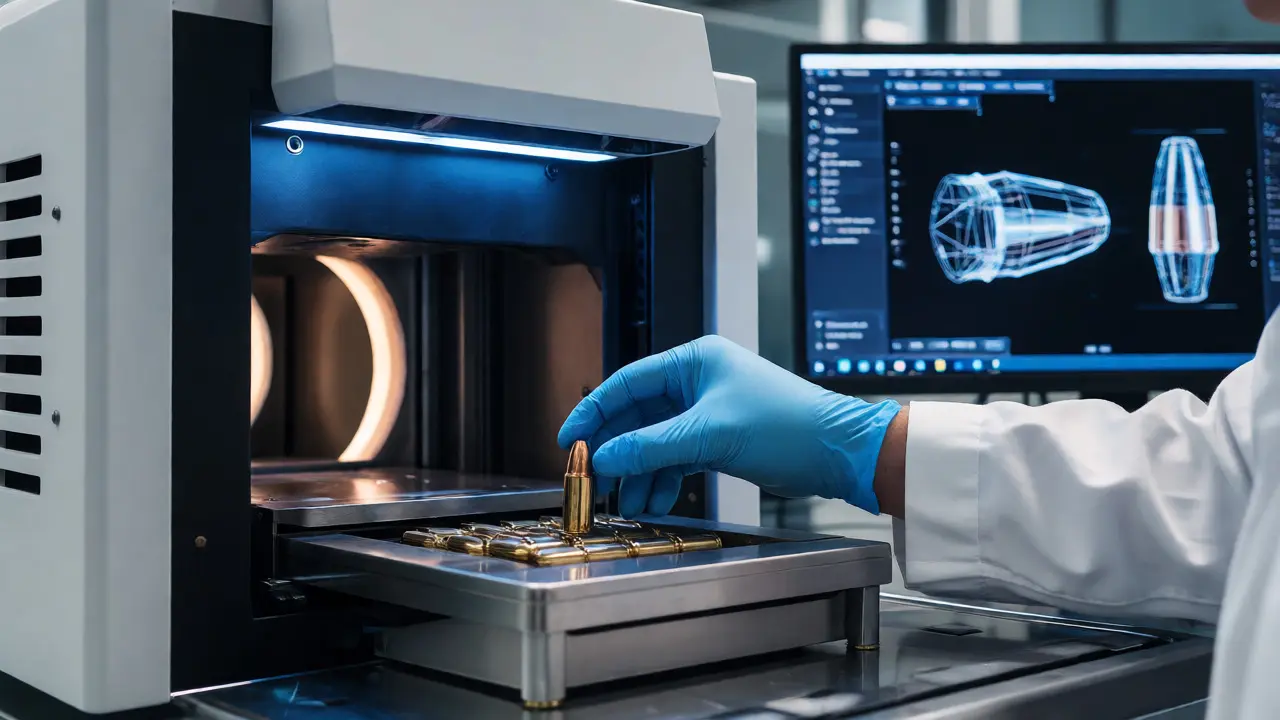
Enter NIBIN (National Integrated Ballistic Information Network). Managed by the ATF, this system scans cartridge casings and bullets using 3D imaging technology. It doesn’t declare a match; instead, it provides a list of potential candidates based on algorithmic similarity scores.
Think of NIBIN as a digital filing cabinet. If a shooting happens in Chicago, and another happens in Detroit three months later, NIBIN can flag that the casings share similar tool marks. This links cases quickly. However, a high score on NIBIN is not proof. It is a lead. A qualified firearm examiner must still manually verify the match using a comparison microscope. Relying solely on the computer’s score is a common pitfall for investigators who want quick answers.
When Striations Fail: Polygonal Rifling
Not all guns leave clear signatures. Traditional rifling cuts sharp edges into the barrel. This creates deep, distinct lines on the bullet. But many modern handguns, particularly those made by Glock, use polygonal rifling. Instead of sharp cuts, the barrel has a series of gentle, rounded ridges.
Polygonal rifling is smoother and easier to manufacture. It also reduces friction, which can improve accuracy. But for forensic examiners, it is a headache. Because the ridges are rounded, the resulting striations on the bullet are often faint, broad, and less distinct. In some cases, the marks are so subtle that determining a unique match becomes highly subjective.
| Feature | Traditional Rifling | Polygonal Rifling |
|---|---|---|
| Barrel Surface | Sharp lands and grooves | Rounded, continuous ridges |
| Bullet Marks | Deep, distinct striations | Faint, broad bands |
| Identification Ease | High clarity for matching | Lower clarity, higher subjectivity |
| Common Brands | Colt, Smith & Wesson (older models) | Glock, Heckler & Koch |
If you are dealing with a case involving a Glock, expect more debate in court. Defense attorneys often argue that the lack of clear striations makes the forensic testimony unreliable. Prosecutors counter that even faint marks can be matched with sufficient expertise. There is no easy answer here-it depends on the quality of the evidence and the skill of the examiner.
The Science vs. The Courtroom
For over a century, firearm identification was treated as absolute science. If the marks matched, the gun fired the bullet. Period. But recent studies have shaken this confidence. The 2009 report from the National Academy of Sciences pointed out that while tool mark analysis is useful, it lacks the statistical rigor of DNA profiling.
DNA gives you a probability: there is a one-in-a-billion chance someone else has this profile. Firearm analysis typically offers a categorical statement: "This bullet came from this gun." Why? Because we don’t have large databases of every possible barrel variation to calculate error rates accurately. We assume uniqueness because we haven’t found two barrels with identical wear patterns yet, but proving that mathematically is difficult.
This gap between perception and data causes tension in trials. Juries hear "it’s a match," and they believe it. But savvy lawyers now challenge the underlying assumptions. They ask: How many false positives have occurred? What is the margin of error? Since the science doesn’t have a precise numerical answer, the credibility of the expert witness becomes the deciding factor. Experience matters. An examiner who has looked at thousands of bullets is more persuasive than one who learned the basics last month.
Practical Tips for Investigators and Enthusiasts
If you are handling ballistic evidence, small mistakes can ruin the analysis. Here is how to keep the striations intact:
- Never drop the bullet. Impact with hard surfaces can crush the delicate ridges. Use padded containers.
- Avoid touching the base. Oils from your skin can corrode the metal or obscure fine details over time. Wear gloves.
- Do not clean aggressively. Unless directed by a lab, do not scrub the bullet. Polishing off rust might polish away the evidence.
- Document everything. Photograph the bullet before any handling. If the striations are damaged during transport, you have a record of their original state.
For enthusiasts trying to learn the craft, start by collecting fired bullets from known sources. Try firing the same gun multiple times and comparing the rounds yourself. Then try firing different guns of the same model. You will quickly see how variable the marks can be, even among identical firearms. It builds intuition faster than reading textbooks.
Can a bullet be matched to a gun without finding the gun?
Yes, but with limitations. Using systems like NIBIN, investigators can link a bullet to other crimes committed with the same unknown weapon. However, to definitively say "this specific gun fired this bullet," you generally need to recover the firearm and conduct a test fire for direct comparison. Without the gun, you can only establish a probable link to a group of shots, not a single weapon.
What happens if the bullet is deformed?
Deformation significantly complicates analysis. If a bullet hits bone, wood, or concrete, the front may be crushed, obscuring the striations. Examiners focus on the rear portion of the bullet, where the marks are usually better preserved. If too much of the bearing surface is destroyed, an examiner may conclude that no identification is possible, rather than guessing.
Is striation analysis considered junk science?
No, but it is not perfect. Critics argue it lacks the statistical foundation of DNA. However, it remains widely accepted in courts and law enforcement. The key is transparency: good experts acknowledge the limitations and avoid overstating certainty. It is a valid investigative tool, especially for linking cases, even if its evidentiary weight varies by jurisdiction and judge.
How long do striations last on a gun?
Striations change as the barrel wears. A new gun produces sharper marks than a gun that has fired thousands of rounds. Corrosion and cleaning agents can also alter the barrel surface. While the fundamental pattern persists, significant wear or damage can make older matches difficult to confirm. Regular maintenance helps preserve consistency, but heavy use inevitably changes the signature.
Can two different guns produce identical striations?
It is theoretically possible but practically rare. Mass-produced guns share similar factory-cut patterns (class characteristics). However, the microscopic random variations created during final finishing or early use are believed to be unique. No confirmed case exists where two unrelated guns produced indistinguishable individual striations, but the possibility cannot be ruled out with absolute mathematical certainty.