You can run the most precise instruments in the world, but if nobody checks your results against an independent standard, how do you know they're actually right? This is where Proficiency Testing (PT), also known as External Quality Assessment (EQA), comes in. It’s not just a box to tick for accreditation; it’s the only way to verify that your laboratory’s measurements are accurate and comparable to others globally.
If you’re preparing for ISO 17025 accreditation or trying to maintain compliance with CAP or CLIA standards, understanding the mechanics of PT is non-negotiable. But beyond the paperwork, there’s a practical reality: PT failures happen. When they do, they often reveal deeper issues in method validation, staff competency, or instrument calibration. Let’s break down what really matters when you sign up for a scheme, receive those mysterious blind samples, and analyze your score.
What Exactly Is Proficiency Testing?
At its core, proficiency testing is an inter-laboratory comparison designed to evaluate performance. You receive a sample from a provider-often called a PT Scheme Provider-that has been prepared under controlled conditions. You don’t know the value. You test it using your routine methods, report the result back, and the provider compares it against the assigned value (usually determined by reference labs) and other participants' results.
This isn't internal quality control (IQC). IQC tells you if your system is stable today. PT tells you if your system is accurate compared to the outside world. Think of IQC as checking your speedometer works; PT is driving on a track with GPS tracking to see if you’re actually going the speed limit.
| Feature | Internal Quality Control (IQC) | Proficiency Testing (PT/EQA) |
|---|---|---|
| Frequency | Daily or per batch | Periodic (quarterly, bi-annually, annually) |
| Sample Source | In-house prepared controls | External provider (blind samples) |
| Purpose | Monitor precision and stability | Verify accuracy and comparability |
| Blindness | No (known values) | Yes (unknown values) |
| Accreditation Role | Mandatory daily monitoring | Mandatory periodic verification |
Choosing the Right PT Scheme
Not all providers are created equal. If you pick a bad scheme, you might fail tests due to poor sample homogeneity rather than your own lab error. Look for providers accredited to ISO 17043 (the international standard for proficiency testing providers). This ensures their statistical evaluation methods and sample preparation processes meet rigorous criteria.
Consider these factors before signing a contract:
- Analyte Coverage: Does the provider cover every test in your scope? Gaps mean you need multiple vendors, which complicates logistics.
- Matrix Matching: A serum control behaves differently than a urine control. Ensure the PT samples mimic your patient samples as closely as possible. Matrix effects are a leading cause of PT failure.
- Turnaround Time: Can you get results back fast enough to correct errors before your next audit cycle?
- Support: Do they offer technical support when you fail? A good provider helps you investigate, not just send a 'Fail' email.
The Logistics: Receiving and Handling Samples
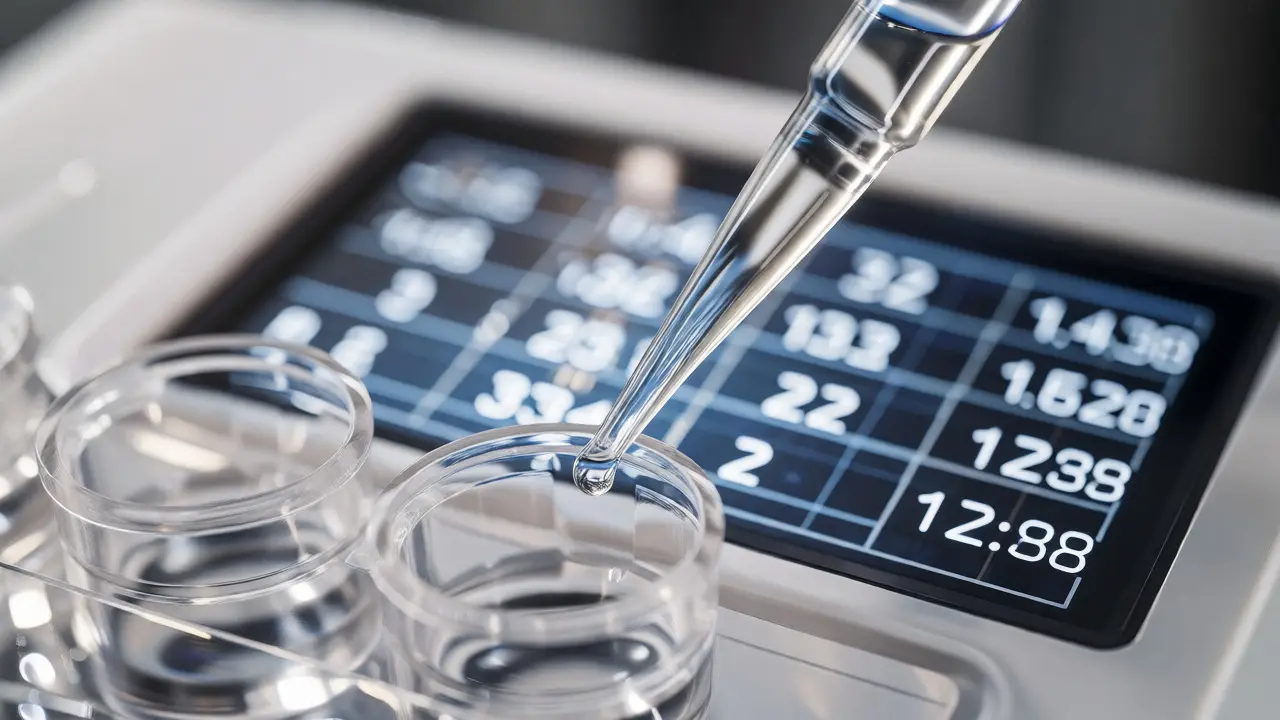
The moment the courier arrives, your PT process begins. Many labs treat PT samples like regular patient specimens, which is correct-but with caveats. First, check the condition upon arrival. Was the cold chain maintained? Did the vials leak? Document this immediately. If the sample arrived warm when it should have been frozen, notify the provider before testing. Otherwise, you’ll be fighting an uphill battle explaining why your glucose levels were off.
Treat PT samples exactly like patient samples. Do not test them first thing in the morning when machines are fresh, then forget about them. Integrate them into your workflow. However, avoid testing them alongside your highest-risk critical samples if possible, so a potential contamination event doesn’t compromise both. Store them according to manufacturer instructions. Some PT materials are lyophilized (freeze-dried) and require reconstitution; follow the water volume instructions to the milliliter. Adding 1 mL instead of 0.9 mL can skew results significantly.
Understanding Statistical Evaluation
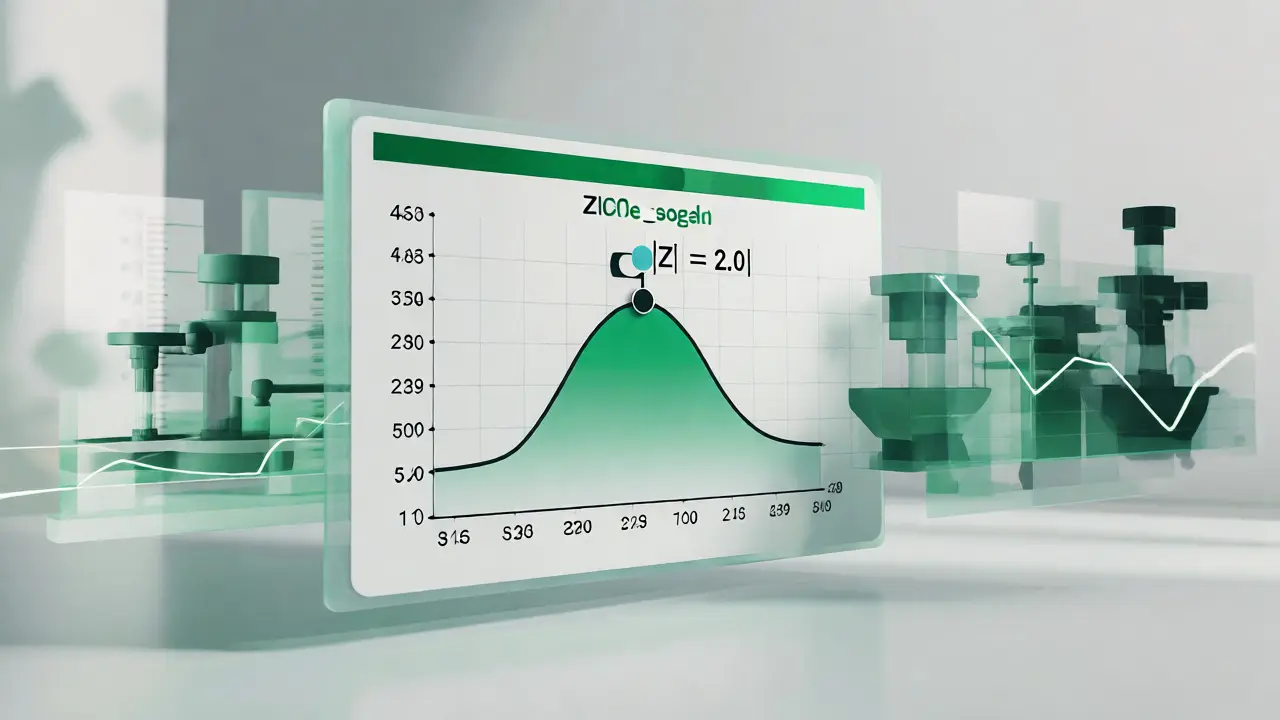
When your report card arrives, you’ll likely see a Z-score. This is the standard metric used in Europe and increasingly elsewhere. A Z-score tells you how many standard deviations your result is from the assigned value.
- |Z| ≤ 2.0: Satisfactory. You’re within acceptable limits.
- 2.0 < |Z| < 3.0: Questionable. You’re drifting. Investigate trends.
- |Z| ≥ 3.0: Unsatisfactory. You failed. Corrective action required.
In the US, you might see SDI (Standard Deviation Index) or percentage bias depending on the analyte. Don’t obsess over passing one round. Look at trends over time. If you pass every quarter but your Z-scores are creeping from +0.5 to +1.8, you have a systematic error developing. Maybe a reagent lot changed, or a pipette needs recalibration. Catching this early prevents a future failure.
Investigating Failures: Beyond the Blame Game
A PT failure triggers a corrective action request. Resist the urge to blame the "bad sample" immediately. Start with a root cause analysis. Did you use the same method for PT as for patients? Sometimes techs use a different dilution factor for PT samples because they expect high concentrations, introducing human error.
Check these common pitfalls:
- Method Discrepancy: Did you run the PT sample on a backup analyzer instead of the primary one?
- Reagent Issues: Was the reagent expired or stored improperly?
- Calculation Errors: Simple transcription mistakes happen more often than complex chemical errors.
- Interferences: Did the PT matrix contain substances that interfere with your assay (e.g., hemolysis, lipemia)?
Document everything. Accreditation assessors love seeing thorough investigation records. They want proof that you understand *why* you failed, not just that you fixed it.
Common Pitfalls and Pro Tips
One major mistake is "testing ahead." Labs sometimes run PT samples days after receipt without proper storage, assuming stability. Check the expiration date and storage guidelines religiously. Another issue is splitting samples among technicians to see who gets the best result. This defeats the purpose. PT evaluates the *laboratory*, not the individual. Randomize assignment or rotate duties to ensure consistent competency across the team.
Also, beware of "over-testing." Running the PT sample ten times and averaging the results doesn’t necessarily improve your score if there’s a systematic bias. Precision (repeatability) is different from accuracy. If your average is wrong, repeating it ten times just gives you a very precise wrong answer.
Next Steps and Troubleshooting Scenarios
If you’re new to PT, start small. Pick one key analyte and one provider. Get comfortable with the reporting portal and the timeline. Once established, expand to full scope coverage.
If you consistently fail specific analytes, consider switching providers. Different manufacturers use different matrix bases. Your method might interact poorly with one provider’s stabilizer but work perfectly with another. This isn’t cheating; it’s finding the right tool for the job.
Finally, remember that PT data is a goldmine for continuous improvement. Use your historical PT scores to set internal quality control limits tighter than the legal requirements. If you always pass with room to spare, you can tighten your IQC rules to catch problems earlier. Turn compliance into competitive advantage.
How often do I need to participate in proficiency testing?
It depends on your accreditation body and local regulations. Generally, ISO 17025 requires participation at least once every two years for each method, but many bodies like CAP or CLIA require annual or even quarterly participation for certain high-complexity tests. Always check your specific accreditation schedule.
Can I use the same PT sample for multiple analytes?
Often, yes. Providers design multi-analyte panels to reduce shipping costs and handling. However, ensure the matrix is appropriate for all tests. For example, a whole blood PT sample is great for CBC and chemistry but might not be suitable for coagulation studies if anticoagulants aren't present in the correct ratio.
What happens if I miss the reporting deadline?
Most providers will still accept late results, but they may not count toward your official success rate for accreditation purposes. You might receive a "late" flag instead of a pass/fail. In some strict programs, missing the deadline counts as a failure. Always contact the provider immediately if you anticipate a delay.
Is PT mandatory for all laboratories?
If you seek accreditation (like ISO 17025) or operate under regulated frameworks (CLIA/CAP in the US), yes. Even if not legally mandated, it is considered best practice for any lab claiming quality assurance. Non-accredited research labs often skip it, but clinical diagnostic labs rarely can.
Who pays for proficiency testing?
The laboratory bears the cost. Budget for this annually. Costs vary widely based on the number of analytes, frequency, and provider. Expect to pay anywhere from $50 to several hundred dollars per analyte per year. Factor this into your operational overhead.