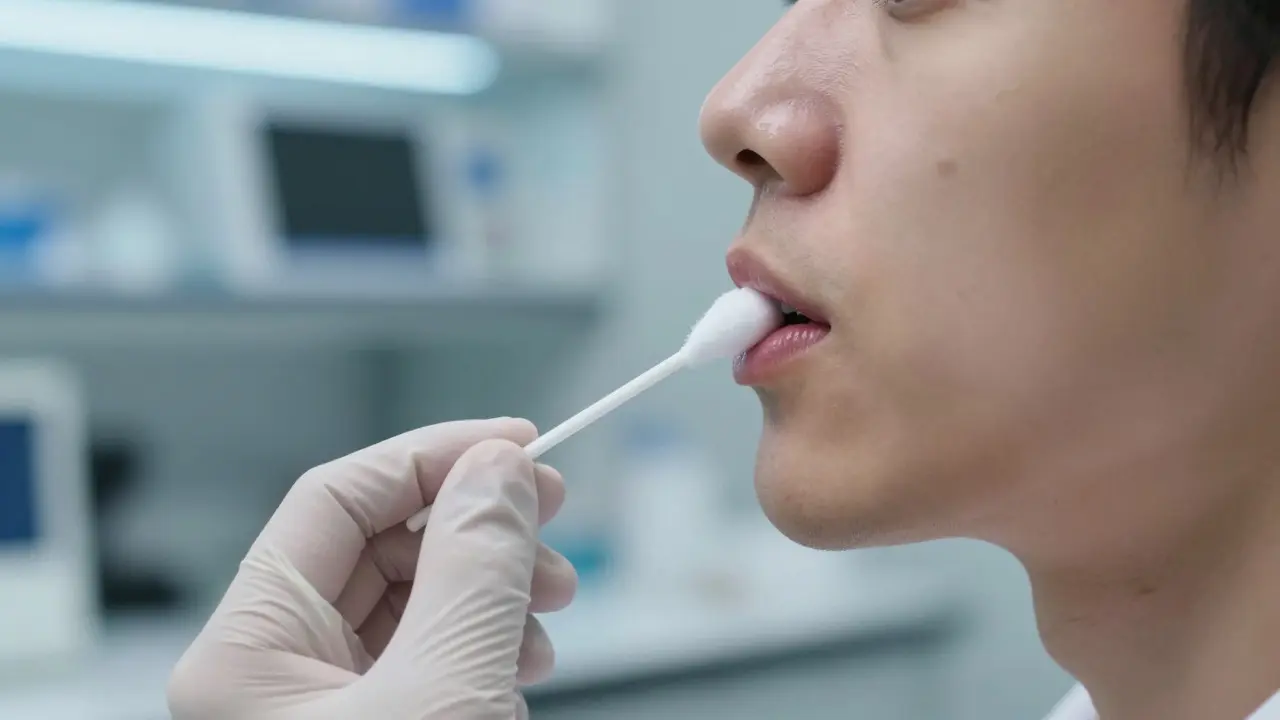
Imagine a courtroom where the only evidence is a cheek swab. No fingerprints, no video footage-just biological material. In these high-stakes scenarios, forensic DNA analysis is the scientific process of extracting and interpreting genetic profiles to establish identity or relationships. While often associated with criminal cases, this technology plays a pivotal role in civil matters like paternity determination. The precision required here isn't just about science; it's about legal certainty.
When a judge asks for proof of biological connection, they aren't looking for a guess. They want data that holds up under cross-examination. This guide breaks down how forensic labs turn microscopic cells into court-admissible facts, covering the methods, the standards, and the common pitfalls that can derail a case.
The Science Behind Biological Links
At its core, parentage testing relies on the principle of Mendelian inheritance. Every child inherits half their DNA from each biological parent. By comparing specific genetic markers between the alleged parent, the child, and sometimes the mother, analysts can calculate the probability of relatedness. The most common method uses Short Tandem Repeats (STRs). These are regions of DNA where short sequences repeat themselves. Because the number of repeats varies significantly between individuals, they act like unique barcodes.
In a standard forensic panel, laboratories analyze at least 15 to 20 STR loci. This number isn't arbitrary; it’s calculated to ensure that the chance of two unrelated people sharing the same profile is less than one in a billion. For example, if an alleged father shares all alleles at 20 tested loci with the child, the Combined Paternity Index (CPI) might reach values in the millions. When converted to a Probability of Parentage (PoP), this translates to a figure like 99.99%. However, '99.99%' doesn't mean 'certain.' It means that statistically, the alleged father is 99.99% more likely to be the biological father than a random man from the population.
Court-Admissible vs. Home Kits: A Critical Distinction
Not all DNA tests are created equal. If you walk into a lab with a sample from a store-bought home kit, you might get an answer, but will a judge accept it? Usually, no. The difference lies in the Chain of Custody and accreditation standards.
| Feature | Forensic/Court-Ordered Test | Direct-to-Consumer (Home) Kit |
|---|---|---|
| Sample Collection | Performed by certified collector under supervision | Self-collected at home |
| Chain of Custody | Strictly documented, sealed, and tracked | Minimal or non-existent documentation |
| Laboratory Accreditation | Requires ISO 17025 and SWGDAM compliance | CLIA certified for medical accuracy, not legal admissibility |
| Legal Weight | Admissible in family court and criminal proceedings | Informative only; rarely accepted as sole evidence |
| Cost Range | $300 - $600+ | $80 - $150 |
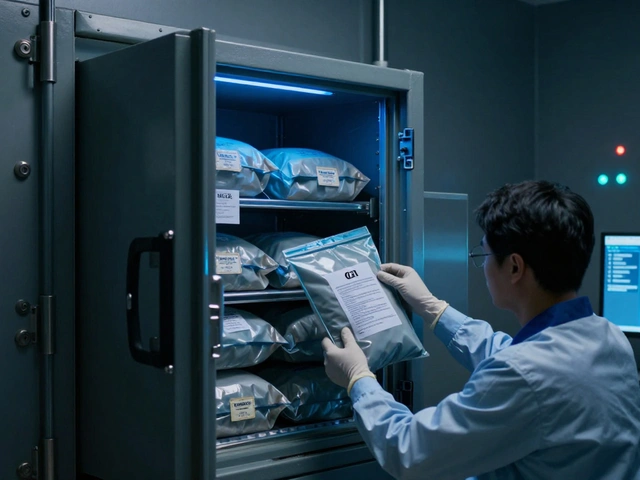
The Chain of Custody is the backbone of forensic integrity. It documents every person who handled the sample, when they touched it, and where it was stored. If a seal is broken without a log entry, the defense attorney can argue contamination. In contrast, home kits rely on the honor system. You mail the tube yourself. Did it sit in a hot car? Was it mixed with another sample? Without rigorous tracking, the data becomes questionable in a legal setting.
Sample Types and Collection Protocols
Buccal swabs (cheek cells) are the gold standard for non-invasive parentage testing. They are easy to collect, painless, and yield sufficient DNA for STR analysis. However, proper technique matters. Analysts need enough epithelial cells, not just saliva. A dry swab or insufficient rubbing time leads to low-template DNA, which can cause stutter peaks or dropouts in the electropherogram-the visual graph of the DNA profile.
For newborns or difficult cases, blood cards (dried blood spots) are used. These require careful drying to prevent degradation. In rare instances, hair follicles or bone fragments are analyzed, particularly in historical or post-mortem cases. Each sample type has specific storage requirements. DNA degrades over time, especially if exposed to heat or humidity. Laboratories typically store samples at 4°C (refrigerated) for short-term holding and -20°C for long-term archival.
Interpreting the Data: Beyond Simple Matches
Reading a DNA report isn't just checking boxes. Analysts look for allelic dropouts, where one allele fails to amplify due to technical issues. They also watch for artifacts like stutters, which are small peaks adjacent to the main peak caused by polymerase slippage during PCR amplification. Distinguishing a true minor contributor from a stutter artifact requires experience and statistical software.
If the alleged father is unavailable, grandparentage testing becomes necessary. This involves analyzing the grandparents' DNA to infer the alleles passed to the child. The calculation here is more complex because you're working with probabilities based on indirect inheritance. The Power of Discrimination decreases slightly compared to direct testing, but it remains highly reliable when multiple relatives are included in the analysis.
Accreditation and Quality Control Standards
To ensure results are defensible, labs must meet strict quality standards. In the United States, the Society of Forensic Science (AFS) and the American Association of Blood Banks (AABB) set guidelines. More critically, the International Organization for Standardization (ISO) 17025 certification verifies that a lab has consistent procedures, validated equipment, and competent personnel. Additionally, the Scientific Working Group on DNA Analysis Methods (SWGDAM) provides consensus recommendations for forensic DNA casework. Labs that ignore these benchmarks risk having their testimony challenged on appeal.
Quality control includes running positive and negative controls with every batch. A positive control confirms the reagents work; a negative control ensures no contamination occurred. If a negative control shows unexpected peaks, the entire run might be invalidated. This level of scrutiny is why forensic reports take longer than commercial ones-it’s not bureaucracy, it’s rigor.

Common Pitfalls That Invalidate Results
Even with perfect science, procedural errors can sink a case. Here are the most frequent mistakes:
- Broken Chain of Custody: Missing signatures or unsealed containers make the sample vulnerable to challenge.
- Poor Sample Quality: Degraded DNA from improper storage leads to incomplete profiles.
- Lack of Mother’s Sample: While not always mandatory, excluding the mother increases the complexity of calculations and can lower the statistical confidence.
- Unaccredited Lab: Using a facility without ISO 17025 or equivalent accreditation weakens the evidentiary weight significantly.
Avoiding these pitfalls starts with choosing the right laboratory. Ask about their accreditation status, their turnaround time, and whether they provide expert witness testimony if needed. Transparency in methodology builds trust before the case even hits the courthouse.
Frequently Asked Questions
How accurate is forensic parentage testing?
When performed correctly with at least 15-20 STR markers, forensic parentage testing offers an accuracy rate exceeding 99.99%. The error rate is primarily driven by human error in sample handling rather than the technology itself.
Do I need the mother's DNA to prove paternity?
No, the mother's DNA is not strictly required. However, including her sample simplifies the analysis by clarifying which alleles came from the maternal side, resulting in higher statistical confidence and faster processing times.
What happens if the alleged father denies paternity?
If paternity is contested, a court usually orders a test. Refusing to comply with a court order can lead to adverse presumptions, where the judge may assume the result would have been unfavorable. Voluntary cooperation strengthens the credibility of the process.
Can home DNA kits be used in court?
Generally, no. Home kits lack the rigorous chain of custody required for legal admissibility. They are best used for personal information. If you plan to use the results in a legal proceeding, opt for a court-ordered or accredited forensic test.
How long does it take to get results?
Standard forensic turnaround times range from 5 to 10 business days after samples are received at the lab. Rush services are available for an extra fee, reducing this to 2-3 days, though this depends on lab workload and sample quality.