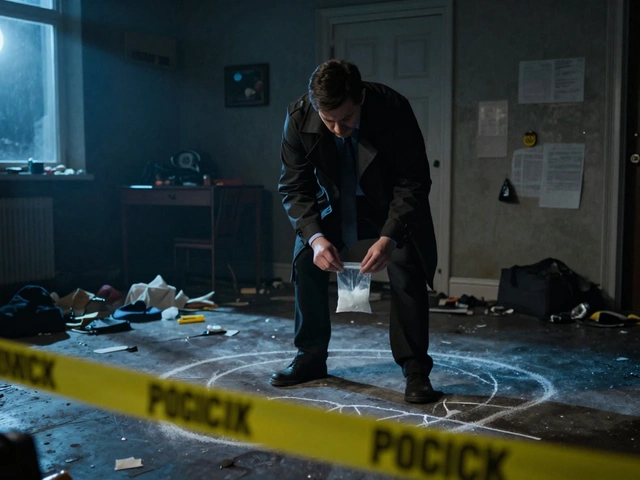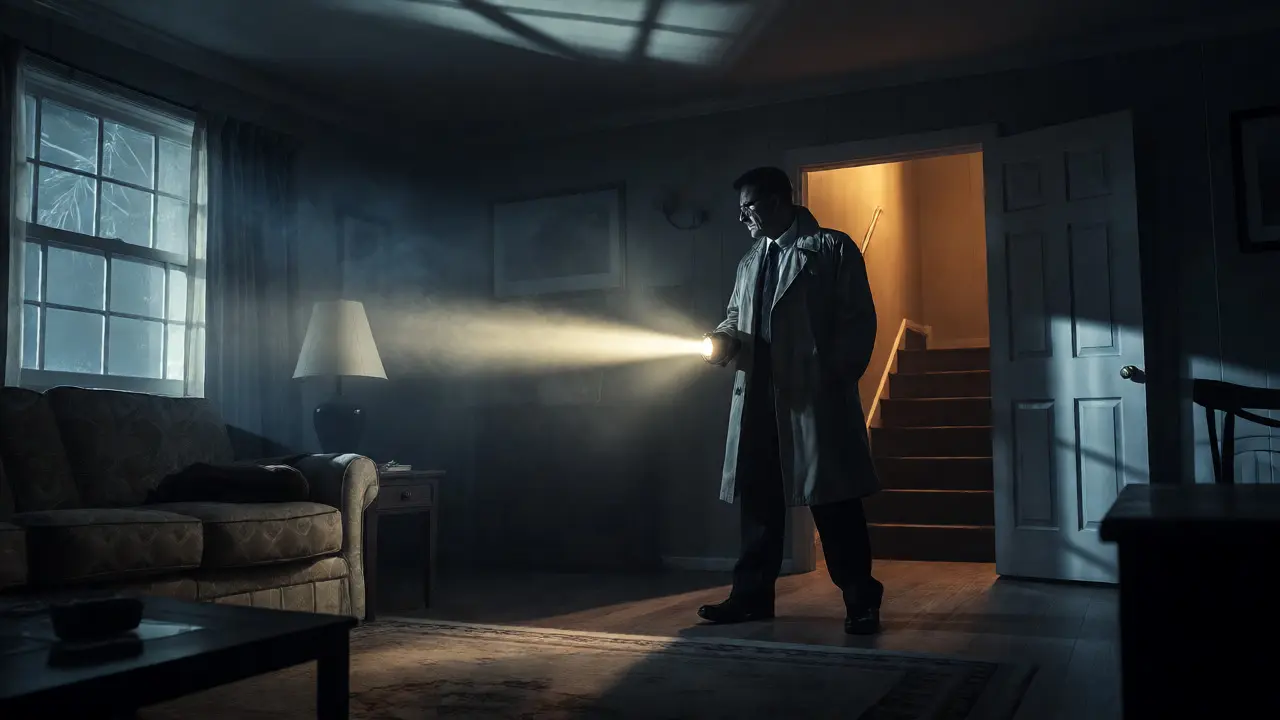
You walk into a house and find one body. It is tragic, it is messy, and you have a job to do. But then you check the basement. Then the attic. Suddenly, you are not looking at a single homicide; you are looking at a pattern. Serial murder investigation is where standard detective work meets high-stakes psychological warfare. It is not just about finding who killed them. It is about understanding why they killed them, in that order, with those specific tools. If you get the "why" wrong, you might catch the killer, but you will never understand the case fully.
The Critical Difference Between Mass and Serial Murders
People use these terms interchangeably, but in law enforcement, they mean very different things. A mass murder involves four or more victims killed in a single event, usually by one perpetrator, without a cooling-off period. Think of a school shooting or a bar brawl gone wrong. A serial murder is different. It involves two or more murders committed as separate events, usually by the same offender, with a significant time gap between them. This gap is called the "cooling-off period." That pause is crucial. It gives the killer time to return to normal life, often blending in perfectly while planning the next hit. Understanding this distinction changes how police allocate resources and prioritize leads from day one.
| Feature | Mass Murder | Serial Murder |
|---|---|---|
| Time Frame | Single continuous event | Separate incidents over weeks, months, or years |
| Cooling-Off Period | None | Present (hours to years) |
| Motive | Often rage, ideology, or despair | Psychological gratification, control, fantasy |
| Victim Selection | Often random or situational | Specific type or archetype |
Identifying the Pattern: Linkage Analysis
How do detectives know these crimes are connected? They look for signatures, not just modus operandi (MO). Your MO is how you commit the crime-using a knife, strangling, shooting. MOs change because killers learn. If a detective gets too close, a killer might switch from using gloves to bare hands to speed up the process. The signature, however, is emotional. It is what the killer *needs* to do to feel satisfied. Maybe they pose the body in a specific way. Maybe they take a small token from each victim. These ritualistic acts rarely change because they feed the killer's psychological need.
Linkage analysis is the forensic method used to connect seemingly unrelated crimes. Investigators compare physical evidence, geographic locations, and behavioral traits. For example, if three victims were found near highway exits within a ten-mile radius, that suggests the killer travels along that route. If all victims had their eyes covered, that is a behavioral link. This process requires meticulous record-keeping. One missed detail-a brand of rope, a specific knot-can break the chain of evidence that ties the cases together.
The Role of Criminal Profiling
When DNA and fingerprints fail, investigators turn to criminal profiling, which uses behavioral science to predict the characteristics of an unknown offender. It is not magic, and it is not like the movies. Profiles are probabilistic, not definitive. They help narrow down the suspect pool. A profiler looks at the crime scene organization. Is the scene chaotic, suggesting an impulsive, disorganized killer with lower intelligence or social skills? Or is it tidy, with the body moved and evidence cleaned, suggesting an organized, intelligent killer who likely has a stable job and family?
- Organized Offenders: Often plan crimes in advance, target strangers, and leave little physical evidence. They may follow news reports about the investigation.
- Disorganized Offenders: Act on impulse, often know their victims, and leave chaotic scenes with plenty of physical clues.
- Mixed Type: Many killers fall somewhere in between, adapting their behavior based on stress or opportunity.
Profiling helps police decide where to focus their canvassing efforts. Should they look for men with military backgrounds? Do they check sex offender registries? While profiles can be wrong, they provide a roadmap when traditional leads run dry.
Geographic Profiling: Where Will He Strike Next?
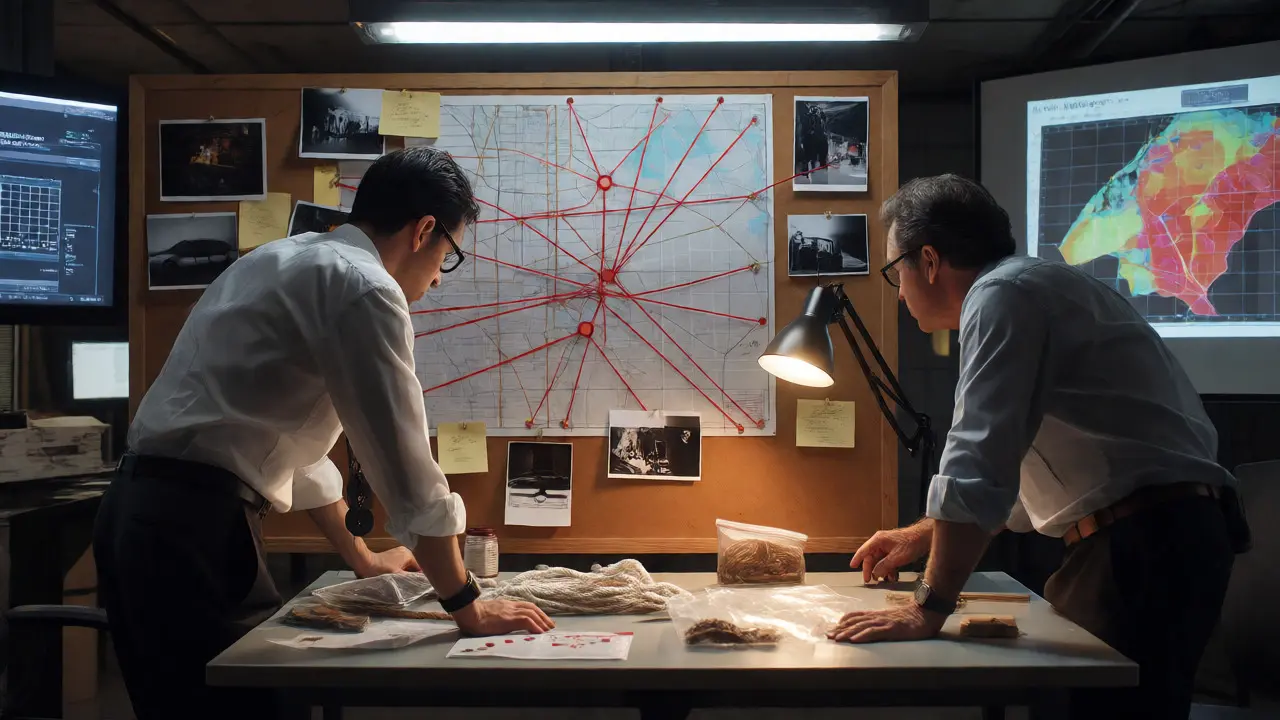
Killers are lazy. They tend to operate within a comfort zone. Geographic profiling uses mathematical models to analyze the locations of past crimes to predict future ones. Most serial killers avoid their immediate home area-their "buffer zone"-because they fear being recognized. Instead, they strike in areas they are familiar with but not too close to home. By mapping the crime scenes, analysts can create a probability surface showing where the killer likely lives or works.
This tool was famously used in the hunt for the Night Stalker in Los Angeles. By analyzing the spatial distribution of attacks, investigators narrowed down the search area significantly. It turns a city-wide manhunt into a neighborhood-level sweep. However, geography alone is not enough. It must be combined with demographic data and temporal patterns (time of day, day of week) to be truly effective.
Managing Multiple Crime Scenes
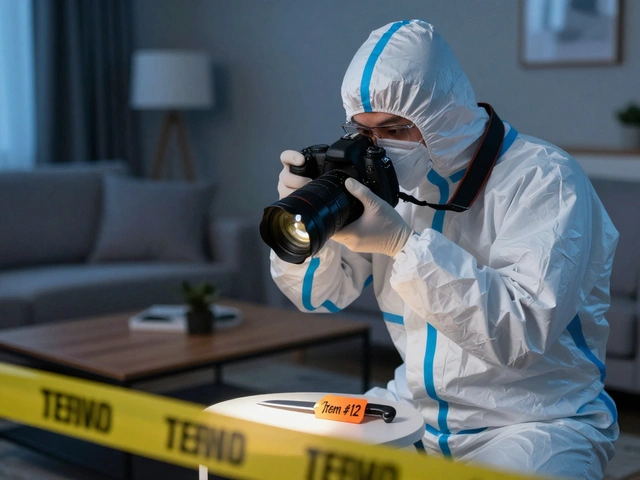
Handling one crime scene is hard. Handling five across different jurisdictions is a logistical nightmare. Each scene must be processed with equal rigor. If police rush the third scene because they think they already know the pattern, they might miss a unique clue that exonerates a suspect or implicates another. Inter-agency cooperation is vital. In many countries, task forces are formed specifically for multi-jurisdictional serial cases. These teams share databases, allowing a fingerprint from City A to match a print from City B instantly.
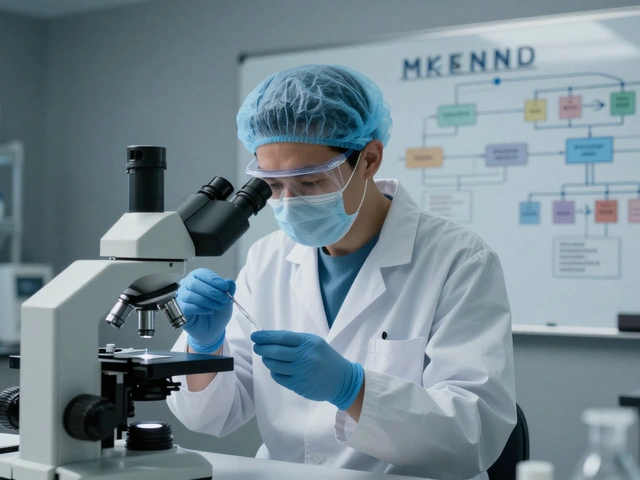
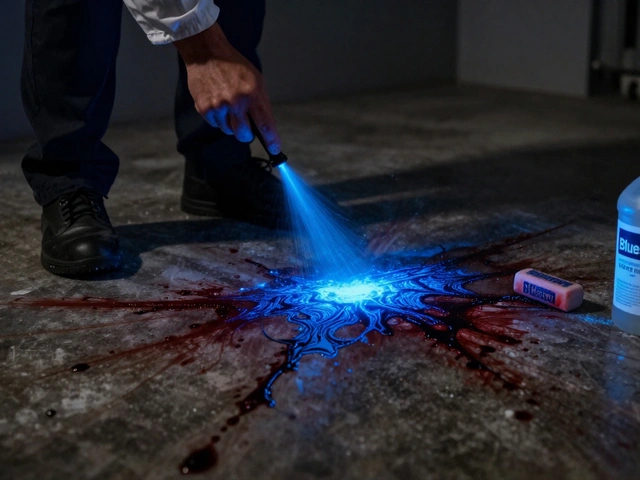
Forensic evidence preservation is critical here. Biological samples degrade. If a victim was found days after death, DNA recovery becomes difficult. Rapid response teams ensure that trace evidence-hair, fibers, soil-is collected before weather or scavengers destroy it. Every piece of evidence adds weight to the case file, building a mosaic that eventually reveals the picture.

The Psychological Toll on Investigators
Working on serial murder cases burns people out. You are not just solving puzzles; you are staring into human depravity repeatedly. Detectives often develop cynicism, insomnia, or hyper-vigilance. They carry the faces of the victims home with them. Support systems within police departments are essential. Regular debriefings, counseling, and mandatory time off help maintain mental health. An investigator who is emotionally compromised might make errors in judgment or miss subtle cues during interviews.
From Suspect to Conviction
Catching the killer is only half the battle. Prosecutors need admissible evidence. Confessions are powerful, but they must be corroborated. Did the suspect mention details only the killer would know? Was the confession voluntary and legally sound? Physical evidence linking the suspect to multiple victims strengthens the case immensely. If you can prove he was at Scene A and Scene B, the jury sees a pattern, not just coincidence. Expert testimony on behavioral consistency helps jurors understand why the same person committed such varied yet similar acts.
What is the difference between MO and signature in serial murder?
Modus Operandi (MO) refers to the practical steps taken to commit the crime, such as the weapon used or entry method. MOs can evolve as the killer gains experience. Signature refers to ritualistic behaviors that satisfy the killer's psychological needs, such as posing the body or taking trophies. Signatures remain consistent throughout the killing spree.
How long does a typical serial murder investigation last?
There is no standard timeline. Some cases are solved in weeks, while others remain open for decades. Advances in genetic genealogy have recently closed cold cases that were unsolved for 40+ years. The duration depends on evidence quality, jurisdictional cooperation, and luck.
Can DNA solve every serial murder case?
No. DNA requires biological material, which degrades over time or may not be present. Additionally, the suspect's DNA must be in a database or linked via familial searching. Without a reference sample or a relative in the system, DNA alone cannot identify a suspect.
Why do serial killers have a cooling-off period?
The cooling-off period allows the killer to return to their daily routine and let the adrenaline fade. It also reduces the risk of detection by spacing out the crimes. This phase is driven by the buildup of internal tension or fantasy, which eventually compels the killer to act again.
What is geographic profiling?
Geographic profiling is a statistical method that analyzes the spatial distribution of crime scenes to predict the most likely residence or base of operations of an offender. It assumes criminals move efficiently and avoid their immediate home turf.