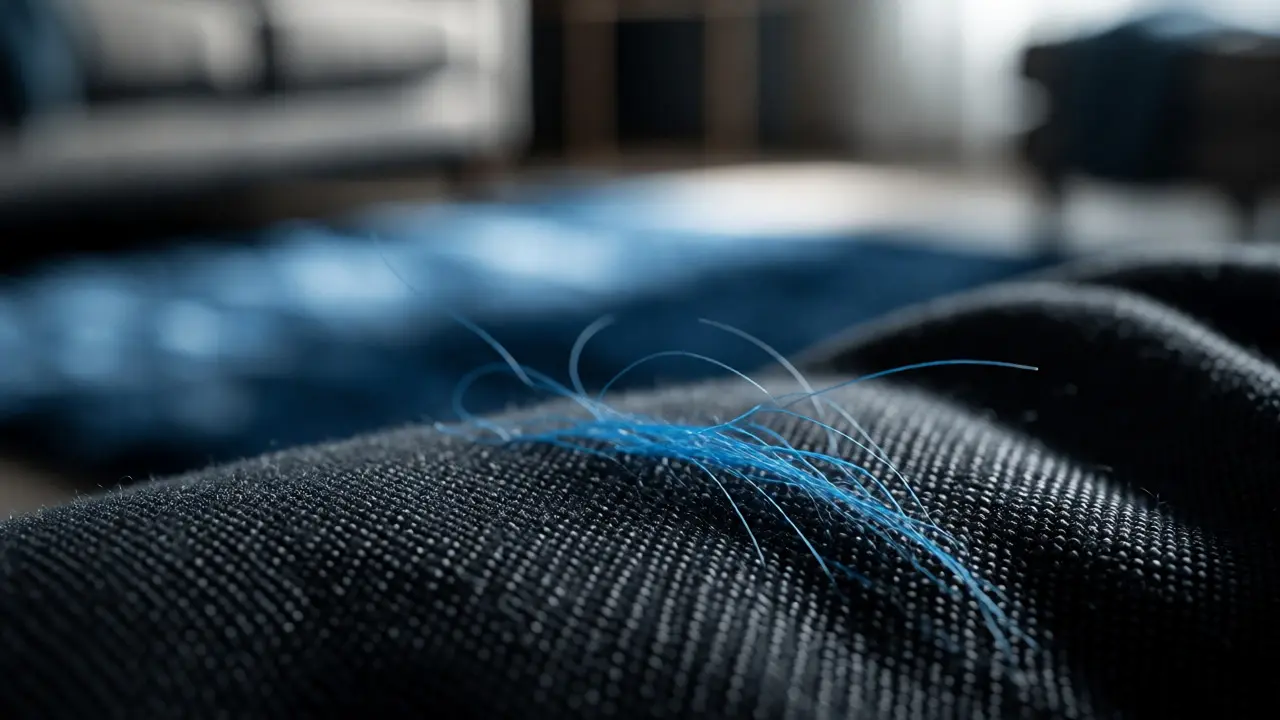
You find a single blue fiber on a suspect's jacket. It looks exactly like the carpet in the victim's living room. Does this prove the suspect was there? Maybe. Does it prove they committed the crime? Absolutely not. This gap between "looks similar" and "proves guilt" is where most legal misunderstandings about trace evidence happen.
Trace evidence-tiny materials like fibers, hair, glass fragments, paint chips, or soil-is often called the "silent witness" of forensics. But unlike DNA, which can provide a statistical probability of identity down to one in billions, trace evidence rarely offers that kind of certainty. Instead, it provides context. It tells you what *might* have happened, not necessarily what *did* happen.
If you are a lawyer, investigator, or just someone fascinated by true crime, understanding how to read a trace evidence report is crucial. A report isn't a verdict; it's a scientific observation with built-in limits. Here is how to interpret those reports without over-crediting them or dismissing them entirely.
What Counts as Trace Evidence?
Before diving into reports, let's clarify what we are talking about. Trace evidence is any material transferred during a physical interaction between two objects or people. The key concept here is Locard’s Exchange Principle: every contact leaves a trace. When two surfaces touch, microscopic particles move from one to the other.
The most common types include:
- Fibers: Natural (cotton, wool) or synthetic (polyester, nylon). These come from clothing, carpets, upholstery, and ropes.
- Hair: Human or animal. Note that human head hair is often less probative than root-bearing hairs because the shaft lacks nuclear DNA.
- Glass: Fragments from windows, bottles, or headlights. Glass has specific refractive indices and densities that make comparison reliable.
- Paint: Layers from cars, walls, or machinery. Paint transfers are highly distinctive due to layer structure and chemical composition.
- Soil and Pollen: Geographic indicators. Soil composition can link a suspect’s shoes to a specific location.
These materials are ubiquitous. You shed thousands of skin cells and hundreds of fibers every day. Your environment is full of loose debris. This ubiquity is both the strength and the weakness of trace evidence analysis.
The Core of the Report: Comparison vs. Identification
When you receive a lab report, look for the conclusion statement. This is where the science meets the law. Forensic examiners generally use a hierarchy of conclusions. Understanding these terms prevents misinterpretation in court.
| Conclusion Type | Meaning | Probative Value |
|---|---|---|
| Indistinguishable | The questioned sample shares all measured characteristics with the known sample. | Moderate. It means they *could* be from the same source, but doesn't prove they are. |
| Consistent With | No differences were found, but the class of materials is large. | Low to Moderate. Many items share these traits (e.g., blue polyester). |
| Inconsistent | A clear difference exists in composition, color, or structure. | High. Effectively excludes the known sample as the source. |
| Identical | Rarely used now. Implies uniqueness beyond reasonable doubt. | High, but scientifically debated for non-biological traces. |
Notice that "Indistinguishable" is not the same as "Identical." If a fiber from a crime scene is indistinguishable from a fiber in your car, it means the microscope, spectrometer, and density tests didn't find a difference. However, millions of blue polyester fibers exist worldwide. The report says, "We couldn't tell them apart," not "They came from the same shirt."
Significance: Why It Matters Anyway
If trace evidence can't definitively identify a source, why bother collecting it? Because it builds a narrative. In isolation, a fiber is weak. In combination with other evidence, it becomes powerful.
Consider a hit-and-run case. A fragment of red automotive paint is found on the victim's jacket. The suspect's car is red. A simple visual match is weak. But if the lab finds that the paint chip has four distinct layers matching the exact primer, base, and clear coat sequence of the suspect's vehicle-and the chemical binder matches-the significance skyrockets. Random chance of another car having that exact layer sequence and chemical formula drops significantly.
Trace evidence also helps reconstruct events. Did the suspect struggle with the victim? Finding victim's hair in the suspect's fingernails supports a struggle. Finding suspect's fibers on the victim's collar suggests close proximity. It places people in space and time.
The Role of Background Statistics
Good reports include background data. How common is this type of fiber? If the lab notes that blue cotton denim fibers are found in 80% of urban clothing samples, the evidentiary weight is low. If they note that a rare fluorescent dye used in a specific brand of carpet is present, the weight is high. Always ask: What is the frequency of occurrence?
Limitations: Where Things Go Wrong
Here is the uncomfortable truth: Trace evidence is fragile. Not physically, but logically. Its limitations stem from three main areas: transfer, persistence, and collection.
1. Transfer Mechanisms
How did the evidence get there? Primary transfer happens when two objects touch directly. Secondary transfer occurs when an object picks up trace material from a third party. Imagine Person A touches a sofa, picking up fibers. Person B then hugs Person A, picking up those sofa fibers. Later, Person B is arrested. Finding sofa fibers on Person B does not mean Person B sat on the sofa. It might just mean they hugged Person A. Labs cannot always distinguish primary from secondary transfer.
2. Persistence
How long does evidence stay? Fibers fall off clothes within hours. Hair falls out naturally. Glass shards dislodge quickly. If you arrest someone two days after a crime, finding their fibers on a victim is impressive. Finding them five days later is less so. Environmental factors like wind, rain, and friction degrade trace evidence rapidly.
3. Collection Bias
Crime scenes are messy. Investigators collect what they see or expect to find. If they focus on the floor, they might miss fibers on the ceiling fan. If they assume the suspect wore jeans, they might overlook shoe lint. Missing evidence is still evidence-it just wasn't collected. This is why chain-of-custody documentation is vital.
Interpreting the Lab Methodology
Not all labs use the same tools. Knowing the method helps you gauge reliability.
- Microscopy: The first step. Examiners compare color, diameter, and surface features. It’s subjective. Two experts might disagree on whether a fiber is "blue-green" or "teal."
- FTIR (Fourier Transform Infrared Spectroscopy): Identifies the polymer type (e.g., polyester vs. nylon). It’s precise but only identifies the material class, not the manufacturer.
- Polarized Light Microscopy (PLM): Used for minerals and some polymers. Good for distinguishing natural from synthetic fibers.
- SEM-EDX (Scanning Electron Microscope with Energy Dispersive X-ray): Provides elemental composition. Excellent for glass and paint. Expensive and time-consuming, so not always used.
A robust report will detail which methods were used. If a report only mentions microscopy, be cautious. Color and shape are easily mimicked. Chemical analysis adds a layer of objective verification.
Common Pitfalls in Legal Argument
Lawyers often make mistakes when presenting trace evidence. Here are the big ones:
Overstating Certainty: Saying "This fiber proves he was there" is wrong. Say "This fiber is consistent with him being there." The distinction matters to a jury.
Ignoring Ubiquity: White cotton T-shirts are everywhere. Finding white cotton fibers on a victim doesn't link a suspect unless the fibers have unique manufacturing defects or unusual blends.
Assuming Exclusivity: Just because a suspect owns a specific car model doesn't mean they are the only one who could have left paint at the scene. There are thousands of that model on the road.

Best Practices for Requesting Analysis
If you are managing a case, how do you ensure the best outcome from trace evidence?
- Collect Early: Every hour reduces the amount of recoverable trace material.
- Control Samples: Always take "control" samples from the suspect's clothing and the scene. You need a baseline to compare against.
- Specify Questions: Don't just send a bag of lint. Ask the lab: "Is this fiber chemically identical to the carpet?" rather than "Did he sit on the carpet?" Let the scientist answer the question they can answer.
- Review Raw Data: If possible, request the spectra or micrographs. Seeing the actual peaks in an FTIR graph gives you more confidence than reading a summary sentence.
Real-World Scenario: The Carpet Fiber
Let's walk through a hypothetical. A burglary occurs. A window is broken. Glass fragments are found on the suspect's jacket. Blue carpet fibers are found on the suspect's pants.
The lab report states:
- Glass: Refractive index and density match the window pane. Conclusion: Consistent.
- Fibers: Blue nylon, triangular cross-section, delustrant present. Matches the victim's carpet. Conclusion: Indistinguishable.
Defense Argument: "My client works in a warehouse with blue nylon carpets. He wears these pants daily. The glass could be from any window." Prosecution Argument: "The glass matches perfectly. The fiber is a rare shade of blue used only in this building. Combined with his presence near the scene, it strongly implies entry."
Who wins? Neither, really. The jury decides based on credibility. But the prosecution must explain *why* the rarity matters. The defense must explain *why* consistency isn't proof. That’s the job of expert testimony.
The Future of Trace Evidence Reporting
Technology is improving. We are moving toward more quantitative statistics. New databases track fiber frequencies across regions. AI-assisted microscopy is reducing subjectivity in color matching. However, the fundamental limitation remains: trace evidence is associative, not definitive. Until we can track individual molecules back to a single spool of thread, we will deal in probabilities, not certainties.
Understanding this nuance protects justice. It prevents wrongful convictions based on coincidental matches and ensures guilty parties aren't acquitted simply because the evidence wasn't DNA. Trace evidence fills the gaps. Use it wisely.
Can trace evidence alone convict someone?
Rarely. Trace evidence is almost always corroborative. It supports other evidence like eyewitness accounts, video surveillance, or digital footprints. Convicting solely on a fiber match is risky because many items share similar characteristics.
Why is 'indistinguishable' different from 'identical'?
'Identical' implies a unique match with no other possible source, which is hard to prove for mass-produced items like fibers. 'Indistinguishable' means current technology cannot detect a difference between the two samples. Given the huge number of manufactured items, 'indistinguishable' is the scientifically accurate term.
How long does trace evidence persist on clothing?
It varies wildly. Loose fibers may last only a few hours or days depending on activity and weather. Embedded fibers in seams might last longer. Generally, the sooner you test, the better. After several washes, most transfer evidence is gone.
Does secondary transfer invalidate trace evidence?
No, but it complicates interpretation. Secondary transfer is common. A good report will acknowledge this possibility. Context clues (like the suspect never visiting the scene but interacting with someone who did) help determine if secondary transfer is plausible.
What is the most reliable type of trace evidence?
Paint and glass are often considered more reliable than fibers because they have complex, multi-layered structures and specific physical properties (density, refractive index) that are harder to replicate randomly than simple textile fibers.