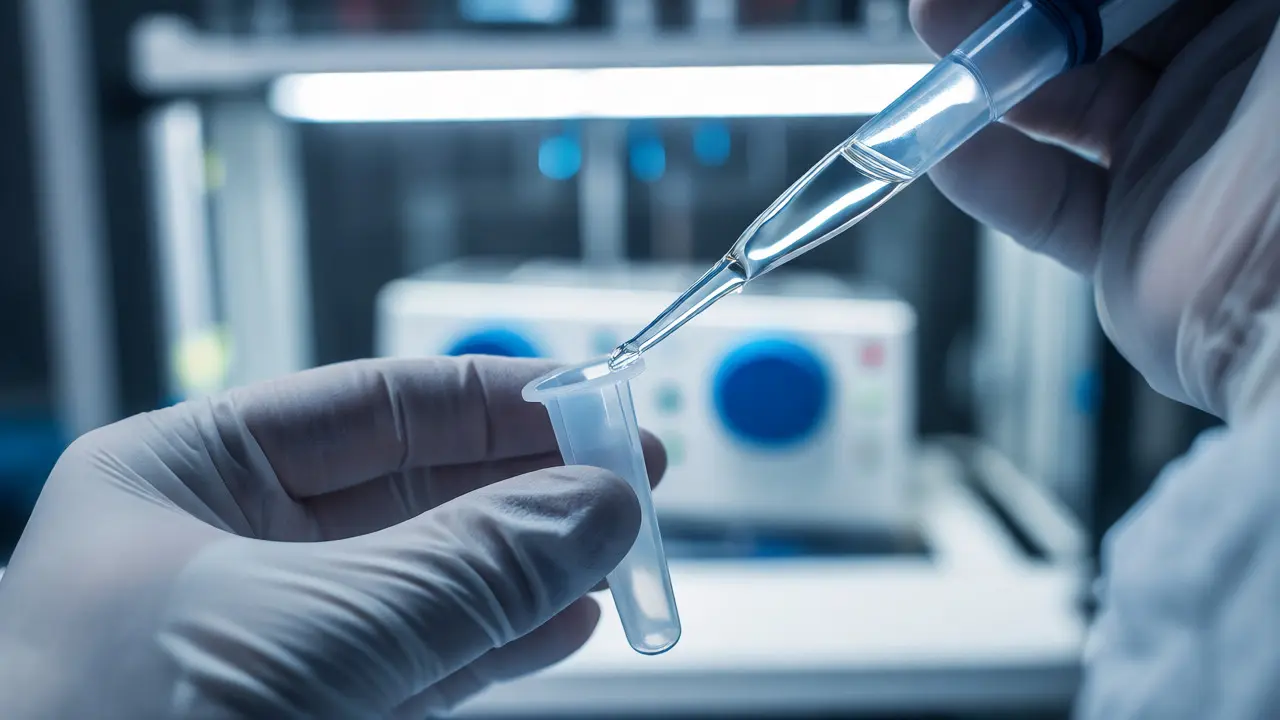
You can have the most sophisticated sequencing machine in the world, but if you feed it a sample with the wrong amount of DNA, you’re going to get garbage results. Or worse, no results at all. In forensic science, DNA quantitation is the critical step that tells you exactly how much human DNA is present and whether it’s intact enough to use. It’s not just about counting molecules; it’s about assessing quality. If you skip this step or do it poorly, your downstream Short Tandem Repeat (STR) profiling will fail, leading to inconclusive evidence or wasted resources.
Think of it like cooking. You wouldn’t throw a whole chicken into a pan meant for two eggs. Similarly, PCR amplification requires a precise range of template DNA. Too little, and you get stochastic effects-alleles dropping out entirely. Too much, and you risk inhibition or saturation artifacts. This guide breaks down how we measure DNA, why quality matters as much as quantity, and what tools forensic labs rely on today.
Why Quantity Isn’t Enough: The Quality Factor
Most people assume quantitation means measuring total mass. But in forensics, "total DNA" includes everything: human nuclear DNA, mitochondrial DNA, bacterial contamination from soil, and even DNA from skin cells left by the analyst. If you only measure total mass using a method that detects all double-stranded DNA, you might think you have 10 nanograms (ng) of usable material. In reality, you might have 9 ng of bacteria and only 1 ng of human DNA.
This is where sample quality becomes the deciding factor. Degraded DNA fragments are shorter than intact strands. Since standard STR kits target specific fragment lengths, degraded samples often fail to amplify larger loci. A high-quantity sample that is heavily degraded will perform worse than a lower-quantity sample that is intact. Therefore, modern quantitation strategies must assess both concentration and integrity.
The Evolution of Quantitation Methods
Forensic labs have moved through several generations of technology. Understanding these helps explain why current standards exist.
- Spectrophotometry: Older methods measured UV absorbance. While quick, they couldn’t distinguish between human and non-human DNA, nor could they detect inhibitors effectively. They are largely obsolete for forensic casework.
- Fluorometry: Using dyes like PicoGreen, this method binds specifically to double-stranded DNA. It’s more sensitive than spectrophotometry but still counts all dsDNA, including microbial contaminants.
- Real-Time PCR (qPCR): This is the gold standard today. By targeting human-specific sequences, qPCR measures only human nuclear DNA. Crucially, it can also provide an Integrity Value (IV), which estimates degradation levels.
The shift to qPCR wasn’t just about precision; it was about efficiency. Before qPCR, analysts often had to run trial-and-error dilutions to find the right input amount for STR typing. Now, a single qPCR run gives a precise number, allowing for accurate normalization before amplification.
How Real-Time PCR Works in Forensics
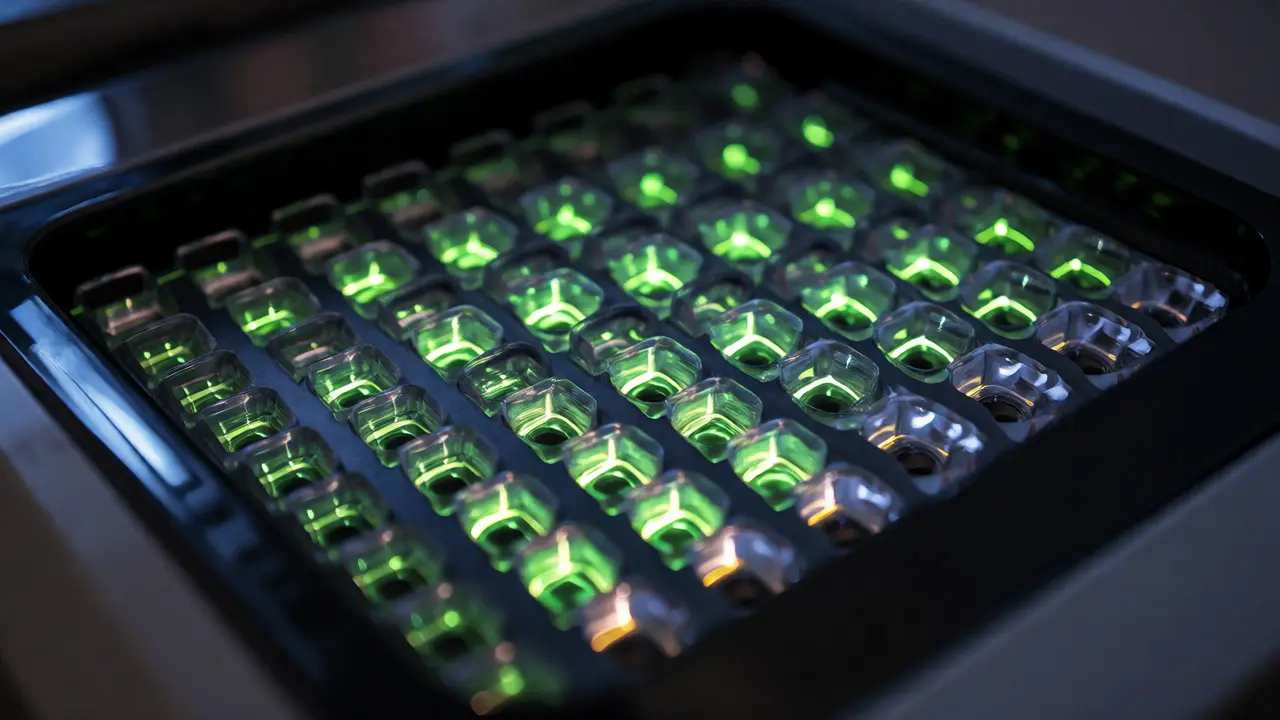
Real-time PCR monitors the amplification of DNA targets during each cycle. Instead of waiting until the end to see if a reaction worked, the instrument detects fluorescence in real time. For forensics, commercial kits like Applied Biosystems’ Quantifiler Trio or Promega’s PowerQuant are industry staples.
These kits use three distinct targets to give a complete picture:
- Human Nuclear Target: Confirms the presence of human DNA and provides the concentration.
- Total Human Target: Often used to cross-check against internal controls.
- Inhibition Control: An internal positive control (IPC) spiked into the sample. If the IPC fails to amplify, you know something in the sample is blocking the reaction-like humic acid from soil or heme from blood.
By comparing the Cycle Threshold (Ct) values of the human target versus the IPC, analysts calculate an Integrity Value. A low IV indicates severe degradation. This data point is vital because it warns the analyst before they waste precious reagents on an STR kit that won’t work.
Interpreting Your Data: Concentration vs. Integrity
Once you have your numbers, how do you act? Most forensic laboratories follow strict guidelines set by organizations like the Scientific Working Group on DNA Analysis Methods (SWGDAM). Here is a general framework for decision-making:
| Concentration (ng/µL) | Integrity Value (IV) | Recommended Action | Risk Level |
|---|---|---|---|
| > 0.5 | Low (< 0.3) | Proceed with standard STR protocol | Low |
| 0.1 - 0.5 | Moderate (0.3 - 0.6) | Reduce input volume; consider mini-STR | Moderate |
| < 0.05 | High (> 0.6) | Use Low Copy Number (LCN) or Mini-STR protocols | High |
| Any | IPC Failed | Dilute sample to reduce inhibition; repeat quant | High |
Note that "Low" integrity doesn’t mean "bad." It means the DNA is fragmented. If your IV is high, you need to adjust your strategy. Standard STR kits target amplicons up to 400 base pairs. If your DNA is mostly broken into 100 bp fragments, those large targets won’t amplify. Switching to a mini-STR kit, which targets smaller regions (under 150 bp), can rescue the profile.
Common Pitfalls and How to Avoid Them
Even experienced analysts make mistakes. The most common issue isn’t bad equipment; it’s poor sampling technique. Touch DNA samples, for example, yield picogram amounts. At this level, contamination is a massive threat. One sneeze or a drop of sweat from the analyst can skew the human DNA count.
Another trap is ignoring inhibitor effects. A sample might show a high concentration because the dye binds to contaminants, but the actual human DNA is inhibited. Always check the IPC Ct value. If the IPC Ct is delayed compared to your negative control, you have inhibition. Diluting the sample often reduces inhibitor concentration below the threshold while keeping enough human DNA for amplification.
Finally, don’t forget the blank. Every batch needs a no-template control. If your blank shows any significant signal, your reagents are contaminated. No amount of clever math can fix a contaminated batch.
Beyond the Lab: Legal Implications of Quantitation
In court, defense attorneys often challenge the validity of DNA evidence. They might ask, "Was the sample too degraded to be reliable?" or "Did the lab account for inhibitors?" Your quantitation report answers these questions. A robust record showing that you assessed integrity and adjusted protocols accordingly strengthens the admissibility of your results under Daubert or Frye standards.
Transparency is key. Documenting the exact concentration and integrity values allows independent reviewers to verify if the analytical choices made were scientifically sound. If you proceed with standard STR on a highly degraded sample without noting the high IV, you open yourself up to criticism. Conversely, documenting that you switched to mini-STR due to degradation shows rigorous scientific judgment.
What is the difference between total DNA and human DNA quantitation?
Total DNA quantitation measures all double-stranded DNA present, including bacterial, plant, and animal sources. Human DNA quantitation uses specific primers to target human-only sequences, ensuring that the reported concentration reflects only relevant forensic material.
How does DNA degradation affect STR profiling?
Degradation breaks DNA into smaller fragments. Since STR markers vary in size, larger loci may fail to amplify if the DNA is too fragmented. This leads to "drop-out," where expected alleles are missing, potentially causing misinterpretation of mixtures or partial profiles.
Can I use spectrophotometry for forensic DNA quantitation?
Generally, no. Spectrophotometry lacks the sensitivity and specificity required for forensic casework. It cannot distinguish human from non-human DNA and is easily skewed by contaminants, making it unsuitable for determining optimal input for STR analysis.
What is an Integrity Value (IV)?
An Integrity Value is a ratio derived from qPCR data that estimates the extent of DNA degradation. A higher IV indicates more fragmentation. Labs use IV thresholds to decide whether to use standard, mini-, or ultra-sensitive STR protocols.
Why is the Internal Positive Control (IPC) important?
The IPC is a synthetic DNA sequence added to every sample. If it fails to amplify or amplifies later than expected, it signals the presence of PCR inhibitors in the sample, such as humic acids or hemoglobin, regardless of the human DNA concentration.