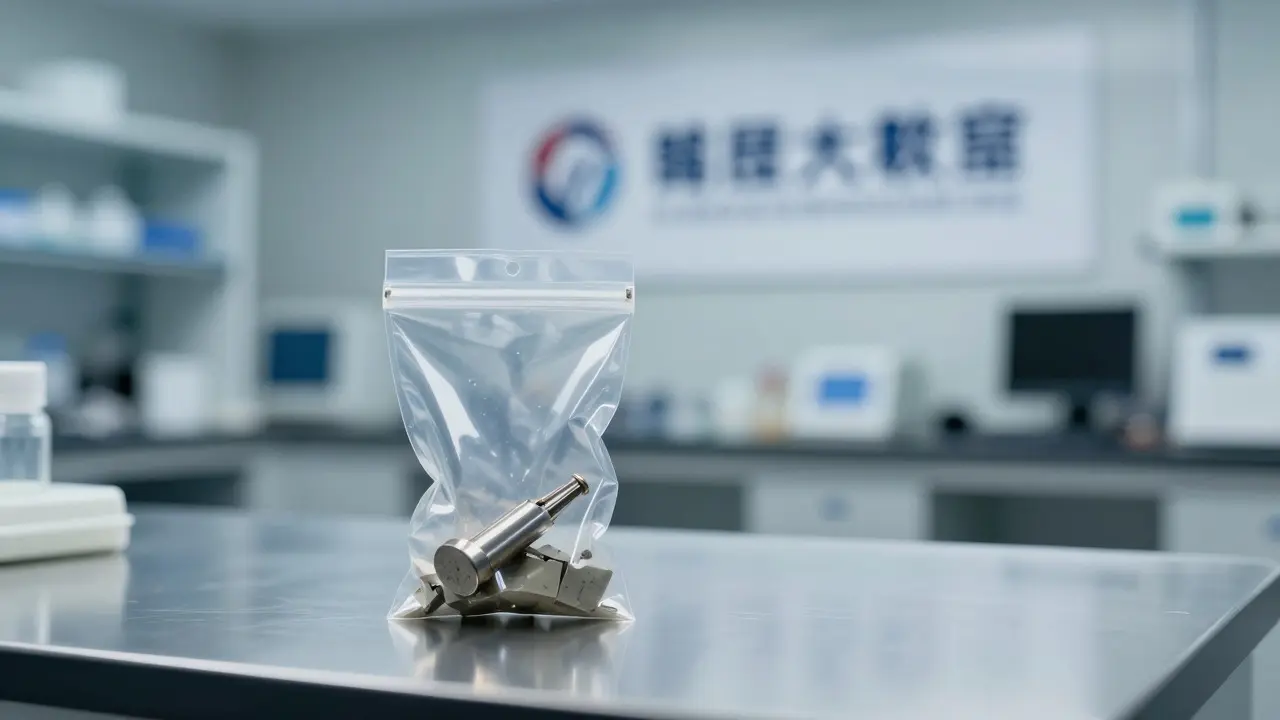
Imagine a crime scene where the evidence points to your neighbor. Now imagine the lab that analyzes that evidence is owned by a company that sells insurance policies to that same neighbor. Does the result still hold up? In the world of laboratory accreditation is a formal process that evaluates and confirms a laboratory's competence to perform specific tests or calibrations according to international standards, this isn't just a hypothetical. It’s a daily operational risk.
When we talk about impartiality is the state of being unbiased, fair, and free from any influence that could compromise objective judgment, we are talking about the backbone of scientific credibility. If a lab loses its impartiality, its data becomes suspect. For accredited labs, especially those in forensics or clinical diagnostics, this means the difference between a conviction and an acquittal, or a correct diagnosis and a missed treatment window.
The core problem isn't usually malice. It’s rarely that a scientist wakes up wanting to lie. The issue is structural. Financial pressures, personal relationships, and organizational hierarchies create invisible currents that can push results in one direction. Conflict of Interest (COI) controls are the guardrails designed to stop these currents before they distort the data.
Why Impartiality Is Non-Negotiable in Accredited Labs
You might think, "If the science is sound, who cares if there's a conflict?" Here’s the catch: science is only as good as the context in which it’s performed. In ISO/IEC 17025 is an international standard for testing and calibration laboratories that sets requirements for competence, impartiality, and consistent operation, Clause 4.1 explicitly demands that labs demonstrate impartiality. This isn't a suggestion; it's a requirement for maintaining accreditation.
Consider a commercial materials testing lab that also manufactures concrete additives. If they test their own competitor’s product, is the pressure to find flaws real? Yes. Even if no one says a word, the financial incentive exists. That incentive is a conflict of interest. When you look at forensic science is the application of scientific methods and techniques to matters of law, including DNA analysis, toxicology, and ballistics, the stakes are even higher. A biased result doesn't just lose a contract; it can send an innocent person to prison.
Impartiality covers three main areas:
- Financial Independence: No single client should control more than a certain percentage of revenue without oversight.
- Organizational Separation: Marketing teams shouldn't dictate technical outcomes.
- Personal Neutrality: Staff shouldn't have undisclosed ties to clients or competitors.
Anatomy of a Conflict of Interest
Not all conflicts are obvious. Some are glaring, like a manager whose spouse works for the primary client. Others are subtle, like a lab receiving a large grant from a pharmaceutical company to develop a new assay method. Let’s break down the types of COIs you’ll actually encounter in the field.
- Direct Financial Interest: The most straightforward type. An employee owns stock in a company whose products they are testing. Or, the lab itself receives consulting fees from a client, creating a dual role.
- Personal Relationships: A technician has a close friend working in the R&D department of the entity being tested. Even if the friend isn't involved in the specific sample, the perception of bias lingers.
- Institutional Bias: A university lab that relies heavily on funding from one industry sector may unconsciously prioritize methodologies that favor that sector’s interests.
- Competitive Advantage: A lab that offers both testing and remediation services. If they find a contaminant, do they report it accurately, or do they soften the findings because they want the cleanup contract?
The key here is that a conflict of interest doesn’t require actual bias to exist. The *potential* for bias is enough to trigger controls. If a reasonable observer would question the neutrality of the result, you have a COI.
Building Your COI Control Framework
So, how do you fix this? You don't just hope people are honest. You build systems. A robust COI framework has four layers: identification, assessment, mitigation, and monitoring.
Layer 1: Identification and Disclosure
Everything starts with transparency. Before a project begins, every relevant staff member must disclose potential conflicts. This includes:
- Current employment or board positions with clients or competitors.
- Significant financial holdings in related industries.
- Recent collaborations or grants from entities involved in the work.
Layer 2: Risk Assessment
Not all disclosures carry the same weight. You need a scoring system. Assign a risk level to each disclosed conflict based on:
- Proximity: How directly is the person involved in the decision-making?
- Magnitude: What is the financial or professional value at stake?
- Visibility: Would external parties likely notice this connection?
Layer 3: Mitigation Strategies
Once identified, you mitigate. Common strategies include:
- Recusal: Remove the conflicted individual from the specific task chain.
- Blind Testing: Code samples so the analyst doesn't know which client sent them.
- Independent Review: Have a second, uninvolved expert verify critical results.
- Firewalls: Create information barriers between departments (e.g., marketing vs. technical).
Layer 4: Monitoring and Audit
Controls fail if no one checks them. Internal audits should specifically look for COI breaches. Are disclosures current? Are recusals documented? Is the blind coding process actually working? Regular spot-checks keep the culture honest.

Case Study: The Insurance Lab Dilemma
Let’s look at a realistic scenario. A private environmental lab provides water quality testing for municipalities. They also sell filtration systems to those same municipalities. One day, a city requests a routine check. The lead analyst notices that the water sample shows trace levels of a contaminant that his company’s filtration system is marketed to remove. If he reports the exact level, the city might buy the filter. If he rounds down slightly, the city might not. Both are technically defensible, but one is ethically compromised. Here, the COI control kicks in. Because the lab sells products to its clients, there is an inherent institutional conflict. The solution? Implement a strict separation. The sales team has zero access to raw data until after the report is finalized and signed off by an independent QA manager. Furthermore, the analyst must disclose any prior discussions with the city’s procurement officer. This removes the temptation and protects the integrity of the data.
Common Pitfalls and How to Avoid Them
Even well-intentioned labs stumble. Here are the traps I see most often:
- The "It’s Not My Job" Mentality: Scientists think COI management is HR’s problem. It’s not. It’s everyone’s problem. If you see a red flag, raise it.
- Over-Reliance on Trust: "We’re all professionals, we’d never cheat." History proves otherwise. Systems beat trust.
- Lack of Training: Staff don’t know what counts as a conflict. A dinner with a client? Maybe. A gift over $50? Definitely. Train them on specific thresholds.
- Ignoring Perceptions: Just because you aren't biased doesn't mean others won't think you are. Manage the perception, not just the reality.
Avoiding these pitfalls requires a culture where asking questions is rewarded, not punished. If an analyst feels safe disclosing a minor conflict without fear of retribution, your controls will work. If they hide things out of fear, your accreditation is at risk.

Documentation: Your Best Defense
In a dispute, memory fails. Documentation lasts. Every COI control must be written down. Keep records of:
- Disclosure forms signed by all relevant staff.
- Risk assessment scores for each project.
- Minutes from meetings where conflicts were discussed.
- Proof of recusal or blind coding implementation.
If an auditor asks, "How did you ensure impartiality for Client X?", you shouldn't guess. You should hand them a folder with signed forms, risk logs, and verification steps. This paper trail is what turns a policy into a practice.
The Role of External Auditors
Internal controls are great, but external eyes are essential. Accreditation bodies like ANAB is the American Association for Laboratory Accreditation, a non-profit organization that accredits testing, calibration, and reference material production laboratories or UKAS is the United Kingdom Accreditation Service, which assesses the competence of conformity assessment bodies will scrutinize your COI processes during surveillance audits. They look for consistency. Do you apply the same rules to your biggest client as you do to your smallest? If not, you have a problem.
External auditors also bring fresh perspectives. They might spot a conflict you’ve become blind to because it’s been there for years. Listen to their observations. They aren't trying to trip you up; they’re trying to protect your reputation.
Future-Proofing Your Ethics Program
As labs move toward digital workflows and AI-assisted analysis, COI risks evolve. If an algorithm is trained on data provided by a single vendor, is the output impartial? Probably not. As you integrate new technologies, ask: Who owns the data? Who benefits from the outcome? Add these questions to your standard operating procedures.
Ethics isn't a static box to check. It’s a dynamic process. Stay curious, stay vigilant, and remember: your job isn't just to produce numbers. It’s to produce truth. And truth requires freedom from interference.
What is the difference between a conflict of interest and bias?
A conflict of interest is a situation where personal, financial, or professional interests could influence judgment. Bias is the actual skewed result. You can have a COI without resulting bias (if controls work), but you cannot have true impartiality with an unmanaged COI.
How often should conflict of interest disclosures be updated?
At minimum, once a year for all staff. Additionally, updates should be required when taking on new roles, joining boards, making significant investments, or starting new long-term client contracts.
Does a small financial interest count as a conflict of interest?
Yes. Materiality varies by context, but generally, any financial interest that a reasonable person would view as potentially influencing judgment should be disclosed. It’s better to over-disclose than under-disclose.
Who is responsible for managing conflicts of interest in a lab?
Ultimately, top management is responsible for establishing the policy. However, execution is shared: HR handles training and forms, QA monitors compliance, and every employee has a duty to disclose their own conflicts.
Can a lab remain impartial if it serves multiple competing clients?
Yes, provided there are strong information barriers. Data from Client A must be inaccessible to the team handling Client B unless necessary and authorized. Blind coding and separate project teams help maintain this separation.