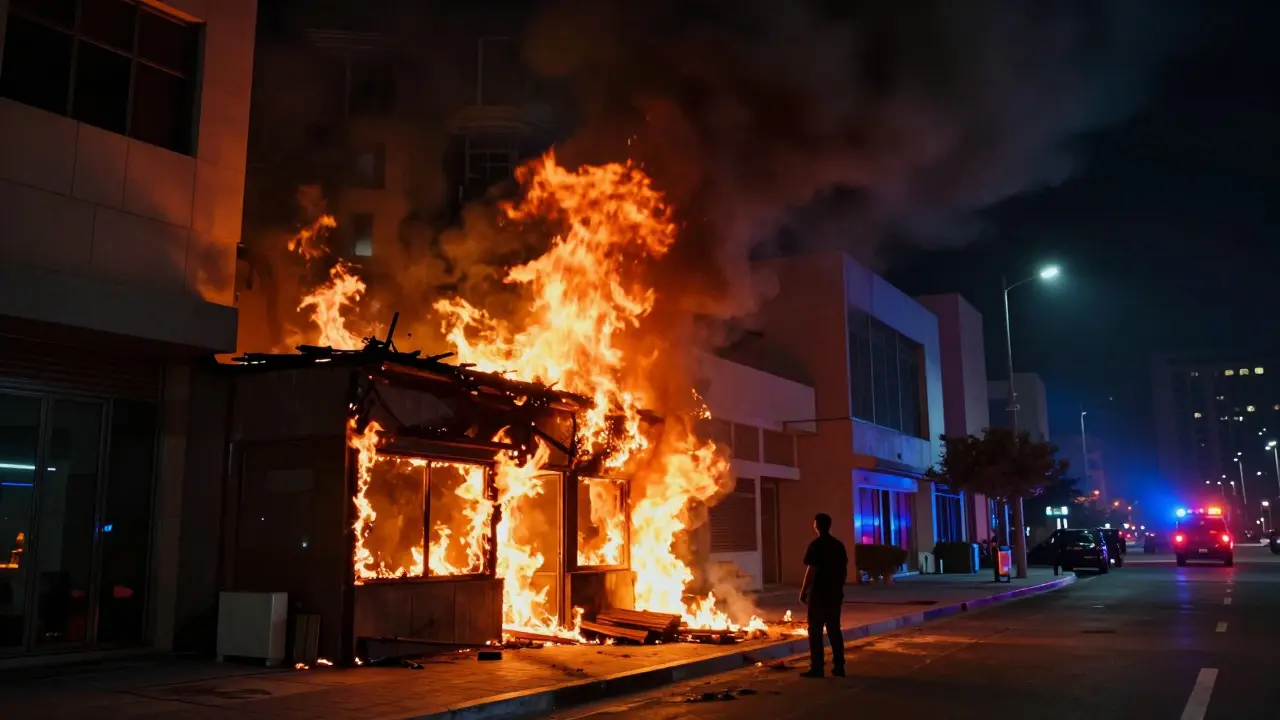
Imagine a small business owner in Portland losing their shop to flames on a Tuesday night. Three months later, a similar structure down the street burns under nearly identical conditions. To the public, these are tragedies. To an investigator, they are data points. Serial arson is the act of setting multiple fires over time by the same perpetrator, often with distinct behavioral signatures that link the incidents. Unlike random accidents or one-off criminal acts, serial arson leaves a trail. The challenge for investigators isn't just finding who lit the match; it's connecting dots that might be scattered across different jurisdictions, seasons, or even years.
The core problem in these cases is that fire destroys evidence faster than any other crime scene. Once the heat dissipates, the physical clues vanish into ash. However, before the smoke clears, specific indicators remain. These indicators form a pattern. When you look at enough fires, certain behaviors repeat. Recognizing these repetitions allows investigators to move from guessing to proving. This article breaks down how those patterns emerge, what they look like, and how professionals use them to build a case.
Defining the Behavioral Signature
Every arsonist has a style. It’s not about the type of fuel used-though that matters-but about the *method*. Does the offender use accelerants? If so, which ones? Gasoline is common, but some prefer kerosene or lighter fluid because it burns hotter or smells less distinctive. More importantly, how do they apply it? A "pour-over" method creates a distinct liquid pool residue. A "drag-and-drop" technique leaves streaks. These physical traces are the first layer of the pattern.
Beyond the chemistry, there is the timing. Serial arsonists often operate on a schedule or a trigger. Do they burn buildings at 3 AM when foot traffic is low? Do they target weekends? Or do they wait for specific weather conditions, like high humidity to hide smoke, or dry winds to spread flames quickly? This temporal consistency is a powerful identifier. If three fires happen within a five-mile radius, all between midnight and 4 AM, all involving commercial structures with no occupancy, the probability of a single actor increases dramatically.
Geographic and Target Analysis
Location is everything in fire investigation. Investigators map every incident to see if there is a geographic center or a path. This is known as the "heat map." If the fires follow a straight line, the suspect might be traveling along a specific route. If they cluster around a particular intersection, the suspect likely lives or works nearby.
Target selection reveals motive. Is the arsonist targeting:
- Abandoned structures: Suggests thrill-seeking or property destruction without fear of human casualties.
- Businesses: Could indicate insurance fraud or personal vendetta against owners.
- Residential homes: Often points to domestic disputes or revenge.
- Specific types of businesses: For example, only burning laundromats suggests a targeted campaign, perhaps due to competition or a grudge against the industry.
Physical Evidence and Accelerant Residues
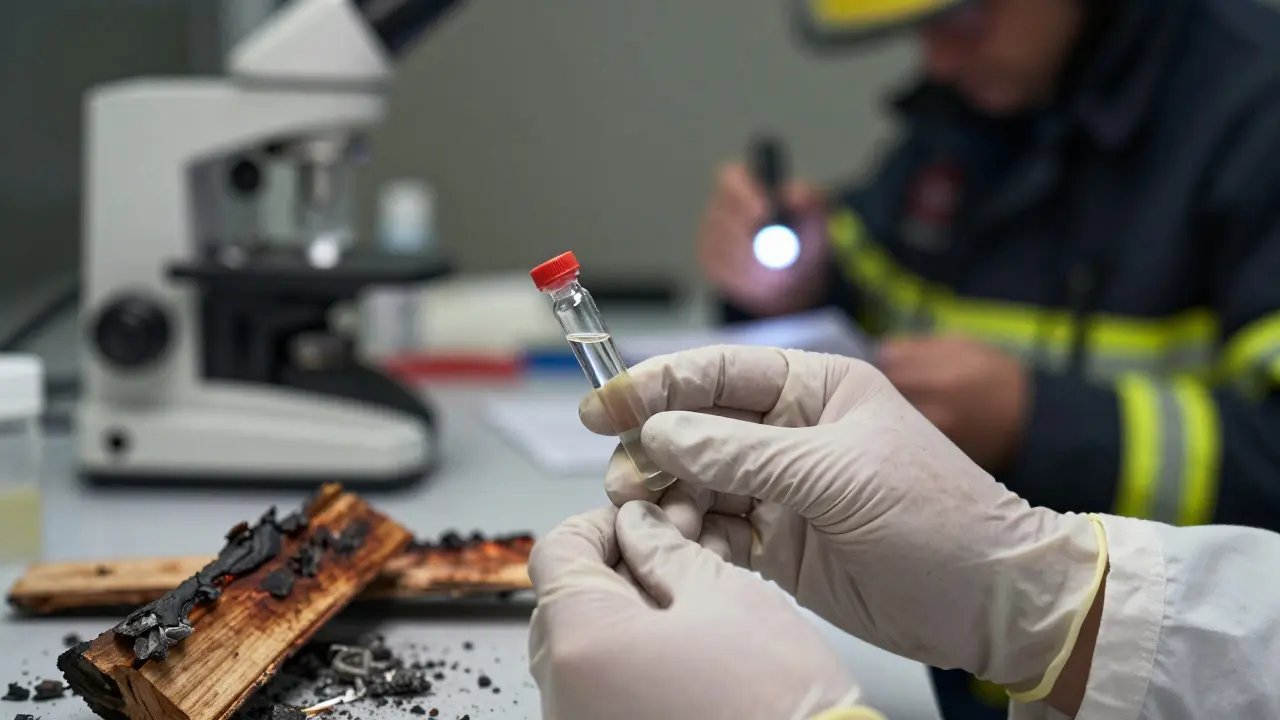
In modern forensics, the lab does the heavy lifting. Investigators collect soil samples, charred wood, and debris from the point of origin. They send these to a forensic laboratory for gas chromatography-mass spectrometry (GC-MS) analysis. This process identifies the chemical fingerprint of the accelerant.
Here is where pattern recognition gets technical. If Fire A contains gasoline with a specific additive blend, and Fire B contains the exact same blend, the link is strong. But it gets better. Some arsonists buy fuel from specific stations. If local gas stations have slightly different formulations due to supplier variations, matching the fuel source can place the suspect near a specific station on the day of the fire. This connects the physical evidence to a location, bridging the gap between the crime scene and the suspect's daily life.
| Indicator Type | What It Shows | Investigative Value |
|---|---|---|
| Accelerant Type | Chemical composition of fuel | Links fires via unique chemical fingerprints |
| Point of Origin | Where the fire started | Reveals access method and planning level |
| Time of Day | When the fire was set | Identifies routine or avoidance of witnesses |
| Target Profile | Type of building/victim | Suggests motive and suspect demographics |
| Witness Statements | Visual/Auditory reports | Provides descriptions of suspects or vehicles |

Witness Testimony and Environmental Clues
Fires rarely happen in a vacuum. Even at 3 AM, someone sees something. A neighbor hears a car door slam. A security camera catches a figure running from a doorway. Investigators treat these fragments as critical puzzle pieces. In serial cases, witness descriptions often converge. Multiple witnesses might describe a "man in a dark hoodie" or a "white sedan with a broken tail light." When these details align across different fires, the pattern becomes undeniable.
Environmental clues also play a role. Did the wind direction change suddenly? Did rain start just after the fire began? Arsonists often exploit weather. If a series of fires all occur during periods of low wind speed, it suggests the offender waits for calm conditions to prevent the fire from spreading too fast and exposing them. This behavioral adaptation to environmental factors is a sophisticated marker of a repeat offender.
Building the Case: Linking the Dots
Pattern recognition isn't just about listing similarities. It's about statistical probability. Investigators ask: How likely is it that two unrelated people would commit crimes with the same modus operandi, in the same area, at the same time, using the same fuel? The answer is usually very low. This low probability forms the basis of the "linkage hypothesis."
To prove this hypothesis, investigators combine three pillars:
- Physical Linkage: Matching accelerants or tool marks.
- Behavioral Linkage: Consistent timing, target selection, and method.
- Circumstantial Linkage: Witness sightings, vehicle matches, or alibi failures.
Challenges in Pattern Recognition
It's not always clear-cut. Sometimes, different arsonists copy each other. This is called "mimicry." One offender might see news reports about a previous fire and try to replicate it to avoid detection. This complicates the analysis. Investigators must distinguish between true serial behavior and imitation. They look for subtle differences that mimics often miss. For example, a mimic might use the wrong type of fuel or fail to account for structural layout. These errors break the pattern and help investigators separate the real serial offender from copycats.
Another challenge is jurisdictional fragmentation. If fires cross city or county lines, information sharing can be slow. Each agency might work in silos. Effective pattern recognition requires centralized databases where investigators can query past fires by date, location, and cause. Without this shared intelligence, patterns remain hidden until it's too late.
Practical Steps for Investigators
If you are working in fire investigation, here is a practical framework for identifying serial patterns:
- Create a Master Log: Document every detail of each fire, including weather, time, and witness statements.
- Map Geographically: Use GIS tools to plot locations and identify clusters or routes.
- Analyze Fuel Sources: Track where accelerants were purchased if possible.
- Review Media Coverage: Check if previous fires were widely reported, indicating potential mimicry risk.
- Collaborate Across Agencies: Share findings with neighboring jurisdictions immediately.
What is the most reliable indicator of serial arson?
The combination of consistent geographic clustering, identical accelerant residues, and similar timing is the most reliable indicator. No single factor is definitive, but the convergence of multiple factors creates a strong probabilistic link.
How long does it take to identify a serial arson pattern?
It varies. Some patterns emerge after two or three fires if the modus operandi is distinctive. Others may take months or years if the offender changes tactics or operates across wide areas. Rapid database sharing accelerates this process.
Can weather affect arson patterns?
Yes. Arsonists often choose times with low wind to control fire spread or high humidity to reduce visibility. Identifying a correlation between specific weather conditions and fire occurrences can reveal the offender's decision-making process.
What role does technology play in detecting serial arson?
Technology enables large-scale data analysis. Geographic Information Systems (GIS) map fire locations, while GC-MS labs provide precise chemical fingerprints. Database software allows investigators to search for historical matches across jurisdictions.
How do investigators handle mimicry in serial arson cases?
Investigators look for inconsistencies that suggest copying rather than original behavior. Mimics often make errors in fuel choice, ignition method, or timing that differ from the original offender's established pattern. These deviations help distinguish the true serial arsonist from imitators.