Chaos is the enemy of truth. When a major crime occurs, the first hour determines whether you catch the perpetrator or lose the case forever. But it isn't just about finding footprints; it's about managing people. If your detectives are walking through your photographer's field of view, or if a rookie officer touches a door handle before it's bagged, the evidence chain breaks. Personnel management at crime scenes is the invisible architecture that keeps investigations intact.
This isn't just about assigning tasks. It’s about controlling movement, communication, and authority in high-stress environments. Whether you’re leading a small local homicide unit or coordinating a multi-agency response to a mass casualty event, the principles remain the same: clear roles, strict boundaries, and unbroken communication. Here’s how to organize your team so they work together instead of against each other.
Quick Summary / Key Takeaways
- Designate a single Incident Commander (IC) immediately to prevent conflicting orders and ensure unified strategy.
- Establish physical zones (Hot, Warm, Cold) to control who enters where, protecting volatile evidence.
- Implement a logbook system for every person entering or leaving the scene to maintain chain of custody.
- Separate investigative functions from operational security to prevent cross-contamination of mental models and physical evidence.
- Use standardized communication protocols to reduce noise and ensure critical information reaches the right ears instantly.
The Core Structure: Incident Command System Adaptation
You don’t need a military-grade setup for every burglary, but the logic of the Incident Command System (ICS) is a standardized approach to the command, control, and coordination of emergency response works perfectly for crime scenes. The most common mistake? Having five senior officers all giving orders. Who does the photographer listen to? The detective? The patrol sergeant? The forensics lead? If everyone is a leader, no one is.
The solution is simple: One Incident Commander. This person doesn’t have to be the highest-ranking officer present, but they must be the only voice with final say on scene operations. Their job isn’t to solve the crime; it’s to manage the resources solving it. They assign sections: Operations, Planning, Logistics, and Finance/Administration. In a typical criminal investigation, this translates to:
- Operations Section: Handles all tactical actions-searching, processing, securing the perimeter.
- Planning Section: Tracks what has been done and what needs to happen next. This is your documentation hub.
- Logistics Section: Manages equipment, transport, and support services (like medical or fire department liaison).
- Liaison Officer: The single point of contact for media, family members, and other agencies.
By stripping the "solving" duty away from the "commanding" role, you reduce cognitive load. The IC can focus on flow, while detectives focus on clues. This separation prevents the IC from getting bogged down in minutiae, like arguing over which shoe print is more important, allowing them to keep the whole operation moving.
Zoning: Controlling Movement and Contamination
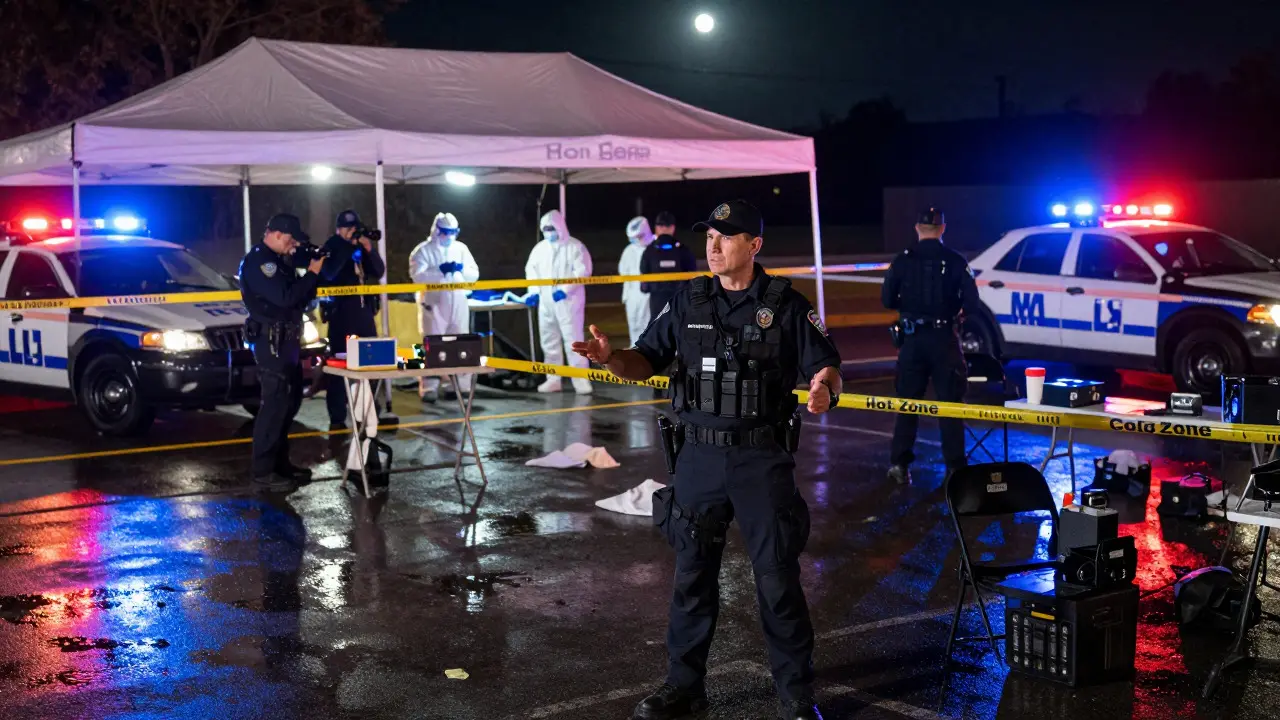
Think of a crime scene as a sterile operating room. You wouldn’t let visitors wander around the surgeon. Similarly, you need to physically restrict access based on necessity. Most professional units use a three-zone model:
| Zone | Location | Access Restriction | Primary Purpose |
|---|---|---|---|
| Hot Zone | Immediate area of interest (e.g., body location, entry point) | Forensic specialists and Lead Investigator only | Collection and preservation of primary evidence |
| Warm Zone | Buffer area surrounding the Hot Zone | Investigative team, photographers, sketchers | Documentation, secondary searches, interviews |
| Cold Zone | Command post and staging area outside the immediate scene | All personnel, media, families, support staff | Coordination, briefing, rest, logistics |
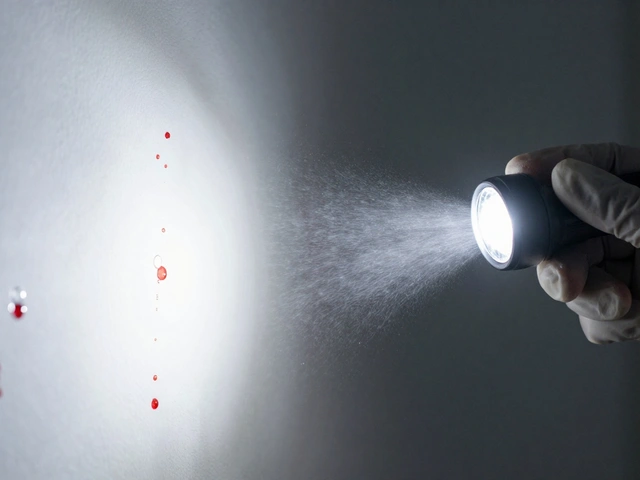
Why does this matter? Because foot traffic destroys evidence. Every step taken in the Hot Zone risks trampling trace DNA or disturbing blood spatter patterns. By forcing non-essential personnel to stay in the Warm or Cold zones, you drastically reduce contamination risk. Use physical barriers like yellow tape or caution cord, but more importantly, use human enforcement. Assign a specific officer to stand at the boundary between the Hot and Warm zones. Their only job is to stop people who aren’t supposed to be there. It sounds petty, but it’s the cheapest insurance policy you have for evidence integrity.
Communication Protocols: Cutting the Noise
A busy crime scene is loud. Radios crackle, phones ring, and people shout updates. Without structure, vital information gets lost in the static. For example, if a witness mentions a blue car was seen at 8:15 PM, and that update gets buried under a conversation about coffee orders, you lose a lead.
Implement a "Radio Discipline" rule. Only authorized personnel talk on the primary channel. Others should use side channels or written notes. Establish a standard format for reporting findings. Instead of saying, "Hey, I found something weird by the window," use a structured call-out: "Found potential tool mark, north window frame, requesting close-up photography."
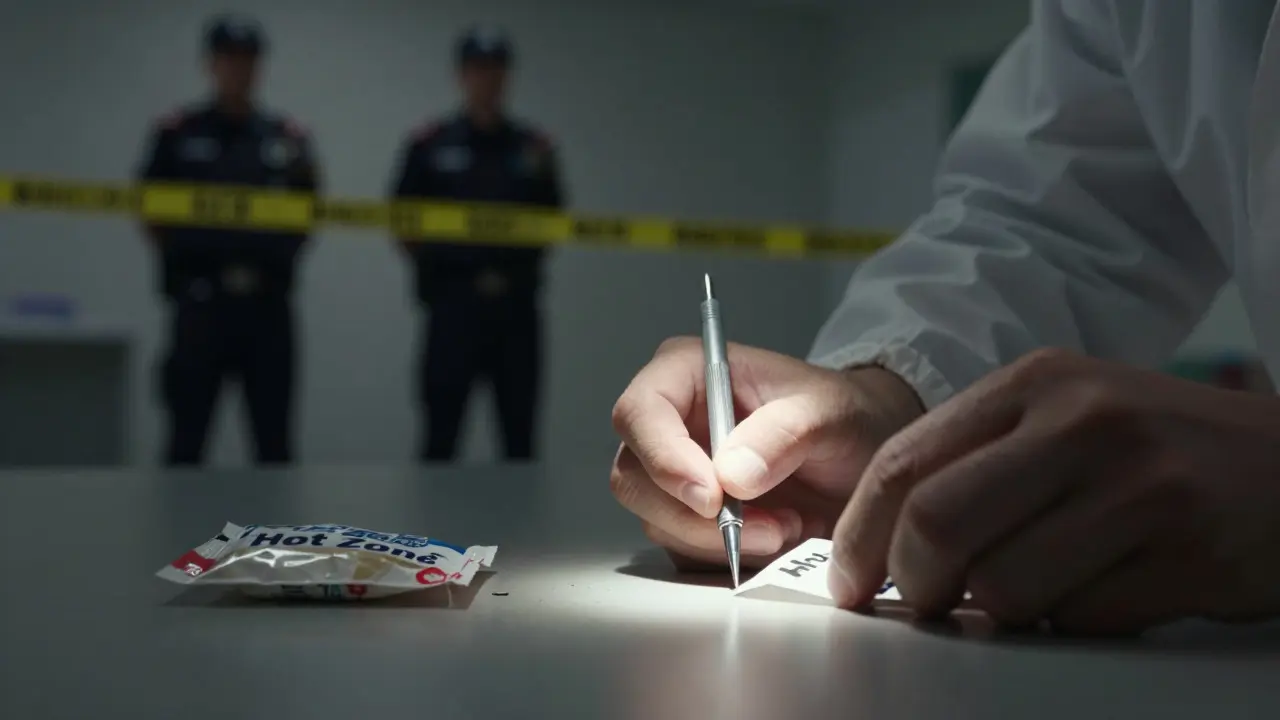
Also, designate a "Scribe" or Documentation Officer in the Cold Zone. This person receives all verbal reports from the field and writes them down in real-time. Why? Because memory fades fast, and radio chatter is easily misheard. A centralized log ensures that when you review the timeline later, you have an accurate record of who said what and when. This also helps in court; if the defense asks, "How do we know this witness wasn't contaminated by another investigator's theory?" you can point to the timestamped log showing exactly when and where statements were made.
Role Clarity: Who Does What?
Vagueness breeds conflict. If you tell a team, "Let's process the scene," everyone thinks they’re doing their part, but often they’re stepping on each other’s toes. Explicit role assignment is critical. Before anyone moves, the IC should announce the assignments clearly.
Here is a practical breakdown for a standard homicide response:
- Lead Detective: Oversees the investigative narrative. Interviews witnesses. Directs the search for suspects. Does NOT touch physical evidence directly.
- Forensic Photographer: Documents the scene before anything is moved. Works independently of the detective to avoid bias in framing.
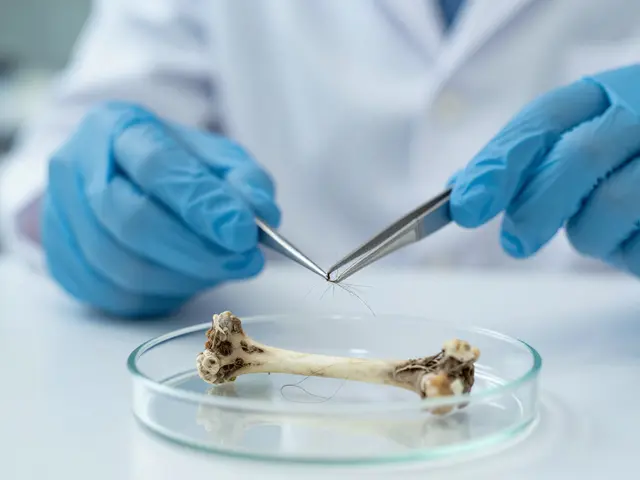
- Trace Evidence Technician: Collects hair, fiber, soil, and glass samples. Requires a calm, methodical approach, separate from the chaos of initial discovery.
- Bloodstain Pattern Analyst: Interprets movement based on blood distribution. Must observe the scene before cleanup begins.
- Perimeter Officers: Control access. Interview neighbors. Watch for fleeing suspects. Do not enter the house unless directed.
The key here is independence. The photographer shouldn’t wait for the detective to tell them what to shoot. The detective shouldn’t tell the technician where to look for fibers. Each role has a specific lens through which they view the scene. Mixing these lenses leads to confirmation bias, where investigators start seeing what they expect to see rather than what is actually there.
Managing Multi-Agency Responses
Sometimes, one agency isn’t enough. A federal case might involve local police, FBI agents, state lab technicians, and even foreign liaisons. This increases complexity exponentially. Different agencies have different cultures, different radios, and different priorities.
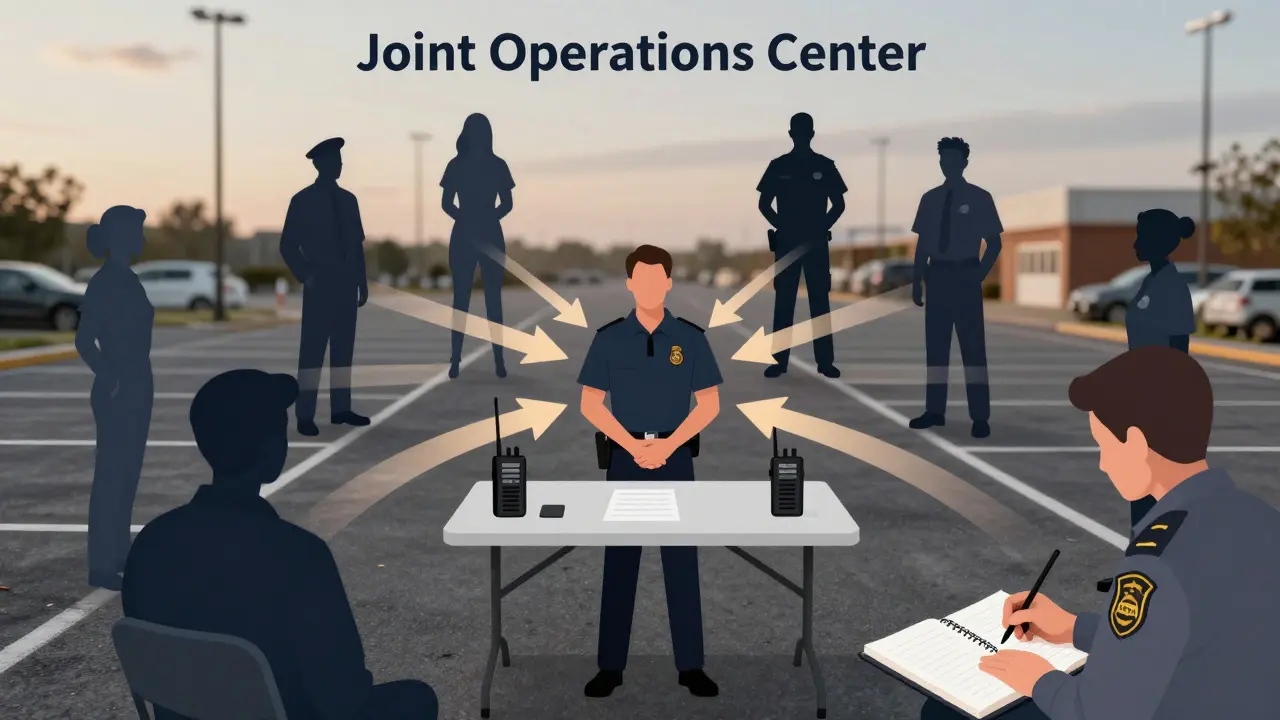
To manage this, you need a Joint Operations Center (JOC) mindset, even if it’s just a folding table in a parking lot. Appoint a Liaison Officer for each external agency. These officers act as translators, not just linguistically, but procedurally. They explain why the local police want to secure the perimeter differently than the federal team wants to interview residents.
Standardize your terminology. If the FBI uses "Scene Manager" and the local PD uses "Incident Commander," clarify early on that these are the same role. Avoid jargon that is specific to one agency. Keep instructions short and actionable. And remember: the host agency usually retains overall command, but the guest agencies bring specialized expertise. Respect that dynamic to keep morale high and friction low.
Common Pitfalls and How to Avoid Them
Even experienced teams make mistakes. Here are the top three personnel errors that ruin cases:
1. The "Hero" Move. An officer sees a clue and rushes to grab it before someone else does. This breaks chain of custody and can destroy fragile evidence. Fix: Reinforce that speed matters less than accuracy. If you find something, mark it, photograph it, then collect it according to protocol.
2. Communication Silos. The detective finds a suspect name but doesn’t tell the perimeter officers because they think it’s irrelevant. Hours later, the suspect walks out the back door unnoticed. Fix: Implement a "Need-to-Know" vs. "Need-to-Act" distinction. Suspect descriptions are "Need-to-Act" for everyone. Detailed motive theories are "Need-to-Know" for the lead investigator only.
3. Fatigue Ignorance. Crime scenes can last 12+ hours. Tired people miss details. They make sloppy entries in logs. They get frustrated with procedures. Fix: Rotate personnel. Send someone home after 6-8 hours if possible. Bring in fresh eyes for the second shift. A rested technician will find the microscopic fiber that a tired one missed.
Next Steps for Your Team
Improving personnel management doesn’t require buying new software or hiring consultants. It requires discipline and practice. Start with your next training exercise. Simulate a complex scene with multiple actors playing different roles. Introduce distractions: a noisy crowd, a missing piece of equipment, a conflicting order. See where the communication breaks down. Debrief afterward. Ask: "Who felt confused? Where did the information get lost?"
Then, refine your zone boundaries. Are they too wide? Too narrow? Adjust the tape. Review your logbook templates. Are they capturing enough detail? Add fields for weather conditions, lighting, and personnel rotations. Small tweaks to your organizational framework yield massive returns in evidence quality.
Finally, trust the process. When the pressure is on, humans want to cut corners. Strong organization gives them permission to slow down and do it right. That’s how you win cases.
Who should be the Incident Commander at a crime scene?
The Incident Commander should be the most qualified person available to manage resources, not necessarily the highest rank. Often, this is a senior detective or a dedicated crime scene manager. The key is that this person focuses on coordination, not investigation, to avoid conflicts of interest and cognitive overload.
How many zones should a crime scene have?
Most professional guidelines recommend three zones: Hot (immediate evidence area), Warm (documentation and secondary search), and Cold (command and logistics). However, complex scenes may require sub-zones within the Hot area, such as separating the body location from the entry point.
What is the biggest mistake in crime scene personnel management?
The most common error is lack of a single point of command. When multiple leaders give conflicting orders, confusion ensues, evidence gets disturbed, and accountability becomes unclear. Always designate one Incident Commander with final authority over scene operations.
How do you handle media presence at a crime scene?
Keep media in the Cold Zone, ideally behind a designated press line managed by a Public Information Officer. Limit their access to prevent interference with evidence collection. Provide regular briefings to satisfy their curiosity and reduce the temptation to sneak closer to the action.
Do small towns need formal Incident Command Systems?
Yes, but scaled down. Even a two-person response needs a clear leader and a clear recorder. The principles of zoning and role clarity apply regardless of team size. Formalizing these steps prevents ad-hoc decisions that can compromise evidence integrity.