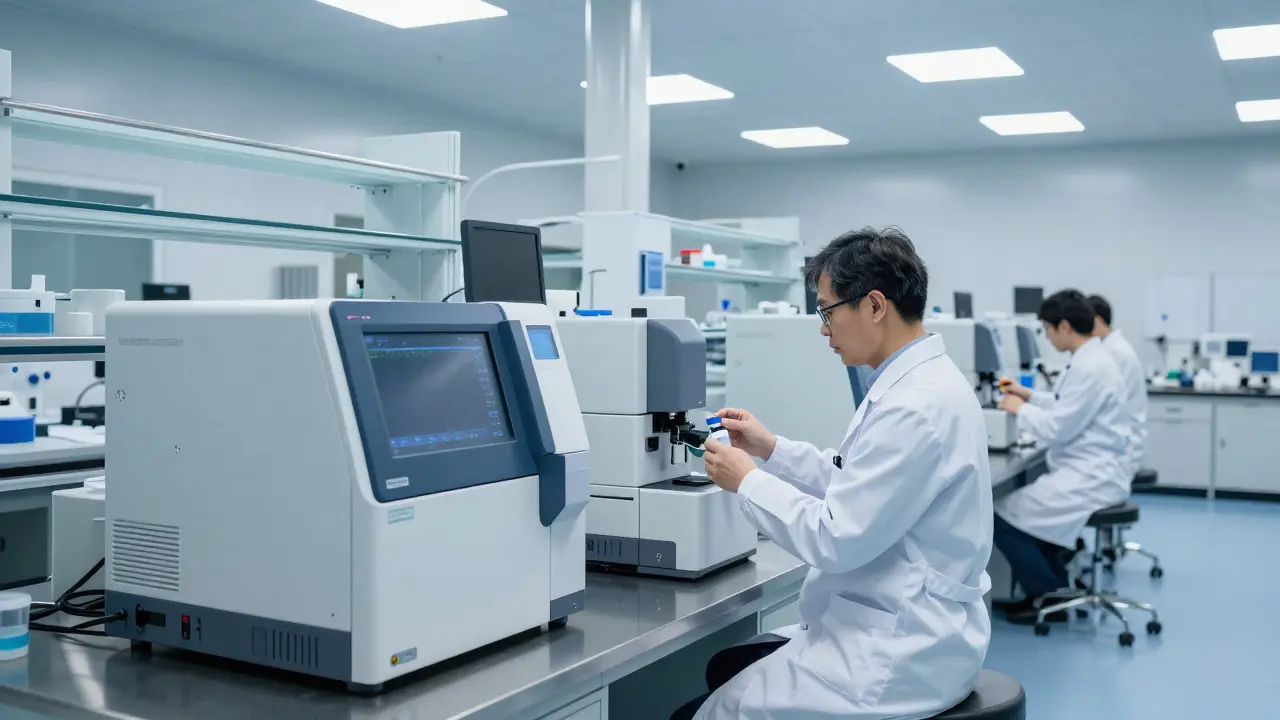
Walk into a modern forensic or clinical lab and you’ll see rows of sophisticated instruments. But the machine isn’t what makes the result trustworthy. The trust comes from the system around it. That system is ISO 17025, the international standard for testing and calibration laboratories. It defines how labs must operate to ensure their data holds up in court, in insurance claims, or in scientific peer review.
You might wonder if every test in a lab needs this level of scrutiny. The short answer is no. Not every discipline requires full accreditation, but most high-stakes fields do. Knowing which tests require certification helps you understand where to spend your budget and where to focus your quality control efforts.
What Counts as an Accredited Discipline?
An accredited discipline is a specific area of testing that has been audited against strict criteria. These criteria cover everything from how you store samples to how you validate new methods. If a lab wants to issue results that are legally defensible, they usually need accreditation in that specific discipline.
For example, a lab testing water for lead doesn’t just run a chemical reaction. They have to prove they can detect lead at very low concentrations, that their equipment is calibrated correctly, and that their technicians know exactly what they’re doing. This proof is documented through proficiency testing and internal audits.
- Forensic Toxicology: Often requires accreditation because results can determine criminal liability.
- Clinical Chemistry: Usually regulated by health bodies, but many private labs seek ISO 17025 for consistency.
- Environmental Sampling: Critical for compliance with government regulations like EPA standards.
- Material Testing: Essential in construction and manufacturing to prevent structural failures.
The Core Standard: ISO 17025 vs. Other Frameworks
While ISO 17025 is the global benchmark, other frameworks exist depending on your industry. Understanding the difference helps you choose the right path for your lab.
| Standard | Primary Focus | Typical Use Case | Legal Weight |
|---|---|---|---|
| ISO 17025 | Technical competence of testing labs | Forensics, Materials, Environmental | High (Court-accepted) |
| CLIA | Clinical laboratory improvement | Human patient diagnostics | Mandatory (US Healthcare) |
| ASTM E1986 | Fire debris analysis | Arson investigation | Medium (Industry best practice) |
If you work in human healthcare, CLIA (Clinical Laboratory Improvement Amendments) is likely your primary legal requirement. However, if you want to offer reference testing or participate in research, adding ISO 17025 strengthens your position. For non-clinical work, ISO 17025 is often the only way to prove your methods are sound without relying on a single regulatory body’s rules.
Disciplines Where Certification Is Non-Negotiable
Some fields carry such high stakes that operating without accreditation is practically impossible. Let’s look at three major areas where certification is effectively mandatory.
Forensic Trace Evidence
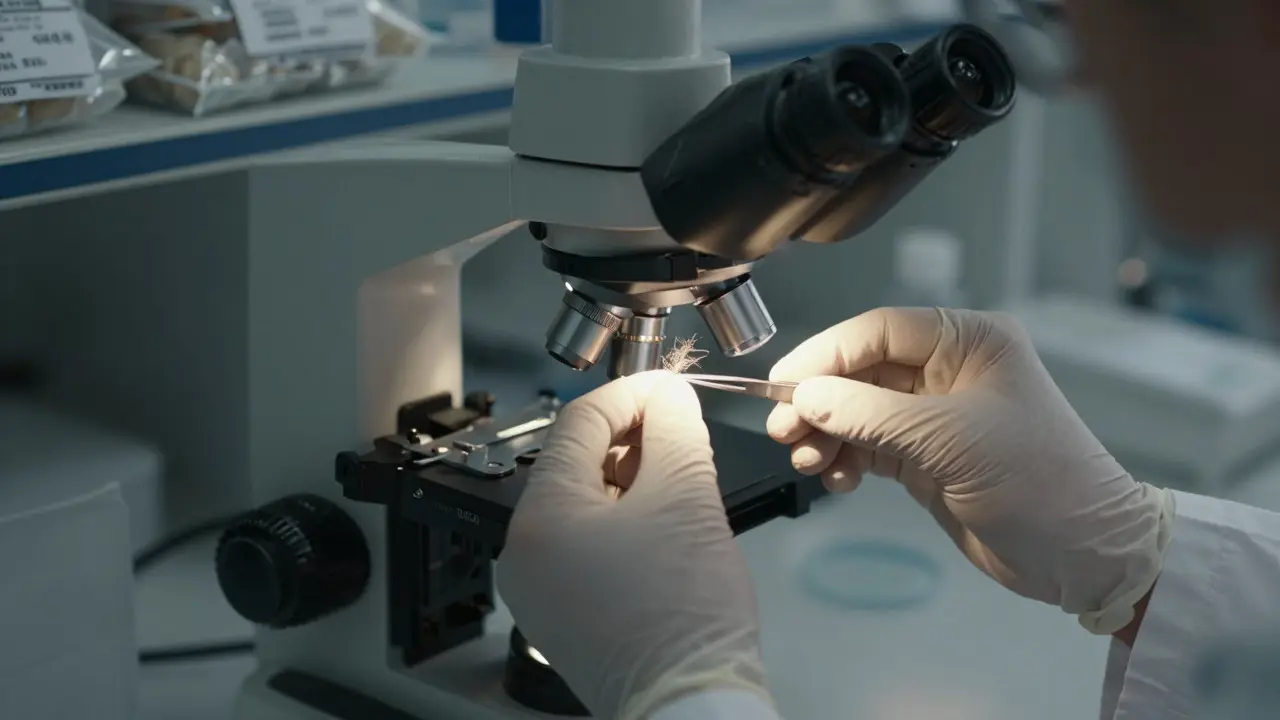
This includes fibers, glass fragments, paint chips, and soil. In a murder trial, a single fiber found on a victim’s clothing could be the deciding factor. Courts scrutinize these results heavily. Without accreditation, defense attorneys often challenge the validity of the evidence, arguing that the lab didn’t follow recognized protocols. Accreditation ensures that chain of custody was maintained and that the method used to identify the fiber is validated.
Toxicology and Drug Analysis
Whether it’s a workplace drug test or a post-mortem blood sample, toxicology results have massive implications. A positive test can end a career; a negative one can save a life. Labs in this space must demonstrate that their gas chromatography-mass spectrometry (GC-MS) systems are working perfectly. Accreditation involves regular blind testing where external agencies send unknown samples to see if the lab can identify them correctly.
Environmental Compliance
Companies dumping waste or factories emitting pollutants need third-party verification. Government agencies don’t always trust self-reported data. An accredited environmental lab provides a neutral, verified number. If a factory claims its wastewater is safe, an accredited lab’s report carries more weight than an internal memo. This protects both the company and the public.
How to Determine If Your Specific Test Needs Accreditation
Not sure where you stand? Here is a simple decision tree to help you evaluate your situation.
- Is the result used in court? If yes, you almost certainly need accreditation (ISO 17025 or equivalent).
- Is the result required by law for business operations? (e.g., food safety, building materials). If yes, check if the regulator accepts any accredited lab or specifies a particular standard.
- Do you bill insurance companies directly? Many insurers prefer or require results from accredited providers to avoid disputes.
- Are you comparing your products to competitors? If you publish performance data, accreditation adds credibility that prevents competitors from dismissing your numbers as marketing fluff.
If you answered “no” to all of these, you might get away with internal quality controls alone. But keep in mind that as your lab grows, clients will start asking for certificates. Getting accredited early is cheaper than retrofitting your entire workflow later.
The Cost and Time Factor
Let’s talk about the elephant in the room: cost. Accreditation isn’t free. You pay annual fees to the accrediting body, plus costs for consultants, training, and initial gap assessments. For a small lab, this can run into tens of thousands of dollars per year.
Time is another factor. Preparing for an audit can take six months to two years, depending on how messy your current documentation is. You need to write Standard Operating Procedures (SOPs), train staff, and run validation studies. It’s a lot of work, but it pays off. Accredited labs often charge higher rates because clients value the reliability. Plus, fewer errors mean less time spent re-testing bad batches.
Common Pitfalls During the Audit Process
Many labs fail their first audit not because their science is wrong, but because their paperwork is sloppy. Here are the top mistakes we see:
- Outdated SOPs: If your manual says to use Method A, but your techs are using Method B, you fail. Keep documents updated.
- Poor Record Keeping: Every calculation must be traceable. If a technician deletes a raw data file, the result is void.
- Lack of Uncertainty Statements: Modern accreditation requires you to state how much error is possible in your result. "Positive" isn't enough; you need "Positive, with a margin of error of ±5%."
Frequently Asked Questions
Does ISO 17025 apply to all types of labs?
Technically, yes, but it is most relevant to testing and calibration labs. Clinical diagnostic labs often fall under different regulations like CLIA in the US, though many pursue ISO 17025 for added credibility. Research labs that don't issue formal reports may not need it unless they want to share standardized data.
How long does it take to get accredited?
On average, expect between 12 and 24 months. This timeline includes writing procedures, training staff, running validation tests, and waiting for the auditor's visit. Smaller labs with existing quality systems might finish faster, while those starting from scratch often take longer.
What happens if I lose my accreditation?
You typically have a probation period to fix the issues. If you don't, your certificate is suspended. Clients may stop sending work to you immediately, especially in forensics or compliance sectors. Re-accreditation after suspension is harder and more expensive than maintaining it.
Can a lab be accredited for only some tests?
Yes. This is called scope limitation. You can be accredited for testing lead in water but not for testing mercury in fish. This allows smaller labs to manage costs by focusing on their core competencies rather than trying to certify every possible method they own.
Is accreditation the same as licensing?
No. Licensing is a legal permission granted by a government to operate. Accreditation is a voluntary recognition of technical competence by a third party. You can be licensed to run a lab but not accredited. Conversely, you can be accredited but still need a license to handle certain hazardous materials or clinical samples.