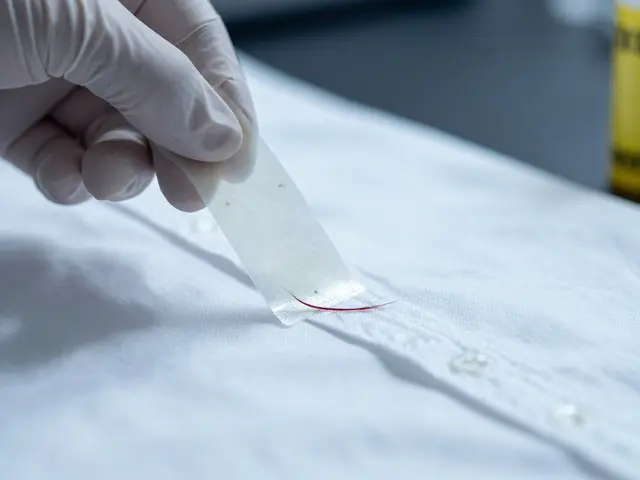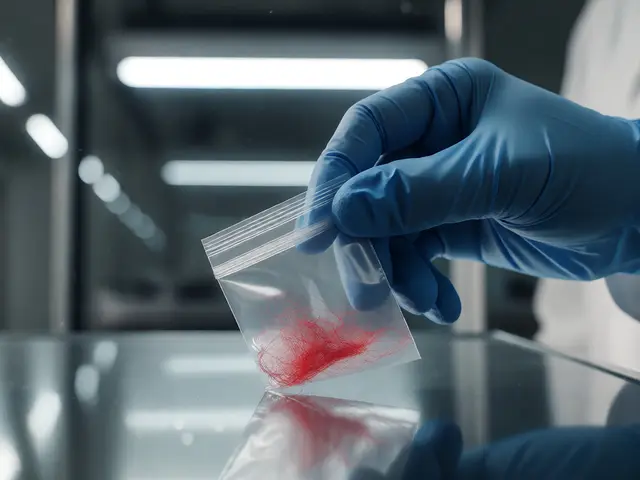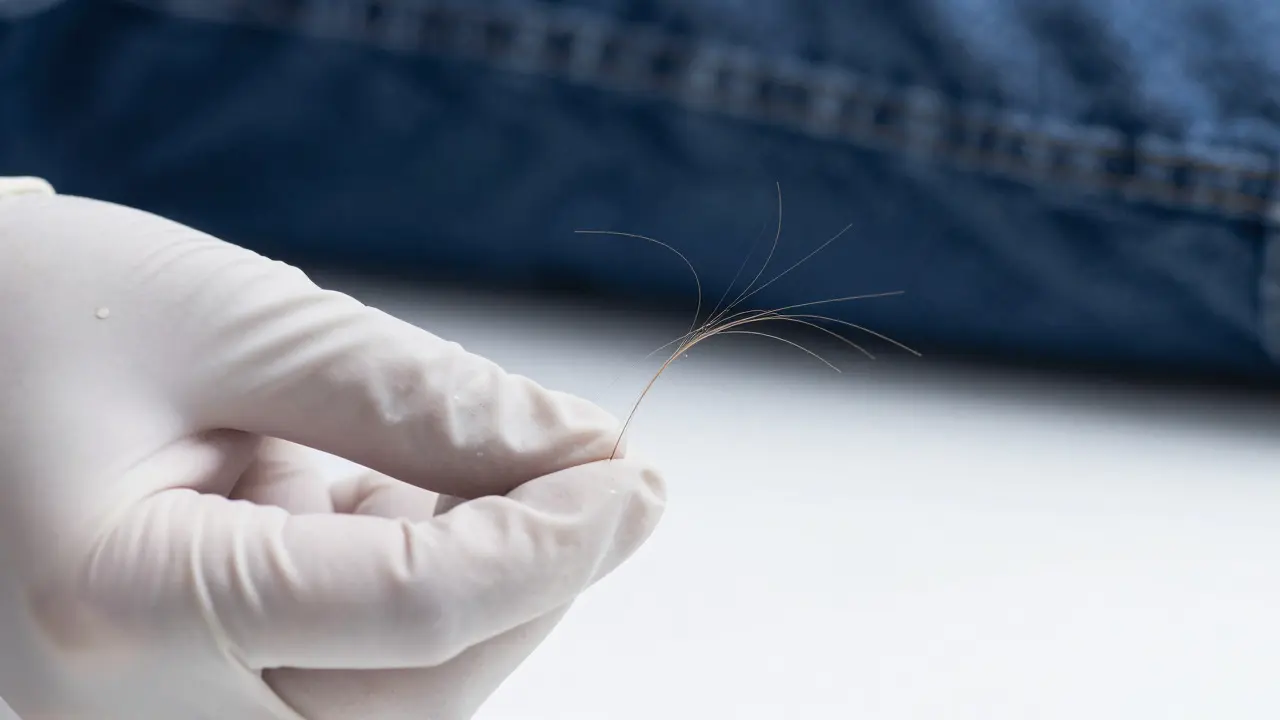
Imagine finding a single hair on a suspect's jacket. It doesn't match the victim. But it matches the suspect themselves. Does that prove they were at the scene? Or did they just shake hands with someone who was?
This is the core dilemma of Secondary DNA Transfer is the movement of biological material from its original source to a new location via an intermediate object or person, without direct contact between the source and the final surface. In forensic science, this phenomenon complicates the interpretation of trace evidence, particularly when dealing with low-template DNA or touch samples.
For investigators and legal professionals, the challenge isn't just detecting DNA-it's determining what that DNA actually means. A positive match is not automatically proof of presence. Understanding the mechanics of how DNA moves helps you weigh the weight of the evidence correctly.
How Secondary Transfer Actually Happens
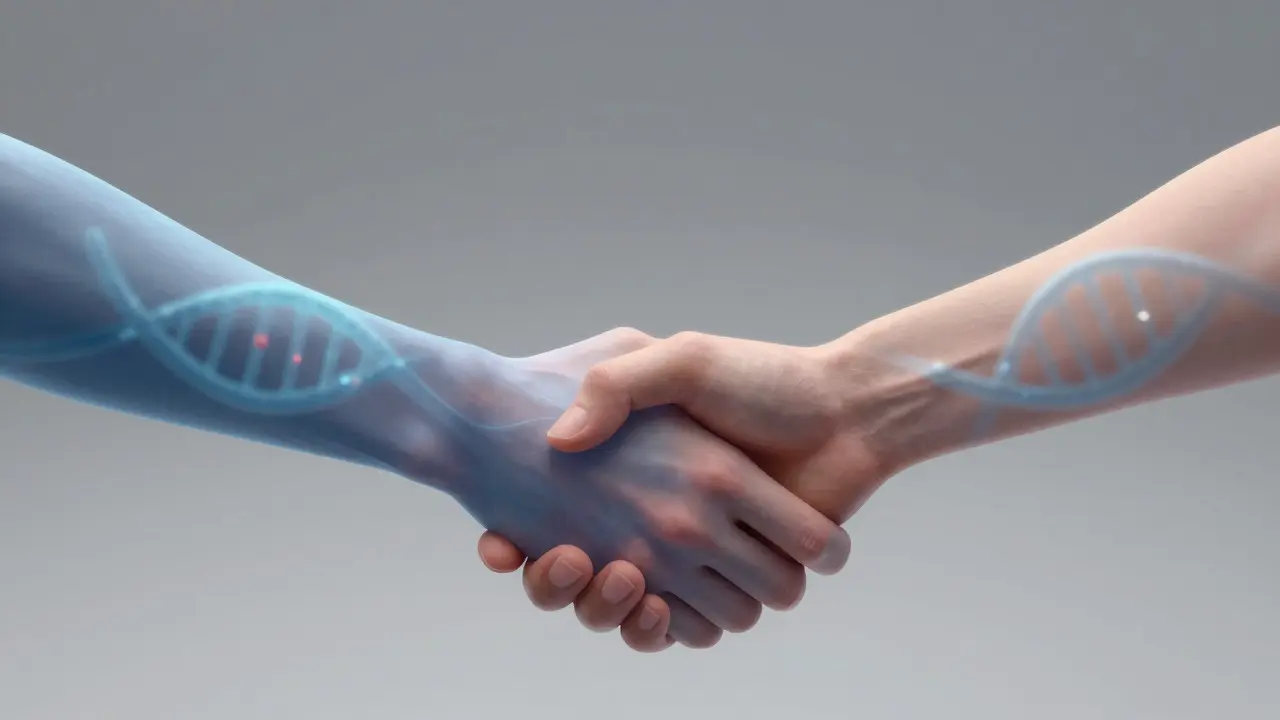
DNA is sticky. It clings to fibers, skin cells, and moisture. When Person A touches Object X, their cells are left behind. If Person B then handles Object X, some of Person A's cells may move to Person B’s clothing or skin. This is known as primary-to-secondary transfer.
The process relies on three key factors:
- Contact Duration: Brief touches transfer fewer cells than prolonged handling.
- Surface Texture: Rough surfaces (like denim) trap more DNA than smooth ones (like glass).
- Environmental Conditions: Humidity and temperature affect cell degradation and adherence.
Research by Walsh et al. demonstrated that significant amounts of DNA can transfer through simple handshakes or shared utensils. This means a “match” on a doorknob could easily be explained by a visitor who touched the door earlier, rather than the suspect breaking in.
The Problem with Low-Template DNA
Most secondary transfer cases involve low-template DNA (LT-DNA), also called touch DNA. These samples contain very few cells-sometimes less than 100 picograms of DNA. Standard STR profiling struggles here because the signal is weak and prone to artifacts like stutter peaks or dropouts.
When laboratories use probabilistic genotyping software to interpret these complex mixtures, the results depend heavily on assumptions about the number of contributors. If the analyst assumes two contributors but there are actually three (victim, suspect, and an unknown third party due to transfer), the likelihood ratio might overstate the suspect's contribution.
This is where Probabilistic Genotyping is a statistical method used to interpret complex DNA mixtures by calculating the probability of observing the observed data given different hypotheses about contributor numbers and profiles. While powerful, it requires careful validation and transparent reporting of priors.
Assessing Evidentiary Value: A Practical Framework
To assess whether secondary transfer undermines a case, you need to look beyond the lab report. Ask these questions during your review:
- What is the quantity of DNA? Is it consistent with direct deposition or background contamination?
- Where was the sample found? Was it on a high-touch surface (doorknob, phone) or a specific area of interest (weapon handle, collar)?
- What is the alternative explanation? Can the presence of DNA be explained by innocent contact before or after the crime?
- Is there corroborating evidence? Do witness statements, CCTV, or other physical evidence support the direct contact hypothesis?
A DNA profile alone is rarely sufficient for conviction if the mechanism of transfer is plausible. Courts increasingly require experts to explain the *activity level* (did the suspect touch the item?) rather than just the *source level* (is the suspect’s DNA present?).
Comparison: Direct vs. Secondary Deposition
| Feature | Direct Deposition | Secondary Transfer |
|---|---|---|
| DNA Quantity | Higher (typically >1 ng) | Lower (often <0.5 ng) |
| Mixture Complexity | Often single-source or simple mix | Complex mixtures with minor contributors |
| Stochastic Effects | Rare | Frequent (dropouts/drop-ins) |
| Evidentiary Weight | Stronger for activity-level inference | Weaker; requires contextual corroboration |
Common Pitfalls in Legal Proceedings
One major issue is the "transfer fallacy." This occurs when jurors assume that because DNA is present, the person must have been there directly. Prosecutors sometimes frame findings too broadly, saying "the suspect's DNA was found" without clarifying the potential for indirect transfer.
Defense attorneys often exploit this by introducing any possible route of transfer, even unlikely ones, to create reasonable doubt. The goal for the expert witness is to balance honesty about limitations with clarity on what the data supports. Avoid absolute statements. Instead, say: "The DNA is consistent with transfer, but the quantity suggests recent and repeated contact."
Another pitfall is ignoring the laboratory's quality control records. Did the lab run negative controls? Were extraction blanks clean? Contamination in the lab can mimic secondary transfer. Always request the full chain of custody and QC logs.

Best Practices for Experts and Investigators
If you are collecting evidence, document everything. Note the time since last cleaning, the number of people who handled the item, and environmental conditions. Use swabs designed for low-template recovery, such as those with binding agents.
For analysts, ensure your probabilistic models account for transfer probabilities. Some software now allows users to input prior probabilities for different scenarios. Document these choices clearly in the report.
Finally, communicate with plain language. Explain to non-scientists that DNA is like dust-it moves around. The more you understand how it moves, the better you can judge where it came from.
FAQs
Can secondary DNA transfer lead to wrongful convictions?
Yes, if the context is ignored. Several exoneration cases involved misinterpreted trace DNA. However, when combined with strong corroborating evidence and proper expert testimony, secondary transfer rarely stands alone as the basis for conviction.
How long does DNA remain transferable on surfaces?
DNA can persist for weeks or months depending on environmental conditions. However, the amount available for successful profiling decreases over time due to degradation. UV light and humidity accelerate this process.
What is the difference between primary and secondary transfer?
Primary transfer is the direct movement of DNA from a person to an object. Secondary transfer is the movement of that DNA from the object to another person or object via an intermediate step.
Does the type of surface matter for DNA transfer?
Yes. Porous surfaces like cotton absorb DNA and make it harder to recover in large quantities. Non-porous surfaces like metal or plastic allow easier swabbing but may retain less DNA if wiped clean. Textured fabrics tend to hold onto cells longer.
How should courts evaluate probabilistic genotyping results in transfer cases?
Courts should focus on the transparency of the model assumptions. The expert must explain how many contributors were assumed and why. The jury should be instructed that the result is a statistical estimate, not a definitive proof of direct contact.