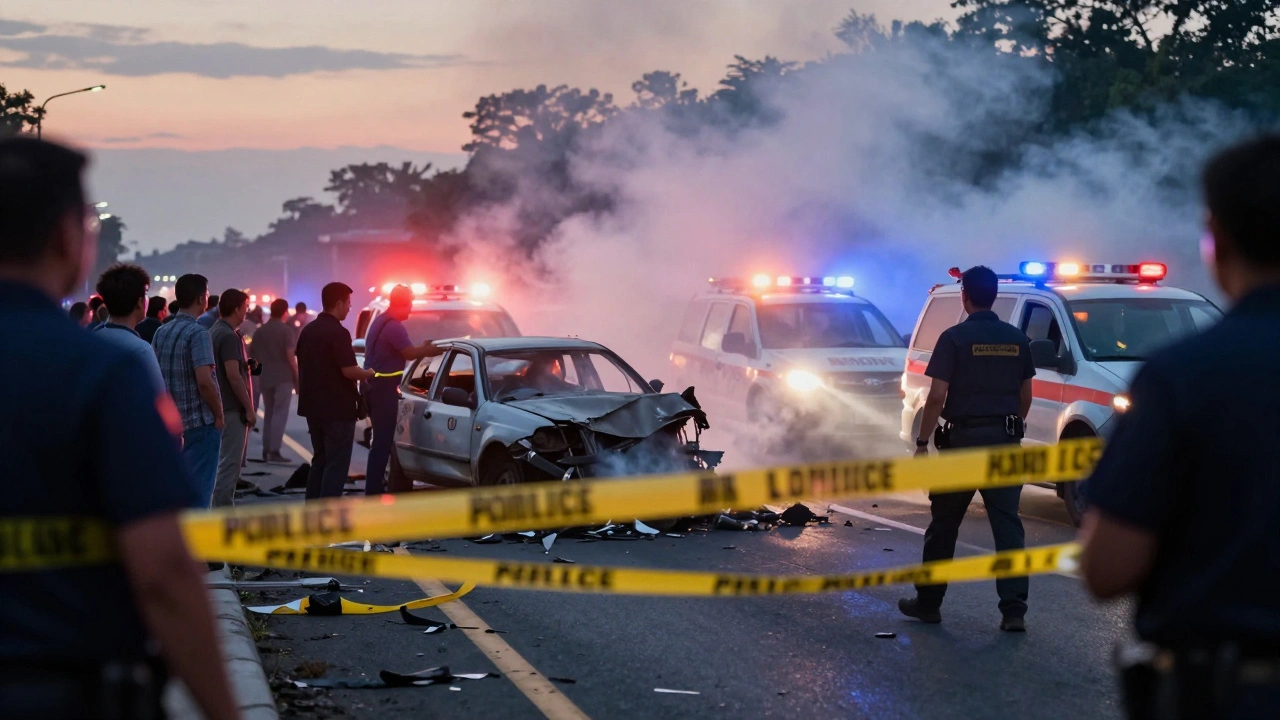
Imagine a high-speed collision on a busy highway. The air is thick with smoke, sirens wail in the distance, and bystanders crowd the area out of curiosity or concern. In that chaotic moment, the difference between a successful investigation and a compromised case often comes down to one thing: scene control. When scene control fails, evidence gets trampled, hazards remain unaddressed, and the truth becomes harder to uncover. It’s not just about police tape; it’s about creating a structured environment where safety, integrity, and clarity can coexist.
We often think of scene control as a law enforcement task, but its principles apply far beyond criminal investigations. From industrial accidents to cyber breaches, the failure to secure and manage an incident scene leads to catastrophic outcomes. Let’s look at why these failures happen, what they cost us, and how we can prevent them.
The Anatomy of Scene Control
Scene control is the systematic process of securing, organizing, and managing an incident site to protect life, preserve evidence, and ensure operational continuity. Whether you’re dealing with a homicide, a chemical spill, or a data breach, the core goals remain the same. You need to establish perimeters, control access, identify hazards, and document everything meticulously.
In physical settings, this framework often relies on the Incident Command System (ICS), which was developed in the 1970s by FIRESCOPE in California to standardize command and control during complex emergencies. ICS provides clear roles-like Incident Commander, Safety Officer, and Operations-who work together to manage the chaos. In digital spaces, standards like NIST SP 800-61 guide computer security incident handling, focusing on containment, log preservation, and controlled access to compromised systems. Both domains share a common thread: without structure, confusion reigns, and mistakes multiply.
When Things Go Wrong: Real-World Case Studies
To understand the stakes, we need to look at real incidents where scene control broke down. These aren’t just historical footnotes; they’re cautionary tales that highlight specific vulnerabilities.
Grenfell Tower Fire: Communication Breakdown
The Grenfell Tower fire in London, which occurred on June 14, 2017, resulted in 72 deaths. While the primary cause involved combustible cladding, the scene control failures exacerbated the tragedy. The London Fire Brigade maintained a “stay put” policy for nearly two hours after the outbreak, despite visible external fire spread. This decision, rooted in outdated high-rise firefighting protocols, prevented many residents from escaping early.
From a scene control perspective, the lack of clear communication between command staff and those on the ground created a deadly information vacuum. Residents didn’t know the severity of the situation, and responders struggled with situational awareness. The UK Grenfell Tower Inquiry Phase 1 report highlighted ineffective emergency response protocols and inadequate information sharing as key factors. This case teaches us that scene control isn’t just about physical barriers; it’s about accurate, timely information flow.
BP Texas City Refinery Explosion: Pre-Incident Planning Gaps
On March 23, 2005, an explosion at the BP Texas City refinery killed 15 people and injured 180 others. The U.S. Chemical Safety Board (CSB) report revealed that while pre-incident safety failures were significant, the post-incident scene management also faced challenges. The sheer scale of the disaster-multiple fires, damaged trailers, and mass casualties-overwhelmed initial response efforts.
The CSB noted that inadequate pre-planning for scene control contributed to the chaos. There were no predetermined muster points or controlled access gates integrated with local emergency services. In large industrial sites, assuming that responders will improvise effective perimeters under stress is a dangerous gamble. This incident underscores the importance of integrating facility-specific plans with broader ICS structures before anything goes wrong.
Equifax Breach: Digital Scene Control Failures
Not all scenes are physical. The Equifax breach, disclosed on September 7, 2017, affected 147 million consumers. From a digital scene control standpoint, Equifax failed in several critical areas. First, they delayed isolating compromised systems. Second, their log preservation was incomplete, making forensic analysis difficult. Third, their public-facing tool for checking breach impact contained legal language that limited victims’ rights, damaging trust further.
This mirrors physical scene control errors: failing to secure the perimeter (network segmentation), losing evidence (logs), and mishandling stakeholder communication. The InfoSecurity Magazine analysis of 2017 incidents points out that poor patch management and communication directly resulted in the loss of customer information. In cybersecurity, scene control means containing the threat, preserving digital evidence, and managing the narrative-all simultaneously.
Hydraulic Press Injury: A Model of Success
Contrast these failures with a hydraulic press injury case documented by Veriforce. When a worker was severely injured by an unexpectedly activated press, the plant’s safety professional immediately cut power, established a perimeter with cones and tape, and restricted access. Investigators took multi-angle photographs, created detailed sketches, and collected maintenance logs before any changes were made. Witnesses were interviewed promptly.
Because scene control was executed correctly, zero additional casualties occurred, and the root cause-a software malfunction-was identified quickly. This led to enhanced lockout/tagout protocols and improved training. This example shows that good scene control isn’t just reactive; it’s proactive in preventing secondary harm and enabling learning.

Common Patterns of Failure
Across these diverse cases, certain patterns emerge. Recognizing these patterns helps us anticipate weaknesses in our own protocols.
- Delayed Perimeter Establishment: Failing to set up inner (hot) and outer (cold) zones quickly allows contamination or further hazard exposure. In urban fires or industrial plants, this delay can be fatal.
- Poor Accountability: Without entry/exit logs, you don’t know who is in the hot zone. This risks lives during evacuations and complicates evidence chain-of-custody.
- Secondary Hazard Oversight: Missing ongoing dangers like structural instability, toxic atmospheres, or active malware credentials leads to additional injuries or data loss.
- Evidence Contamination: Starting cleanup or reimaging systems before full documentation destroys critical clues. In cyber incidents, wiping drives prematurely erases attack vectors.
- Command Breakdowns: Unclear leadership or conflicting instructions, like the “stay put” advice at Grenfell, confuse responders and victims alike.
- Integration Failures: Late notification to regulators (OSHA, CISA) or lack of multi-agency coordination hampers comprehensive response efforts.
Prevention Strategies for Physical Scenes
Preventing scene control failures requires deliberate planning and consistent practice. Here are practical steps based on OSHA, NFPA, and FEMA guidelines.
- Pre-Incident Planning: Large facilities should conduct annual pre-plans with local fire and EMS. Identify control points, muster areas, and exclusion zones. NFPA 1620 recommends detailed floor plans and hazard inventories so you’re not improvising under stress.
- Training and Exercises: OSHA’s HAZWOPER standard requires 24-40 hours of initial training plus 8 hours annually for hazardous waste operations. FEMA ICS courses (ICS-100, 200, 700) train personnel in command structures and resource tracking. Regular drills keep skills sharp.
- Standard Operating Procedures (SOPs): Write policies that mandate immediate perimeter establishment for moderate-to-severe incidents. Use cones, tape, and controlled entry points. Veriforce’s guidance emphasizes restricting access to only essential personnel.
- Accountability Systems: Implement paper or electronic check-in/out logs. NFPA 1500 mandates accountability systems for firefighters. Knowing exactly who is in the hot zone saves lives during unexpected events.
- Safety Officer Role: Assign a dedicated Safety Officer at significant incidents. This person has the authority to halt operations if scene control degrades. Post-Deepwater Horizon reviews stress the need for empowered safety personnel.
- Technology Aids: Use personal gas monitors, RFID tags for personnel, drones for overhead assessment, and body-worn cameras. These tools enhance situational awareness and provide objective documentation.
- Evidence Preservation Policies: Define clear triage between life-saving intervention and evidence preservation. Document machinery, controls, and logs before major changes are made.
- Regulator Coordination: Pre-agree on processes for notifying OSHA, MSHA, or environmental agencies. Balancing safety, investigative needs, and business recovery requires foresight.

Prevention Strategies for Digital Scenes
Digital scene control follows similar principles but applies them to networks and data. NIST SP 800-61 and SANS incident response guidance offer robust frameworks.
- Formal Incident Response Plans: Define severity levels, containment options, and authority to isolate systems. NIST recommends four phases: preparation, detection/analysis, containment/eradication/recovery, and post-incident activity.
- Network Segmentation: Implement “kill switches” to isolate affected segments within minutes. The WannaCry ransomware spread rapidly because flat networks allowed easy lateral movement. Blocking SMB traffic (TCP port 445) could have contained it faster.
- Centralized Logging: Use NTP for time synchronization and retain logs for 1-2 years. Forensic teams need accurate timelines to reconstruct attacks. Incomplete logs hinder investigation.
- Role-Based Access: Restrict system modifications during active incidents to designated handlers. Uncontrolled changes, like applying unassessed patches, can alter critical logic and compromise evidence.
- Legal and Communications Review: Involve legal counsel in customer-facing tools. Equifax’s initial claim site included restrictive legal clauses that had to be reversed. Incident response must integrate PR and legal strategy.
- Information Sharing: Participate in ISACs/ISAOs and follow CISA advisories. Coordinated containment across organizations prevents adversaries from hopping between vulnerable targets.
- Regular Tabletop Exercises: Conduct annual simulations to rehearse containment, forensics, and cross-functional decision-making. ISO/IEC 27035 recommends regular testing of incident response capabilities.
Implementation Challenges and Solutions
Implementing robust scene control isn’t easy. It requires multi-year organizational effort, executive support, and cultural change. Common challenges include staff turnover, conflicting priorities between production restart and evidence preservation, and physical constraints in dense environments.
In cyber contexts, cloud and multi-tenant environments complicate isolation without collateral damage. Organizations must maintain up-to-date asset inventories and logging infrastructure. Training incident handlers via SANS courses or internal programs takes time and resources.
The solution lies in governance. Executive sponsorship ensures that incident commanders can prioritize safety and evidence over short-term pressures. As seen in post-Grenfell and post-Texas City recommendations, strong leadership commitment is non-negotiable. Invest in standardized frameworks, sustain training, and embrace technology to build resilience.
What is the primary purpose of scene control?
The primary purpose of scene control is to protect life, preserve evidence, and maintain operational continuity during an incident. It involves securing the area, managing access, identifying hazards, and documenting actions to ensure a safe and effective response.
How does the Incident Command System (ICS) help in scene control?
ICS provides a standardized framework for command and control, defining clear roles such as Incident Commander, Safety Officer, and Operations. This structure reduces confusion, improves communication, and ensures coordinated efforts among multiple agencies and personnel.
Why is accountability important in scene control?
Accountability ensures that every person entering the hot zone is known and tracked. This is critical for safety during evacuations, for maintaining the chain of custody for evidence, and for preventing unauthorized access that could compromise the scene.
What are common signs of poor scene control?
Signs include delayed perimeter establishment, lack of entry/exit logs, uncontrolled access by media or contractors, evidence contamination due to premature cleanup, unclear leadership, and failure to notify relevant regulators or stakeholders.
How can organizations prepare for digital scene control?
Organizations should implement formal incident response plans, use network segmentation for rapid isolation, maintain centralized logs with time synchronization, enforce role-based access during incidents, and conduct regular tabletop exercises to test their readiness.
What role does pre-incident planning play in preventing failures?
Pre-incident planning identifies potential hazards, establishes control points and muster areas, and integrates facility-specific protocols with local emergency services. This reduces improvisation under stress and ensures a more coordinated and effective response.
Can technology aid in better scene control?
Yes, technology such as drones for aerial assessment, RFID tags for personnel tracking, body-worn cameras for documentation, and gas monitors for hazard detection significantly enhances situational awareness and accountability at the scene.
What lessons did the Grenfell Tower fire teach about scene control?
Grenfell highlighted the critical need for accurate, timely communication and flexible command decisions. Rigid adherence to outdated policies like “stay put” without assessing real-time conditions led to tragic outcomes, emphasizing the importance of adaptive scene management.
How does NIST SP 800-61 guide digital scene control?
NIST SP 800-61 provides a comprehensive guide for computer security incident handling, outlining phases for preparation, detection, containment, eradication, recovery, and post-incident activity. It emphasizes log preservation, controlled access, and structured workflows.
What is the impact of evidence contamination in scene control?
Evidence contamination compromises the integrity of the investigation, potentially leading to incorrect conclusions, failed prosecutions, or missed opportunities for systemic improvements. Proper documentation and preservation protocols are essential to avoid this.