Imagine this scenario: You spend weeks analyzing DNA samples or reconstructing a crime scene. Your analysis is spot-on. The science is solid. But when you hand over the final forensic report, the attorney reads it, squints, and asks, "So what?" That moment stings because the problem wasn't your science-it was how you presented it.
The results section is where most forensic reports live or die in court. It’s not just about dumping data; it’s about translating complex observations into a narrative that judges and juries can actually follow. If your findings are buried under jargon or poorly structured logic, even the strongest evidence loses its punch. Here is how to make sure your results speak for themselves, clearly and convincingly.
The Core Purpose of the Results Section
Before you type a single word, understand what this section is supposed to do. In scientific writing, the results section answers one question: "What did I find?" It does not answer "Why did it happen?" or "What does it mean?" That interpretation belongs in the discussion or conclusion sections. Keeping these separate prevents bias from creeping into your raw data presentation.
In forensic contexts, however, the line between observation and inference often blurs. A blood spatter pattern isn’t just a shape; it implies movement. A tool mark isn’t just a scratch; it suggests contact with a specific object. The key is to describe the physical evidence objectively first, then link it to the context without jumping to conclusions too early.
Forensic Reporting is the process of documenting scientific findings for legal proceedings. Its primary goal is to provide an objective, reproducible account of evidence analysis that supports or refutes hypotheses within a legal framework. Unlike academic papers, which seek new knowledge, forensic reports seek truth verification for a specific case.
Structure Matters More Than Style
Readers don’t read forensic reports linearly like novels. Attorneys scan them. Judges skim them. Jurors get confused if the structure is messy. Use a hierarchical approach that mirrors the chain of custody or the logical flow of the investigation.
- Evidence Identification: Start by listing exactly what you examined. Include unique identifiers (case numbers, item tags). This anchors the reader immediately.
- Methodology Summary: Briefly state how you tested the evidence. Don’t rewrite the entire protocol, but mention key techniques (e.g., GC-MS for toxicology, AFIS for fingerprints).
- Observations: Describe what you saw, measured, or detected. Use bullet points for clarity.
- Data Presentation: Include tables, graphs, or images directly adjacent to the text that references them.
By breaking the section into these chunks, you allow the reader to pause and verify each step. If a juror doesn’t understand why you used gas chromatography, they can look at the methodology summary before moving to the results. This reduces cognitive load and builds trust.
Visuals Are Not Decorations-They Are Evidence
A picture is worth a thousand words, but only if it’s labeled correctly. Too many forensic reports include photos without scale bars, lighting explanations, or clear captions. If you show a close-up of a fiber, tell us the magnification level. If you display a chromatogram, label the peaks.
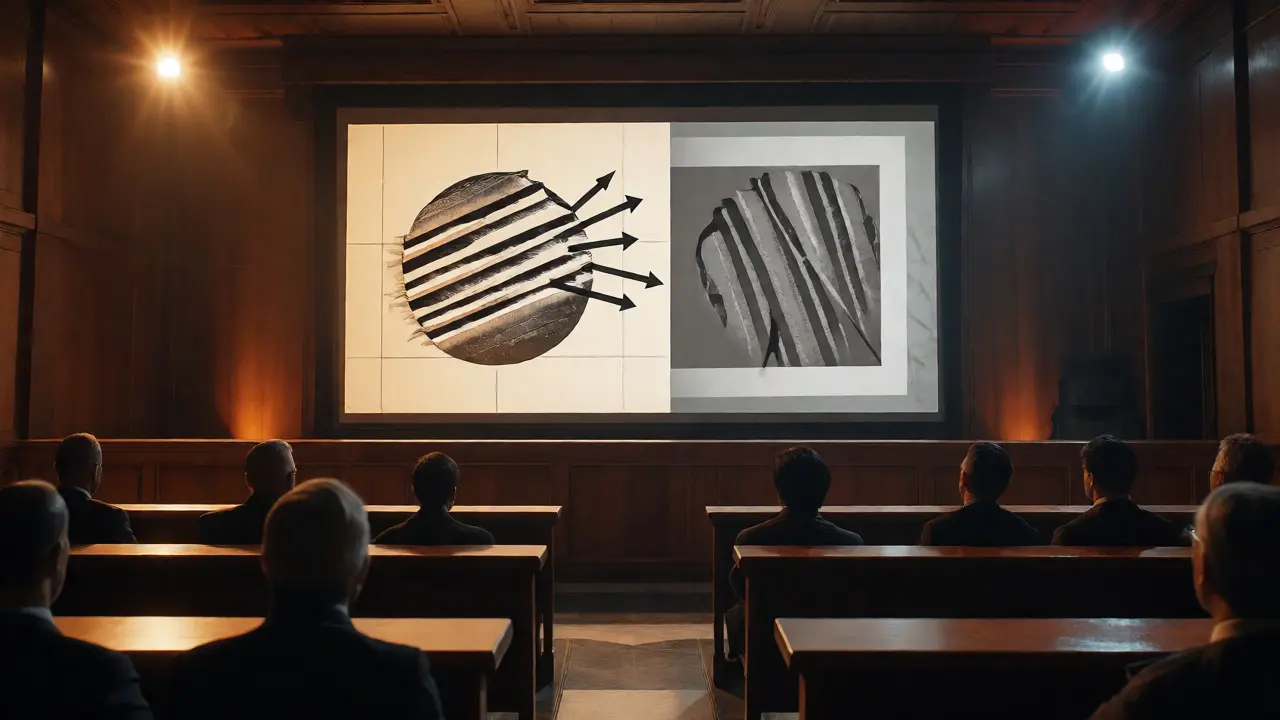
Consider using annotated diagrams instead of raw photographs when possible. For example, if you’re reporting on a ballistics match, don’t just paste two side-by-side photos of bullet grooves. Add arrows pointing to the matching striations. Highlight the areas of agreement and disagreement. This guides the eye and preempts the defense attorney’s argument that the match is subjective.
| Element | Common Mistake | Correct Approach |
|---|---|---|
| Photographs | No scale bar or reference object | Include ruler and color chart in frame |
| Graphs | Unlabeled axes or missing units | Label X/Y axes with units (e.g., ppm, meters) |
| Captions | Vague descriptions like "Figure 1" | Descriptive titles summarizing the finding |
| Formatting | Low-resolution scans | High-DPI images legible in print and digital |
Language Precision vs. Accessibility
You have a tough balancing act here. You need to be precise enough to satisfy other experts who might review your work, but simple enough for a layperson to understand. Avoid unnecessary acronyms. If you must use them, define them on first use.
Instead of saying, "The specimen exhibited positive presumptive reactions consistent with hemoglobin," try, "The test showed the substance likely contains blood." Save the technical confirmation details for the next sentence. This two-step approach respects the intelligence of the reader while keeping the language accessible.
Also, watch out for passive voice overload. While some traditionalists prefer "It was observed that...", active voice is clearer. "I observed a fracture line" is stronger than "A fracture line was observed." It takes ownership of the finding and makes the report feel more direct.
Handling Negative Results
Many analysts hate reporting negative results. They worry it looks like they failed. But in forensics, absence of evidence is often crucial. If you didn’t find drugs in a suspect’s bag, that’s a result. State it clearly.
Don’t just say "No drugs found." Specify what you looked for and the sensitivity of your test. "No controlled substances were detected above the limit of detection (0.5 ng/mL) using immunoassay screening." This tells the court that you checked thoroughly and defines the boundaries of your certainty.
The "So What?" Test
After drafting your results, read each paragraph and ask, "Does this help prove or disprove a fact in issue?" If a detail doesn’t connect to the case’s central questions, cut it. Extraneous information dilutes the impact of your key findings.
For instance, if you’re analyzing handwriting, you don’t need to list every minor variation in pen pressure unless it relates to the forgery claim. Focus on the discrepancies that matter. Keep the narrative tight. Every sentence should earn its place.
Peer Review and Clarity Checks
Never submit a report without a second pair of eyes. Ideally, this is a colleague in your lab who knows the science. But also consider having someone outside the field read it. Can they summarize your main findings after one read-through? If not, your results section needs restructuring.
Check for consistency. Did you call the item "Item 3" in the intro and "Exhibit C" in the results? Pick one naming convention and stick to it. Small inconsistencies erode confidence in the larger analysis.
Frequently Asked Questions
Should I include my opinions in the results section?
Generally, no. The results section should focus on factual observations and data outputs. Opinions, interpretations, and conclusions belong in the discussion or conclusion sections. Mixing them can lead to accusations of bias. However, if an opinion is inseparable from the observation (like identifying a known substance), phrase it as a factual identification based on standard criteria.
How detailed should the methodology be in the results section?
Keep it brief. Reference the full method in an appendix or earlier section. In the results, only mention specific parameters if they directly affect the interpretation of the data (e.g., temperature settings during a reaction). The goal is to let the reader know *how* you got the number, not to teach them the technique.
What if my results contradict previous tests?
State the discrepancy plainly. Do not hide it. List both sets of results and note the conditions under which each was obtained. Transparency builds credibility. Explain possible reasons for the contradiction in the discussion section, but keep the results section neutral.
Is it okay to use bullet points in a formal forensic report?
Yes, absolutely. Bullet points improve readability, especially for lists of observations or multiple exhibits. Just ensure each bullet is a complete thought or data point. Avoid fragmented sentences that require reading surrounding paragraphs to make sense.
How do I handle inconclusive results?
Be explicit about the limitations. Instead of saying "Inconclusive," explain why. Was the sample degraded? Was there insufficient material? Define the limits of detection or quantitation. This helps the court understand that the lack of a definitive answer is due to evidence quality, not analyst incompetence.