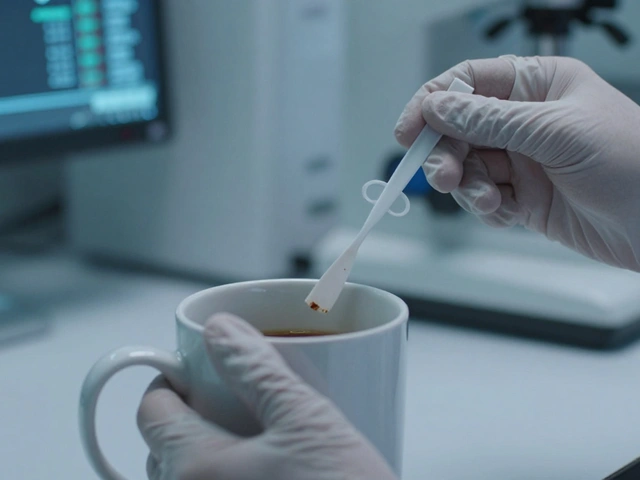
Imagine you’re an attorney. You’ve just received a forensic report that seems to confirm your entire case strategy. The language is confident, the conclusions are definitive, and the evidence feels irrefutable. But then you realize something unsettling: the examiner didn’t just interpret the data; they seemed to be arguing for you. This isn’t science-it’s advocacy. And in the courtroom, this subtle shift from objective analysis to partisan support can dismantle credibility faster than any cross-examination.
Forensic science sits at a precarious intersection of rigorous methodology and legal pressure. Unlike academic research, where being wrong might mean publishing a correction, being wrong-or perceived as biased-in forensics can send someone to prison or let a guilty person walk free. The core ethical mandate for any forensic professional is impartiality. Yet, human nature pulls us toward confirmation. We want our hard work to matter. We want our findings to help the side that hired us. This desire often leads to two specific pitfalls: advocacy and overreach. Understanding how to spot and avoid these traps is essential for maintaining the integrity of the justice system.
The Thin Line Between Interpretation and Advocacy
Advocacy bias occurs when a forensic examiner unconsciously (or consciously) tailors their interpretation to support the hiring party’s theory. It’s rarely malicious. More often, it’s a byproduct of context. If a detective tells you, "We think he did it," you might start looking for evidence that supports that narrative rather than testing it. You might overlook ambiguous markers because they don't fit the story. You might describe a match with more certainty than the data actually warrants.
This isn’t about lying. No one is fabricating DNA profiles. It’s about framing. Consider a fingerprint analyst who finds a partial print on a weapon. The print has enough detail for a comparison, but not enough for absolute individualization. An advocate might write, "The suspect’s fingerprint matches the latent print found on the knife." A neutral scientist would write, "Features observed in the latent print are consistent with those in the reference print of the suspect, though the limited quality precludes individualization."
The difference? The first sentence sounds like proof. The second describes the state of the evidence. In court, attorneys will seize on that first phrasing to argue guilt beyond reasonable doubt. The second phrasing protects the scientific truth. To avoid advocacy, examiners must treat the hypothesis of innocence with the same rigor as the hypothesis of guilt. Did you actively look for reasons why the suspect *didn’t* leave the print? If not, you were advocating.
Defining Overreach: When Conclusions Outpace Data
If advocacy is about bias, overreach is about scope. Overreach happens when a forensic conclusion extends beyond what the evidence can physically or logically support. It’s the leap from "I found drug residue" to "The defendant was using drugs regularly." Or from "There is blood at the scene" to "The victim was bleeding heavily."
Overreach often stems from a lack of distinction between direct observation and inference. Forensic reports should clearly separate what was seen under the microscope from what was deduced from general knowledge. For example, in digital forensics, finding a file deleted from a recycle bin doesn’t prove intent to hide evidence. It could have been accidental, automated, or part of normal maintenance. Claiming "intent to conceal" without corroborating metadata or user behavior logs is overreach.
A common area for overreach is in pattern recognition disciplines like toolmark analysis or bite mark comparison. Historically, experts claimed 100% identification rates based on subjective visual comparisons. Modern standards, influenced by studies such as those from the National Institute of Standards and Technology (NIST), emphasize probabilistic language. Saying "more likely than not" is honest. Saying "definitely made by this tool" when error rates exist is overreach. It ignores the known limitations of the method itself.
The Role of Contextual Bias in Report Writing
You cannot write a good report if you know too much about the case before you analyze the evidence. This is the problem of contextual bias. Research in cognitive psychology shows that knowing the "answer" beforehand changes how we process information. If you know the police believe a suspect is guilty, you are statistically more likely to find evidence supporting that view.
To combat this, many labs now implement "blind verification" or sequential unmasking. This means the primary examiner analyzes the evidence without knowing which sample belongs to the suspect and which is the control. Only after reaching a preliminary conclusion do they learn the identity of the samples. This technique reduces the temptation to tweak interpretations to fit expectations.
When writing the report, stick to the facts derived during the blind phase. If new information comes to light later-say, a confession-that information belongs in a supplemental report, not in the initial technical analysis. Mixing investigative context into technical findings muddies the water. It makes the report look like a summary of the police investigation rather than an independent scientific assessment.
Structuring Your Report for Neutrality
The structure of your document dictates how readers perceive your objectivity. A well-structured forensic report follows a logical flow that isolates observations from opinions. Here is a recommended framework:
- Introduction: State the purpose of the examination and the questions asked. Keep it brief. Do not summarize the crime here.
- Evidence Received: List exactly what came in, its condition, and chain of custody details. Use passive voice if necessary to remain impersonal (e.g., "Item A was received...").
- Methods: Describe the procedures used. Cite standard operating procedures (SOPs). If you deviated from the SOP, explain why.
- Results: Present raw data and observations. Include images, charts, and measurements. Let the data speak. Avoid adjectives like "obvious" or "clearly." If it’s obvious, show it. If it’s unclear, say so.
- Discussion: Interpret the results. This is where you connect the dots. Acknowledge alternative explanations. Discuss limitations.
- Conclusion: Answer the specific questions posed in the introduction. Use precise language regarding certainty levels.
Notice where the opinion lives. It’s in the Discussion and Conclusion, not in the Results. Many junior analysts make the mistake of putting conclusions in the Results section. They write, "A match was found," instead of "Points of comparison were identified." The former implies a final verdict; the latter states an observation.
Language Choices That Signal Objectivity
Words matter. In forensic reporting, certain phrases act as red flags for opposing counsel. Others serve as shields for the examiner. Here is a comparison of advocacy-heavy language versus neutral, scientifically accurate phrasing.
| Advocacy/Overreach Phrase | Neutral/Accurate Alternative | Why It Matters |
|---|---|---|
| "The suspect committed the crime." | "The evidence is consistent with the suspect's involvement." | Forensic scientists don't determine guilt; juries do. |
| "100% match." | "Individual characteristics corresponded." | "100%" implies no possibility of error, which is scientifically unsound. |
| "Obviously fabricated." | "Features inconsistent with natural formation." | "Obviously" is subjective. Describe the inconsistency instead. |
| "Proves he was there." | "Indicates presence at the location." | Presence does not equal action or timing. |
| "No other explanation possible." | "Alternative explanations were considered and deemed less probable." | Shows you thought critically about alternatives. |
Using qualifiers is not a sign of weakness; it’s a sign of precision. Words like "consistent with," "indicate," "suggest," and "support" are your friends. They accurately reflect the probabilistic nature of most forensic evidence. Avoid absolutes unless you are dealing with binary digital data (like a hash value match) where false positives are virtually non-existent due to mathematical probability.
Handling Ambiguity Without Fear
One of the biggest fears for forensic writers is saying "I don’t know" or "It’s inconclusive." Lawyers hate ambiguity. They want answers. But forcing an answer when the evidence is weak creates overreach. An inconclusive result is a valid scientific outcome. It tells the investigator that more evidence is needed, or that this particular piece of evidence won’t help their case.
When results are ambiguous, explain why. Was the sample degraded? Was the background noise too high? Were the features insufficient for comparison? Providing the reason for ambiguity adds value. It guides the next steps of the investigation. If you force a conclusion just to please the client, you risk being impeached later when better technology or additional evidence reveals the true picture.
Consider the case of arson investigations. Older methods relied heavily on visual signs of burn patterns, leading to many wrongful convictions. Modern chemistry allows for more precise detection of accelerants. If an older report said "Gasoline present," but modern re-analysis says "Hydrocarbons detected, source unknown," updating the conclusion is ethically required. Sticking to the old, overstated claim despite new understanding is a form of institutional advocacy.
The Impact of Ethical Reporting on Legal Outcomes
Why does all this linguistic precision matter? Because the forensic report is often the only thing the jury sees. They don’t see the lab bench. They don’t hear the debate among colleagues. They read the paper. If that paper reads like a prosecutor’s brief, the jury may assume the science is settled. If it reads like a cautious scientific inquiry, the jury understands the weight of the evidence.
Judges also rely on reports to rule on admissibility. Under standards like Daubert or Frye, the methodology must be reliable. A report riddled with overreach suggests the methodology was applied poorly. A report that acknowledges limitations demonstrates competence. Ironically, admitting uncertainty often strengthens the expert’s standing because it shows confidence in the boundaries of their expertise.
Furthermore, ethical reporting builds long-term trust. Defense attorneys, prosecutors, and judges remember which experts give straight answers and which ones stretch the truth. Once an expert is labeled an "advocate," their future testimony loses weight, regardless of how solid their science is. Reputation takes years to build and seconds to destroy.
Practical Checklist for Reviewing Your Draft
Before submitting your final report, run through this checklist to catch advocacy and overreach:
- Remove Emotional Language: Delete words like "brutal," "sinister," "innocent," or "guilty." These are legal/moral terms, not scientific ones.
- Check Absolute Claims: Search for "always," "never," "proves," and "certain." Replace them with qualified statements unless mathematically justified.
- Separate Fact from Opinion: Ensure every statement in the Results section is directly observable. Move all interpretations to the Discussion.
- Address Alternatives: Have you listed at least one alternative explanation for your findings? If not, add it.
- Verify Consistency: Does your conclusion match the strength of your data? If the data is weak, the conclusion must be tentative.
- Read Aloud: Does it sound like a scientist talking to another scientist, or a lawyer talking to a judge? Aim for the former.
Writing ethically isn’t about making your job harder. It’s about making your work defensible. In a field where lives hang in the balance, the ability to say exactly what the evidence says-and nothing more-is the highest form of professionalism.
What is the difference between advocacy and overreach in forensic reports?
Advocacy refers to bias in interpretation, where the examiner leans toward the hiring party's theory. Overreach refers to stating conclusions that go beyond what the physical evidence supports. Advocacy is about direction; overreach is about magnitude.
Can a forensic expert use the word 'match' in a report?
Yes, but with caution. In fields like DNA, 'match' has a specific statistical meaning. In pattern comparison (fingerprints, ballistics), it is safer to use 'correspondence' or 'consistency' to avoid implying absolute individualization if the error rate isn't zero.
How should I handle conflicting instructions from the client?
If a client asks you to change a conclusion to favor their case, politely decline and explain that your role is to provide objective scientific analysis. Document the request in your notes. If the conflict persists, consider whether continuing the engagement compromises your independence.
Is it unethical to mention the suspect's name in the results?
It depends on the discipline. Generally, it is best to refer to samples by identifier (e.g., 'Sample S1') in the technical sections to maintain blinding. Names can appear in the Introduction or Conclusion to link the science to the case context, but keeping them out of the raw data section helps preserve objectivity.
What if my conclusion is inconclusive?
An inconclusive result is a valuable finding. Clearly state that the evidence was insufficient to reach a definitive conclusion and explain the specific limitations (e.g., degradation, lack of detail). Do not force a positive or negative result just to satisfy the requester.