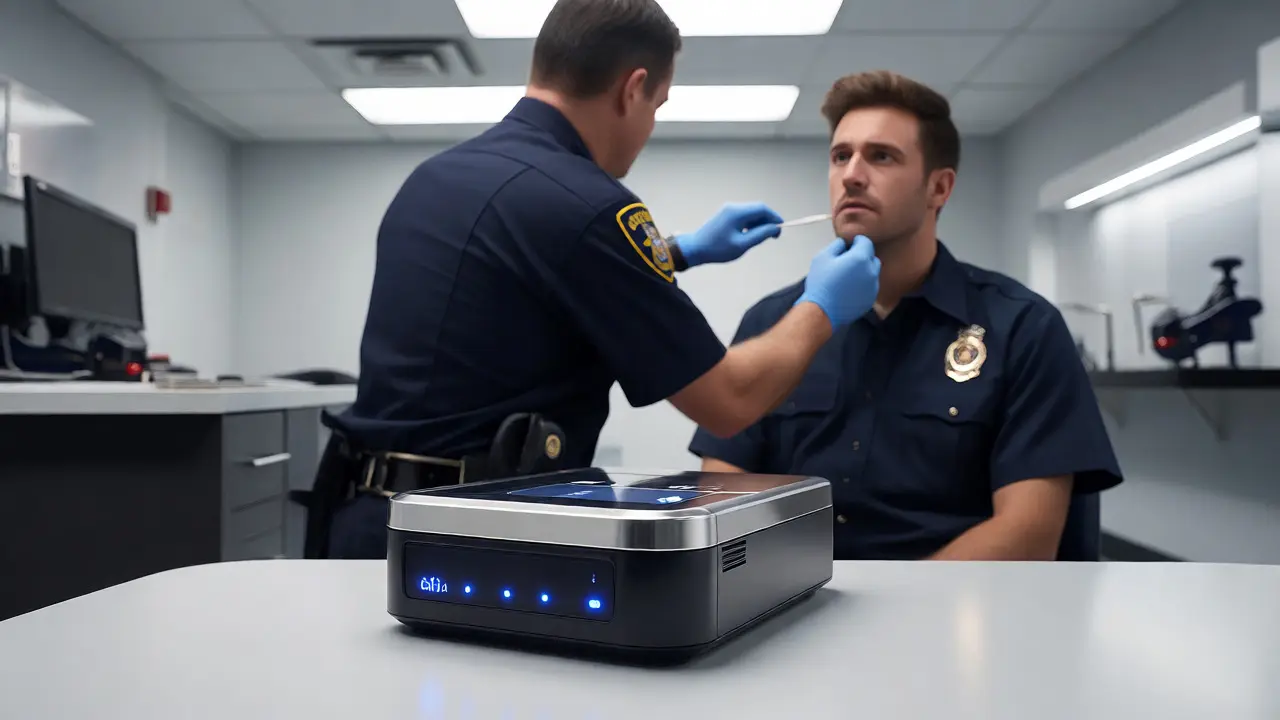
Imagine pulling someone over for a minor traffic violation. In the old days, you’d take them to the station, fingerprint them, maybe check their license plate, and hope they weren’t wanted for something bigger. Today, that same stop could yield a full genetic profile in under two hours. That’s not science fiction; it’s the current reality of Rapid DNA Technology, which allows law enforcement to generate forensic DNA profiles from buccal swabs without manual processing. This shift is transforming how police handle booking procedures and field investigations, moving from days-long waits to near-instant identification.
The core promise here is speed and accuracy at the point of contact. Traditional DNA analysis requires sending samples to a centralized lab, waiting weeks or months for results, and then cross-referencing databases manually. Rapid DNA systems automate this entire workflow. They extract, amplify, and analyze DNA directly on-site using portable devices. For officers in the field or staff at a booking facility, this means immediate answers. Did we just arrest a repeat offender? Is this person linked to an unsolved case? The machine tells you before the suspect leaves the room.
How Rapid DNA Works in the Booking Process
Booking is usually a bureaucratic bottleneck. You have paperwork, fingerprints, mugshots, and property inventory. Adding DNA collection used to mean sending a swab off to a state crime lab. Now, with rapid DNA instruments like the ANDE or the Global Forensic Solutions RapidHIT, the process changes entirely. An officer collects a cheek swab, inserts it into the device, and walks away. The machine handles the rest.
The internal mechanics are surprisingly robust despite the small footprint. These devices use automated extraction kits to pull DNA from epithelial cells collected by the swab. Then, polymerase chain reaction (PCR) amplifies specific short tandem repeats (STRs)-the standard markers used in forensic genetics. Finally, capillary electrophoresis separates these fragments to create a digital profile. All of this happens inside a sealed cartridge, minimizing contamination risks. The result is a CODIS-compatible profile uploaded automatically to local, state, or federal databases.
| Process Step | Traditional Lab Workflow | Rapid DNA Field/Booking |
|---|---|---|
| Sample Collection | Buccal Swab or Blood Card | Buccal Swab (Standard) |
| Transport Time | 1-3 Days (Courier/Mail) | 0 Minutes (On-Site) |
| Processing Time | 4-6 Weeks (Backlog dependent) | 90-120 Minutes |
| Data Upload | Manual Entry after QC | Automated Secure Upload |
| Turnaround Result | Weeks to Months | Same Day |
This speed isn’t just about convenience. It has legal implications. In many jurisdictions, if a suspect is booked for a misdemeanor but matches a violent felony in the database, officers can hold them longer or charge them differently based on that new information. Without rapid DNA, that match might come too late to affect the initial custody decision. With it, the intelligence is available when it matters most.
Field Applications Beyond the Precinct
While booking facilities were the first adopters, field applications are expanding rapidly. Think about major events, border crossings, or disaster response scenarios. During large public gatherings, identifying individuals who may be missing persons or suspects doesn’t require dragging everyone to a station. Portable units can operate in mobile command centers.
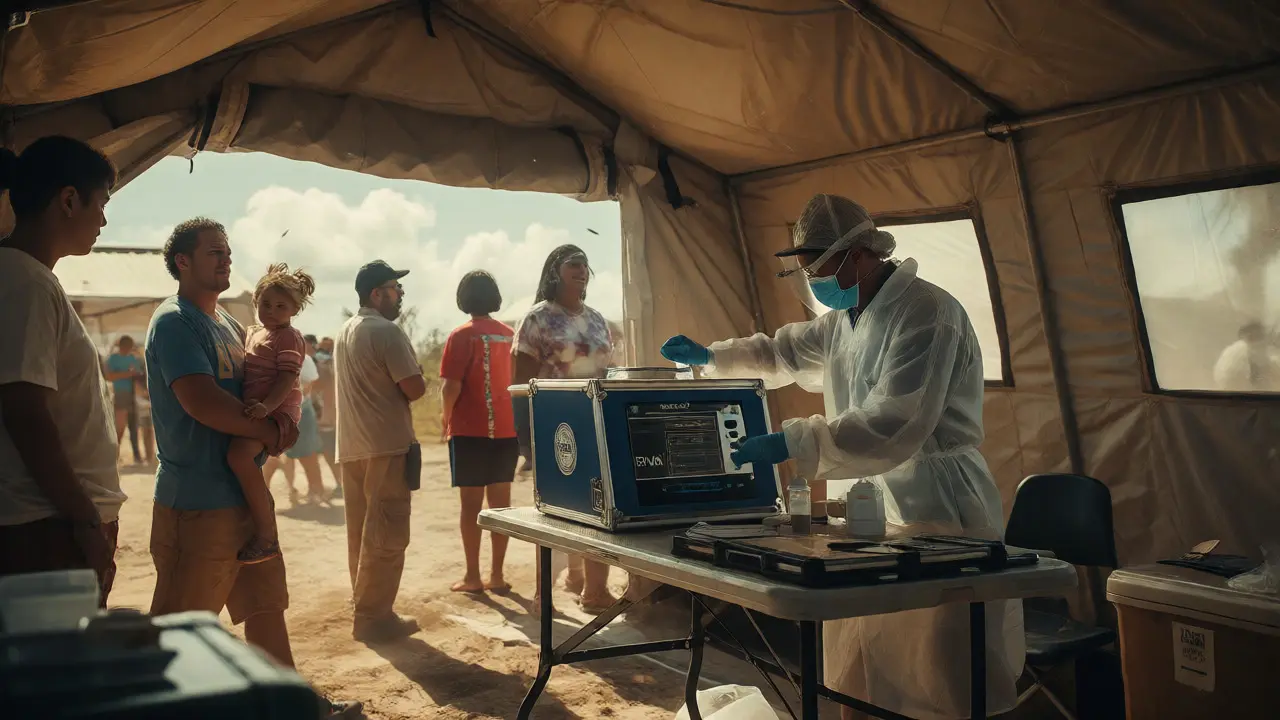
A compelling example comes from recent hurricane relief efforts. When families are separated during evacuations, traditional ID methods fail if documents are lost. Rapid DNA units deployed by FEMA and local agencies have helped reunite children with parents by matching buccal swabs against reference samples provided by guardians. This isn’t criminal investigation; it’s humanitarian aid enabled by forensic tech. The same logic applies to refugee processing or mass casualty incidents where visual identification is impossible due to decomposition or trauma.
In routine patrols, some departments are testing "DNA-on-demand" for high-risk stops. If an individual refuses to provide ID or provides inconsistent stories, a quick swab can verify identity against existing records. This reduces the time spent holding unverified individuals in custody. However, this raises significant privacy questions. Are we creating a de facto national DNA registry through voluntary bookings? Critics argue yes, while proponents say it prevents wrongful detention of people with similar names or appearances.
Legal and Privacy Implications
You can’t talk about rapid DNA without addressing the Fourth Amendment. The Supreme Court ruled in Maryland v. King (2013) that collecting DNA from arrestees for serious offenses is reasonable. But what about minor offenses? What about field stops where no arrest occurs? Laws vary wildly by state. In Oregon, where I live, the rules differ significantly from Texas or Florida. Some states allow DNA collection upon arrest for any offense; others restrict it to felonies or specific misdemeanors.
The automation aspect introduces another layer of scrutiny. Because the process is largely hands-off, chain-of-custody documentation must be impeccable. Every step-from swab insertion to data upload-must be logged digitally. Any gap in this audit trail can lead to evidence suppression in court. Defense attorneys are already challenging the reliability of black-box algorithms used in these devices. If the software makes a call on a mixed sample or a low-template DNA profile, who is responsible for validating that interpretation?
- Consent Issues: Does a suspect need to consent if the swab is part of a mandatory booking procedure?
- Data Retention: How long is the profile kept if no conviction follows?
- Civil Liberties: Does widespread field use erode the expectation of privacy in public spaces?
These aren’t abstract concerns. Recent legislative proposals aim to limit the retention of DNA profiles from non-convicted individuals. As adoption grows, expect more litigation defining the boundaries of this technology.
Technical Challenges and Limitations
Don’t let the marketing fool you: rapid DNA isn’t magic. It works best with single-source, high-quality samples. Buccal swabs from arrestees are ideal because they’re fresh and contain plenty of human epithelial cells. But try using a rapid unit on a dirty crime scene sample-a cigarette butt found in rain, or blood mixed with soil-and you’ll likely get inconclusive results. These devices lack the sensitivity and cleanup capabilities of large laboratory platforms like those running Illumina sequencing.
Contamination remains a persistent enemy. Even though cartridges are sealed, operator error during swab collection can introduce foreign DNA. A gloved hand touching a face mask, or talking over an open tube, can compromise the sample. Training is critical. Officers and technicians must follow strict protocols to avoid false positives or allelic dropouts.
Cost is another barrier. While per-test costs have dropped, the initial investment for a rapid DNA instrument ranges from $50,000 to $70,000, plus ongoing maintenance and consumable expenses. Small rural departments often struggle to justify this expense unless they share resources regionally. Regional hubs, where several towns pool funds to buy one unit, are becoming a common model.
Best Practices for Implementation
If your agency is considering rapid DNA, start with a clear policy framework. Define exactly when and why DNA will be collected. Will it be for all arrests? Only for DUIs? For field identifications only? Ambiguity leads to inconsistent practice and legal challenges.
- Train Thoroughly: Don’t just teach button-pushing. Teach the biology behind the test so operators understand failure modes.
- Integrate Systems Early: Ensure the device talks seamlessly to your LIMS (Laboratory Information Management System) and CODIS. Manual data entry defeats the purpose of automation.
- Audit Regularly: Review random samples for quality control. Check logs for anomalies in run times or error codes.
- Engage Legal Counsel: Have prosecutors review your collection protocol before rollout. Identify potential constitutional hurdles early.
Success depends less on the hardware and more on the workflow integration. The goal isn’t just to generate a profile; it’s to act on it within the operational window of the arrest or incident.
Looking Ahead: The Future of On-Site Genetics
We are moving toward even smaller, faster, and cheaper devices. Next-generation sequencers miniaturized for field use could eventually replace STR-based profiling, offering higher discrimination power. Imagine a handheld scanner that reads whole-genome SNPs in ten minutes. That would allow for phenotypic predictions-estimating eye color, hair color, and ancestry-directly in the field.
For now, however, rapid DNA serves its primary role well: closing the gap between collection and identification. It turns DNA from a retrospective tool into a proactive investigative asset. Whether you’re booking a suspect in Portland or managing a crowd at a festival in New Orleans, the ability to know who you’re dealing with in real-time changes the game.
Is rapid DNA as accurate as laboratory testing?
Yes, for single-source buccal swabs, rapid DNA systems produce profiles identical to those generated in accredited laboratories. They use the same STR markers and validation standards required by FBI guidelines for CODIS inclusion. However, they are less effective than labs for complex mixtures or degraded samples.
Can anyone refuse a rapid DNA test during a traffic stop?
It depends on jurisdiction and whether an arrest has occurred. In many places, DNA collection is mandatory upon arrest for certain offenses. During a mere traffic stop without arrest, consent is typically required unless there is probable cause for arrest. Always consult local laws.
What happens to my DNA profile if I am not convicted?
Policies vary by state. Some jurisdictions expunge profiles if charges are dropped or the defendant is acquitted, while others retain them indefinitely. Recent legal trends favor expungement for non-convicted individuals to protect civil liberties.
How much does a rapid DNA machine cost?
Initial hardware costs generally range between $50,000 and $70,000. Additional annual costs include maintenance contracts, software licensing, and disposable cartridges/swabs, which can add several thousand dollars per year depending on usage volume.
Does rapid DNA work on old samples?
Generally, no. Rapid DNA is optimized for fresh buccal swabs collected immediately. It struggles with degraded samples, such as bones, teeth, or environmental evidence exposed to weather, which require more sensitive laboratory techniques.