Imagine you’re a defense attorney holding a lab report that claims your client had 200 ng/mL of cocaine in their blood. The number looks precise, scientific, and damning. But what if that number is wrong? What if the machine picked up background noise from the previous sample or a contaminant from the glassware? In drug analysis, the difference between "guilty" and "not guilty" often hangs on two unglamorous things: analytical standards and blanks. These aren’t just paperwork; they are the guardrails that keep science from becoming fiction.
If you work in a forensic lab, clinical toxicology unit, or pharmaceutical QC department, you know the pressure. One contaminated reagent can ruin a batch of tests. One miscalibrated standard can send an innocent person to jail. This guide breaks down exactly how these tools work, why they fail, and how to use them correctly so your data holds up in court.
The Foundation: What Are Analytical Standards?
An analytical standard is a substance with a known purity and concentration used to calibrate instruments and verify results. Think of it as the ruler you use to measure length. If your ruler has faded markings, every measurement you take is suspect. In drug analysis, we don’t have physical rulers; we have chemical references.
There are two main types you’ll encounter daily:
- Certified Reference Materials (CRMs): These are high-purity substances traceable to national metrology institutes like NIST (National Institute of Standards and Technology). They come with a certificate stating the exact concentration and uncertainty range. You use these to build your calibration curve.
- Internal Standards (IS): These are compounds added to every sample at a fixed amount. They usually look chemically similar to the drug being tested but behave differently enough to be distinguished by the detector. For example, if you’re testing for THC, you might add a deuterated version of THC as your internal standard. It corrects for variations in how much sample actually makes it into the machine.
Why does this matter? Because machines drift. A mass spectrometer’s sensitivity changes over time due to temperature fluctuations, column aging, or ion source contamination. Without a fresh standard run before each batch, you’re guessing, not measuring.
The Safety Net: Understanding Blanks
If standards tell you where the target is, blanks tell you if there’s anything else in the room making noise. A blank is a sample that contains everything except the analyte (the drug) you’re looking for. When you run a blank, any signal you see should theoretically be zero. If you see a peak, something is wrong.
Not all blanks are created equal. Mixing them up is a common rookie mistake that leads to false positives.
| Blank Type | Composition | Purpose | Common Failure Mode |
|---|---|---|---|
| Solvent Blank | Pure solvent (e.g., methanol, water) | Checks instrument baseline and system cleanliness | Carryover from previous injection |
| Reagent Blank | All chemicals/reagents used, no biological matrix | Detects contamination in solvents, buffers, or enzymes | Contaminated water or impure salts |
| Method Blank | Drug-free matrix (e.g., human serum) + all steps | Detects contamination during extraction and preparation | Dirty glassware or plasticizers from tubes |
| Field Blank | Sample collected alongside evidence but kept closed | Detects environmental contamination at crime scene | Airborne particulates or handler contact |
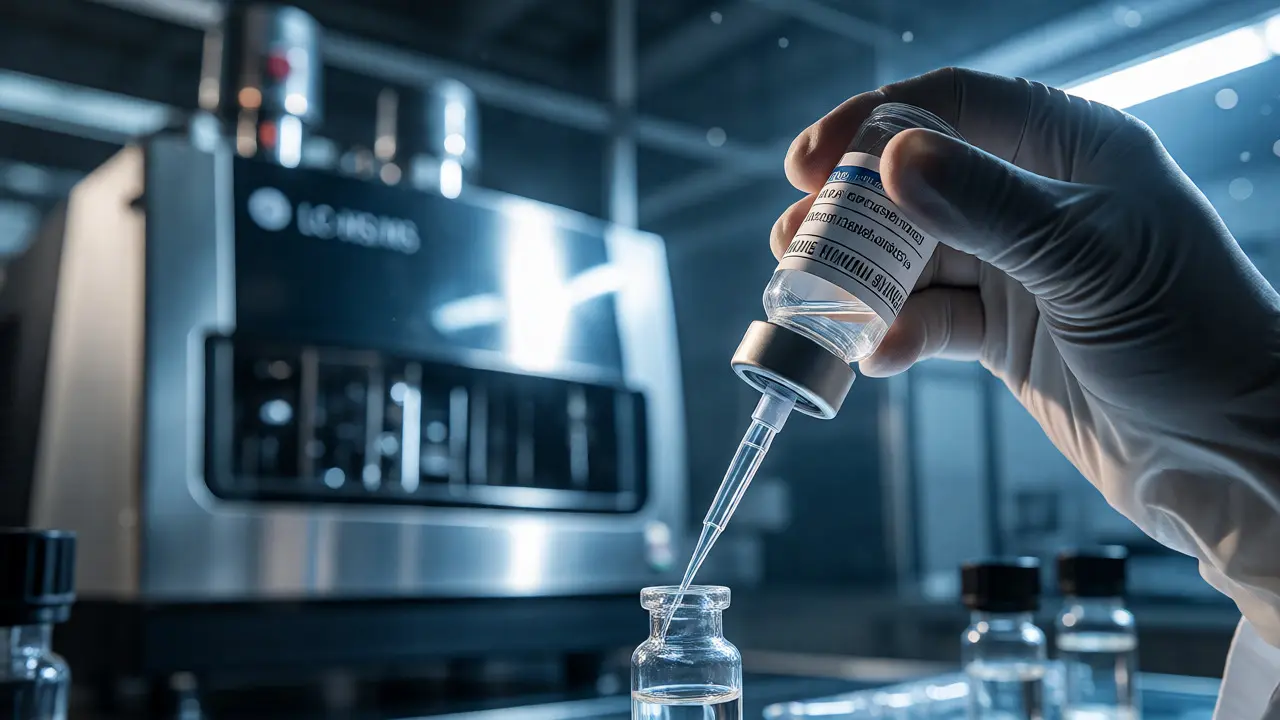
Here’s the critical rule: A method blank is your best friend. It goes through the entire process-extraction, centrifugation, drying, reconstitution-just like a real patient sample. If your method blank shows a peak for cocaine, you cannot trust the positive result in the patient sample. It means the cocaine came from somewhere else, likely the lab environment or the extraction kit itself.
Building a Calibration Curve That Doesn’t Lie
You don’t just drop a standard into a machine and call it a day. You need a calibration curve, which is a plot of instrument response versus known concentrations. This curve allows the software to calculate the unknown concentration in your samples.
Most labs follow strict guidelines here. For forensic toxicology, a linear range is preferred because it’s easier to validate and explain to a jury. However, some drugs exhibit non-linear behavior at low concentrations. Here’s how to ensure your curve is robust:
- Use Matrix-Matched Standards: Don’t prepare your standards in pure water if your samples are blood plasma. Blood proteins bind to drugs, changing how much reaches the detector. Prepare your standards in drug-free plasma to mimic the real sample conditions.
- Include Low and High Ends: Your lowest standard should be near the Limit of Quantification (LOQ). Your highest should cover expected therapeutic or toxic levels. If you extrapolate beyond your curve, you’re guessing.
- Check Linearity: The correlation coefficient ($R^2$) should generally be above 0.995 for forensic work. But don’t just look at $R^2$. Look at the residuals. If the points systematically curve away from the line, your model is wrong, even if $R^2$ looks good.
A pro tip: Always run a quality control (QC) sample at three levels-low, medium, and high-at the beginning, middle, and end of your batch. If the mid-level QC fails, the whole batch is suspect, regardless of what the curve says.
The Contamination Trap: Why Blanks Fail
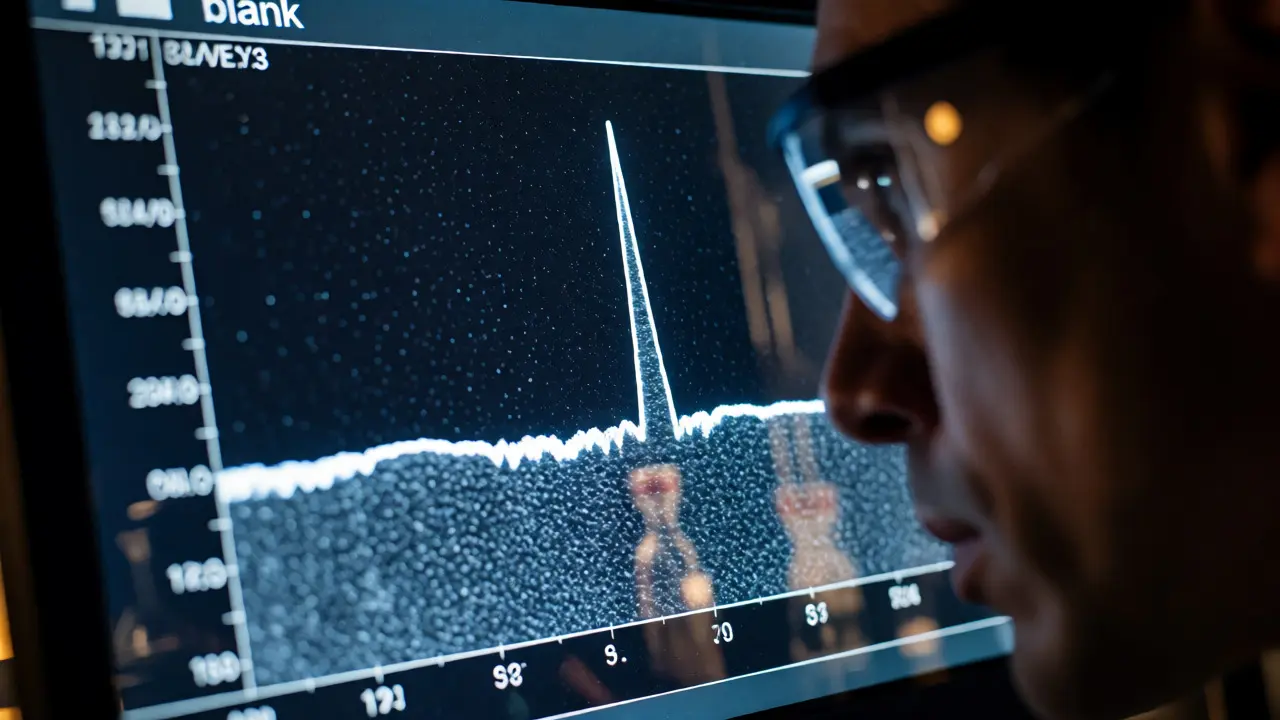
False positives are the nightmare of drug analysis. They happen when a blank shows a signal for the drug. Where does this contamination come from?
1. Carryover: This happens when a highly concentrated sample sticks to the autosampler needle or the chromatography column. The next sample (often a blank) picks up traces of the previous one. To fix this, use wash solvents between injections and include a "system suitability" check where you inject a blank after a high-concentration standard.
2. Reagent Impurities: Not all solvents are created equal. HPLC-grade methanol is cleaner than technical grade. Even "clean" solvents can contain trace amounts of benzene or other aromatics that interfere with UV detection. Regularly test new lots of solvents against old ones.
3. Plasticizers: Many plastics leach compounds like phthalates or bisphenol A. If you extract lipophilic drugs using hexane and store them in cheap polypropylene tubes, those plasticizers can elute at similar retention times to your drug. Use glass vials for storage whenever possible, or validate that your specific plastic tubes are inert.
4. Environmental Exposure: In labs handling illicit drugs, airborne particles are a real risk. If you weigh pure cocaine powder on a balance in the same room where you prepare samples, dust settles everywhere. Physical separation of areas-weighing area vs. extraction area-is mandatory for high-sensitivity assays.
Regulatory Expectations: ISO and SWGTOX
You can’t just decide how many blanks to run based on gut feeling. Regulations dictate it. Two major bodies set the bar for drug analysis quality:
- ISO/IEC 17025: This international standard for laboratory competence requires documented procedures for quality control. It mandates that labs must demonstrate the validity of their results through regular participation in proficiency testing and internal QC.
- SWGTOX (Scientific Working Group for Forensic Toxicology): In the US, this group provides detailed recommendations. For immunoassays, they recommend running controls with every batch. For confirmatory tests like GC-MS or LC-MS/MS, they specify strict acceptance criteria for calibration curves and blank responses.
If your method blank shows a response greater than 20% of the Lowest Calibrator (L0), you typically must reject the batch. This isn’t arbitrary; it’s a statistical threshold designed to keep false positive rates below 1%.
Troubleshooting: When Results Don’t Match
So, your QC failed. Now what? Don’t panic. Follow this diagnostic tree:
- Check the Blanks First: Did the method blank show interference? If yes, the problem is contamination. Check your reagents, glassware, and pipette tips. Replace them and rerun the batch.
- Check the Calibration: Did the curve meet linearity requirements? If the first point is off, your lowest standard might have degraded. Volatile compounds evaporate quickly. Ensure your standards are stored properly (usually -20°C or -80°C) and protected from light.
- Check the Internal Standard: Is the IS response consistent across all samples? If the IS peaks are varying wildly, you have a pump issue, a leak, or inconsistent injection volumes. Service the instrument.
- Review Sample Prep: Did you skip a step? Did you mix poorly? Human error is the most common cause of QC failure. Retrain staff on critical steps like vortexing and centrifuging.
Remember, a failed QC is better than a silent error. Catching a bad batch now saves you from explaining a wrongful conviction later.
Key Takeaways
- Standards are your truth: Use Certified Reference Materials (CRMs) for calibration and Internal Standards (IS) for correction. Never rely on uncertified powders.
- Blanks reveal lies: Method blanks catch contamination during extraction. Solvent blanks catch instrument carryover. Run both.
- Matrix matters: Calibrate in the same matrix as your samples (e.g., plasma for plasma) to account for binding effects.
- Follow the rules: Adhere to ISO 17025 and SWGTOX guidelines for acceptance criteria. If the blank exceeds limits, reject the batch.
- Document everything: If a blank fails, document the investigation. Courts love seeing a clear audit trail of how errors were caught and corrected.
What is the difference between a solvent blank and a method blank?
A solvent blank contains only the pure solvent used for dilution, checking for instrument contamination or carryover. A method blank contains all reagents and goes through the entire sample preparation process (extraction, drying, etc.) without the actual drug. The method blank detects contamination introduced during manual handling and chemical processing, while the solvent blank checks the hardware.
How often should I run calibration standards?
For forensic toxicology, calibration is typically required at the start of each analytical run or batch. Some methods allow for bracketing, where a calibration is verified at the beginning and end of a sequence. However, if the instrument undergoes maintenance or if QC samples fail, a new full calibration curve must be generated immediately.
Can I reuse calibration standards?
Yes, but with caution. Stock solutions are stable if stored correctly (usually frozen and protected from light). However, working standards prepared for immediate use may degrade over time, especially volatile compounds. Always check the stability data provided by the manufacturer or validated in-house. Never use expired standards.
What causes high background noise in blanks?
High background noise can stem from dirty ion sources in mass spectrometers, contaminated mobile phases, or electrical interference. It can also result from column bleed if the chromatographic column is nearing the end of its life. Regular maintenance, using high-purity solvents, and replacing columns according to manufacturer guidelines help minimize this.
Why do we use internal standards in drug analysis?
Internal standards compensate for variations in sample preparation efficiency and instrument response. Since the internal standard is added at a known amount to every sample, including blanks and calibrators, any loss during extraction affects both the analyte and the internal standard proportionally. This ratio-based calculation improves precision and accuracy significantly compared to external calibration alone.