When a shotgun is fired, it doesn’t just leave behind a hole or a wound. It leaves behind physical clues-tiny pieces of plastic, metal, and debris-that tell investigators exactly what kind of weapon was used, what ammunition was fired, and sometimes even which specific gun fired it. This isn’t science fiction. It’s standard forensic work done in crime labs across the country, from Portland to Phoenix. And if you’ve ever wondered how experts figure out the gauge of a shotgun from a few scattered pellets or a shredded wad, here’s how it actually works.
What Exactly Is a Shotgun Wad?
The wad is the part of a shotgun shell that sits between the powder and the pellets. It’s usually made of plastic, but older shells used fiber or paper. Its job? To seal the barrel, keep gas pressure behind the shot, and hold the pellets together until they exit the muzzle. But after firing, the wad doesn’t just disappear. It flies out of the barrel, often landing near the scene or embedded in clothing or walls. And that’s where forensic examiners step in.
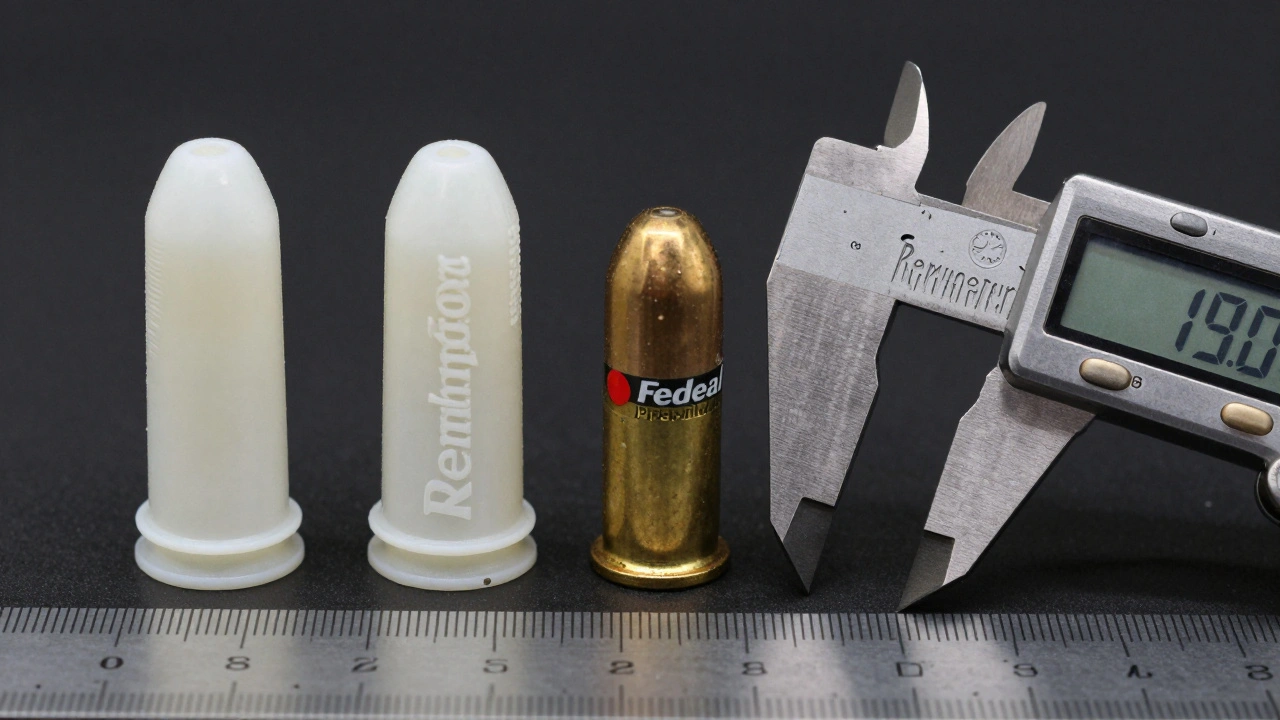
Wads are more than just packaging. They carry marks. These aren’t random scratches-they’re impressions left by the barrel’s interior, the crimp at the shell’s mouth, and the manufacturer’s stamp. A plastic wad from a Remington shell might have a small logo stamped on its base. A Federal Premium wad might show a unique rib pattern. These aren’t just for branding-they’re forensic fingerprints.
To determine the shotgun gauge, examiners measure the diameter of the wad’s base. A 12-gauge wad is about 0.729 inches wide. A 20-gauge is 0.615 inches. A .410 bore? Just 0.410 inches. But here’s the catch: wads can get crushed, melted, or swollen from moisture or body fluids. That’s why examiners don’t rely on one measurement. They compare the evidence wad to known standards from the same brand and model. If the evidence is too damaged, they test it against wads from one gauge larger and one gauge smaller to narrow it down. This isn’t guesswork-it’s a calibrated process backed by decades of lab data.
Shot Pellets: Size, Weight, and Material
Pellets are the obvious clue, but they’re also the trickiest. A single shotgun blast can fire hundreds of pellets. Some hit the target. Some bounce off. Others melt, deform, or get covered in blood and tissue. So how do you measure something that’s been twisted by impact?
There are three main methods:
- Direct measurement-using a calibrated microscope to measure the diameter of the most intact pellets. For small shot (like #8 or #9), measurements go to three decimal places (e.g., 0.078 inches). For buckshot, two decimals are enough (e.g., 0.33 inches).
- Weight comparison-weighing a group of pellets (say, 10 or 20) and comparing their average weight to known standards. A single #8 lead pellet weighs about 0.005 ounces. If the average weight of 15 recovered pellets matches that, you know you’re dealing with #8 shot. This method is especially useful when pellets are flattened or melted.
- Visual comparison-lining up recovered pellets next to reference shot from known ammunition. Labs keep reference collections of every common brand and size. If the evidence pellet matches a #6 shot from a Winchester shell, that’s your answer.
But here’s something most people don’t realize: industry standards allow for a half-size variation. A shell labeled “#7 shot” might actually contain pellets ranging from #6.5 to #7.5. That’s why forensic reports never say “this was fired from a #7 shotgun.” They say “shot size is consistent with #7, with a possible range of #6.5 to #7.5.” Precision matters, but so does honesty.
Can You Trace Pellets Back to a Specific Gun?
Unlike bullets, which get unique rifling marks from the barrel, shotgun pellets don’t usually carry individualized tool marks. That’s because they’re small, soft, and travel through a smoothbore barrel. But there’s an exception: plastic wads.
Some wads-especially modern, high-performance ones-can show striations. These are microscopic grooves or ridges left by the barrel’s interior. If the wad is recovered in good condition, examiners can compare those striations to test-fired wads from the suspect shotgun. It’s rare, but it’s possible. The National Institute of Justice (NIJ) has documented cases where this method helped link a wad to a specific weapon. It’s not common, but when it happens, it’s powerful evidence.
And then there’s the material. Not all pellets are lead. Steel, bismuth, tungsten, copper, and even iron are used today-especially for waterfowl hunting, where lead is banned. These materials don’t just affect hunting regulations-they affect forensic analysis.
The New Frontier: Dual-Energy CT Scanning
Just a few years ago, identifying pellet material meant chemical tests or X-rays with limited accuracy. Now, some advanced labs use Dual-Energy Computed Tomography (DECT). This isn’t sci-fi-it’s real. DECT scans can tell the difference between lead, steel, copper, and tungsten pellets based on how they absorb different X-ray energies.
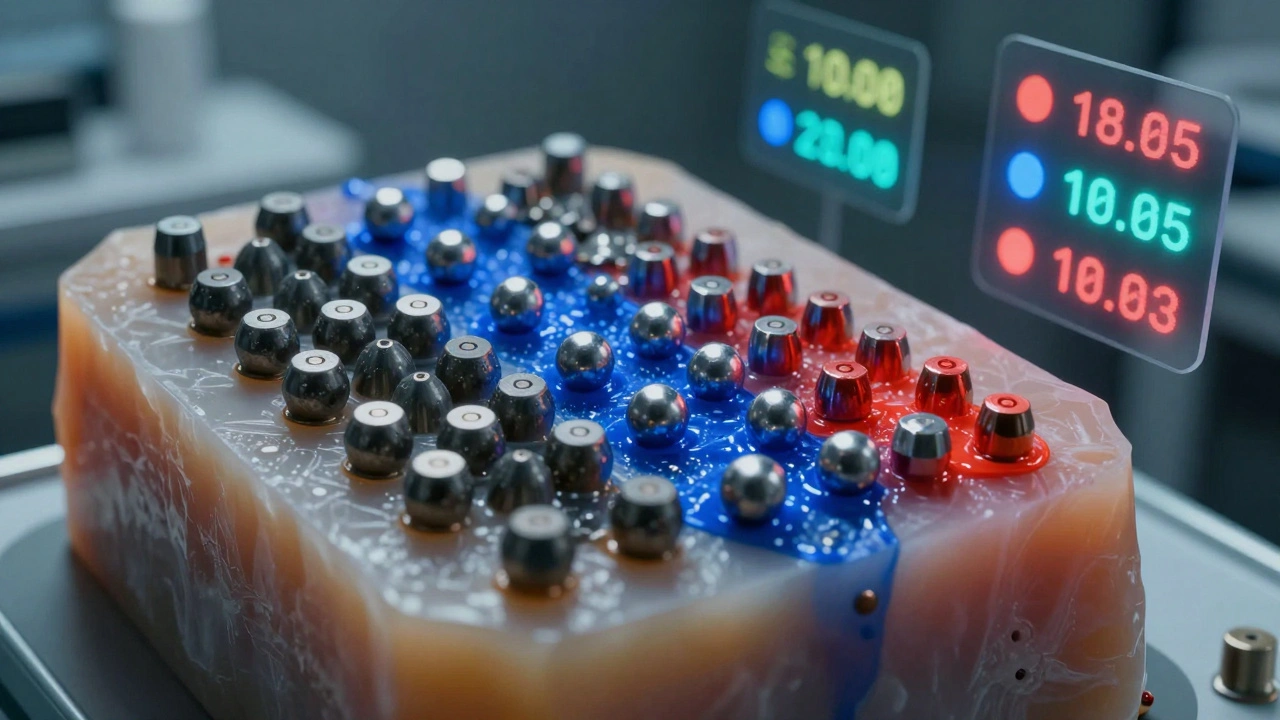
In a 2025 study, researchers fired pellets of five materials into gelatin blocks. Lead and tungsten showed high density but low contrast on DECT. Steel and copper? They stood out like beacons. The difference between steel pellets of 3mm and 4mm was only 0.8% in DECT readings-so size didn’t matter much. But material did. This matters because lead is toxic. If a pellet is found in a victim’s body, knowing it’s lead changes how medical teams handle removal. Steel pellets? They can interfere with MRI scans. Identifying the material isn’t just about the gun-it’s about patient safety.
How Evidence Is Collected and Preserved
It sounds simple: pick up the pellets and wads. But it’s not. Shotgun evidence is fragile. A single pellet can be lost in fabric. A wad can dissolve in rain. So the rules are strict:
- Wads are placed in sealed plastic bags, labeled, and kept dry.
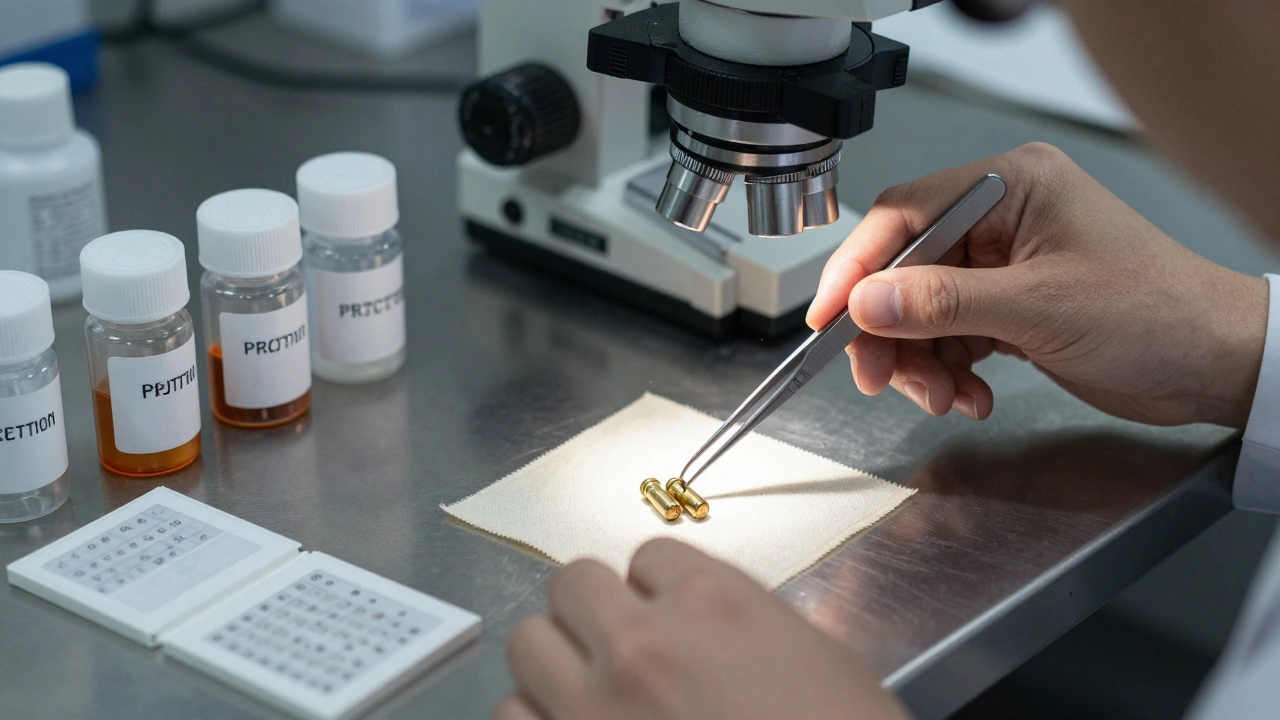
- Pellets are collected with tweezers, not fingers, and stored in pill vials or small containers to prevent movement and damage.
- If multiple unfired shells are found, they’re disassembled to compare wad materials side by side.
- Test fires from the suspect shotgun are always conducted to create reference samples.
Even a single pellet, if properly preserved, can be enough to link a crime to a specific type of ammunition. And that’s often enough to build a case.
Why This Matters Beyond the Crime Scene
Shotgun evidence isn’t just about solving crimes. It’s about accountability. When a law enforcement officer discharges a shotgun, knowing the exact gauge and load can determine whether the use of force was justified. When a hunting accident happens, identifying the shell can reveal whether illegal ammunition was used. And when a child finds a shell in the woods, knowing the gauge helps determine if it’s safe to handle.
This isn’t abstract science. It’s practical, repeatable, and grounded in real-world data. Labs in Washington, Idaho, and Maine have been doing this for decades. Their methods are standardized, validated, and defensible in court. And now, with tools like DECT, they’re getting even more precise.
Can you determine the shotgun gauge from just one pellet?
Not reliably. A single pellet can’t tell you the gauge because pellets are the same across different gauges. A #7 shot pellet is roughly the same size whether fired from a 12-gauge or a 20-gauge shotgun. Gauge is determined by the wad’s diameter or the shell’s physical dimensions. One pellet can tell you the shot size, but not the gauge.
Are all shotgun pellets made of lead?
No. While lead is still common, many jurisdictions ban it for waterfowl hunting due to environmental concerns. Today, you’ll find steel, bismuth, tungsten, copper, and even alloy pellets. Forensic labs now routinely test for material composition because it affects everything from toxicity to imaging. A steel pellet can ruin an MRI; a lead pellet can cause poisoning.
Do shotgun wads always have manufacturer markings?
Not always, but most modern plastic wads do. Manufacturers stamp logos, codes, or gauge indicators on the base. Older fiber or paper wads rarely have markings. When markings are present, they’re critical for narrowing down the brand and sometimes even the batch. But even without markings, the wad’s shape, thickness, and material can still help identify the gauge.
Can forensic examiners tell if two shotguns fired the same load?
Not from the pellets alone. But if wads are recovered, and they show unique striations from the barrel, examiners can compare them to test-fired wads from each suspect shotgun. This is rare but possible. The key is having a good-quality wad and a test fire from the weapon. Without a test fire, you can’t make that link.
Is shotgun evidence as reliable as bullet analysis?
It’s different, not less reliable. Bullets leave unique rifling marks, making individual firearm identification possible. Shotguns don’t. But shotgun evidence is more reliable for identifying the type of weapon and ammunition used. In fact, wad and pellet analysis has a higher success rate for determining gauge and shot size than bullet analysis has for matching a specific gun. The science is solid-it just answers different questions.