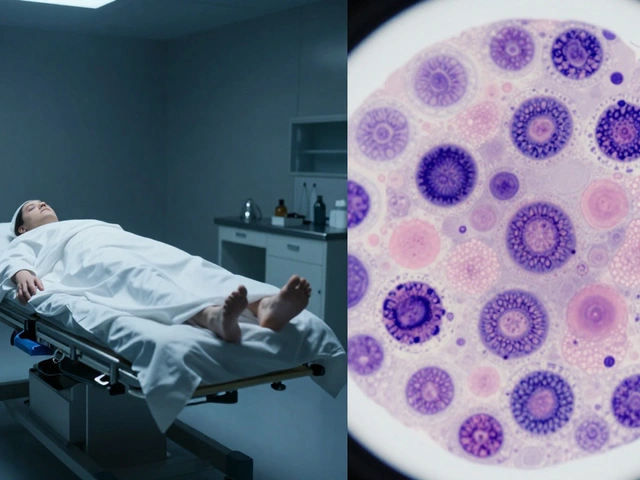
Imagine a crime scene where a single hair strand holds the key to solving a decades-old cold case. Now imagine that hair was contaminated by a technician's sneeze, or the database search missed a match due to software error. In Forensic DNA Analysis is the scientific process of extracting, amplifying, and interpreting genetic material from biological evidence to identify individuals. While the science itself is robust, the human and procedural elements surrounding it are where failures often occur. This is why Quality Assurance (QA) in forensic laboratories is not just a bureaucratic checkbox-it is the backbone of justice.
When we talk about QA in this context, we aren't just talking about checking boxes on a form. We are talking about a systematic approach to preventing errors before they happen. It involves strict protocols for handling evidence, rigorous validation of testing methods, and continuous monitoring of laboratory performance. If one link in this chain breaks, the entire case can collapse, leading to wrongful convictions or the release of guilty parties.
The Core Pillars of Laboratory Accreditation
Most reputable forensic labs operate under strict accreditation standards. The gold standard globally is ISO/IEC 17025, which sets requirements for the competence, consistency, and impartiality of testing and calibration laboratories. In the United States, many labs also adhere to guidelines set by the American Society of Crime Lab Directors International (ASCLD) or follow specific state mandates. These accreditations ensure that every step-from sample receipt to final report-is documented and repeatable.
Accreditation isn't static; it requires regular audits. External auditors visit labs to inspect records, observe procedures, and verify that staff are trained appropriately. For example, if a lab uses a specific brand of extraction kit, the auditor will check if the lab has validated that kit against their specific equipment and environmental conditions. This prevents 'cutting corners' with new technologies without proper testing.
Contamination Control: The Invisible Enemy
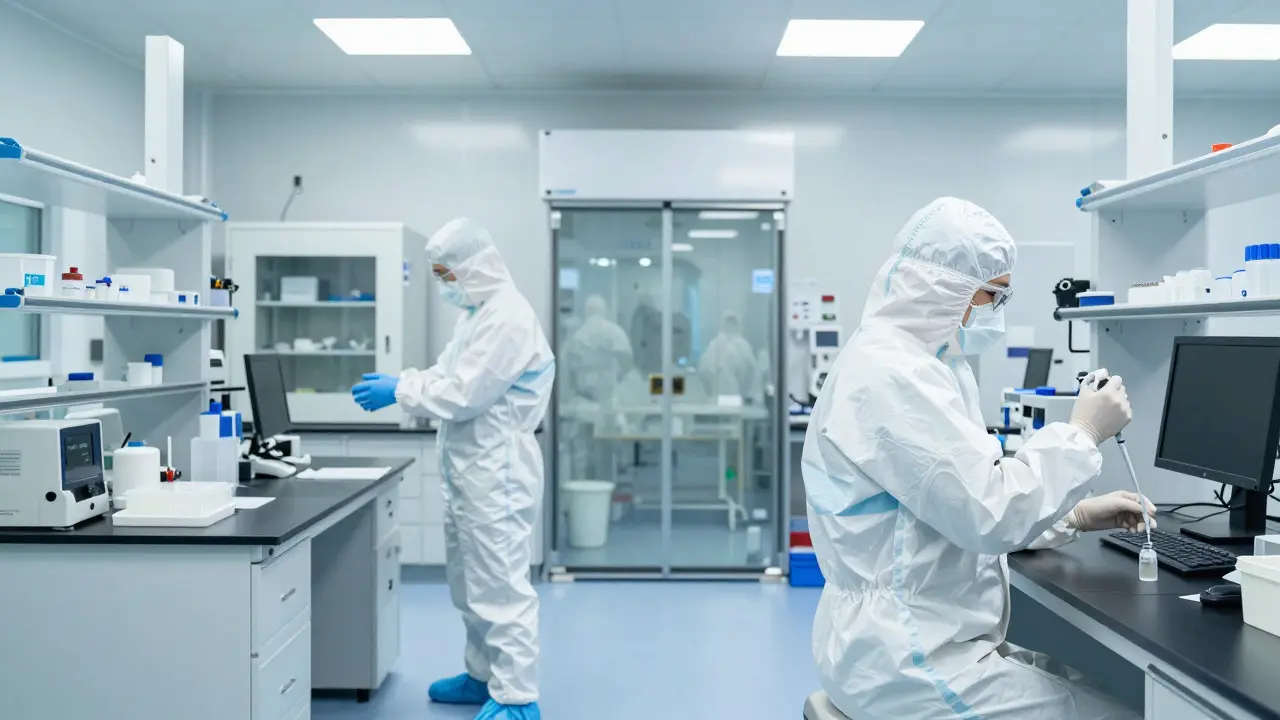
In any other lab, a bit of stray protein might be annoying. In a forensic DNA lab, it’s catastrophic. Contamination can come from three main sources: the environment, the personnel, and the samples themselves. To combat this, labs use physical separation of work areas. You’ll typically find distinct zones for pre-PCR (extraction), PCR (amplification), and post-PCR (analysis). Moving between these zones requires changing gloves, lab coats, and sometimes even shoes to prevent cross-contamination.
Air filtration systems, specifically HEPA filters, keep airborne particles out. But technology alone isn’t enough. Staff must follow strict hygiene protocols. Imagine a technician who just ate lunch nearby without washing hands properly-that residual DNA could end up on a victim’s swab. Regular cleaning with bleach or enzymatic cleaners helps break down organic matter, but the real defense is discipline and routine verification using negative controls.
Validation and Verification: Proving the Method Works
Before a forensic lab runs a test on a real case, they must prove the method works reliably. This is called validation. It involves running tests on known samples to determine limits. For instance, how much background noise does the machine produce? At what point does a signal become too weak to trust? These metrics define the sensitivity and specificity of the assay.
Once a method is validated, the lab performs ongoing verification. This means periodically running proficiency tests-samples sent by external organizations where the correct answer is known only to the sender. If the lab fails to identify the correct profile, it triggers an investigation into what went wrong. Was it a machine malfunction? A data entry error? A misunderstanding of the protocol? Identifying the root cause is crucial for maintaining integrity.
Chain of Custody: Tracking Every Touch
DNA evidence is only as good as its history. If you can’t prove who had the sample and when, the defense can argue it was tampered with. This is where the chain of custody comes in. It’s a detailed log that tracks the sample from the crime scene to the archive. Every transfer must be signed off. Every storage condition (temperature, humidity) must be recorded. If a box of evidence sits in a hot car for two hours, that needs to be noted because heat can degrade DNA over time.
Modern labs use digital tracking systems with barcodes or RFID tags to reduce human error in logging. However, the paper trail remains legally significant. A missing signature or a gap in the timeline can cast doubt on the results, regardless of how perfect the technical analysis was.
Data Integrity and Software Management
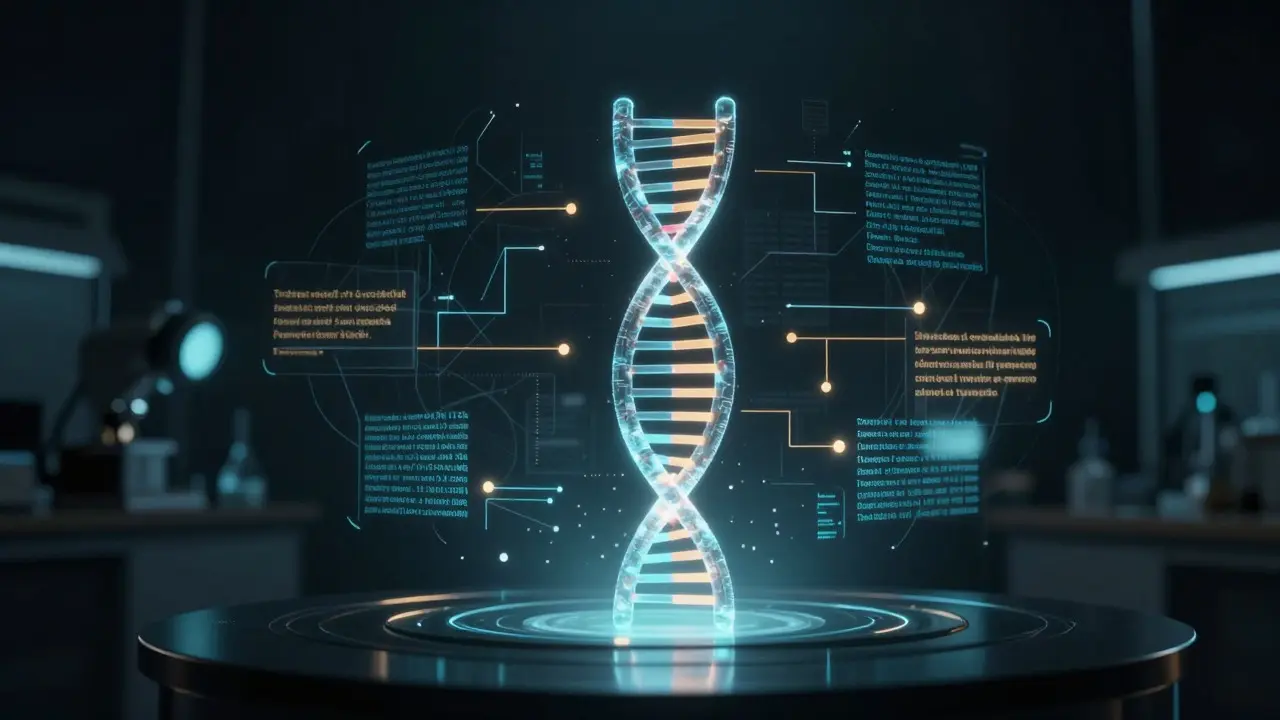
Today, most DNA analysis is computer-driven. Electropherograms (the graphical output of DNA fragments) are interpreted by specialized software. This introduces a new risk: software errors or misinterpretation. Labs must validate their software versions. When a software update is released, the lab cannot just install it and move on. They must re-validate the system to ensure the new version produces the same accurate results as the old one.
Additionally, raw data files must be backed up and protected from alteration. Audit trails within the software record every action taken by an analyst. Did they adjust a peak threshold? Did they exclude a stutter peak? These decisions are logged. This transparency allows reviewers to see exactly how a conclusion was reached, making the process defensible in court.
| Element | Purpose | Common Failure Mode |
|---|---|---|
| Accreditation Audits | Verify compliance with ISO/IEC 17025 | Lack of documentation during spot checks |
| Negative Controls | Detect environmental contamination | Ignoring low-level background signals |
| Proficiency Testing | Benchmark lab performance externally | Failing to investigate root causes of errors |
| Chain of Custody Logs | Prove sample integrity and ownership | Missing signatures or unrecorded transfers |
| Software Validation | Ensure consistent digital interpretation | Using unvalidated software updates |
The Human Factor: Training and Culture
Machines don’t make mistakes; people do. That’s why training is central to QA. New analysts undergo months of supervised practice before running cases independently. They learn to recognize subtle signs of trouble, like a smearing pattern in an electropherogram that suggests degraded DNA. Experienced mentors review their work regularly. This culture of peer review acts as a safety net.
Culture also matters. In some labs, there’s a fear of reporting errors, leading to hidden problems. Effective QA programs encourage a 'just culture' where near-misses are reported without blame, allowing the lab to fix systemic issues before they cause harm. If a technician notices a pipette is slightly off-calibration, they should feel safe reporting it immediately rather than hoping it doesn’t affect the current batch.
Why This Matters for Justice
Ultimately, quality assurance protects the truth. It ensures that when a DNA profile matches a suspect, the match is reliable. It ensures that when a profile is excluded, the exclusion is valid. Without rigorous QA, forensic science becomes guesswork. With it, DNA analysis remains one of the most powerful tools in criminal justice, capable of both convicting the guilty and exonerating the innocent.
As technology evolves with rapid DNA testing and next-generation sequencing, the principles of QA remain constant: document everything, control the environment, validate your methods, and trust no one’s word without proof. The lab may change, but the need for absolute reliability never does.
What is the most common cause of error in forensic DNA labs?
Contamination is widely considered the most frequent source of error. This can happen through airborne particles, improper cleaning of surfaces, or cross-contamination between samples if work areas are not physically separated. Strict adherence to zoned workflows and regular use of negative controls help mitigate this risk significantly.
How often do forensic labs undergo external audits?
Labs accredited to ISO/IEC 17025 typically undergo full external audits every three years, with surveillance audits in between. Additionally, they participate in annual proficiency testing programs where unknown samples are sent to them to verify their analytical accuracy against peer institutions.
Can software errors invalidate a DNA result?
Yes. If a software update changes how peaks are calculated or displayed without proper re-validation, it can lead to misinterpretation. Labs must maintain audit trails that show which software version was used and confirm that any updates were tested against known standards before being applied to casework.
What role does the chain of custody play in QA?
The chain of custody proves that the DNA analyzed in the lab is the same DNA collected at the crime scene. It documents every person who handled the sample, the time of transfer, and storage conditions. Any break in this chain can allow defense attorneys to challenge the admissibility of the evidence in court.
How does training contribute to quality assurance?
Training ensures that analysts understand not just how to run a machine, but how to interpret results critically. Ongoing education helps staff stay updated on best practices and emerging pitfalls. Peer review and mentorship create a second layer of checking, catching potential errors before they reach the final report.