You cleaned up a blood spill last week using the same bleach ratio you learned in 2019. It felt effective. The smell was sharp, the surface looked clean, and you tossed the waste into a red bag. But here is the uncomfortable truth: your biohazard cleanup protocol might be obsolete. Why? Because the enemies have changed.
We aren't just fighting standard bloodborne pathogens anymore. We are dealing with emerging pathogens-viruses and bacteria that behave differently, survive longer on surfaces, or resist traditional disinfectants. Think about how quickly SARS-CoV-2 reshaped our understanding of aerosol transmission. Or consider the rise of multidrug-resistant organisms (MDROs) like MRSA in community settings. If your cleaning checklist hasn't been reviewed since before these shifts, you are likely leaving gaps in your safety net.
This isn't about fear-mongering. It's about practical adaptation. Whether you run a professional restoration company, manage a laboratory, or handle home remediation, updating your protocols isn't optional-it's survival. Let's break down exactly what has changed and how to fix it without overhauling your entire business model overnight.
The Shift from Standard Bloodborne to Complex Threats
For decades, OSHA’s Bloodborne Pathogens Standard (29 CFR 1910.1030) was the bible. It focused heavily on Hepatitis B, Hepatitis C, and HIV. These viruses are tough, but they are predictable. They require specific exposure routes-usually direct contact with infected blood or bodily fluids. Cleaning them meant wearing gloves, using an EPA-registered tuberculocidal disinfectant, and disposing of waste properly. Simple.
Emerging pathogens throw wrenches into this simplicity. Take Norovirus. It doesn't need blood to spread; a few particles on a countertop can infect dozens of people. It survives drying out better than many assume. Then there are novel coronaviruses or influenza variants that may persist on porous materials longer than we previously thought. The old rule of "bleach kills everything" fails when you encounter spores like Clostridioides difficile, which requires specific sporicidal agents, not just general disinfectants.
Your protocol needs to move beyond "blood only." It must account for respiratory secretions, vomit, and environmental persistence. This means re-evaluating what constitutes a "contaminated area." Is it just where the fluid landed? Or is it the air space above it if aerosolization occurred? Modern protocols increasingly treat certain spills as potential airborne hazards, requiring different ventilation strategies during cleanup.
Revisiting Personal Protective Equipment (PPE)
If you are still relying solely on nitrile gloves and a surgical mask, you are under-protected. The biggest mistake teams make is assuming one size fits all. Emerging pathogens often demand higher-level protection due to their transmissibility or resistance.
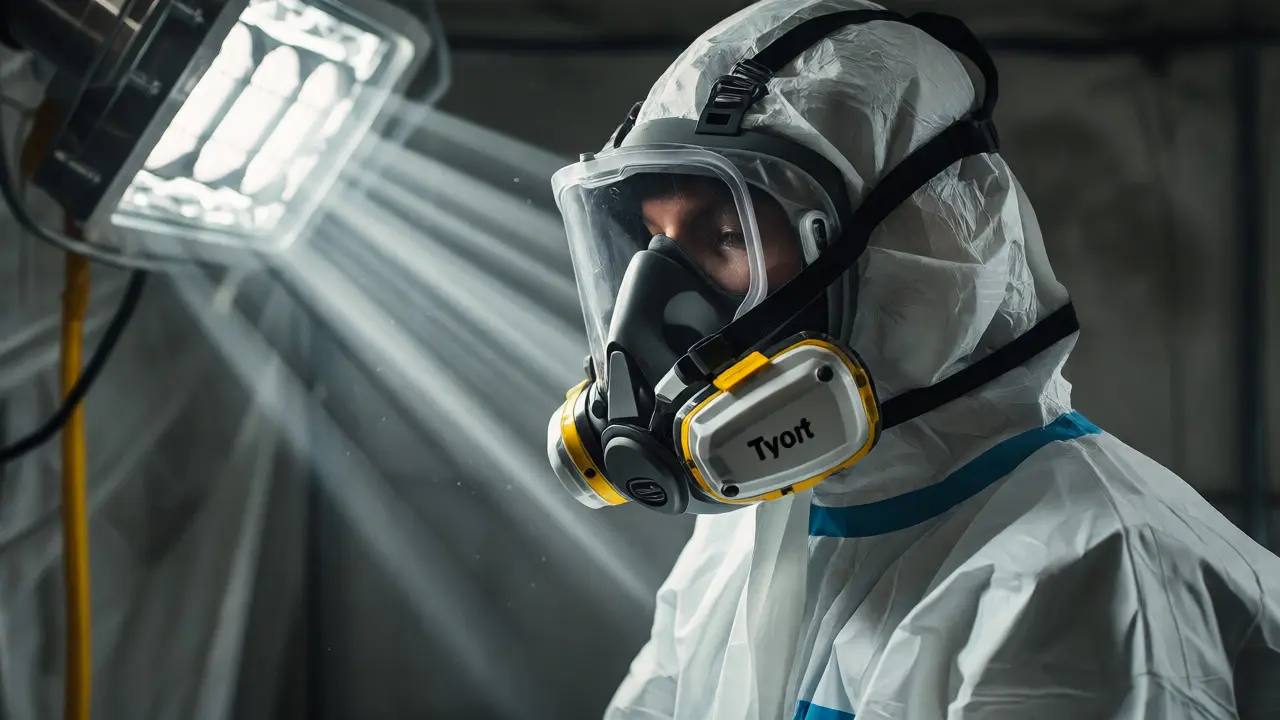
Consider respiratory protection. N95 respirators filter at least 95% of airborne particles, but they rely on a tight seal. If your team wears glasses or has facial hair, an N95 is useless. For unknown emerging threats, especially those with potential aerosol transmission, upgrading to half-face or full-face respirators with P100 filters provides a wider margin of safety. These filters capture smaller particles and offer better protection against volatile organic compounds (VOCs) released by strong disinfectants.
Eye protection is another weak link. Splash goggles are standard, but they don't protect against aerosols entering from the sides. Full face shields combined with sealed goggles create a barrier that surgical masks simply cannot match. And let's talk about coveralls. Disposable Tyvek suits are great, but do they have taped seams? Untaped seams allow liquids to wick through via capillary action. For high-risk biohazard scenarios involving vomiting or large volume spills, liquid-impermeable coveralls with hooded designs are becoming the new baseline, not the luxury add-on.
Disinfectants: Beyond Bleach and Alcohol
Bleach (sodium hypochlorite) is cheap and effective, but it corrodes metal, damages fabrics, and degrades quickly once mixed. Alcohol wipes are convenient but evaporate too fast to kill some hardy non-enveloped viruses like Norovirus or Adenovirus. You need a tiered approach.
| Disinfectant Type | Best For | Contact Time | Limitations |
|---|---|---|---|
| EPA List N (Coronavirus) | Novel enveloped viruses | Varies (check label) | Specific to listed pathogens |
| Sporicidals (e.g., Hydrogen Peroxide based) | C. diff spores, resilient bacteria | Longer (often 10+ mins) | Can bleach colors, costly |
| Quaternary Ammonium Compounds | General surface cleaning | Short (1-5 mins) | Ineffective against spores/naked viruses |
| Hypochlorite (Bleach) | Broad spectrum, low cost | 1-10 mins depending on concentration | Corrosive, unstable solution |
The key takeaway? Read the label. Not the marketing copy-the actual EPA registration number and the specified "contact time." Many cleaners fail because people spray and wipe immediately. If the label says 5 minutes, the surface must remain visibly wet for 5 minutes. Dry spots mean live pathogens. For emerging threats, err on the side of longer contact times. If you are unsure of the pathogen, use a dual-action product or follow a two-step process: clean with detergent first to remove organic load, then disinfect with a sporicidal agent if risk is high.
Aerosol Management and Ventilation
Traditional biohazard cleanup assumed fluids stayed where they fell. We know now that flushing toilets, coughing during autopsy, or even aggressive scrubbing can create micro-droplets that hang in the air. This changes the geometry of your work zone.
Before starting cleanup, assess airflow. If you are working in a small, enclosed bathroom with the fan off, you are trapping contaminants. Open windows if possible. Use negative air machines equipped with HEPA filters to contain particulates. A negative air machine pulls air from the room, filters it, and exhausts it outside, preventing contaminated air from drifting into clean zones. This is critical when dealing with pathogens that may remain viable in aerosols for hours.
Don't forget HVAC systems. If a spill occurred near an intake vent, turning on the central AC could spread contaminants throughout the building. In severe cases, isolate the HVAC system serving the affected area until after final clearance testing. This step is often skipped in residential jobs but saves massive headaches in commercial settings.
Waste Disposal and Documentation
Red bags are iconic, but they are not universal. Regulations vary by state and municipality regarding what qualifies as regulated medical waste. Some jurisdictions allow autoclaving or chemical treatment on-site before disposal, while others require licensed transporters. With emerging pathogens, local health departments may issue temporary orders mandating stricter handling.
Documentation is your shield. Every step taken should be logged: date, time, personnel involved, PPE used, disinfectants applied (including lot numbers), and any deviations from standard procedure. If a client claims illness post-cleanup, your logs prove you followed updated protocols. Digital checklists are superior to paper here-they timestamp entries automatically and prevent illegible handwriting disputes.
Training and Competency Checks
Protocols are useless if staff ignore them. Annual training is legally required in many places, but it’s insufficient for dynamic threats. Implement quarterly "tool box talks" focusing on one specific change. For example, one month focus on proper doffing (removing) of PPE to avoid self-contamination. Another month focus on recognizing signs of chemical exposure from new disinfectants.
Run drills. Simulate a spill scenario involving a hypothetical novel virus. Watch how your team reacts. Do they hesitate? Do they reach for the wrong glove size? Do they forget to secure the perimeter? Observation reveals gaps that written tests miss. Competency isn't just knowing the rules; it's executing them under stress.
Do I need to update my insurance policy for emerging pathogens?
Potentially, yes. Many liability policies exclude losses related to specific biological contaminants unless explicitly covered. Review your policy language regarding "biological hazards" or "communicable diseases." Given the evolving landscape, consult with your broker to ensure coverage extends to cleanup costs and third-party claims arising from newly identified pathogens. Don't wait for a claim to discover a gap.
How long does an emerging pathogen typically survive on surfaces?
It varies wildly. Enveloped viruses (like Influenza or Coronaviruses) generally survive hours to days on non-porous surfaces. Non-enveloped viruses (like Norovirus) can persist for weeks. Bacteria like MRSA can survive months on dry surfaces. Spores like C. diff can remain viable for years. Always assume the longest reasonable survival time for the class of pathogen suspected, and prioritize rigorous disinfection over speed.
Is UV light effective for killing emerging pathogens?
UV-C light can inactivate many pathogens, but it is not a standalone solution for biohazard cleanup. Shadows hide contaminants, and dust blocks UV penetration. Surface irregularities also reduce effectiveness. Use UV as a supplemental measure after thorough mechanical cleaning and chemical disinfection, never as a replacement. Ensure devices meet specific irradiance standards and note that efficacy depends heavily on distance and exposure time.
What is the most common error in modern biohazard cleanup?
Ignoring contact time. Technicians often apply disinfectant and wipe it away immediately to save time. However, most EPA-registered disinfectants require surfaces to remain wet for several minutes to achieve claimed kill rates. Drying prematurely leaves viable pathogens behind. Another common error is improper PPE removal sequence, leading to self-contamination during the doffing process.
Should I test for pathogens after cleanup?
Visual inspection is usually sufficient for routine blood spills. However, for high-risk scenarios involving unknown emerging pathogens, outbreaks, or immunocompromised occupants, ATP swab testing or specific PCR assays can provide verification. ATP tests measure organic residue (not specifically pathogens), offering a quick proxy for cleanliness. Specific pathogen testing is slower and more expensive but provides definitive confirmation if legal or health concerns arise.