Ever stared at a blank page after spending eight hours under a microscope or processing a crime scene? You know the data is solid. The results are clear. But turning that technical reality into a document that holds up in court is where most forensic professionals hit a wall. It isn't about what you found; it's about how you prove it was found correctly. That proof lives entirely in your citations and references.
In forensic reporting, a citation isn't just academic homework. It is a chain of custody for your methodology. If you don't cite the standard you used to measure DNA, a defense attorney can argue you invented the method on the fly. If you don't reference the specific legal statute governing search warrants, a judge might toss the physical evidence because the process wasn't legally sound. Mixing these two worlds-scientific rigor and legal compliance-is the core challenge of professional forensic documentation.
The Dual Nature of Forensic Documentation
Forensic reporting is the formal record-keeping process used by investigators and scientists to document evidence collection, analysis, and interpretation for legal proceedings. Unlike a research paper written for other scientists, a forensic report has two distinct audiences. First, there is the scientific community (peer reviewers, lab directors, expert witnesses). Second, there is the legal system (judges, juries, attorneys). These groups care about different things.
Scientists care about reproducibility. They want to know exactly which reagent you used, at what temperature, and for how long. Lawyers care about admissibility. They want to know if the method is generally accepted in the field and if the person who did the work is qualified to do it. Your references must satisfy both masters simultaneously. A good reference list acts as a bridge between the laboratory bench and the courtroom dockets.
Scientific Sources: Proving the Method Works
When citing scientific sources, you are validating your technique. In forensics, "generally accepted" doesn't mean "popular." It means peer-reviewed and standardized. The gold standard here is usually not a single journal article, but rather a recognized standard from an organization like ASTM International is a global standards organization that develops and publishes consensus technical standards for materials, products, systems, and services. For example, if you are performing hair microscopy, you aren't just citing a random study from 1995. You are citing the current ASTM E136 standard, which outlines the precise procedures for comparing hair characteristics.
Journal articles play a supporting role. Use them when you are using a newer technique that hasn't yet been codified into a broad standard, or when you need to justify a deviation from a standard protocol. For instance, if you used a modified PCR cycle time due to degraded samples, you would cite a specific peer-reviewed study that validated that modification. This shows the jury that your shortcut was based on science, not convenience.
- Standards Organizations: Cite ASTM, ISO, or SWGFAST guidelines for established protocols.
- Peer-Reviewed Journals: Use Journal of Forensic Sciences or Forensic Science International for novel methods or validation studies.
- Validation Studies: Always cite the specific validation study for any new software or instrument you deploy.
Legal Sources: Proving the Process Was Lawful
This is where many technical experts stumble. You can have the most perfect DNA profile in the world, but if the blood sample was collected without proper consent or a warrant, it’s inadmissible. Legal citations anchor your findings to the rules of the game. These references aren't about *how* to do the test; they are about *when* and *why* you were allowed to do it.
You will frequently cite case law. For example, Frye v. United States (1923) established the "general acceptance" test for scientific evidence in many U.S. jurisdictions. Later, Daubert v. Merrell Dow Pharmaceuticals (1993) expanded this to include reliability factors like error rates and peer review. When writing your report, referencing Daubert signals to the court that you have considered the reliability of your method beyond just its popularity.
Beyond case law, you must reference statutory law. State codes vary wildly. A citation to California Penal Code regarding chain of custody differs from New York Civil Practice Law and Rules. Always verify the jurisdiction-specific statutes. A common mistake is citing federal regulations when the case is strictly state-level, or vice versa. Precision here prevents procedural objections.
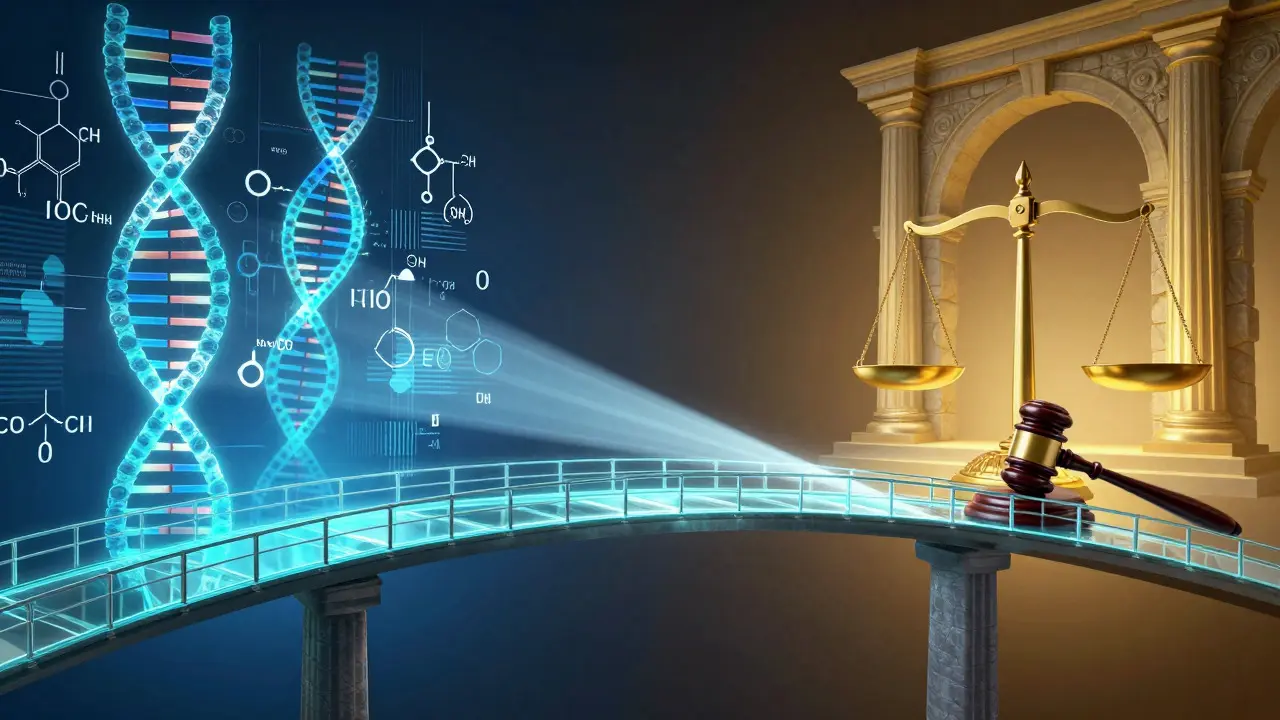
Structuring Your Reference List for Clarity
A messy reference list looks like a sloppy investigation. Structure matters. Most forensic labs follow a hybrid style guide. We typically separate the references into two distinct sections: "Scientific Literature & Standards" and "Legal Authorities." This visual separation helps the reader quickly find what they need.
Within each section, consistency is key. Do not mix APA and Bluebook styles randomly. Pick one format for scientific papers (usually APA or Vancouver) and stick to it. Pick one format for legal cases (usually Bluebook) and stick to it. Here is a quick comparison of how these sources differ in practice:
| Feature | Scientific Sources | Legal Sources |
|---|---|---|
| Purpose | Validate methodology and accuracy | Establish admissibility and authority |
| Primary Examples | ASTM Standards, Peer-Reviewed Journals | Case Law (Supreme Court), Statutes |
| Citation Style | APA, Vancouver, or Lab-Specific | Bluebook or Local Court Rules |
| Key Risk if Missing | Method challenged as unreliable | Evidence excluded as unlawful |
| Update Frequency | Annual (standards update often) | Per Case (precedent changes) |
Common Pitfalls and How to Avoid Them
I’ve seen reports get rejected not because the science was wrong, but because the citation was outdated. Standards change. An ASTM standard from 2010 might be obsolete by 2026. Always check the revision date. If you cite an old version, the opposing counsel can argue you didn't use the best available practices.
Another trap is over-citing. You don't need to list every textbook you read. Only cite sources that directly support a specific claim in your text. If you say "The extraction method was standard," cite the specific standard. If you say "The instrument was calibrated per manufacturer specs," cite the calibration log, not a general manual. Specificity builds credibility.
Finally, watch out for paywalled journals. If a judge requests the full text of a cited article and it costs $45 to download, it creates friction. Whenever possible, cite open-access articles or standards that are freely available online. It makes your life easier during discovery.
Practical Workflow for Accurate Referencing
Don't wait until the end of the report to gather your citations. Build a reference library as you go. Here is a simple workflow that saves hours later:
- During Sampling: Note down the specific legal authority (warrant number, consent form type) immediately.
- During Analysis: Log the exact standard version and software version used. Screenshot the validation parameters.
- Drafting Phase: Paste raw notes into a reference manager (like Zotero or EndNote). Tag them as 'Science' or 'Law'.
- Review Phase: Check every in-text citation against the reference list. Ensure the year matches the source.
This proactive approach ensures that when you write the final paragraph stating your conclusion, every claim is backed by a verifiable source. It transforms your report from a narrative into a defensible artifact.
FAQ
Do I need to cite the same standard multiple times?
No. Cite it once in the body where it is first mentioned, then refer to it by name or number in subsequent mentions. However, ensure it appears only once in the final reference list to avoid clutter.
What if no standard exists for my specific method?
Cite the closest applicable standard and explain the deviation in the report. Then, cite the specific validation study that proves your modified method is reliable. This combination covers both the baseline and the exception.
Which is more important: scientific or legal citations?
They are equally critical but serve different gates. Without legal citations, the evidence may never enter the trial. Without scientific citations, the evidence may be deemed unreliable. You need both to survive cross-examination.
How do I handle internal lab manuals in citations?
Treat internal manuals as secondary sources. Cite them for procedure steps, but always back them up with the external standard (like ASTM) that the manual is based on. Judges trust external standards more than internal documents.
Does the citation format matter for digital reports?
Yes. Even in PDFs, consistent formatting signals professionalism. Use hyperlinks for digital references where appropriate, but keep the text visible so the report remains readable if printed or converted to plain text.