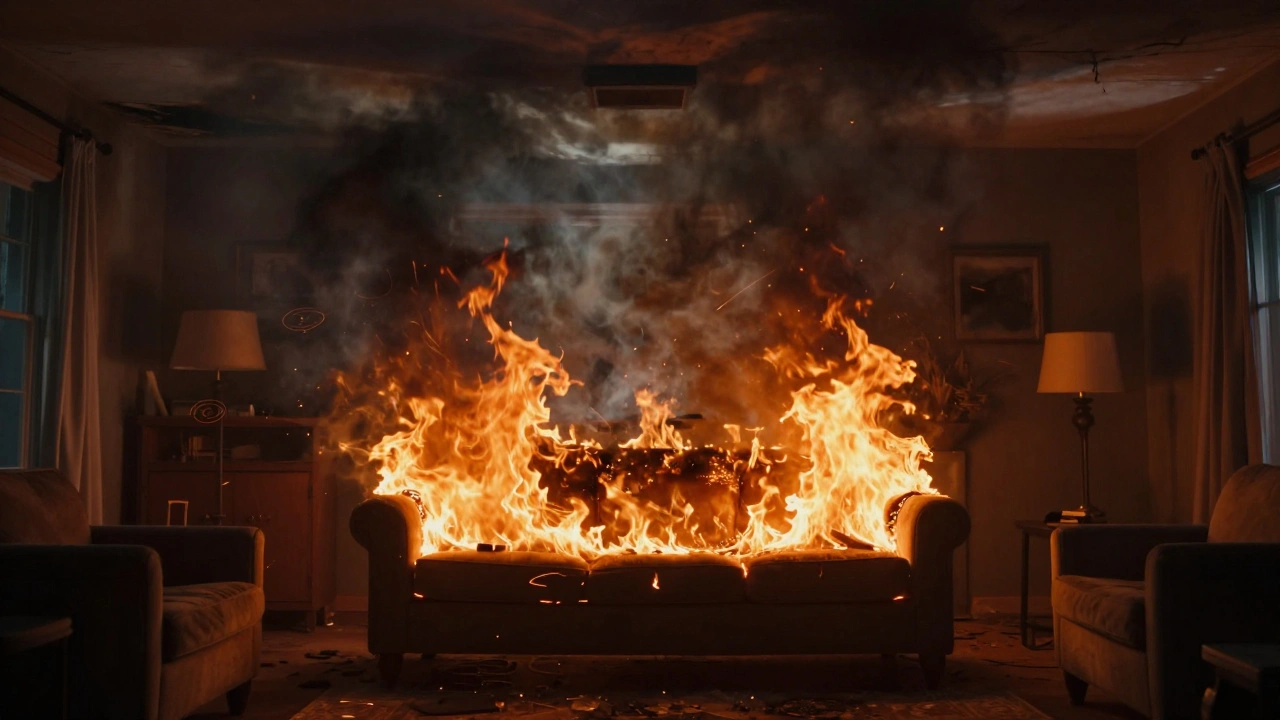
Imagine walking into a room where the fire is confined to a single sofa. You feel the heat, but it seems manageable. Then, in less than ten seconds, the entire room-walls, ceiling, and every piece of furniture-bursts into flames simultaneously. This isn't a movie effect; it's a deadly phenomenon known as flashover. For those in the line of fire, understanding the shift from "a fire in a room" to "a room on fire" is the difference between a successful operation and a catastrophe.
The industry is moving away from old terminology. The National Fire Protection Association (NFPA) now classifies these events under the broader umbrella of Rapid Fire Progress (RFP). Whether you're a first responder or a safety professional, recognizing the patterns that lead to this rapid spread is critical because these events often happen with almost no warning.
The Science of the Flash: Thermal Radiation Feedback
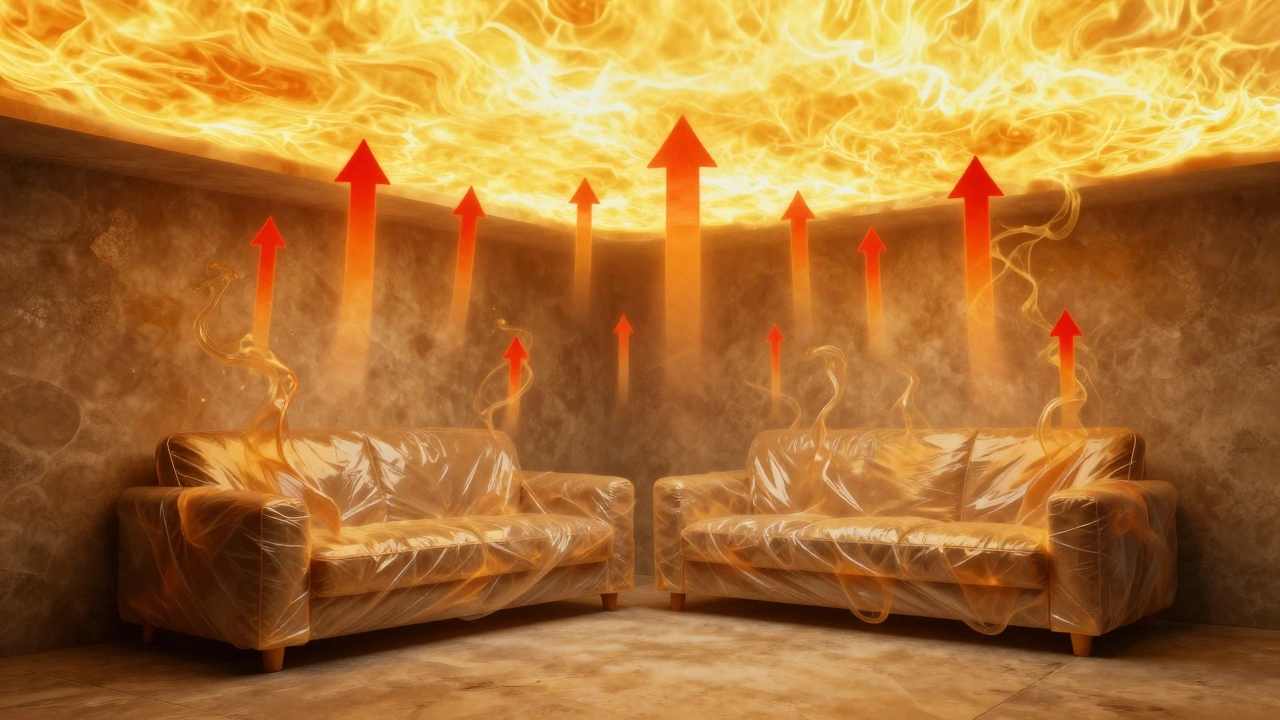
For years, people thought flashover happened because gases simply collected at the ceiling and hit a flammable limit. We now know it's much more violent and complex. The real driver is Thermal Radiation Feedback, a process where energy from the fire radiates back and forth between the flames and the room's surfaces.
As the fire grows, the gases at the ceiling can hit 900°F. This heat isn't just staying at the top; it's beaming down onto everything in the room. This causes the furniture and walls to undergo Pyrolysis, which is the chemical decomposition of organic materials by heat in the absence of oxygen. Essentially, your couch starts off-gassing flammable vapors before it even catches fire. When that ceiling layer hits roughly 1,100°F, those vapors ignite all at once. This creates a sudden, total involvement of every combustible object in the space.
Why Modern Homes Burn Faster
If you've noticed that house fires seem more aggressive than they were thirty years ago, you're right. Rapid fire progress is accelerating due to how we build and furnish our homes today. We have larger open-concept floor plans that allow heat and smoke to travel faster, and we've replaced solid wood with synthetic materials and plastics that have much higher fuel loads. These materials don't just burn; they melt and release high-energy gases that shorten the time to flashover significantly, leaving far less time for evacuation or intervention.
Three Deadly Variants of Rapid Spread
Not every rapid fire event looks the same. Depending on the ventilation and fuel, you'll see different patterns:
- Hot Rich Flashover: This is the classic version. Superheated smoke and fire gases build up in a room, and thermal radiation triggers a sudden ignition of that entire smoke layer.
- Backdraft: This is the rarest but perhaps most explosive. It happens in an oxygen-depleted environment. When a firefighter opens a door or window, the sudden rush of oxygen mixes with the superheated gases, causing an immediate explosion.
- Delayed Flashover: This is a deceptive pattern. A fire might start in a far-off bedroom, but the energy and smoke fill the entire house. When rescuers enter, a hot rich flashover triggers in the original room, but the spike in temperature ignites the gases throughout the rest of the building simultaneously.
| Type | Primary Trigger | Key Characteristic | Frequency |
|---|---|---|---|
| Hot Rich | Thermal Radiation | Total room involvement | Common |
| Backdraft | Oxygen Introduction | Explosive ignition | Rare |
| Delayed | Remote Ignition Spike | Multi-room simultaneous flash | Moderate |
Spotting the Warning Signs
Since flashover can happen in under ten seconds, you have to look for the precursors. You aren't looking for a bigger flame; you're looking for the environment's reaction to the heat. Watch for the rapid development of heated smoke layers-smoke that is thick, dark, and moving quickly across the ceiling. Pay attention to the surfaces. If you see materials "sweating" or visibly releasing gases without a direct flame touching them, that's pyrolysis in action. When the heat radiation becomes so intense that it's felt through heavy protective gear, the window for safety is closing fast.
The Future: AI and Predictive Modeling
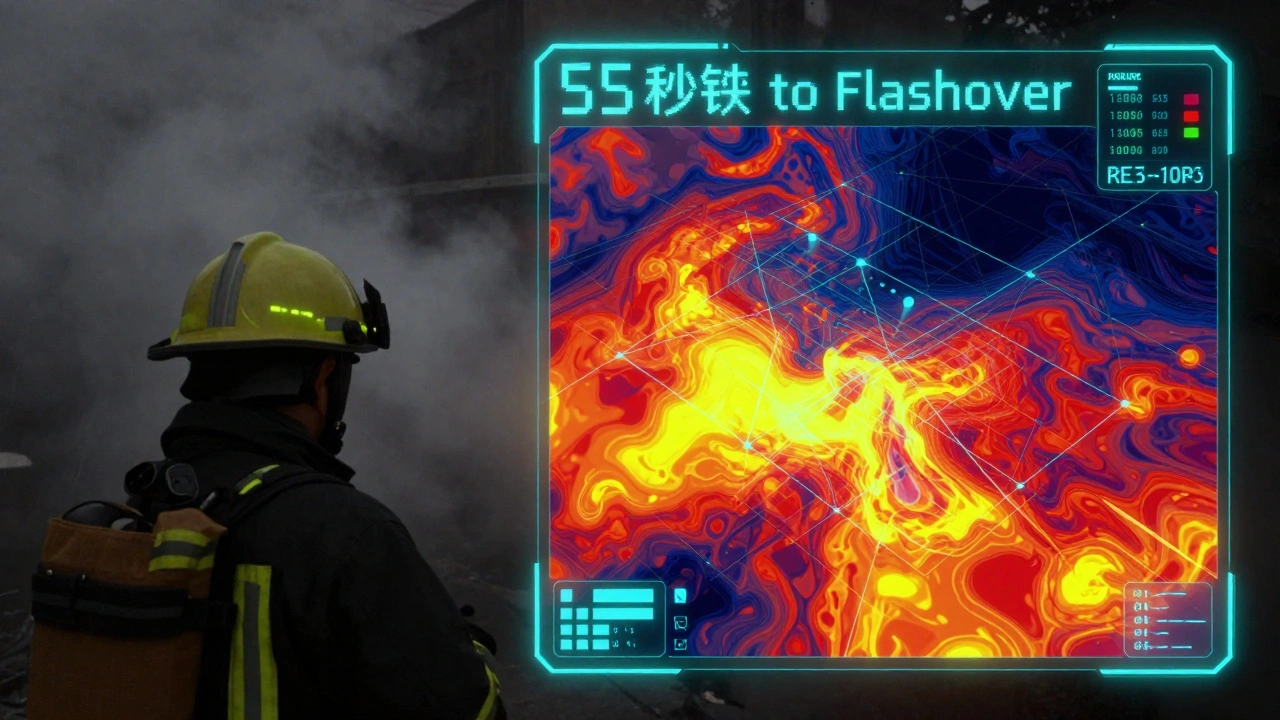
We are moving beyond relying solely on human intuition. New technology is allowing us to "see" the flash before it happens. NASA researchers have begun using generative adversarial neural networks to analyze video from firefighter body cameras. By enhancing dark, smoke-filled footage, these AI systems can detect subtle changes in fire patterns and predict a flashover up to 55 seconds before it occurs.
Another breakthrough is the P-Flash system. This model uses Support Vector Regression (SVR) to analyze data from heat detectors across multiple rooms. Instead of just saying "it's hot in here," P-Flash looks at the relationship between temperatures in adjacent spaces to recover data from the fire's origin. It has shown an accuracy rate of about 83% in predicting current flashover events, giving teams a critical 60-second window to get out or change tactics.
What is the main difference between flashover and backdraft?
Flashover is driven by heat radiation that causes all combustibles in a room to ignite at once. A backdraft, however, is driven by the introduction of oxygen into a fuel-rich, oxygen-starved environment, resulting in a sudden explosive combustion.
How does the fuel load in modern homes affect flashover?
Modern homes use more synthetic materials (like polyurethane foam in sofas) which release more energy and ignite faster than natural materials. This increases the fuel load and accelerates the thermal radiation feedback loop, meaning the time it takes to reach the critical 1,100°F ceiling temperature is much shorter.
Can a flashover be predicted with 100% accuracy?
No, but we are getting closer. Current AI models like P-Flash achieve around 81-83% accuracy. While not perfect, a 60-second warning is an enormous improvement over the traditional method of recognizing visual cues, which often happen only seconds before the event.
What is pyrolysis and why does it matter?
Pyrolysis is the process where heat breaks down a material into flammable gases without the material actually burning yet. It matters because these gases accumulate in the room and act as the primary fuel that ignites during a flashover.
What temperature triggers a typical flashover?
While it varies by room size and fuel, flashover generally occurs when the upper gas layer of the room reaches approximately 1,100°F, at which point the pyrolysis gases from the furniture and the ceiling layer ignite simultaneously.
Next Steps for Safety and Prevention
If you are managing a facility or training a team, focus on these two areas to mitigate the risks of rapid fire spread:
- Upgrade Detection Systems: Move beyond simple smoke alarms to heat detector arrays that can provide quantitative data on temperature progression across multiple rooms.
- Analyze Fuel Loads: Conduct a walkthrough of your space to identify high-energy synthetic materials. Replacing highly flammable foams with fire-retardant alternatives can actually increase the time available for evacuation.