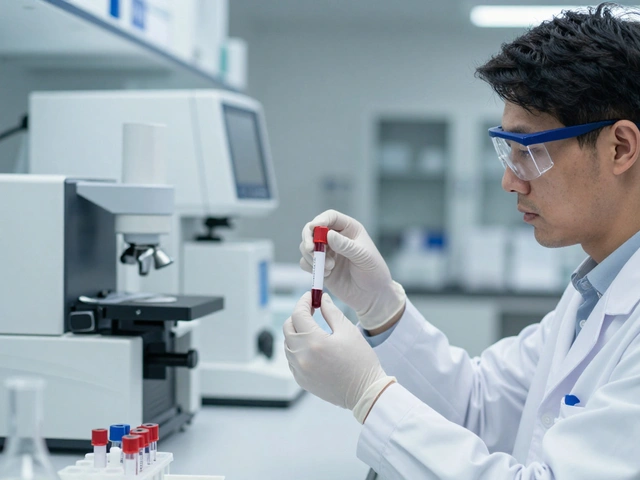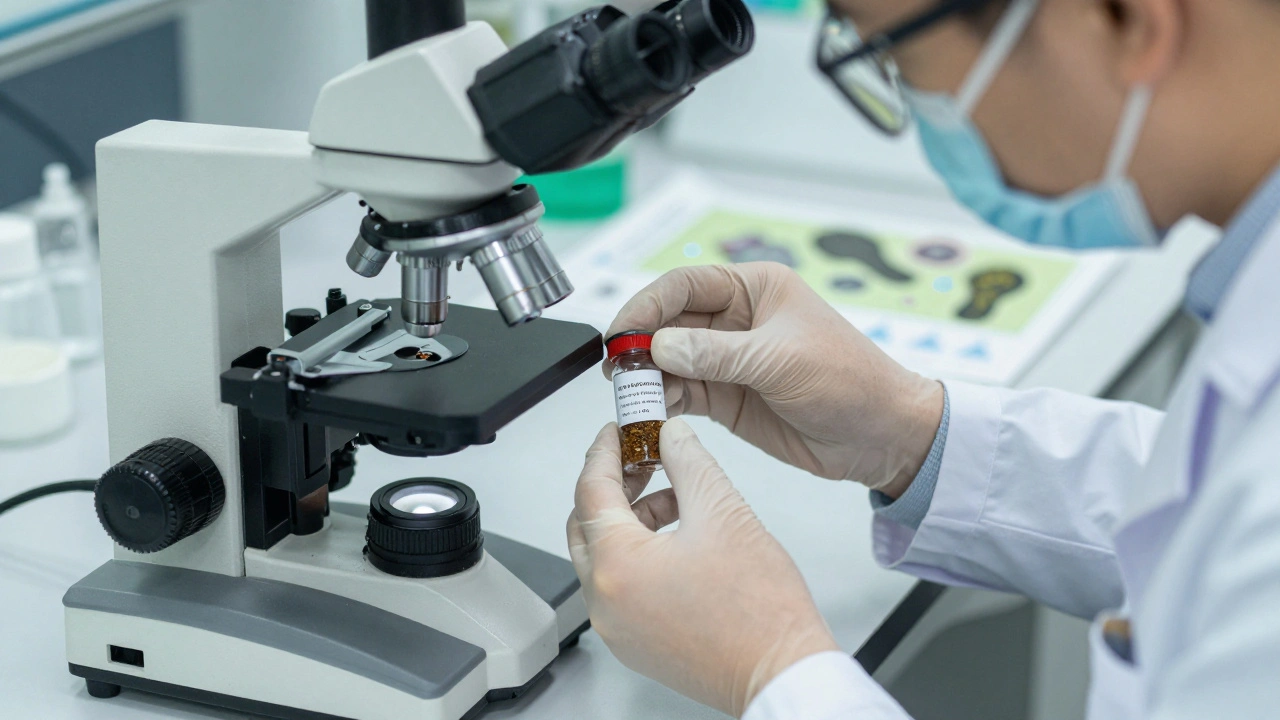
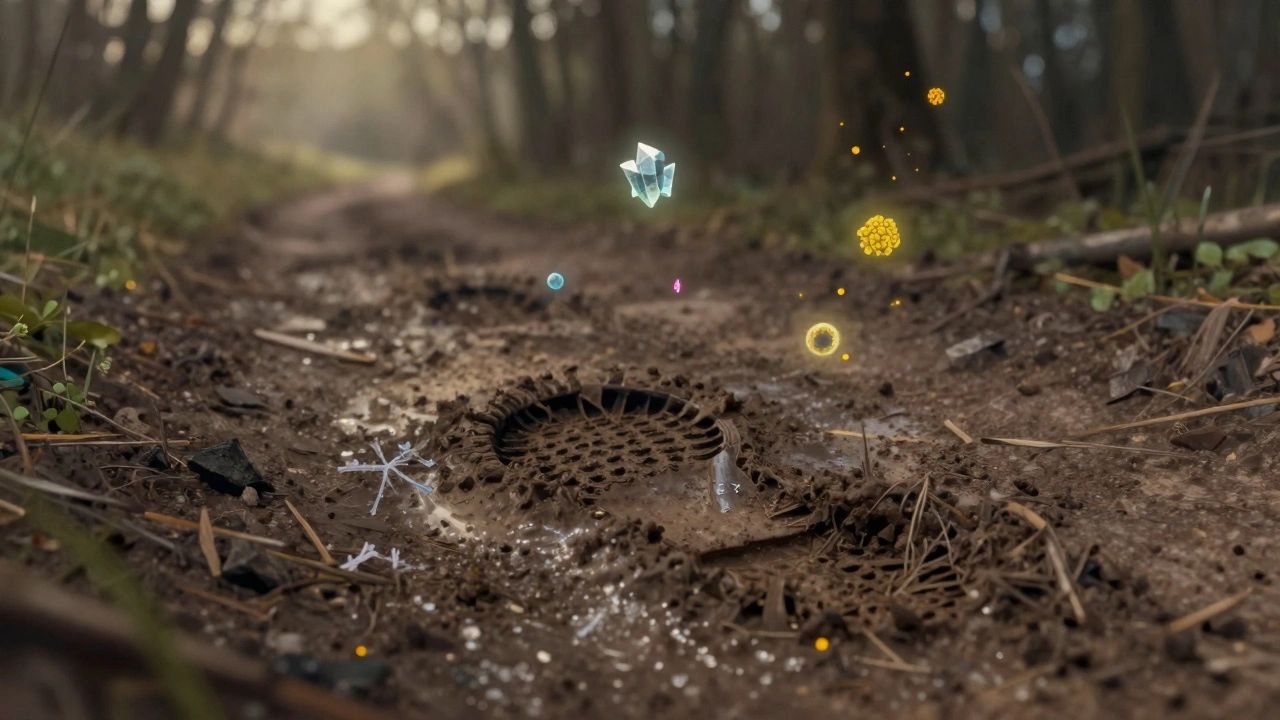
When a suspect leaves behind a shoe print in mud at a crime scene, or a victim’s clothing picks up dirt from a remote trail, that soil isn’t just dirt. It’s a silent witness. Soil evidence can link a person, object, or vehicle to a location with startling precision - if it’s analyzed correctly. Unlike fingerprints or DNA, soil doesn’t vanish. It clings. It changes. And when examined with the right tools, it tells a story no one meant to leave behind.
What Makes Soil a Unique Forensic Marker
Not all soil is the same. A handful of dirt from a city park looks like dirt from a forest, but under the microscope, they’re worlds apart. Forensic soil analysis works because every patch of earth has a unique chemical, mineral, and biological fingerprint. This fingerprint comes from the bedrock beneath it, the climate above it, the plants that grew there, and even the human activity that passed through. A sample from the Willamette Valley in Oregon, for example, will have high levels of volcanic ash minerals like zeolite and smectite, along with organic matter from decades of rainforest runoff. A sample from the red clay of Georgia, on the other hand, is rich in iron oxides and kaolinite, with very little organic content. Even two fields five miles apart can have different compositions because of past fertilizer use, drainage patterns, or buried construction debris. This isn’t guesswork. It’s science. And it’s been used in real cases to place suspects at crime scenes - or clear them.Breaking Down Soil Composition: The Key Components
Forensic soil analysis doesn’t just look at color or texture. It breaks down the sample into measurable components:- Mineralogy: The types and proportions of minerals like quartz, feldspar, mica, and clay. These come from the parent rock and don’t change much over time. A sample with high amounts of olivine, for instance, might point to volcanic terrain.
- Chemical composition: Elements like iron, aluminum, calcium, magnesium, and phosphorus. Their ratios act like a chemical signature. High phosphorus could mean past manure use; elevated lead might indicate old industrial contamination.
- Organic matter: Decomposed plant and animal material. The type of organic matter - whether it’s grass pollen, leaf fragments, or fungal spores - can reveal the vegetation history of the area.
- Particle size distribution: How much of the soil is sand, silt, or clay. A sandy loam behaves differently than a heavy clay, and each has a distinct origin.
- Pollen and microfossils: These are tiny, durable, and often unique to regions. Finding pollen from a rare alpine plant in soil from a city sidewalk? That’s a red flag.
These aren’t just buzzwords. Each one is measured using standardized forensic protocols, not agricultural tests. While a farmer might care about nitrogen levels for crops, a forensic scientist cares about the ratio of phosphorus to calcium - because that ratio is tied to specific soil types.
How Forensic Labs Analyze Soil Samples
The process starts the moment a sample is collected. Unlike agricultural testing, which uses bulk samples from large fields, forensic analysis requires precision:- Collection: Soil is collected in sterile containers, labeled with location, depth, and time. Multiple samples are taken - from the crime scene, from the suspect’s shoes, from a vehicle’s undercarriage. Even a single grain can matter.
- Drying and sieving: Samples are air-dried at room temperature to prevent microbial changes. Then sieved to separate particle sizes. This step removes debris like twigs or rocks that could skew results.
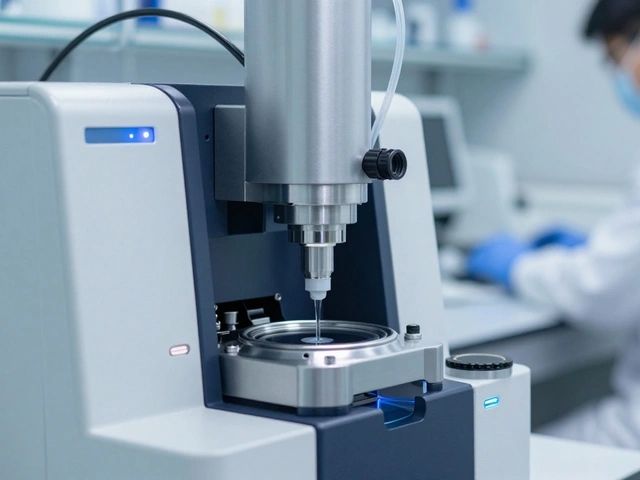
- Mineral identification: X-ray diffraction (XRD) scans reveal the crystal structure of minerals. A sample with high smectite content might match soil from a riverbank in Washington, while one rich in gypsum points to arid regions like Arizona.
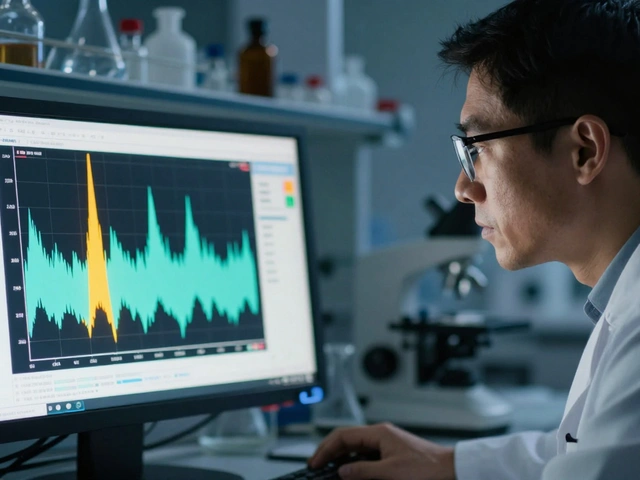
- Elemental analysis: Inductively Coupled Plasma (ICP) spectrometry measures trace elements. This is how labs detect subtle differences - like elevated strontium levels from limestone bedrock or anomalous zinc from old paint chips.
- Pollen and spore analysis: Samples are chemically treated to remove organic material, then examined under high-powered microscopes. Pollen grains are species-specific and can be mapped to known regional distributions. A match between soil on a suspect’s boot and pollen from a protected wetland? That’s a direct link.
- Comparative analysis: The final step: comparing the crime scene sample to reference soils from suspect locations. If 12 out of 15 chemical and mineral markers match, it’s not coincidence - it’s evidence.
This process isn’t magic. It’s repeatable. And it’s been validated in courtrooms across the U.S. since the 1980s.
Real Cases Where Soil Evidence Made the Difference
In 1998, a murder suspect in New Hampshire claimed he’d never been near the victim’s cabin. But soil from his boots matched the unique mix of glacial till, quartz sand, and specific fungal spores found only in the woods surrounding the cabin - a location he swore he’d never visited. He was convicted. In 2012, a missing person case in Arizona was solved when soil from a vehicle’s tire treads matched the composition of a remote desert wash - a place only known to the suspect and the victim. The soil had a distinctive blend of calcium carbonate and wind-blown basalt, rarely found outside that exact area. Even in international cases, soil evidence has cracked cold cases. A 2019 investigation in Germany linked a suspect to a crime scene using soil containing microfossils from a rare lichen species that grows only on ancient granite outcrops in the Black Forest - a species not found anywhere else in the country.These aren’t outliers. They’re routine. And they rely on one thing: accurate, detailed analysis.
Why Agricultural Soil Tests Don’t Work for Forensics
Many people assume soil testing for farming can be used in criminal cases. It can’t. And here’s why:- Agricultural labs test for nutrients like nitrogen and phosphorus to guide fertilizer use. Forensic labs test for those same elements - but they care about ratios, not absolute values.
- Farmers use bulk sampling from 100-acre fields. Forensic scientists collect 10 grams from a single shoe print.
- Agricultural reports don’t include pollen, microfossils, or mineralogy. Those are the forensic gold.
- Standard agricultural methods like Mehlich-3 extraction are designed for plant availability - not geographic sourcing.
Using a farm lab for forensic work is like using a kitchen scale to weigh a diamond. The tool might be similar, but the precision? Completely different.

Challenges and Limitations
Soil evidence isn’t foolproof. It has limits:- Contamination: If samples aren’t collected properly, cross-contamination can occur. A suspect’s soil might be mixed with soil from their garage or driveway.
- Similar soils: Two regions can have nearly identical geology. The Appalachian foothills and parts of the Ozarks, for example, share similar mineral profiles.
- Time: Soil can change. Rain, erosion, or human activity can alter its composition over months or years.
- Reference databases: Unlike DNA, there’s no national soil database. Labs rely on local reference collections - which means they need access to soil samples from known locations.
That’s why successful forensic soil analysis depends on trained specialists, proper chain-of-custody, and detailed geographic mapping of reference soils.
What’s Next for Soil Forensics
New technologies are making soil evidence even more powerful:- Portable XRF analyzers: Handheld devices that can scan soil composition in the field, giving investigators real-time data.
- DNA from soil microbes: Emerging research shows soil contains unique microbial communities - like a fingerprint of bacteria and fungi that vary by region.
- Isotope analysis: Measuring ratios of stable isotopes (like oxygen-18 to oxygen-16) can pinpoint geographic origin based on rainfall patterns.
These tools won’t replace lab analysis - but they’ll speed it up. And in time-sensitive investigations, speed matters.
Final Thoughts
Soil evidence doesn’t shout. It whispers. But when listened to carefully, it speaks volumes. It doesn’t lie. It doesn’t forget. And it doesn’t disappear.For investigators, the lesson is clear: never underestimate the dirt. Every grain holds a story. And with the right analysis, that story can change the course of a case.
Can soil evidence be used to prove someone was at a crime scene?
Yes. If the soil on a suspect’s clothing, shoes, or vehicle matches the unique chemical, mineral, and biological profile of soil at the crime scene - and there’s no plausible explanation for how it got there - it can be strong evidence of presence. Courts have accepted this in hundreds of cases, especially when combined with other forensic data.
How long does soil analysis take?
Standard forensic soil analysis takes 7-14 days. This includes drying, sieving, mineral identification, elemental testing, and pollen analysis. If isotope or DNA testing is added, it can take 3-4 weeks. Expedited requests are possible in urgent cases but require priority handling.
Can soil be planted or altered to mislead investigators?
It’s possible to transfer soil intentionally - but it’s nearly impossible to perfectly replicate its full fingerprint. Even if someone brings soil from Location A to Location B, the microbial community, trace element ratios, and microfossil content will still reflect its origin. Forensic labs look for inconsistencies, not just surface matches.
Is soil evidence admissible in court?
Yes. Since the 1980s, U.S. courts have routinely admitted soil evidence under Daubert and Frye standards, provided it’s collected and analyzed by qualified experts using peer-reviewed methods. The key is documentation: how the sample was collected, stored, and tested.
What’s the difference between forensic soil analysis and environmental testing?
Environmental tests focus on pollution levels - like heavy metals or pesticides - to assess risk to human health or ecosystems. Forensic analysis looks for unique geographic signatures: mineral ratios, pollen types, microfossils, and trace element patterns that tie soil to a specific location. The goals, methods, and interpretation are entirely different.