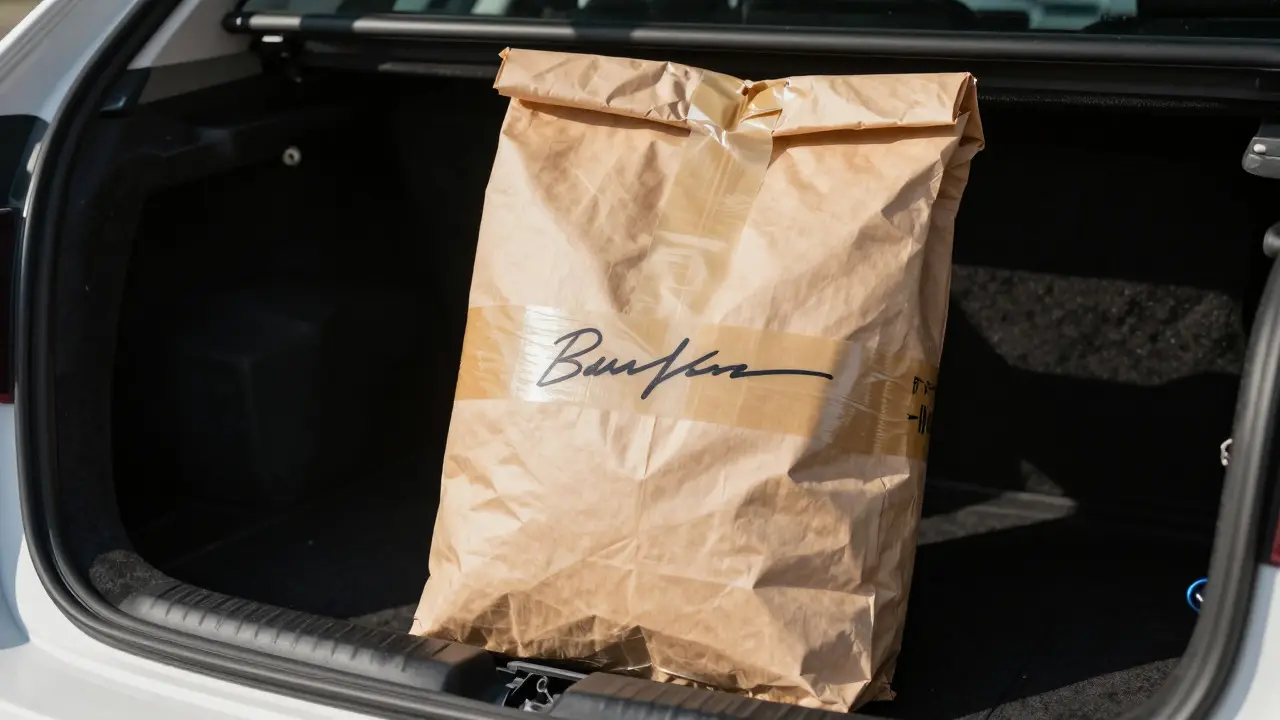
Imagine this: you just collected a crucial DNA sample from a crime scene. It’s in a sterile tube, labeled correctly, and sealed tight. But then, during the drive to the lab, your car hits a pothole, the bag shifts, and a corner tears open. Or maybe you left it in the back seat for twenty minutes under direct sunlight. Suddenly, that "perfect" sample is compromised. This isn't just a hypothetical; it's one of the most common reasons evidence gets thrown out of court. Evidence transport is the invisible bridge between the scene and the laboratory, and if that bridge cracks, the case might fall with it.
Why the Journey Matters More Than You Think
We often focus heavily on how evidence is collected or analyzed, but the time in transit is where things go wrong most frequently. Chain of Custody is the documented trail that tracks who had possession of evidence, when, and where. If the documentation stops at the collection point and resumes only at the lab intake, you have a gap. In that gap, defense attorneys look for holes. They ask, "How do we know no one tampered with it?" or "Did it degrade due to heat?"
The risk isn't just about tampering. It's about environmental factors. Biological evidence like blood or semen can dry out or break down if exposed to humidity or heat. Digital media can be corrupted by magnetic fields or physical shock. Even trace evidence like hair or fibers can be dislodged if the container isn't rigid enough. The goal isn't just to move the item; it's to preserve its state exactly as it was found.
Packaging: The First Line of Defense
Before anything moves, it must be packaged correctly. This step is non-negotiable. Using the wrong container can ruin evidence before it even leaves the scene. For example, putting wet biological samples in an airtight plastic bag without desiccant can lead to mold growth within hours. Conversely, using a paper envelope for liquid spills will result in leaks and cross-contamination.
- Biological Evidence: Use breathable paper bags (like manila envelopes) for wet items to allow moisture to escape. For dried stains, rigid boxes are better to prevent crushing.
- Digital Media: Place hard drives or phones in anti-static bags inside rigid cases. Avoid placing them near strong magnets or in direct sunlight.
- Trace Evidence: Small items like fibers or glass shards need rigid containers, such as petri dishes or small boxes, to prevent loss or displacement.
- Firearms: Must be unloaded, action opened, and secured in a padded case to prevent accidental discharge or damage to markings.
Always seal the package with evidence tape and sign across the seal. This creates a visual indicator of tampering. If the tape looks peeled or broken, you have a problem to document immediately.
Environmental Controls: Temperature and Humidity
Your vehicle is not a climate-controlled lab. In summer, a parked car can reach temperatures exceeding 100°F (38°C), which is fatal to certain DNA samples. In winter, freezing temperatures can crack glass or shatter fragile items. You need a strategy for maintaining stable conditions.
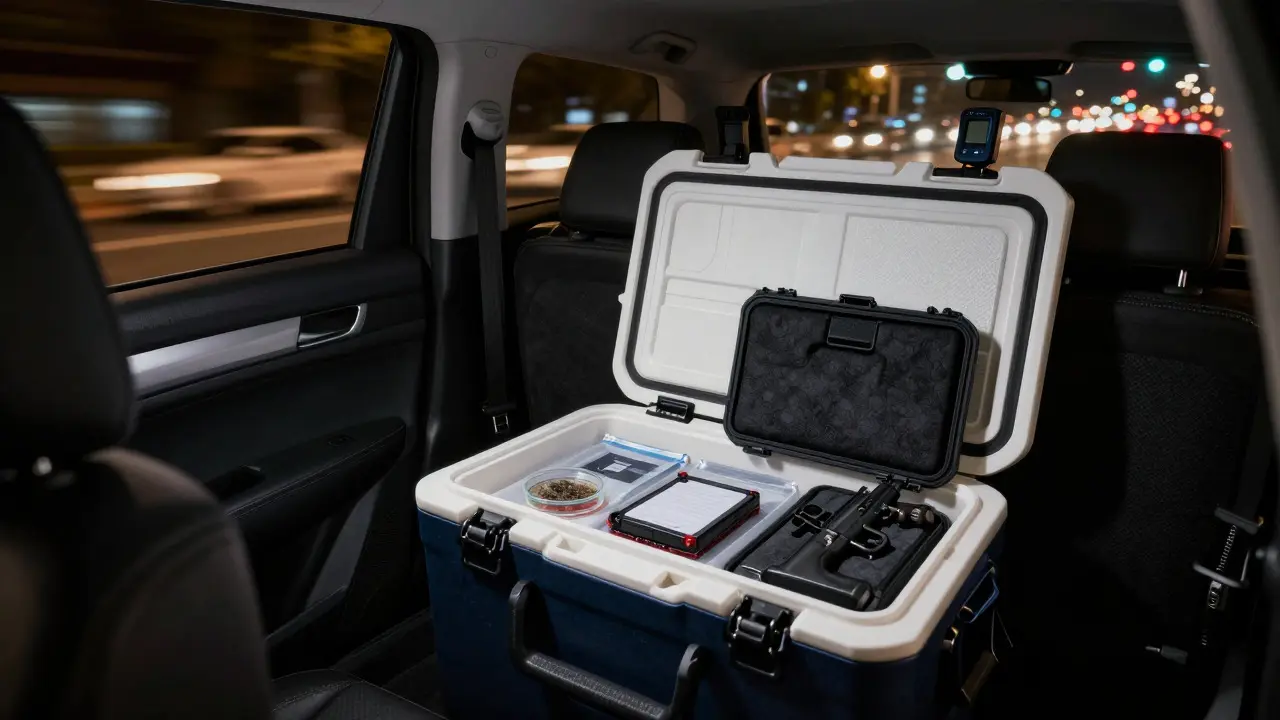
If you're transporting biological evidence over a short distance (under 30 minutes), a standard trunk is usually acceptable if the car has been running recently. However, for longer trips or extreme weather, use insulated coolers with ice packs for cold-sensitive items or heated pads for freeze-sensitive ones. Keep a log of the ambient temperature if possible. Some agencies now require temperature data loggers for high-value biological evidence. These small devices record the temperature every few minutes, providing irrefutable proof that the sample stayed within safe limits.

Secure Handling and Chain of Custody Documentation
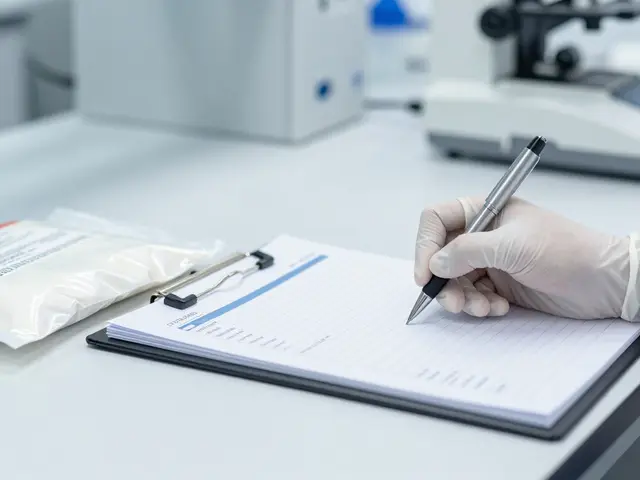
Documentation is your best friend in court. Every handoff must be recorded. This includes not just the name of the person receiving the evidence, but their title, the date, the time, and the reason for transfer. Vague entries like "Left with Lab" are red flags. Specific entries like "Transferred to Dr. Jane Doe, Forensic Biology Unit, 14:05 hrs, for DNA extraction" are gold.
During transport, the officer carrying the evidence becomes part of the chain. If you hand the bag to a detective for questioning, that transfer must be logged. If you leave the evidence in a locker, that access must be logged. The key principle is accountability. At any given moment, there should be only one person responsible for the item. Shared responsibility equals no responsibility.
| Evidence Type | Risk Factor | Mitigation Strategy |
|---|---|---|
| Wet Blood Stains | Mold Growth / Degradation | Air-dry in paper bag; avoid airtight plastics |
| Digital Hard Drives | Magnetic Interference / Shock | Anti-static bag + Rigid Case; keep away from magnets |
| Fibers/Hair | Loss / Displacement | Rigid Petri Dish or Box; label side up |
| Firearms | Accidental Discharge / Damage | Unload, Open Action, Padded Case |
Vehicle Logistics: Where Does Evidence Go?
Where you put the evidence in your vehicle matters more than you might think. The glove box is a bad idea because it's exposed to direct sunlight and heat. The passenger seat is risky because airbags can deploy and destroy fragile items. The trunk is generally the safest bet, provided it's clean and free of other contaminants.
Keep a dedicated section of your trunk for evidence. Use a divider or a specific bin so that evidence doesn't roll around and hit other objects. If you're transporting multiple items, separate them to prevent cross-contamination. For instance, don't put a knife used in a stabbing next to a blood swab from the same victim unless they are properly separated and labeled. Cross-contamination can lead to false positives in lab results, which can derail a case.
Also, consider the route. Avoid rough roads if possible. Sudden braking or sharp turns can shift heavy items. Secure the evidence box with a strap or place it against the rear window where it's less likely to slide. If you're driving long distances, take breaks, but ensure the evidence stays in a secure location during those breaks. Never leave evidence unattended in a public area, even for a minute.
Common Mistakes That Sink Cases
Even experienced professionals make errors. Here are the top three mistakes I see too often:
- Delay in Transport: Leaving biological evidence in a hot car for hours. Solution: Transport immediately or use cooling methods.
- Incomplete Labels: Forgetting to write the date or case number on the outside of the package. Solution: Double-check labels before sealing.
- Broken Seals: Taping packages loosely so the tape peels off during movement. Solution: Use strong evidence tape and sign across the seam.
Another subtle mistake is mixing evidence types. If you carry a suspect's shirt and a victim's hair sample in the same bag, you've created a mess. Always use separate containers for different sources. The lab needs to know exactly what came from where without guessing.
Best Practices for Long-Distance Transfers
When moving evidence between jurisdictions or to distant labs, the stakes are higher. Use professional couriers if available, but if you're doing it yourself, plan meticulously. Check the weather forecast. Prepare backup power for any electronic monitoring devices. Have a secondary route in case of traffic accidents.
For digital evidence, consider using Faraday bags to block cellular signals and Wi-Fi, preventing remote wiping or data alteration. This is especially important for smartphones and tablets. Once the device is powered off and in a Faraday bag, it's effectively isolated from the outside world.
Finally, communicate with the receiving lab. Call ahead to confirm they are ready to accept the evidence. This prevents the awkward situation of arriving at a closed facility at 6 PM on a Friday. Coordination ensures a smooth handoff and immediate logging into the lab's system.
FAQ
What is the biggest risk to evidence during transport?
The biggest risk is environmental degradation, particularly heat and humidity affecting biological samples. Physical shock is also a major concern for fragile items like glass or digital media.
Should I keep evidence in my car's trunk or passenger area?
The trunk is generally safer because it is away from airbag deployment zones and direct sunlight exposure compared to seats. Ensure the trunk is clean and the evidence is secured to prevent shifting.
How do I document a handoff during transport?
Record the name, title, date, time, and purpose of the transfer on the chain of custody form. Both parties should sign. If the transfer is verbal, note it in your report immediately after.
Is it okay to leave evidence in a car overnight?
Ideally, no. If necessary, store it in a locked, climate-controlled evidence room. If you must leave it in a car, ensure the vehicle is in a secure, low-traffic area and monitor temperature if possible.
What should I do if the evidence package breaks open in transit?
Stop safely, assess the damage, and repack the evidence if possible. Document the incident thoroughly, noting the time, location, and condition of the evidence. Notify your supervisor and the lab immediately.