Imagine you are staring at a phone that was wiped clean by a suspect. The screen is black, the device seems empty, but somewhere in the silicon, a crucial text message from three years ago still exists. This is the reality of chat application forensics, the specialized branch of digital investigation focused on extracting, analyzing, and interpreting communications from messaging platforms. It is not just about finding deleted texts; it is about reconstructing timelines, verifying authenticity, and uncovering hidden layers of data that standard users never see.
Most people think if a message is deleted, it is gone. In the world of forensic science, that assumption is dangerously wrong. Modern smartphones and cloud services leave traces everywhere. From local database files to remote server logs, the path to recovering lost communications involves understanding how apps store data, where backups hide, and how metadata tells the real story.
Key Takeaways for Investigators
- Local databases are the primary source for most chat history, often stored in SQLite format even after messages are 'deleted' in the UI.
- Cloud synchronization means data may persist on servers long after it disappears from the device.
- Metadata (timestamps, read receipts, media hashes) is often more valuable than the text itself for establishing timelines.
- Encryption varies by app; end-to-end encryption protects content but rarely hides metadata or local cache files.
- Proper chain of custody documentation is critical to ensure recovered messages hold up in court.
Understanding Data Storage in Messaging Apps
To recover what isn't visible, you must know where it lives. Most major messaging applications, such as WhatsApp, Telegram, and Signal, do not store messages directly in the operating system's SMS database. Instead, they use proprietary storage methods. Typically, this involves SQLite databases, which are lightweight file-based relational databases embedded within the app's private folder.
When a user deletes a message, the app usually marks the record as null or removes it from the active table. However, unless the database file is explicitly defragmented or overwritten, the data often remains in the file structure. Forensic tools can scan these binary files for residual data. Additionally, many apps keep separate tables for media attachments, contact lists, and group information. These auxiliary files often contain timestamps that align with specific conversations, helping investigators piece together a timeline even if the text content is corrupted.
It is also crucial to distinguish between local storage and cloud storage. Local data resides on the device's flash memory. Cloud data is hosted by the service provider. If a phone is reset, local data is wiped, but cloud copies may remain accessible via account credentials. Conversely, if an account is deleted, local caches might still hold fragments of the last synced state. A thorough investigation requires checking both locations simultaneously.
The Role of Metadata in Reconstruction
Text content is easy to misinterpret. Metadata is harder to fake. In chat forensics, metadata refers to the technical details surrounding a message: exact send time, receipt time, read status, device ID, and network type. For example, a message sent at 11:59 PM might show a 'delivered' timestamp at 12:01 AM the next day. This two-minute gap can prove a phone was off or out of range, contradicting a suspect's claim that they were asleep.
Consider the case of a disputed business contract. The text says "Agreed." But the metadata shows the message was sent from a different IP address than the one associated with the signer's home network. This discrepancy suggests the message might have been forwarded or sent from a backup device. By cross-referencing IP addresses, numerical labels assigned to devices connected to a computer network with geolocation data, investigators can verify who actually sent the communication.
Media files add another layer. Photos and videos in chats carry EXIF data (Exchangeable Image File Format), which includes camera model, GPS coordinates, and original creation date. Even if a photo is re-uploaded through a chat app, some metadata persists in the file header. Extracting this data allows investigators to place a person at a specific location at a specific time, independent of the chat log itself.

Step-by-Step Recovery Process
Recovering messages is not a single click operation. It follows a structured workflow to ensure integrity. Here is the standard procedure used by professional examiners:
- Image the Device: Create a bit-for-bit copy of the phone's storage using hardware write-blockers. Never work directly on the original device to prevent accidental alteration.
- Identify App Folders: Locate the directories for relevant apps (e.g., /data/data/com.whatsapp/). Use file system analysis to find recently modified files, even if the app appears uninstalled.
- Extract Databases: Copy SQLite files to a secure workstation. Use forensic software to parse the tables, looking for rows marked as deleted or fragmented.
- Analyze Logs: Check system logs for app activity. When did the app open? When did it sync with the cloud? These events correlate with message sending times.
- Verify Hashes: Calculate MD5 or SHA-256 hashes of extracted files before and after processing to prove the data has not changed.
- Correlate with Cloud: If credentials are available, pull backup data from the provider's servers. Compare cloud records with local findings to identify discrepancies.
This process ensures that every piece of evidence is traceable. If a defense attorney asks, "How do we know this message wasn't added later?" your answer lies in the hash values and the logical consistency of the timestamps across multiple data sources.
Challenges with End-to-End Encryption
A common misconception is that end-to-end encryption (E2EE) makes messages unrecoverable. While E2EE prevents third parties from reading messages during transit, it does not protect data once it reaches the device. On the phone, messages are decrypted for display and then encrypted again for storage or transmission. The decryption keys reside locally in the device's secure enclave or keychain.
If you have physical access to the unlocked phone, or if you can extract the key material from the device image, you can decrypt the local database. Tools like Cellebrite UFED or Magnet AXIOM automate this process. They handle the complex cryptographic operations behind the scenes, presenting the investigator with readable text.
However, E2EE poses a challenge for cloud backups. Some providers encrypt backups with a user-set password or a secondary key. If the user knows the password, recovery is straightforward. If not, brute-force attacks may be necessary, though success depends on password strength. In such cases, metadata becomes even more critical, as it is often stored in plaintext or with weaker encryption.
| Source Type | Data Persisted After Deletion? | Access Requirement | Evidentiary Value |
|---|---|---|---|
| Local SQLite DB | Yes (until overwritten) | Physical access + unlock | High (direct content) |
| Cloud Backup | Yes (server-side retention) | Account credentials | Medium (may lag local state) |
| System Logs | Partial (event triggers only) | Root/Jailbreak or OEM tool | Medium (timeline support) |
| Media Cache | Yes (orphaned files) | File system scan | High (EXIF/GPS data) |
Legal Admissibility and Chain of Custody
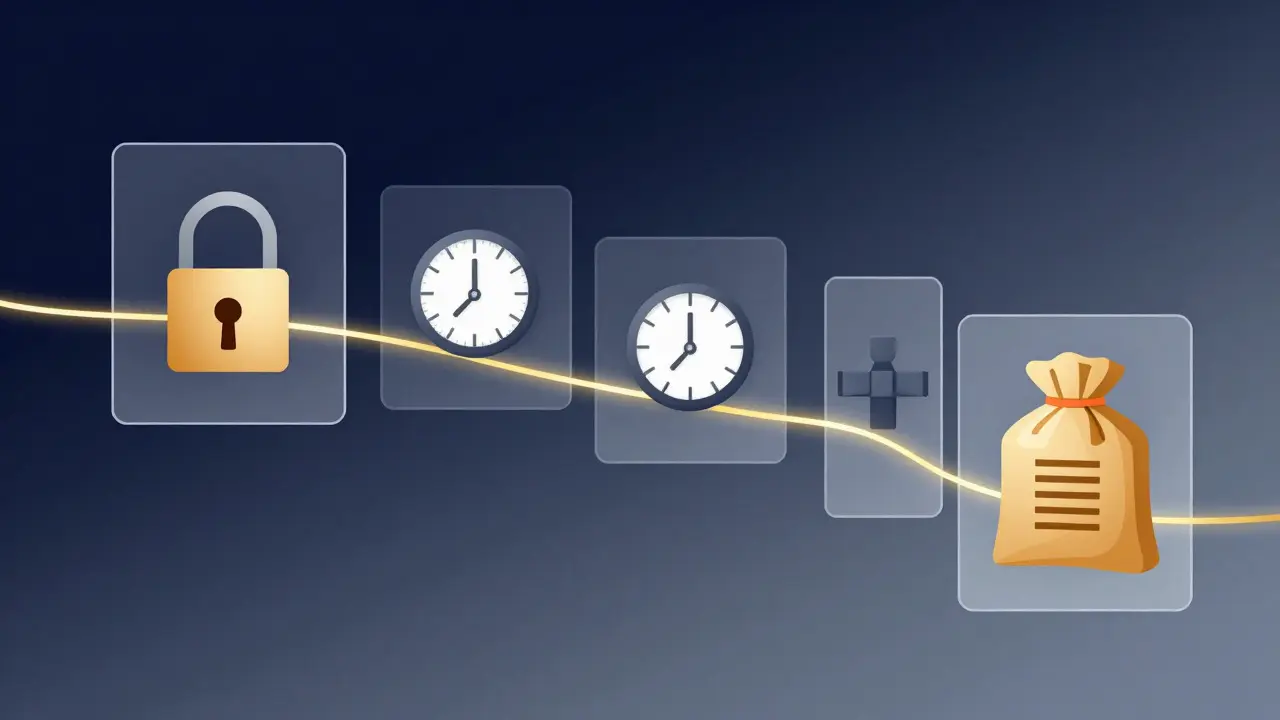
Finding the message is only half the battle. You must prove it belongs to the suspect and hasn't been tampered with. Courts require a strict chain of custody. Every time the data changes hands, it must be documented. Who accessed the file? When? What tool was used? Any gap in this record can lead to suppression of evidence.
Furthermore, authentication is key. The examiner must demonstrate that the recovered message came from the specific app version installed on the specific device. This involves matching the app's unique identifiers (like the Android package name or iOS bundle ID) with the device's serial number. If the app was updated between the time of the crime and the time of seizure, schema changes in the database might affect readability. Using version-specific parsers ensures accuracy.
In jurisdictions following Daubert or Frye standards, the method of recovery must be scientifically valid. Citing peer-reviewed studies on SQLite fragmentation or vendor documentation on encryption protocols strengthens the argument that the technique is reliable. Avoiding 'black box' tools without transparency helps build trust with judges and juries.
Common Pitfalls to Avoid
Even experienced investigators make mistakes that compromise cases. One frequent error is relying solely on the 'last modified' timestamp of a file. Files can be touched by background processes, antivirus scans, or OS updates, changing their timestamp without altering their content. Always rely on internal file metadata (like creation time within the SQLite header) rather than external file system attributes when possible.
Another pitfall is ignoring timezone settings. A message sent at 8:00 AM might appear as 7:00 AM if the device clock was set incorrectly or if the user traveled across time zones. Normalizing all timestamps to UTC (Coordinated Universal Time) before analysis prevents confusion. Finally, don't forget about shared devices. If a family tablet is used by multiple members, distinguishing between users requires looking at login sessions or biometric unlock logs, not just the chat history itself.
Future Trends in Communication Forensics
As technology evolves, so do the challenges. The rise of ephemeral messaging-where messages disappear automatically after being viewed-adds complexity. Apps like Snapchat or WhatsApp's 'Disappearing Mode' delete data actively, not just passively. Forensic tools are adapting by monitoring RAM (Random Access Memory) while the device is powered on, capturing messages before they are purged. This requires live acquisition techniques, which are riskier but sometimes necessary.
Additionally, the integration of AI in chat apps means automated replies and bot interactions are becoming common. Distinguishing between human-typed messages and AI-generated responses will become a vital skill. Metadata fields indicating 'sender type' (human vs. bot) will likely become standard, providing new avenues for verification. Staying current with these developments ensures that your forensic practice remains effective in a rapidly changing digital landscape.
Can you recover messages from a factory-reset phone?
Yes, but it is difficult. Factory resets wipe the main partition, but remnants may remain in unallocated space if the drive isn't fully overwritten. More reliably, you can recover messages from cloud backups if you have the account credentials. Without credentials, local recovery chances drop significantly due to encryption keys being erased.
Do deleted photos in chats stay on the phone?
Often, yes. Chat apps frequently cache media files in temporary folders. Even if the message is deleted, the image file might remain until the app clears its cache or the file is overwritten. Scanning the app's cache directory is a standard step in forensics to find these orphaned media files.
Is end-to-end encryption a barrier to forensics?
Not for local data. Once a message is received, it is decrypted on the device for viewing. If you have access to the device's key store (via unlock or extraction), you can decrypt the local database. E2EE primarily protects data in transit and in cloud backups, making those areas harder to access without credentials.
What is the best tool for chat forensics?
There is no single 'best' tool. Industry leaders include Cellebrite UFED, Magnet AXIOM, and Open Source Mobile Explorer (OSMEx). The choice depends on budget, platform support (iOS vs. Android), and the need for custom scripting. Many investigators use a combination of commercial tools for speed and open-source utilities for deep-dive analysis.
How long does chat data stay in cloud backups?
It varies by provider. Some services keep the latest backup indefinitely, while others retain versions for 30 days. Generally, the most recent backup is always available until the user manually deletes it or the account is closed. Checking the provider's retention policy is essential for planning recovery efforts.