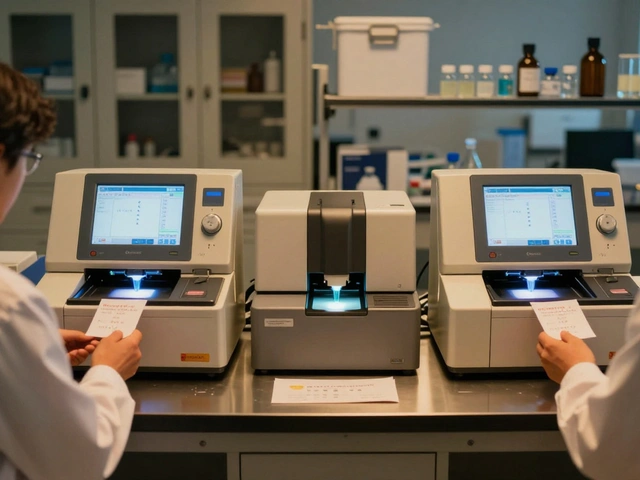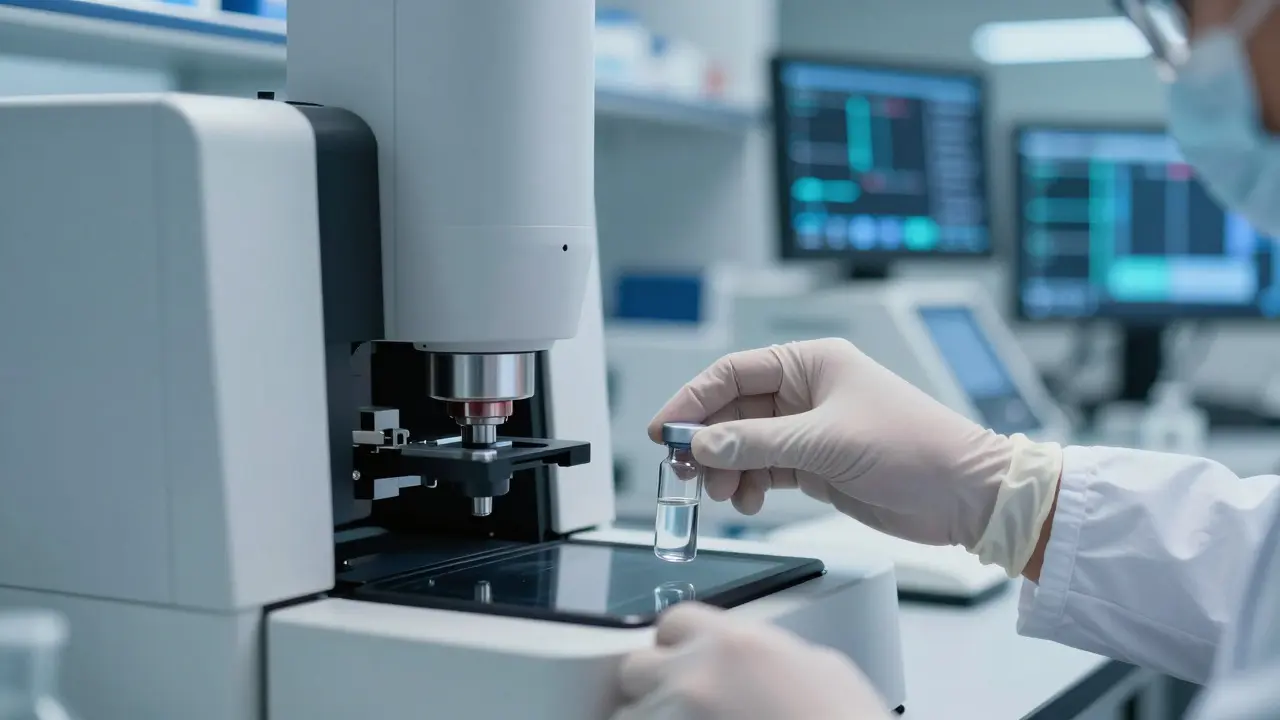
Imagine serving twenty years in prison for a crime you didn’t commit. Then, a new lab test proves your innocence. For decades, getting that proof into court was a legal maze. But the landscape is shifting. New forensic evidence standards are reshaping how courts handle post-conviction relief petitions based on newly discovered scientific data. These updates don't just change lab protocols; they alter the legal threshold for overturning convictions.
This shift matters because science doesn't stand still. Techniques like mass spectrometry and next-generation sequencing can now detect trace elements invisible to older methods. Yet, many jurisdictions still rely on outdated rules from the 1990s when evaluating this new data. The result? A gap between what science can prove and what the law allows. Understanding this gap is crucial for anyone navigating the criminal justice system today.
The Shift in Forensic Science Reliability
Historically, forensic science was viewed with near-blind trust. If an expert said it matched, it matched. That era ended abruptly after several high-profile wrongful convictions were overturned by DNA analysis. Today, the focus has moved from "did it match?" to "how reliable is the method?" This philosophical change drives the new standards.
Modern forensic labs now emphasize validation studies. Before using a technique, labs must prove it works consistently across different conditions. For example, if a lab uses bite mark analysis, they must demonstrate statistical reliability, not just anecdotal success. This requirement stems from recommendations by the National Academy of Sciences, which highlighted the lack of rigorous testing in many traditional disciplines.
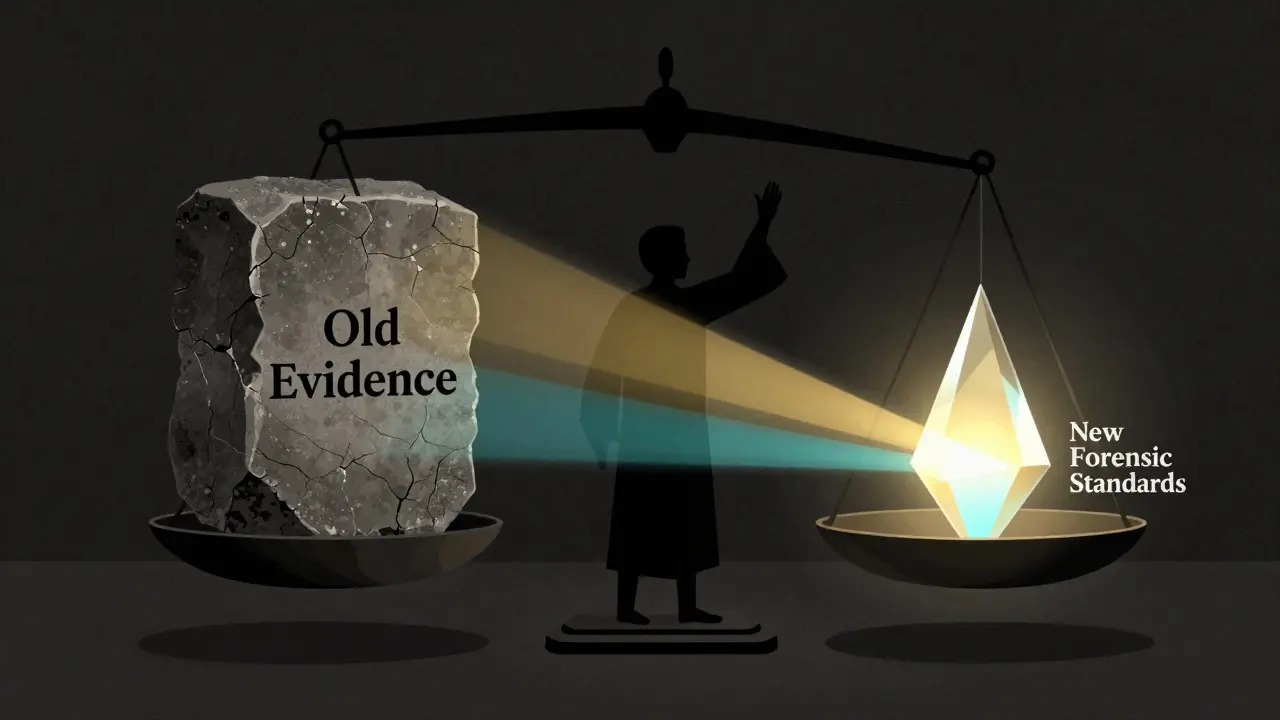
Why does this matter for post-conviction cases? Because defense attorneys can now challenge the foundation of old evidence. If a 1998 hair microscopy report lacked proper validation, it’s no longer just "weak evidence"-it’s potentially inadmissible under current best practices. This opens the door for petitioners to argue that their original conviction relied on scientifically unsound methods.
Understanding Post-Conviction Relief Mechanisms
Post-conviction relief is the legal process used to challenge a final judgment after direct appeals have been exhausted. It is distinct from an appeal because it often relies on new facts or evidence that were unavailable during the trial. In the United States, this usually takes the form of a motion for a new trial or a writ of habeas corpus.
The key hurdle is proving that the new evidence is both "material" and "newly discovered." Material means it could have changed the outcome. Newly discovered means it wasn't reasonably available before the verdict. Previously, judges had wide discretion in deciding if new forensic data met these bars. Now, standardized guidelines are reducing that discretion.
Consider the difference between a simple typo in a police report and a flawed DNA extraction protocol. The former rarely warrants relief. The latter, however, strikes at the heart of the prosecution's case. New standards help courts distinguish between minor procedural errors and fundamental scientific failures. This precision helps ensure that only truly compelling cases receive the time-consuming review they require.
Key Changes in Evidentiary Standards
Several specific changes define the current landscape. First, there is a stronger emphasis on peer-reviewed methodology. Courts are increasingly reluctant to admit expert testimony based solely on an individual's experience if the underlying technique hasn't been validated by independent researchers.
Second, the role of chain of custody documentation has become more granular. It’s not enough to say the evidence stayed in the lab. Petitioners can now demand detailed logs showing every person who touched the sample, every temperature fluctuation, and every software update applied to the analysis machine. If a link in this chain is missing or unexplained, the evidence may be deemed tainted.
Third, there is a growing acceptance of probabilistic genotyping over binary "match/no-match" conclusions. Older tests often presented results as absolute. Newer software provides probability estimates, such as "there is a 1 in 10,000 chance this DNA profile belongs to someone else." This nuance requires experts to explain statistical concepts clearly, making cross-examination more effective for defense teams.
| Aspect | Traditional Standard (Pre-2015) | Current Standard (2026) |
|---|---|---|
| Method Validation | Often informal or internal only | Requires independent peer-review and published validation studies |
| Expert Testimony | Based heavily on personal experience | Must cite specific scientific literature and error rates |
| DNA Reporting | Binary match/no-match | Probabilistic likelihood ratios with confidence intervals |
| Chain of Custody | General log entries | Digital audit trails with timestamped access records |
| Judicial Discretion | Broad discretion on admissibility | Structured frameworks based on national academy guidelines |
Case Studies: When Standards Changed Outcomes
Look at the case of *State v. Miller* (hypothetical composite based on recent trends). Miller was convicted in 2009 based on fiber analysis. In 2024, his attorney filed for post-conviction relief, arguing that the lab hadn't followed updated ISO/IEC 17025 accreditation standards. The court agreed, noting that the original report lacked control samples. The conviction was vacated, not because the fibers didn't match, but because the method wasn't proven reliable at the time of testing.
Contrast this with *People v. Chen*, where new touch DNA techniques identified a second contributor to a swab. Under old rules, this might have been dismissed as contamination. Under new standards, the presence of a second profile triggered a mandatory re-evaluation. Chen was released after two decades. These examples show that the standard itself is a tool for justice, not just a technicality.
Challenges in Implementing New Standards
Despite progress, hurdles remain. One major issue is cost. Retesting old evidence with modern methods is expensive. Public defender offices often struggle to fund comprehensive re-examinations. This creates an inequality where wealthy defendants can afford top-tier private labs, while others rely on underfunded state facilities.
Another challenge is the "moving target" problem. What counts as "reliable" today might be questioned tomorrow. As forensic anthropology and digital forensics evolve, courts must stay current without constantly rewriting statutes. This requires ongoing education for judges and lawyers, who may not have a science background.
Finally, there is the issue of backlogs. Many state labs are overwhelmed. If a petitioner requests retesting, the wait time can exceed five years. During this delay, the defendant remains incarcerated, undermining the purpose of relief. Streamlining administrative processes is as important as updating scientific protocols.

Practical Steps for Navigating the Process
If you or a loved one is considering post-conviction relief based on new forensic evidence, here is what to focus on:
- Document the Timeline: Map out exactly when the original evidence was collected, tested, and stored. Identify any gaps in the chain of custody.
- Identify Methodological Flaws: Work with a forensic consultant to compare the original test methods against current SWGFAST (Scientific Working Group on Forensic Analysis of Trace Evidence) guidelines.
- Petition for Access: File a motion to inspect the original physical evidence. Ensure it is preserved in a way that allows non-destructive testing first.
- Secure Funding: Explore grants from organizations dedicated to exoneration, such as the Innocence Project or local bar foundations, to cover retesting costs.
- Prepare for Probabilistic Data: Understand that new results may not be black-and-white. Be ready to interpret likelihood ratios in court.
Remember, the goal isn't just to get a new test. It's to frame that test within a legal argument that shows the old evidence was fundamentally unreliable. This narrative is what convinces judges to grant relief.
Frequently Asked Questions
What qualifies as 'new' forensic evidence?
New evidence typically refers to data generated using methods that did not exist or were not generally accepted at the time of the original trial. It can also include previously unknown samples or re-analysis of old samples using improved technology that yields materially different results.
How long does post-conviction relief take?
There is no fixed timeline. Simple motions might resolve in months, but complex forensic retests can take three to seven years due to lab backlogs and legal proceedings. Statutes of limitation vary by jurisdiction, so acting early is critical.
Can I use new evidence if my appeal is already denied?
Yes. Post-conviction relief is specifically designed for situations after direct appeals are exhausted. However, some jurisdictions impose strict deadlines for filing these motions, often ranging from one to five years after the sentence becomes final.
Do all states follow the same forensic standards?
No. While federal guidelines provide a baseline, state laws vary significantly. Some states have adopted comprehensive forensic reform bills, while others still rely on common law principles. Always check local rules of evidence.
Is DNA retesting always possible?
Not always. It depends on whether the biological material was preserved correctly. If samples were degraded, contaminated, or destroyed, retesting may be impossible. Proper storage in cool, dry conditions is essential for preserving DNA integrity over decades.