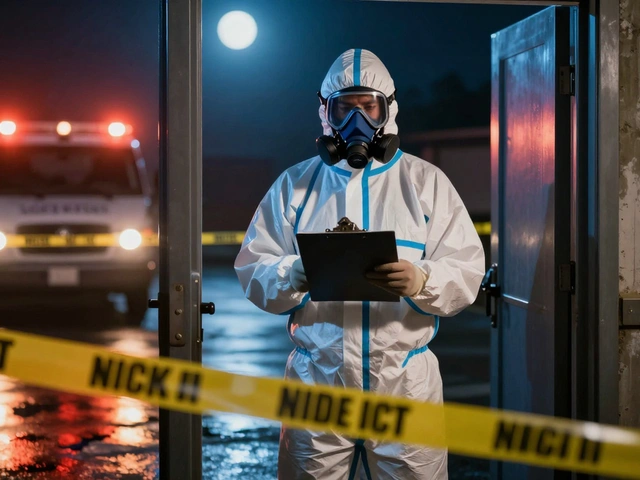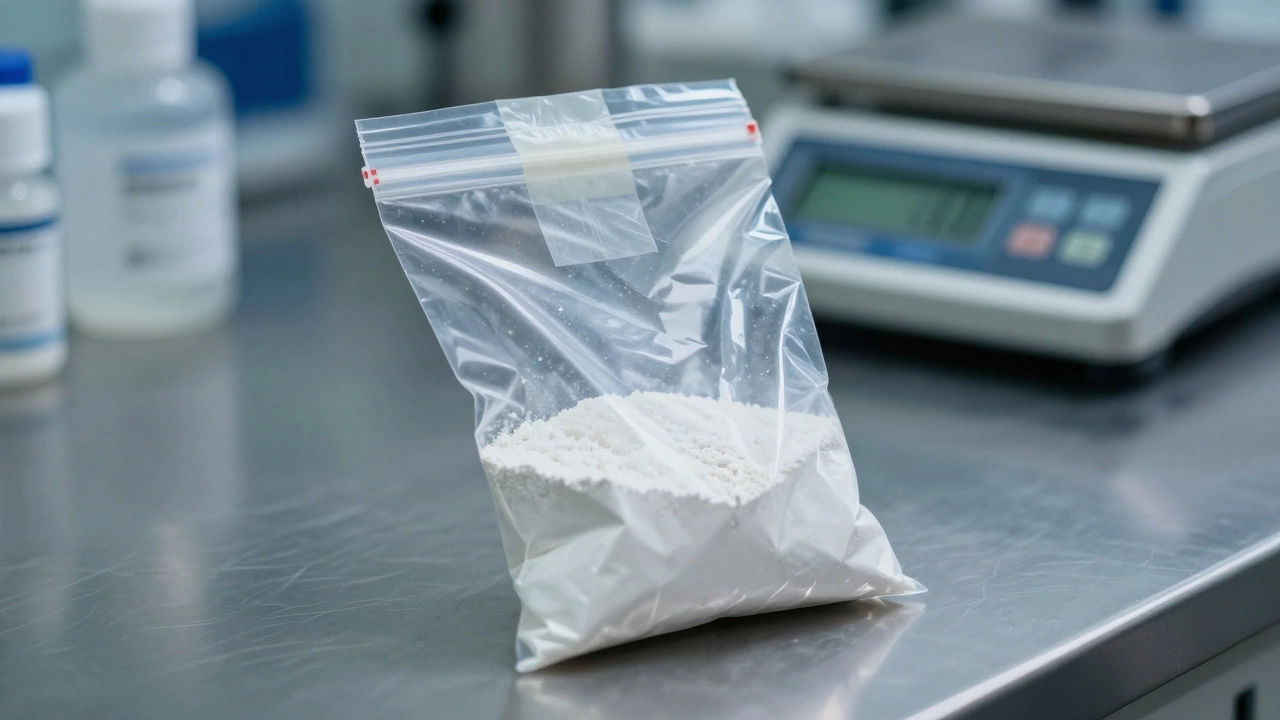
You find a bag of drugs on a suspect. It weighs exactly four grams. Two weeks later, the lab says it weighs three point two grams. Who touched it? Where was it stored? Did someone swap the contents? If you cannot answer those questions with absolute certainty, your case is in trouble. This is the core problem of chain of custody, defined as the documented, chronological record that tracks the collection, transfer, analysis, and storage of physical or digital evidence to prove its identity and integrity. When this chain breaks, evidence can be suppressed, convictions overturned, and justice delayed.
The Legal Standard: Reasonable Probability, Not Perfection
Many people think a single missing signature ruins a case. That is rarely true. Under U.S. law, specifically Federal Rule of Evidence 901, enacted in 1975 and requiring evidence sufficient to support a finding that the item is what the proponent claims it is, the prosecution does not need to prove beyond a reasonable doubt that no tampering occurred. They only need to show a "reasonable probability" that the evidence has not been materially altered.
Courts distinguish between two types of errors:
- Technical defects: A missing initial, a time recorded as 09:00 instead of 09:05, or one witness failing to testify. These usually go to the weight of the evidence (how much the jury should believe it), not its admissibility.
- Substantive breaks: Unexplained gaps in hours or days, unsealed bags, inconsistent labels, or significant changes in weight or condition. These can lead to total suppression under rules like Federal Rule of Criminal Procedure 12.
In United States v. Lott (7th Cir. 1988), the court ruled that the government need not exclude every possibility of tampering, only demonstrate reasonable precautions. However, if defense counsel can show a significant possibility of substitution-like the drug weight dropping without explanation-the judge may exclude the evidence entirely.
Where Chains Break: Common Failure Points
Most chain of custody failures are not acts of malice but results of systemic pressure and human error. According to research by La Russa et al. (2023) in the International Journal of Environmental Research and Public Health, overcrowded facilities and high case volumes statistically increase these risks.
| Failure Type | Description | Impact on Case |
|---|---|---|
| Inadequate Storage | Evidence rooms lacking space; temperature above 25°C or humidity above 60% degrading biological samples. | DNA degradation; latent fingerprint loss; potential exclusion of biological evidence. |
| Human Error | Mislabeled bags (transposed case numbers); missing signatures; failure to use tamper-evident tape. | Identity confusion; defense arguments of substitution; reduced credibility. |
| Digital Disparity | Inconsistent procedures across officers (e.g., copying files vs. creating bit-for-bit images). | Hash value mismatches; inability to verify original data integrity. |
| Unexplained Gaps | Hours or days where no custodian is identified for an item. | High risk of suppression; presumption of tampering. |
Digital Forensics: The Invisible Chain
Digital evidence presents unique challenges because it can be altered invisibly with a few keystrokes. Unlike a bullet casing, a file on a smartphone has no physical mass to weigh. To maintain integrity, investigators must follow guidelines from NIST Special Publication 800-86, published in September 2006, which recommends creating bit-for-bit images of digital media and calculating cryptographic hash values (such as SHA-256) to verify data integrity.
A break in the digital chain occurs when:
- An examiner analyzes the original device rather than a forensic image.
- Hash values (MD5 or SHA-256) are not calculated at intake and again after analysis.
- Access logs do not account for who had system administrator privileges during specific timeframes.
Cloud storage complicates this further. If evidence resides on a server in another jurisdiction, governed by laws like the EU’s General Data Protection Regulation (GDPR), proving that no unauthorized person accessed the data becomes legally complex. Third-party service providers become part of the chain, and their internal logs must be subpoenaed and verified.
Biological Evidence and Sexual Assault Kits
In medical and sexual assault cases, the stakes are incredibly high. A sexual assault kit typically contains 10-20 labeled swabs, blood vials, and clothing. These kits move from hospitals to police, then to forensic labs, and finally to long-term storage. La Russa et al. note that prolonged storage-sometimes exceeding 12 months-increases the risk of mislabeling.
If a kit cannot be tied to a specific victim or collection date due to documentation errors, defense counsel can argue that the DNA analyzed in 2020 does not definitively link to the alleged assault in 2015. In toxicology cases, such as DUIs, improper storage of blood tubes outside the recommended 2-8 °C range can cause fermentation, artificially raising blood alcohol concentration levels. Courts have reversed convictions where such preservation failures created substantial doubt about the accuracy of chemical tests.
Systemic Scandals: What Happens When Protocols Fail Completely
Individual errors are bad; systemic failures are catastrophic. The Annie Dookhan scandal in Massachusetts serves as a stark warning. From 2003 to 2012, Dookhan, a state chemist, falsified test results in hundreds of drug cases. Investigations revealed she had unsupervised access to evidence, signed out multiple samples at once, and manipulated labels. Approximately 34,000 criminal cases were potentially tainted. The chain of custody logs could not reliably establish which bag of powder corresponded to which defendant.
Similarly, the Houston Police Department Crime Lab scandal in the early 2000s involved degraded DNA evidence due to improper refrigeration and lost samples. These scandals highlight that chain of custody is not just paperwork; it is a quality-assurance requirement linked to accreditation standards like ISO/IEC 17025:2017.
Tech Solutions: DEMS and Blockchain
To combat these issues, agencies are adopting Digital Evidence Management Systems (DEMS). Vendors like Omnigo and Axon provide platforms that track items via barcodes or RFID tags, logging every check-in and check-out with timestamps to the second. These systems reduce manual paperwork and human error.
Emerging technologies include blockchain. Proof-of-concept projects between 2017 and 2022 demonstrated using distributed ledgers to create immutable logs of evidence movements. Each transaction is recorded with a unique hash. While no major jurisdiction has codified blockchain CoC in statutes yet, it offers a promising way to prevent retroactive tampering with logs, provided the physical labeling remains accurate.
How to Protect Your Case
For investigators, the key is discipline. Every transfer must be logged with four core data points: handler identity, exact date/time, location, and action taken. For defense attorneys, the strategy is to cross-examine each custodian listed on the logs to identify contradictions in seal numbers, tape colors, or timestamps. For labs, adherence to ISO standards and regular proficiency testing are non-negotiable. The goal is always the same: ensure that the item presented in court is undeniably the same item seized at the scene.
Does a broken chain of custody always mean evidence is excluded?
No. Minor technical errors, like a missing signature or a slight time discrepancy, usually affect the weight of the evidence rather than its admissibility. Exclusion typically requires a substantive break that creates a reasonable probability of tampering or alteration.
What is the difference between a technical and a substantive chain of custody error?
A technical error is a procedural flaw without clear evidence of tampering, such as a missed initial. A substantive error involves unexplained gaps in custody, unsealed containers, or changes in the evidence's physical properties, suggesting possible alteration or substitution.
How does digital evidence change chain of custody requirements?
Digital evidence requires cryptographic hash values (like SHA-256) to be calculated at acquisition and verification stages. Investigators must create bit-for-bit images of devices rather than analyzing originals, and every access to the data must be logged with precise timestamps.
Can blockchain technology fix chain of custody issues?
Blockchain can make digital logs immutable and tamper-evident, preventing retrospective alterations to custody records. However, it does not solve physical layer errors, such as mislabeling a sample bag before it enters the digital system.
What happened in the Annie Dookhan scandal regarding chain of custody?
Annie Dookhan, a Massachusetts state chemist, exploited weak chain of custody controls by having unsupervised access to evidence, signing out multiple samples simultaneously, and falsifying labels. This led to the tainting of approximately 34,000 criminal cases and highlighted the need for strict segregation of duties and audit trails.