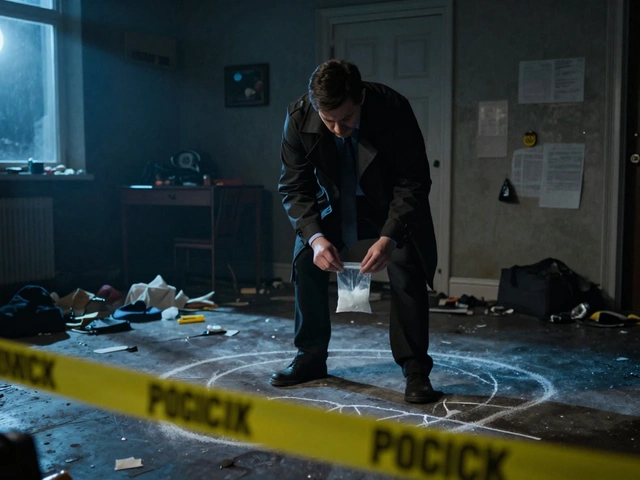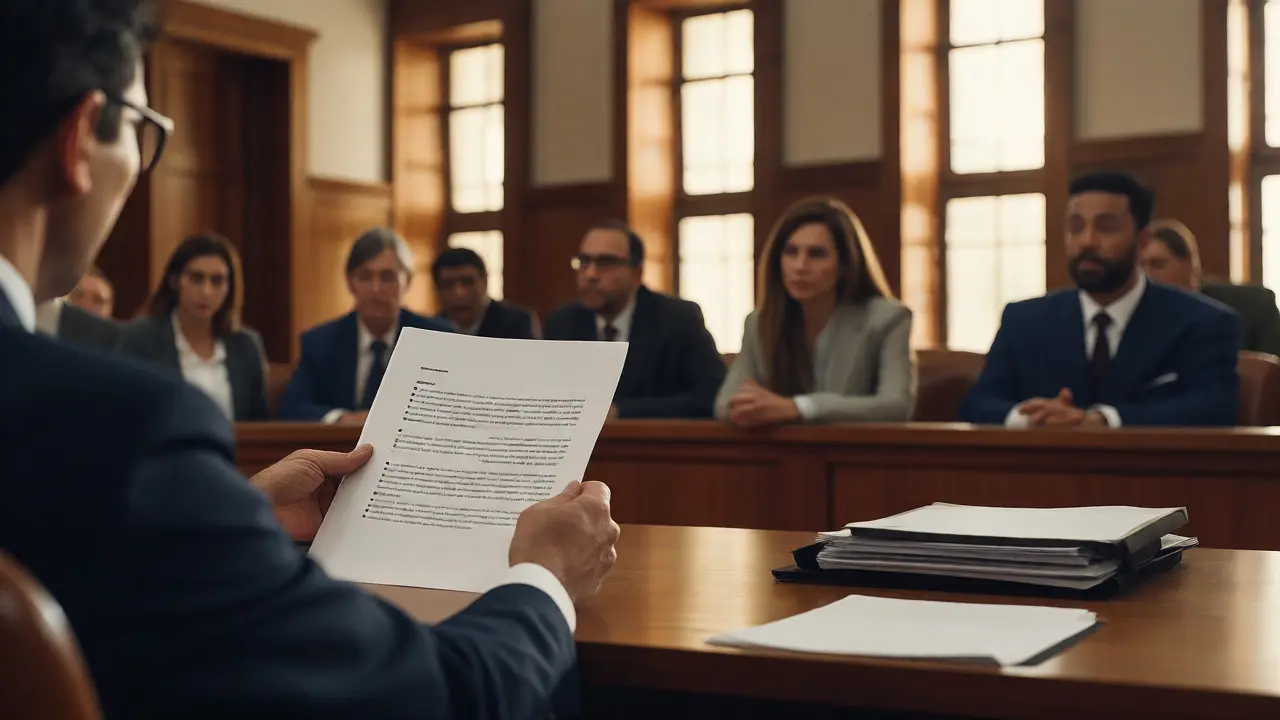
You spent months analyzing DNA sequences or reconstructing ballistics trajectories. You double-checked your calibration curves. You cited the latest ASTM standards. Then you hand over a 40-page report filled with acronyms like "STR," "LOD," and "RIN." The attorney glances at it, sighs, and asks, "Can you explain this to me in English?"
That moment is where many forensic experts lose the room. In the courtroom, clarity isn't just nice to have-it's the difference between evidence being accepted or ignored. Plain Language Summaries are concise, jargon-free overviews of complex forensic findings designed specifically for non-experts. They bridge the gap between technical precision and human understanding. If your goal is to ensure jurors grasp the significance of your work, you need to master this skill.
Why Technical Precision Fails in Courtrooms
Jurors aren't scientists. They don't care about your p-values or your confidence intervals unless those numbers directly explain why a suspect was excluded from a lineup. When experts rely solely on raw data dumps, they create cognitive overload. Research from the National Institute of Standards and Technology (NIST) suggests that excessive jargon increases error rates in decision-making among laypeople because they disengage rather than attempt to decode the meaning.
Attorneys face a similar problem. They need to build a narrative, not a lab manual. If they can't quickly extract the "so what?" from your report, they might misinterpret your findings during cross-examination. A well-written summary acts as an anchor. It gives the lawyer a clear, defensible statement to use in opening statements and closing arguments.
The Anatomy of an Effective Summary
A good summary isn't just a shorter version of your full report. It's a different document with a different job. While the full report serves peer review and quality assurance, the summary serves persuasion and comprehension. Here’s what needs to be in there:
- The Question Asked: Restate the specific issue the court asked you to address. Did they want to know if the blood type matched? Or if the handwriting was forged?
- The Bottom Line Up Front (BLUF): State your conclusion immediately. Don't bury the lead under three pages of methodology.
- The Basis for Confidence: Explain why you reached that conclusion using simple analogies or concrete facts, not statistical formulas.
- Limitations: Be honest about what you couldn't determine. This builds credibility.
For example, instead of saying "The likelihood ratio supports inclusion," say "The DNA profile found at the scene matches the suspect's profile. Statistically, it is one million times more likely to come from him than from a random person." That second sentence sticks.
Translating Jargon into Everyday Concepts
The biggest enemy of plain language is unexplained terminology. You cannot assume the jury knows what "chain of custody" implies regarding contamination risks. You must translate concepts without dumbing them down to the point of inaccuracy.
Consider how you describe uncertainty. In science, we love qualifiers like "probable" or "consistent with." In law, these words can feel wishy-washy. Your job is to define the weight of the evidence. Use comparisons jurors understand. If you're discussing fingerprint analysis, avoid talking about "minutiae points" unless you immediately explain that these are unique ridge endings and bifurcations, like distinct scars on a finger.
| Technical Term | Plain Language Equivalent | Why It Works |
|---|---|---|
| Exclusionary Power | Ability to rule out suspects | Focuses on the practical outcome for the jury. |
| Contamination Artifact | Foreign material introduced by mistake | Removes the Latin root; clarifies the source of error. |
| Statistical Significance | Unlikely to happen by chance | Explains the probability concept without math. |
| Latent Print | Invisible fingerprint left behind | Describes the physical state of the evidence. |

Structuring for Skimmability
Lawyers and judges read fast. They scan documents looking for key phrases. If your summary is a wall of text, they will miss critical nuances. Use visual hierarchy to guide their eyes.
Start with a bold headline that states the finding. Follow it with bullet points for supporting details. Keep paragraphs short-three to four sentences max. Use active voice. Instead of "It was determined by the examiner that...", write "I determined that..." This sounds more confident and direct.
Also, consider the audience's emotional state. Jurors are often tired, confused, or anxious. A clean, well-spaced document reduces cognitive friction. White space is your friend. It allows the reader to pause and process information before moving to the next point.
Common Pitfalls to Avoid
Even experienced experts fall into traps when trying to simplify. One major pitfall is oversimplification that leads to inaccuracy. Saying "the gun fired" when you mean "the trigger mechanism released the hammer" might seem trivial, but in a negligence case, that distinction matters. Always check with the attorney to ensure the simplified version doesn't alter the legal implication.
Another trap is defensiveness. Some experts write summaries that sound like they are arguing with the opposing counsel before the trial even starts. Keep the tone neutral and objective. Let the facts speak. If you sound biased, the jury will discount your expertise.
Finally, never hide bad news. If your results were inconclusive, say so clearly. A summary that says "Results were inconclusive due to sample degradation" is better received than a vague statement that tries to spin a negative result into a positive one. Honesty builds trust.
Collaborating with Legal Teams
Writing plain language summaries isn't a solo act. It works best when you collaborate with the attorney handling the case. Ask them: "What is the single most important takeaway you need from my report?" Their answer might surprise you. Sometimes, they care less about the scientific method and more about the timeline or the location of the evidence.
Offer to draft the summary first, then let the attorney edit for legal strategy. This ensures the science remains accurate while the framing fits the case theory. Remember, you are the expert on the evidence; they are the expert on the law. Neither role is superior, but both are necessary for a successful outcome.
Checklist for Reviewing Your Summary
Before you hit send, run through this quick checklist:
- Is the main conclusion stated in the first paragraph?
- Are all acronyms defined upon first use?
- Did I remove unnecessary passive voice?
- Would a high school student understand the core message?
- Did I include limitations honestly?
- Is the formatting easy to skim?
If you checked every box, you’re ready. If not, rewrite. It takes time, but the payoff in courtroom effectiveness is worth it.
How long should a plain language summary be?
Ideally, one page. It should be concise enough to be read in under two minutes but detailed enough to stand alone. If it exceeds two pages, you are likely including too much methodology or background detail that belongs in the full report.
Do attorneys prefer summaries over full reports?
Attorneys need both. They use the summary for quick reference, depositions, and jury instructions. They use the full report for deep dives, cross-examination preparation, and verifying your methodology. The summary makes the full report accessible.
Can I use analogies in forensic summaries?
Yes, but use them carefully. Analogies help explain complex processes (like comparing DNA matching to fitting keys in locks), but ensure the analogy doesn't imply certainty where none exists. Always qualify analogies with scientific accuracy.
Who is responsible for editing the summary?
The forensic expert owns the scientific accuracy. The attorney owns the legal framing. Best practice is for the expert to draft the initial summary, and the attorney to suggest edits for clarity and strategic emphasis, ensuring no scientific meaning is lost.
What if the findings are negative or inconclusive?
State this clearly and prominently. Do not bury negative results. Explain why the result was inconclusive (e.g., low quantity of DNA, poor condition of prints). Jurors respect honesty and transparency, which enhances your credibility as an unbiased expert.