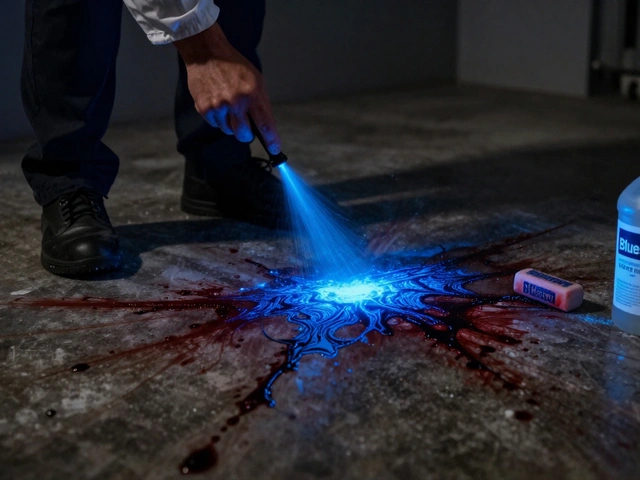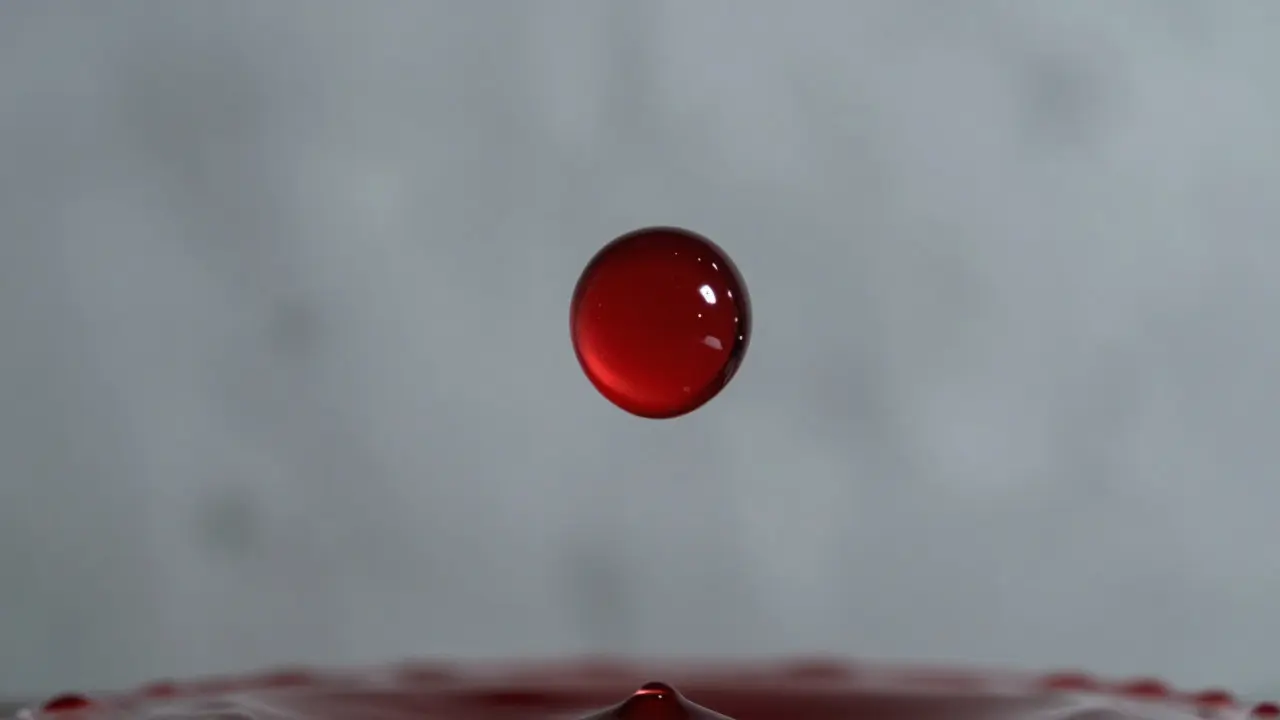
Imagine a single drop of blood falling from a height of six feet. It doesn't just land; it shatters. The resulting shape, size, and direction tell a story that no witness might remember. This is the core of analyzing passive blood drops, which are defined as bloodstains formed by the free fall of blood under the influence of gravity alone, without external force or velocity added to the droplet. Unlike spatter patterns caused by impact, these stains rely on simple physics. For crime scene investigators, recognizing these patterns is the first step in reconstructing where a victim stood and how high the source was.
Many people assume all blood on a wall is evidence of a struggle. In reality, most small, round spots found at floor level are simply passive drips from a wound that opened while the person was standing. Understanding the difference between passive and active patterns prevents misinterpretation of the scene. If you look closely at a stain, you aren't just seeing red; you're seeing data points about volume, surface tension, and distance.
The Physics of Free-Falling Blood
To understand passive stains, you have to respect the forces acting on the liquid. Blood is not water. It has higher viscosity and contains cellular components like red blood cells and platelets. These elements affect how the drop forms and breaks apart. When a drop detaches from a source, gravity accelerates it downward. As it falls, air resistance pushes against it. Eventually, the drop reaches terminal velocity, meaning it stops accelerating and falls at a constant speed.
The key factor here is the diameter of the drop. A larger drop weighs more but also presents a larger surface area to air resistance. Smaller drops reach terminal velocity faster than larger ones. However, for typical passive drips (usually between 0.5mm and 3mm in diameter), the effect is subtle but measurable. The standard rule of thumb in forensic ballistics and fluid dynamics suggests that drops smaller than 4mm do not deform significantly during short falls. They remain spherical until they hit the surface. This spherical shape is critical because it determines the final stain geometry.
- Viscosity: Blood’s thickness keeps the drop cohesive, preventing it from breaking into mist during a simple fall.
- Surface Tension: This force holds the drop together against gravity until impact.
- Terminal Velocity: The maximum speed reached when drag equals gravitational force, typically around 18-20 m/s for large drops, but much lower for small passive drips.
Identifying Passive vs. Active Patterns
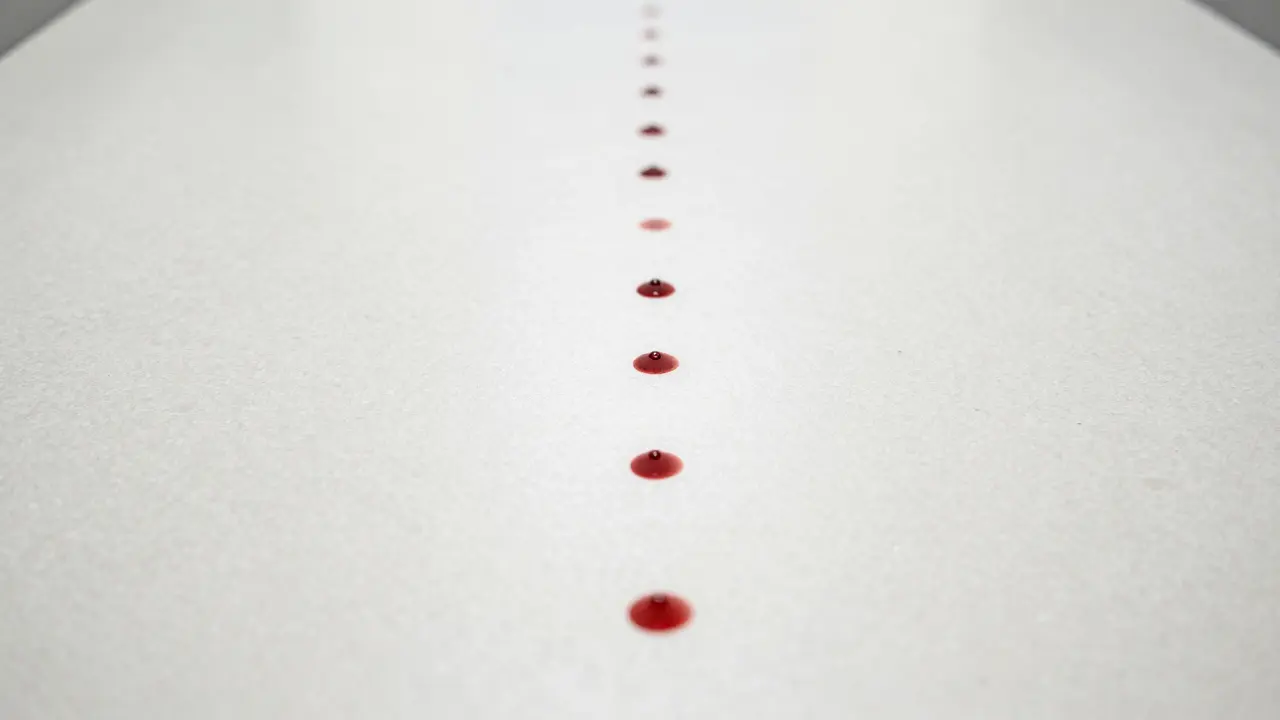
The biggest mistake beginners make is confusing passive drips with low-velocity impact spatter. Both can produce small, round stains. So, how do you tell them apart? Look at the context and the distribution. Passive stains usually appear in vertical trails directly below a wound. They often show a gradient: larger drops at the bottom of the trail if the bleeding slowed down, or consistent sizing if the flow was steady.
In contrast, impact spatter creates a random distribution over a wider area. There is no direct vertical line connecting the stains to a specific point unless the impact was perfectly vertical. Passive stains also lack satellite spatter. Satellite drops occur when a primary drop hits a surface and bounces back up, creating tiny secondary stains. Since passive drops fall slowly and gently, they rarely have enough energy to bounce back and create satellites. If you see a cluster of tiny dots around a larger stain, suspect an impact event, not a passive drip.
| Feature | Passive Blood Drops | Low-Velocity Impact Spatter |
|---|---|---|
| Formation Cause | Gravity only | External force (blunt trauma) |
| Shape | Round, uniform edges | Round, may have irregular edges if wet-on-wet |
| Distribution | Vertical trails, clustered below source | Random, wide dispersion |
| Satellite Spatter | Absent | Present |
| Directionality | None (no tails) | None (no tails) for low velocity |
Calculating Height and Source Location
One of the most practical applications of studying passive drops is estimating the height of the blood source. You don't need complex software for this. You need a ruler and basic math. The relationship between drop diameter and fall height is inverse: the longer the fall, the smaller the drop becomes due to slight stretching and evaporation, though for very short distances, the change is minimal. However, the volume of the drop changes based on how long it hangs before detaching.
For precise calculations, forensic scientists use the concept of "drop volume." A standard passive drip from a hanging drop is approximately 0.05 ml. If you measure the width and length of the resulting stain, you can estimate the original volume. But wait, passive drops are round, so width equals length. This simplifies things. The formula used is derived from fluid dynamics experiments: $$D = k \cdot V^{1/3}$$ Where $D$ is the diameter of the stain, $V$ is the volume of the drop, and $k$ is a constant dependent on the surface type. On smooth, non-porous surfaces like tile or glass, the stain spreads less than on carpet. Therefore, the same drop will create a larger stain on carpet. Always note the substrate. If you find a trail of passive drops, measure the distance between them. If the drops are spaced evenly, the bleeding was continuous. If the spacing increases, the victim was moving. If the spacing decreases, they were slowing down or stopping. This temporal analysis helps build a timeline of events.
Surface Effects on Stain Appearance
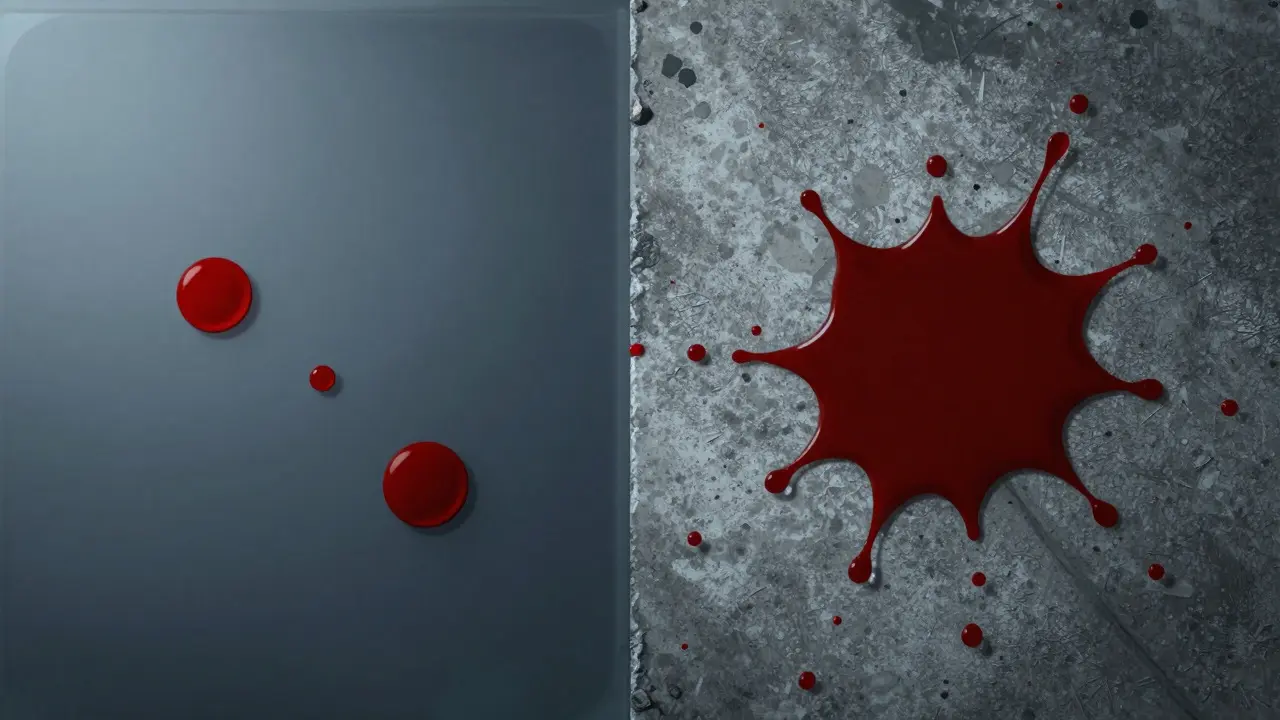
The surface the blood hits changes everything. A passive drop hitting a smooth, hard surface like a steel table will form a perfect circle. The edges will be sharp. Now, imagine that same drop hitting a rough concrete floor. The stain will be irregular, with jagged edges. This isn't because the drop changed shape in the air; it's because the surface texture disrupted the spreading process.
Porous surfaces like wood or fabric absorb blood quickly. This absorption pulls the liquid inward, reducing the final stain size. A drop that would be 5mm on tile might only be 3mm on oak flooring. Investigators must account for this "absorption factor" when comparing stains across different parts of a room. If you see smaller stains near a wooden beam and larger ones on the adjacent tile floor, it doesn't mean the drops were different sizes. It means the surface changed.
Temperature also plays a role. Cold blood coagulates faster. If a body has been dead for several hours, the blood is thicker. Thicker blood resists spreading, resulting in smaller, more compact stains. Conversely, warm, fresh blood spreads more readily. This is why time-of-death estimation often involves analyzing stain morphology alongside other biological markers.
Common Pitfalls in Interpretation
Even experienced examiners can trip up on passive patterns. One common error is assuming that any vertical line of stains indicates a dripping wound. Sometimes, rainwater mixed with blood creates similar trails. Or, condensation on a cold window can cause water droplets to slide down, carrying traces of dried blood with them. Always check for environmental factors.
Another pitfall is ignoring the angle of the surface. If a passive drop hits a slanted roof or a sloped table, the stain will elongate. The tail of the stain points in the direction of the slope, not the direction of travel. This can mimic medium-velocity spatter. To distinguish them, look for the presence of directional tails on multiple stains. Passive drops on slopes create consistent directional artifacts based on the slope angle, whereas spatter directionality relates to the vector of the impact force.
Finally, don't forget about secondary transfers. If a passive drop lands on a shoe, and then the person steps on a clean floor, you get a transfer pattern. This looks like a partial print, not a round stain. Identifying these transfers requires understanding the sequence of events. Did the drop happen before or after the movement? The overlap of patterns provides the answer.
Practical Application in Crime Scene Reconstruction
Let's apply this knowledge to a real-world scenario. Imagine a kitchen scene with a cut on a victim's arm. You see a trail of small, round stains leading from the sink to the refrigerator. The stains are 2mm in diameter. The floor is linoleum. Based on standard tables, a 2mm passive drop likely fell from a height of 3 to 4 feet. This matches the average adult elbow height. The even spacing suggests the victim walked steadily. There are no satellite stains, confirming no impact occurred during the walk. The trail ends at the refrigerator door handle. This tells you the victim moved to the fridge, possibly to open it, before collapsing or being interrupted. The passive drops didn't just mark the path; they confirmed the gait and the endpoint.
This reconstruction allows investigators to question witnesses accurately. Instead of asking "Did you see him bleed?", you ask "Did you see him walk to the fridge while holding his arm?" The specificity comes from the physics of the passive drops.
Frequently Asked Questions
What is the typical size of a passive blood drop?
A standard passive blood drop ranges from 0.5mm to 3mm in diameter. Most common drips fall within the 1mm to 2mm range. Larger drops are rare in passive scenarios unless the wound is very close to the ground or the surface is highly porous.
Do passive blood drops have tails?
No, passive blood drops typically do not have tails. They form circular or oval shapes depending on the surface. Tails indicate velocity and direction, which are characteristics of impact spatter, not gravity-driven drips.
How does surface texture affect passive stain size?
Rough and porous surfaces reduce the final stain size by absorbing blood and disrupting spread. Smooth, non-porous surfaces allow the blood to spread further, resulting in larger stains. Always document the surface type when measuring stains.
Can passive drops be distinguished from rain splashes?
Yes. Rain splashes are usually irregular, larger, and distributed randomly. Passive drops are smaller, rounder, and often aligned vertically below a source. Context is key: look for a logical source of bleeding nearby.
Does temperature change passive stain morphology?
Yes. Colder blood is more viscous and coagulates faster, leading to smaller, more compact stains. Warmer blood spreads more easily, creating larger stains. Temperature should be considered when interpreting stain size relative to expected volumes.