You fire a shot. The bullet leaves the barrel at supersonic speed, hits its target, and disappears into the tissue. But what actually happens inside that target? Did it stay whole? Did it break apart? Did it tumble? For forensic experts, hunters, and self-defense practitioners, understanding bullet fragmentation isn't just academic trivia-it’s the difference between a clean exit wound and a messy crime scene puzzle.
Most people imagine bullets as solid chunks of lead or copper that punch through things like needles through paper. Reality is far more chaotic. When a projectile strikes bone, dense muscle, or even heavy clothing, it undergoes violent structural changes. This process, known as fragmentation, dictates how much energy is transferred, where the debris ends up, and ultimately, how effective the shot was. Let’s break down why bullets break, when they do it, and what it means for you.
What Is Bullet Fragmentation?
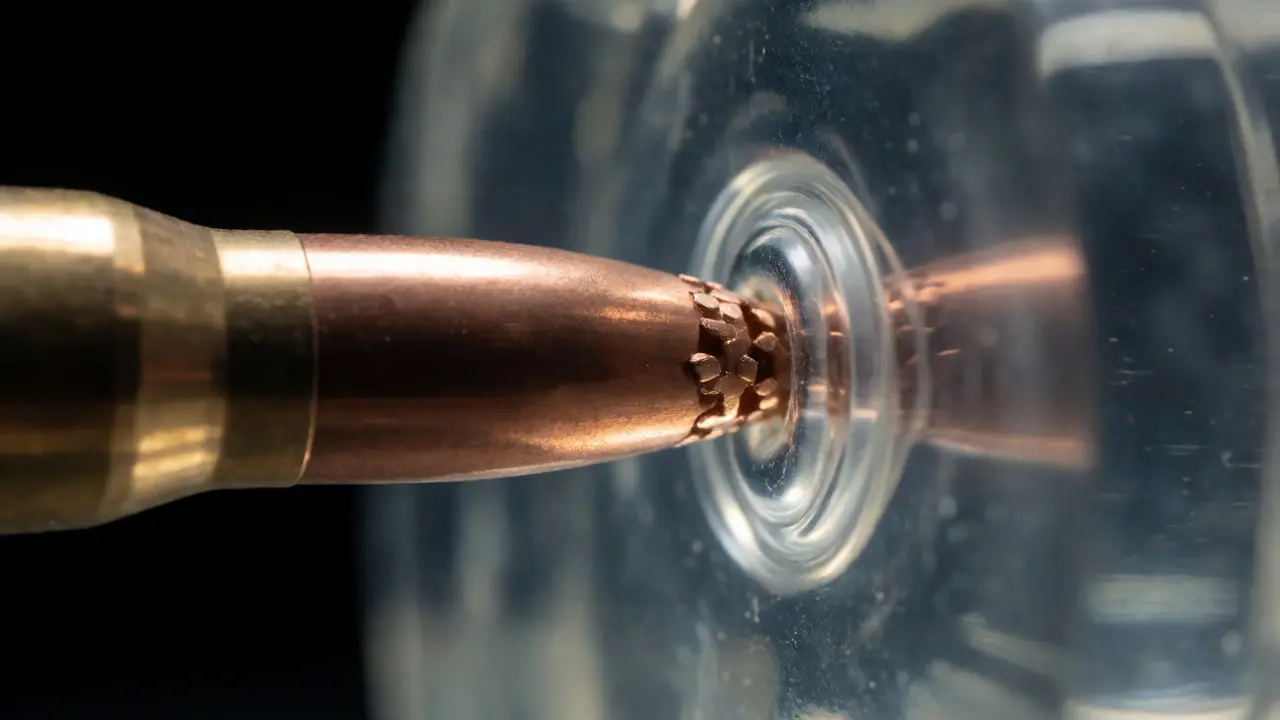
Bullet fragmentation is the physical disintegration of a projectile upon impact with a medium denser than itself. Unlike expansion, where a hollow-point mushrooming outward while staying largely intact, fragmentation involves the actual breaking off of pieces from the main body of the bullet. This can range from minor surface chipping to total shattering into dozens of tiny shards.
This behavior is governed by physics-specifically, the relationship between velocity, mass, material hardness, and target density. A .22 LR round fired at close range might pass through soft tissue without fragmenting at all. A .308 Winchester hitting a femur at 150 yards? That bullet will likely explode into fragments. Why? Because the kinetic energy has nowhere else to go but to tear the bullet’s own structure apart.
The Physics Behind the Break
To understand why bullets fragment, you have to look at hydrostatic shock and temporary cavitation. When a high-velocity bullet enters a medium, it creates a pressure wave. If the bullet is traveling fast enough (typically above 1,600 feet per second for many rifle calibers), this pressure wave exceeds the tensile strength of the bullet’s alloy.
Think of it like throwing a raw egg versus a hard-boiled egg at a wall. At low speeds, both might bounce or crack slightly. At high speeds, the raw egg splatters completely. Bullets behave similarly. Lead is soft; copper jackets are tougher; steel cores are rigid. Each reacts differently to stress.
- Velocity: Higher speed equals higher kinetic energy, increasing the likelihood of fragmentation.
- Material Composition: Soft lead core bullets fragment more easily than bonded or monolithic copper bullets.
- Target Density: Bone and heavy organs cause more fragmentation than fat or skin.
- Design: Hollow points expand; full metal jackets (FMJ) tend to penetrate deeper with less fragmentation unless they hit bone.
Types of Bullet Failure Modes
Not every broken bullet tells the same story. Forensic analysts classify failure modes to reconstruct shooting incidents. Here are the three most common behaviors observed in terminal ballistics:
| Failure Mode | Description | Typical Cause | Forensic Significance |
|---|---|---|---|
| Penetration | Bullet passes through with minimal deformation. | High velocity, dense target, FMJ design. | Straight-line trajectory reconstruction is easier. |
| Expansion | Bullet mushrooms but remains one piece. | Hollow point design, moderate velocity. | Indicates designed stopping power; less debris. |
| Fragmentation | Bullet breaks into multiple pieces. | High velocity, hitting bone, thin jacket. | Complex wound channel; harder to recover evidence. |
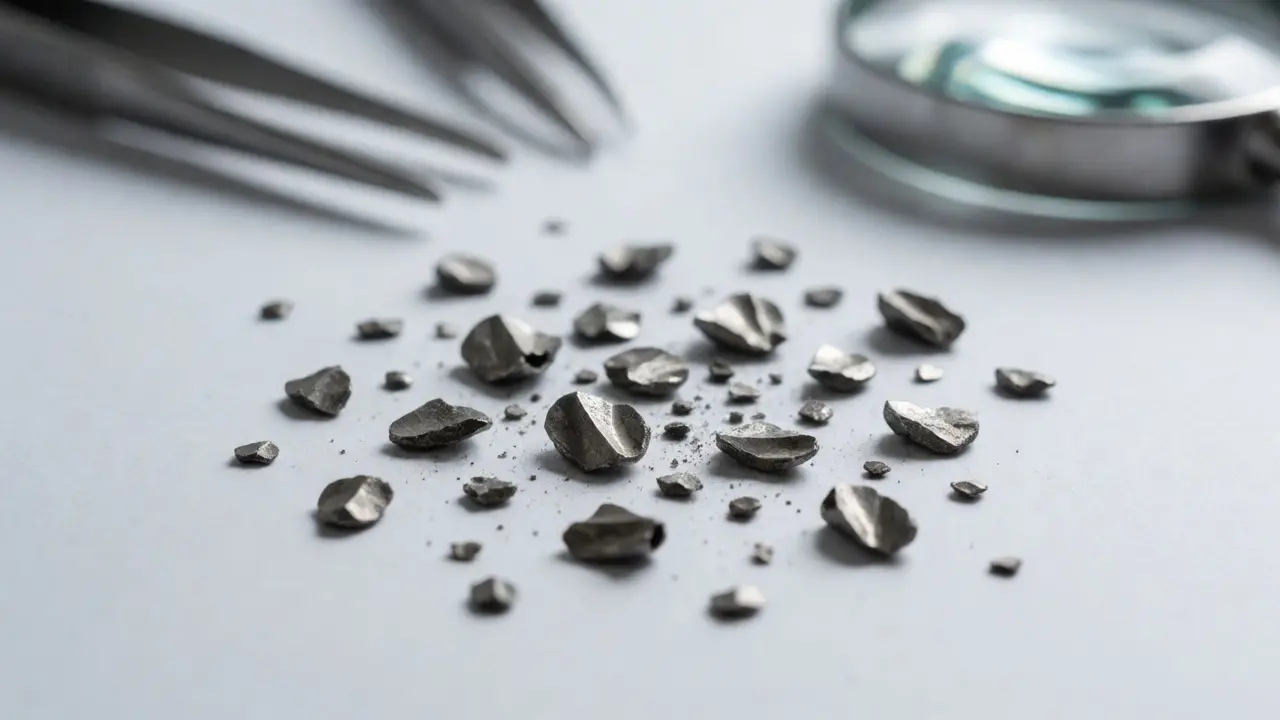
Fragmentation is often considered the "worst-case" scenario for evidence recovery because the original bullet shape is lost. You’re left picking up lead shards from the floor, which makes matching them to a specific firearm difficult unless you use advanced microscopy techniques.
Factors That Trigger Fragmentation
Why does one bullet fragment and another doesn’t? It comes down to specific variables in the equation of impact.
Impact Velocity
This is the biggest driver. A handgun bullet traveling at 1,000 fps rarely fragments in soft tissue. A rifle bullet at 2,800 fps almost always does if it hits anything substantial. The threshold varies by caliber, but generally, once a bullet exceeds its critical velocity, its structural integrity fails upon impact.
Target Composition
Soft tissue allows bullets to stretch and deform. Hard targets like skull bone, teeth, or pelvic girdles act as anvils. When a bullet hits an anvil, it flattens against it. If the force is great enough, the edges shear off. This is why headshots often result in significant fragmentation compared to torso shots.
Bullet Construction
Modern ammunition engineering tries to control fragmentation. Bonded bullets fuse the lead core to the copper jacket, preventing separation during expansion. Monolithic copper bullets (like Barnes TSX) don’t have a core to separate from, so they shed weight differently-they shave off strips rather than exploding into shards. Traditional FMJs, however, are prone to yawing (tumbling) and then shedding their jackets entirely upon impact.
Implications for Forensic Analysis
If you’re working in forensics, fragmented bullets present unique challenges. You can’t just drop a recovered bullet into a comparison microscope and match the rifling marks. When a bullet shatters, those microscopic striations are scattered across dozens of fragments.
Experts must reassemble fragments like a jigsaw puzzle. Even then, only some fragments retain the land-and-groove impressions needed for identification. In cases involving high-powered rifles, investigators often find no single recoverable bullet, only lead dust and small chips embedded in walls or clothing.
This affects legal proceedings too. Defense attorneys may argue that the lack of a pristine bullet means the prosecution cannot definitively link the weapon to the crime. Prosecutors counter with statistical probabilities based on the distribution of fragments, which often aligns with the suspect’s firearm type.
Practical Considerations for Shooters
For hunters and concealed carriers, fragmentation isn’t just about forensics-it’s about ethics and effectiveness.
Hunters: Over-penetration is bad, but excessive fragmentation can be worse if it fails to reach vital organs quickly. A varmint hunter using a .22 Hornet wants explosive fragmentation to ensure instant kill on small game. A deer hunter using a .30-06 wants controlled expansion with limited fragmentation to ensure deep penetration into the lungs.
Self-Defense: Most modern defensive loads are engineered to minimize fragmentation in soft tissue to avoid over-penetration risks (hitting a bystander behind the threat). However, if your bullet hits a car door or a wall before reaching the target, it may fragment unpredictably. Testing your ammo in ballistic gelatin is crucial to see how it behaves under stress.
How to Minimize Unwanted Fragmentation
If you want predictable performance, choose ammunition wisely. Here’s a quick decision guide:
- Choose Bonded Bullets: These resist separating into core and jacket, maintaining mass retention.
- Avoid Thin-Jacketed Varmint Loads: Designed to explode, these are poor choices for large game or defense.
- Match Caliber to Distance: Don’t use a high-velocity rifle load at 10 yards if you don’t need the speed; lower velocities reduce fragmentation risk.
- Test Your Ammo: Fire rounds into water bottles or ballistic gel. Inspect the recovered bullets. Are they intact? Mushroomed? Shattered? Know your gear.
Related Concepts in Ballistics
Understanding fragmentation requires grasping related terms. Terminal Ballistics is the study of a projectile's behavior after it hits a target. Within this field, concepts like yaw (the angle at which a bullet travels sideways), tumble (full rotation end-over-end), and keyhole (a circular hole caused by tumbling) all interact with fragmentation. A tumbling bullet is more likely to fragment than a stable, nose-forward projectile because it presents a larger cross-sectional area to the resistance of the tissue.
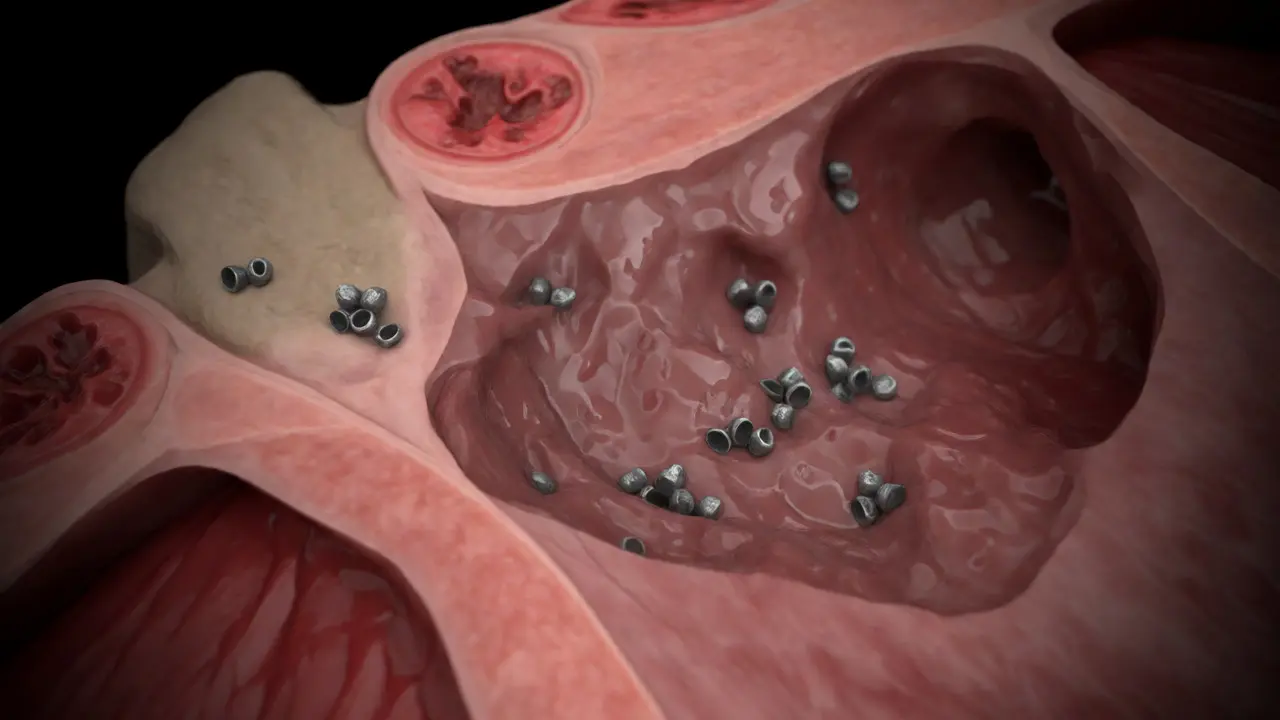
Another key term is energy transfer. Fragmentation increases the surface area of the bullet, causing it to dump its energy rapidly. This creates a larger temporary cavity, which is desirable for stopping power but complicates medical treatment due to widespread tissue damage.
Does all ammunition fragment?
No. Many handgun rounds, especially Full Metal Jacket (FMJ) types fired at moderate velocities, pass through soft tissue with minimal deformation. They may yaw or tumble but remain intact. Fragmentation is primarily associated with high-velocity rifle rounds or specialized hunting/varmint loads designed to expand explosively.
How does fragmentation affect wound channels?
Fragmentation creates a wider and more irregular wound channel. Instead of a single clean hole, the tissue suffers multiple puncture wounds from flying shards. This increases bleeding and tissue destruction but can also mean the bullet loses momentum quickly, potentially failing to reach deep vital organs if the entry point is distant.
Can forensic experts identify a gun from fragmented bullets?
Yes, but it is more difficult. Experts must recover multiple fragments and compare their individual rifling marks. If enough fragments retain the unique microscopic imperfections of the barrel, a match can still be made. However, complete vaporization or extensive crushing can make identification impossible.
What is the difference between expansion and fragmentation?
Expansion refers to a bullet widening in diameter while remaining a single cohesive unit, typical of hollow-point designs. Fragmentation involves the physical breaking apart of the bullet into two or more distinct pieces. Expansion is controlled and predictable; fragmentation is often chaotic and depends heavily on impact velocity and target density.
Do modern bullets still fragment?
Yes, but manufacturers engineer them to control it. Modern bonded bullets and monolithic copper projectiles are designed to expand reliably without shedding significant weight or breaking into dangerous shards. However, at very high velocities or upon striking bone, even premium ammunition will exhibit some degree of fragmentation.