You hear the sirens. You see the yellow ribbon on a telephone pole. Your stomach drops because you know what that means: a child is missing, and time is the enemy. But here is the part most people miss in the chaos of news headlines-child abduction investigations aren't just about looking for clues. They operate under a completely different set of rules than adult missing person cases. The clock doesn't just tick; it screams. And if you think every police department handles these cases the same way, you're wrong.
The difference between a "runaway" and an "abduction" can mean the difference between life and death. In Portland, Oregon, or anywhere else in the United States, law enforcement agencies don't have the luxury of waiting 24 hours to file a report. That old myth? It's dead. But beyond the immediate rush, there are specialized legal procedures, international treaties, and forensic protocols designed specifically for minors. This isn't standard detective work. It's a high-stakes race involving federal resources, international diplomacy, and psychological profiling that would make a thriller novelist blush.
The First Hour: Why Time Is Critical
When a child goes missing, investigators rely on what they call the "golden hour." Data from the National Center for Missing & Exploited Children (NCMEC) suggests that if a child is abducted by a stranger, the likelihood of survival drops significantly after the first few hours. For family abductions, the window is slightly wider but still tight. Unlike adults who might wander off due to dementia or mental health issues, children rarely leave their environment voluntarily without reason.
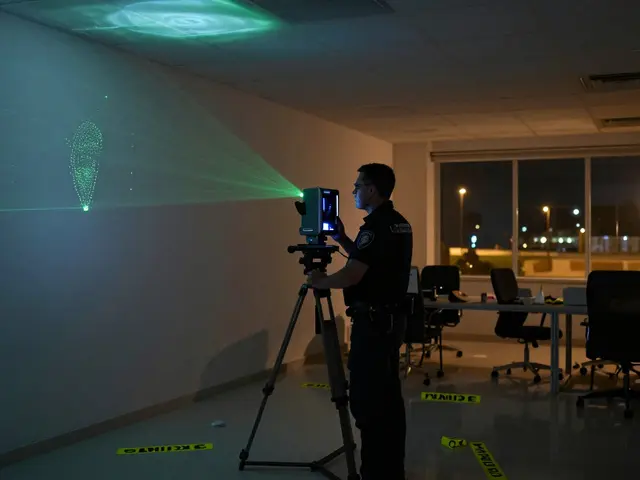
Police enter these cases with a presumption of foul play until proven otherwise. This shifts the entire investigative posture. Instead of checking hospitals and shelters first, detectives immediately secure the scene. They treat the child's bedroom, the school bus stop, or the backyard as a crime scene. Why? Because even if the child walked away, the evidence left behind tells a story. Did they take their phone? Their favorite toy? A sudden change in routine often signals coercion.
Law Enforcement agencies activate specific protocols within minutes of a report, bypassing standard administrative delays to prioritize resource allocation for child safety.
Distinguishing Family Abductions from Stranger Danger
Most people imagine a van with tinted windows when they hear "abduction." Statistically, that's rare. About 75% of parental abductions involve a non-custodial parent taking the child across state lines or internationally. These cases are messy. They involve custody battles, emotional volatility, and complex legal jurisdictions.
Stranger abductions, while less common, trigger a different response. They often involve predatory behavior patterns. Investigators look for signs of premeditation: was the location isolated? Was there a lure used? Forensic psychologists help build profiles based on how the child was taken. Was it a blitz attack? A gradual grooming process? Understanding the "how" helps predict the "where."
| Feature | Family Abduction | Non-Family Abduction |
|---|---|---|
| Frequency | High (approx. 75-80%) | Low (approx. 1-3%) |
| Motivation | Custody dispute, control, relocation | Sexual gratification, ransom, murder |
| Investigation Lead | Family dynamics, financial records, travel history | Witnesses, DNA, geographic profiling |
| Legal Complexity | Domestic vs. International Custody Laws | Criminal Law, Federal Jurisdiction |
The Role of the National Center for Missing & Exploited Children (NCMEC)
If you've ever seen a milk carton with a missing kid's photo, you've interacted with the legacy of NCMEC. Established by Congress in 1984, this nonprofit operates almost like a private-public partnership with the FBI. When local police hit a wall, NCMEC steps in with resources that small departments simply don't have.
They maintain the largest database of missing children in the country. More importantly, they run the CyberTipline, which processes millions of reports annually regarding online exploitation. For investigators, NCMEC provides age-progression technology. If a child has been missing for ten years, they don't look for a 6-year-old anymore. They use algorithms to generate images of what that child might look like at 16, 20, or 30. This tool has reunited hundreds of families with grown-up children who were abducted decades ago.
NCMEC is a nonprofit organization authorized by the U.S. Congress to serve as a national information clearinghouse and resource center for missing, exploited, and endangered children.

International Cases and the Hague Convention
Things get complicated fast when borders are involved. If a parent takes a child to another country, local police lose jurisdiction. Enter the Hague Convention on the Civil Aspects of International Child Abduction, a multilateral treaty developed by the Hague Conference on Private International Law.
This treaty isn't about deciding who gets custody. It's about speed. The goal is to return the child to their "habitual residence" so the courts there can decide custody. However, the Hague Convention only applies between signatory countries. If a child is taken to a nation that hasn't signed the treaty-like Japan or India-the legal leverage evaporates. Parents may find themselves stuck in foreign courts for years, fighting for access rather than return.
In these scenarios, the U.S. State Department’s Office of Children’s Issues becomes the primary point of contact. They issue passports, track flights, and sometimes negotiate directly with foreign governments. It’s diplomatic triage. Without the treaty framework, parents often resort to hiring private investigators abroad, navigating language barriers and unfamiliar legal systems alone.
Technology and Digital Footprints
Gone are the days when a missing child case relied solely on newspaper ads. Today, digital forensics drives the investigation. Every smartphone ping, every social media login, and every credit card swipe creates a breadcrumb trail. Investigators now request data from tech giants like Apple and Google, often using emergency disclosure laws to bypass standard warrant timelines.
Social media plays a dual role. It helps locate witnesses through geotagged photos and check-ins. But it also exposes children to risks. Predators use platforms to groom victims before physical abduction. Investigators analyze chat logs not just for threats, but for patterns of manipulation. Did the child receive gifts? Were conversations kept secret from parents? These digital artifacts often reveal the relationship between victim and suspect long before a body is found.
Facial recognition software has also entered the fray. Agencies scan thousands of surveillance camera feeds, matching the child’s face against traffic cameras and store security footage. While privacy advocates debate its ethics, for a desperate parent, it’s a vital tool for narrowing down search grids from city-wide blocks to specific street corners.

Forensic Psychology and Geographic Profiling
How do you find someone when you don't know where they started? You use math. Geographic profiling analyzes known locations related to the case-home, school, last seen-and calculates the probability of other locations. It assumes offenders operate within a "comfort zone." By mapping crimes or sightings, analysts create heat maps showing where the suspect is likely to live or hide.
This method helped catch the Grim Sleeper in Los Angeles and countless other predators. For missing children, it helps prioritize search areas. Do you send volunteers to the park or the industrial district? The algorithm suggests the latter based on distance decay curves. It removes emotional bias from the search effort, ensuring resources go where the data points, not where hope wants them to go.
Next Steps for Families and Investigators
If you’re dealing with a missing child situation, whether as a relative or a student of criminal justice, understanding these special procedures changes everything. It’s not just about calling 911. It’s about knowing who holds the keys to databases, which laws apply across state lines, and how technology bridges the gap between a cold case and a new lead.
- Immediate Action: File a report instantly. Provide recent photos and dental records if available.
- Communication: Keep lines open with law enforcement. Avoid posting conflicting info on social media that might confuse witnesses.
- Legal Counsel: In international cases, hire attorneys specializing in family law and international treaties immediately.
- Support: Connect with NCMEC or local advocacy groups. They offer counseling and practical assistance during the investigation.
Is there a waiting period to report a missing child?
No. The 24-hour rule is a myth. Police must accept a missing child report immediately. Delaying can compromise the golden hour of investigation.
What happens if my child is taken out of the country?
If the country is a signatory to the Hague Convention, you can petition for the child's return to their habitual residence. If not, legal options become more limited and may require local counsel in that country.
How does the Amber Alert system work?
Amber Alerts are issued when law enforcement confirms a child has been abducted, faces imminent danger, and there is enough descriptive information to broadcast. It uses wireless emergency alerts, TV, and radio to reach the public quickly.
Can police force a parent to submit to a drug test during an investigation?
In urgent circumstances involving a missing child, police may seek exigent circumstances warrants to compel testing, especially if substance abuse is suspected as a factor in the disappearance.
What is age progression?
Age progression is a forensic art technique used to estimate what a child would look like today if they are still alive. It combines photography, computer graphics, and anatomical knowledge to update facial features over time.