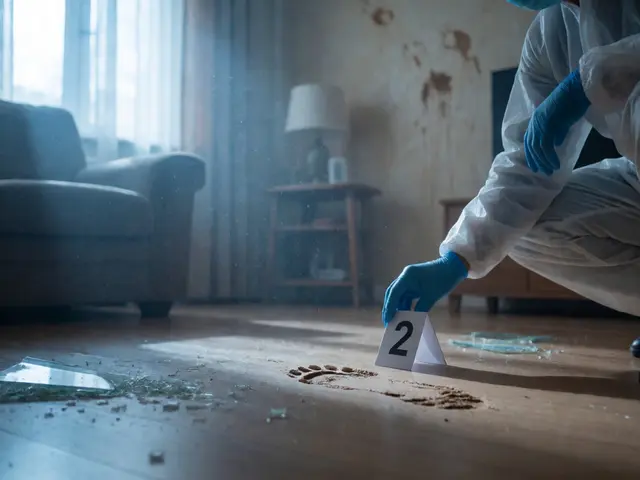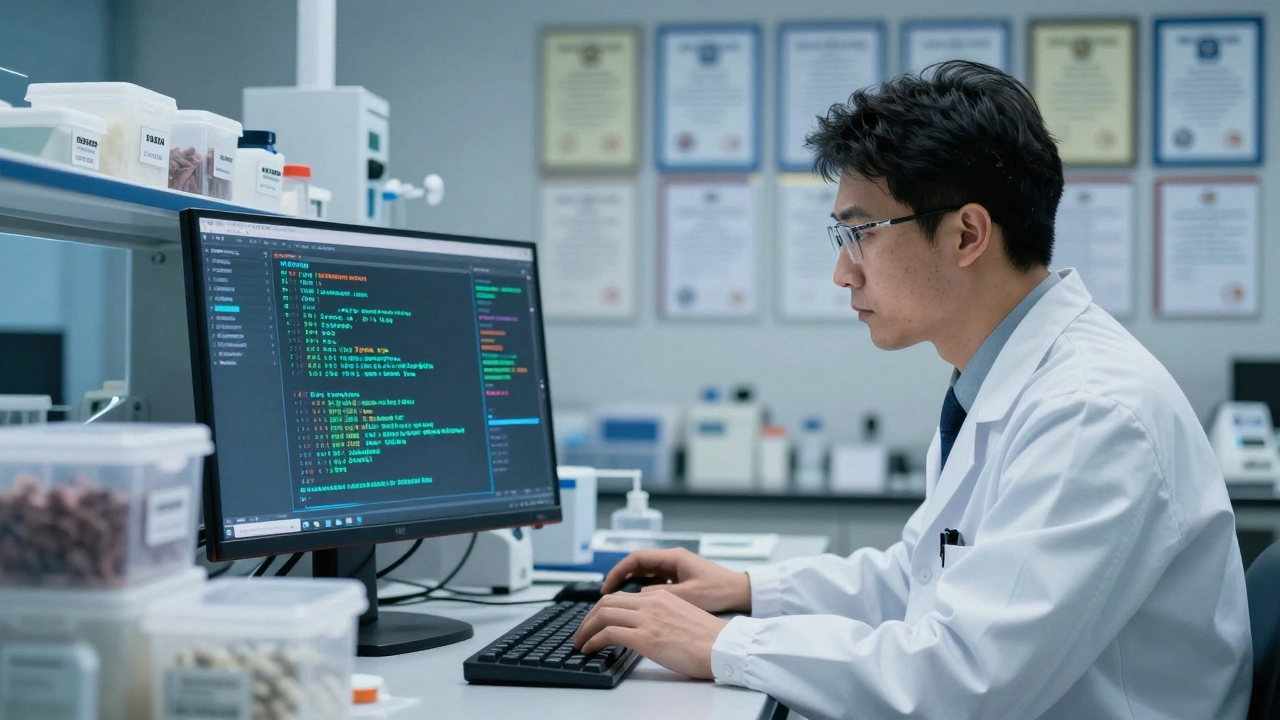
Forensic science isn’t static. The tools, techniques, and standards used in crime labs and crime scenes change faster than most people realize. A fingerprint analysis method that was cutting-edge five years ago might be outdated today. A DNA extraction protocol you learned in college could be replaced by a faster, more accurate version now in use across major labs. If you’re a forensic scientist and you’re not actively learning, you’re falling behind-and that’s not just a career risk, it’s a legal and ethical one.
Why Continuing Education Isn’t Optional
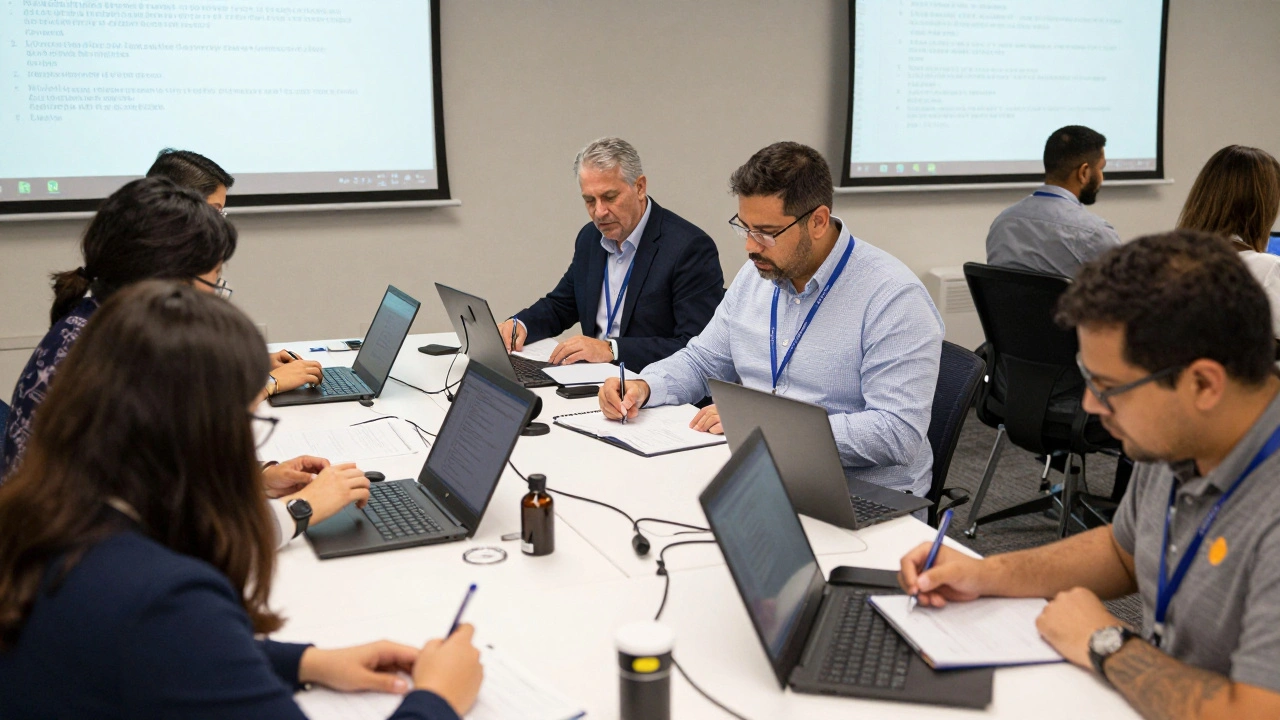
Every forensic scientist works at the intersection of science and justice. Your analysis might help convict a guilty person-or free an innocent one. That kind of responsibility demands precision, accuracy, and up-to-date knowledge. The National Institute of Standards and Technology (NIST) makes it clear: continuing education isn’t a nice-to-have. It’s mandatory.For crime scene investigators, the standard is 48 hours of continuing education every two years. At least 24 of those hours must be directly tied to crime scene investigation. That means attending a workshop on bloodstain pattern analysis, taking a course on digital evidence collection, or learning new protocols for handling trace evidence. It’s not enough to just show up. You need to prove you learned something.
And it’s not just crime scene techs. Forensic toxicologists, DNA analysts, digital forensics examiners, and document examiners all face similar requirements. Certifying bodies like the American Board of Criminalistics (ABC), the American Board of Forensic Toxicology (ABFT), and the International Association for Identification (IAI) tie certification renewal directly to documented continuing education. Skip the hours? Your certification lapses. No certification? Many labs won’t let you work on casework.
What Counts as Continuing Education?
Not every training session counts. The ABFT is strict about what qualifies. Here’s what does:- Attending workshops at major forensic conferences like the American Academy of Forensic Sciences (AAFS) or the Society of Forensic Toxicologists (SOFT)
- Publishing a peer-reviewed paper or presenting at a forensic symposium
- Completing an online course from a regionally accredited institution
- Taking a certified class on new instrumentation or software used in forensic labs
And here’s what doesn’t:
- Reading journal articles on your own
- Preparing for court testimony or writing expert reports
- Internal lab meetings about case workload
- Manufacturer training on equipment you use daily
- Teaching undergrads or mentoring new hires
The key is structured, documented learning. You need a certificate, a CEU, or an official attendance log. A PDF of an article you read? That’s not enough. A 3-hour webinar with a quiz and a signed certificate? That works.
Where to Find Quality Training
There are plenty of places to get the hours you need. Here are the most reliable sources:- American Academy of Forensic Sciences (AAFS): Their annual meeting offers over 100 continuing education sessions across disciplines. You can also access recorded sessions online. Registration includes CEU credits, but there’s a fee.
- Criminalist Foundation for Science and Research Excellence (CFSRE): Offers specialized workshops on emerging tech like rapid DNA analysis and AI-assisted digital forensics. Their courses are hands-on and often include lab time.
- American Society for Clinical Pathology (ASCP): Has a growing library of forensic courses, especially for lab-based professionals. Many are self-paced and approved for continuing medical education credits.
- Online platforms like Purdue Global and WP Connect Forensic Science Academy: These offer certificate programs that double as continuing education. For example, Purdue’s Crime Scene Technician Certificate includes 12 modules that cover evidence collection, photography, and chain-of-custody protocols-all eligible for CEUs.
Some agencies cover the cost. Others give you time off during work hours. But don’t wait for your boss to make the move. If your lab doesn’t have a formal training budget, start looking at free or low-cost options. Many professional societies offer discounted rates for members, and some webinars are free if you register early.
Documentation: Keep It Organized
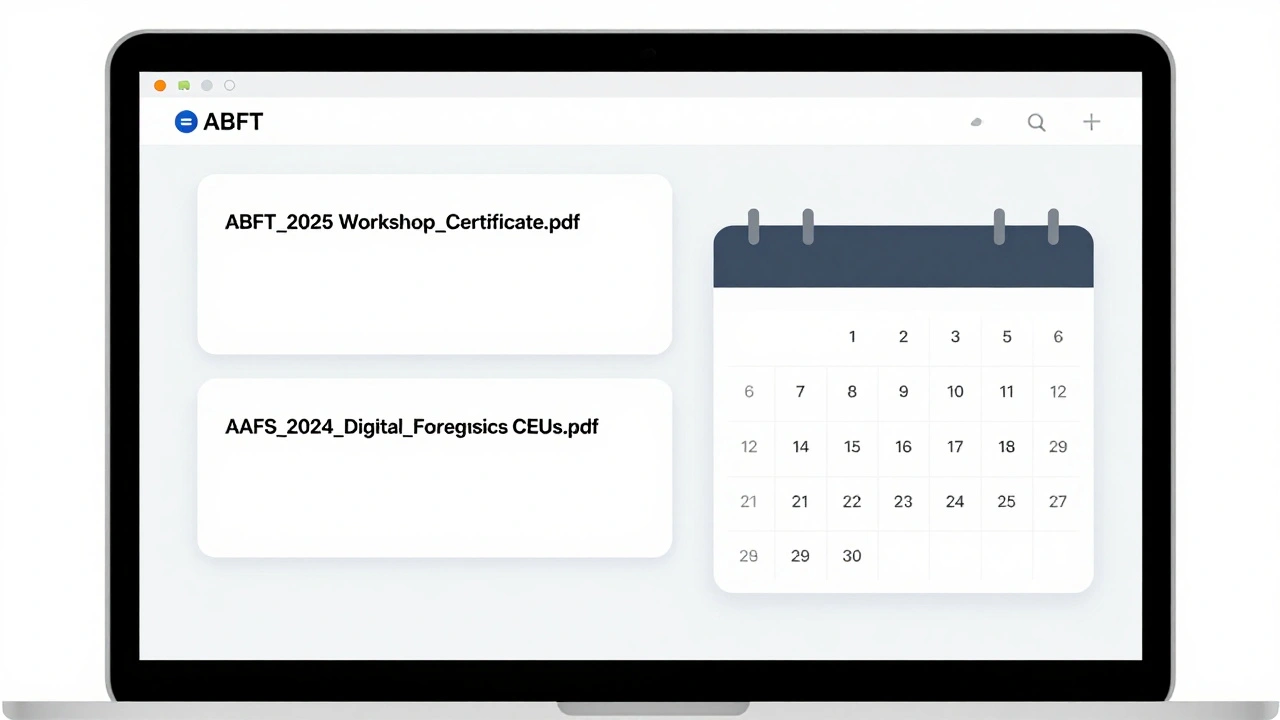
You’re not just learning-you’re building a record. Every certificate, every attendance sheet, every email confirming your participation should be saved. Create a digital folder labeled “Continuing Education.” Name files clearly: ABFT_2025_Workshop_Certificate.pdf, AAFS_2024_Digital_Forensics_CEUs.pdf.Most certifying boards require you to submit proof every renewal cycle. If you’re asked for your last 24 months of training and you can’t produce it, your certification could be suspended. Don’t risk it. Set a reminder every three months to organize your records. A simple spreadsheet with columns for Date, Activity, Provider, Hours, and Certificate ID will save you hours when renewal time comes.
Advanced Education: Beyond the Minimum
While 48 hours every two years is the baseline, many forensic scientists go further. A Master’s degree in forensic science, forensic biology, or digital forensics can open doors to supervisory roles, lab director positions, or expert witness opportunities. Some agencies even pay tuition for employees pursuing advanced degrees.Doctoral programs are rarer but growing. If you’re interested in research, teaching, or developing new forensic methods, a Ph.D. gives you the credibility and skills to lead in those areas. Even if you don’t plan to leave the lab, advanced education teaches you how to evaluate new research critically-something every forensic scientist needs.
Don’t underestimate certificate programs either. A 6-week online course on forensic photography from the IAI can make you the go-to person in your lab for crime scene documentation. A certification in firearms and toolmark examination from AFTE can position you as the lead examiner for ballistics cases.
The Bigger Picture: Why This Matters
Continuing education isn’t just about keeping your job. It’s about keeping justice accurate. When you attend a seminar on new DNA interpretation software, you’re not just learning a tool-you’re learning how to avoid a false match. When you take a course on crime scene reconstruction, you’re not just improving your technique-you’re ensuring the evidence you collect holds up in court.Lawyers, judges, and juries trust forensic scientists to be experts. That trust is built on competence, consistency, and credibility. If you’re not learning, you’re not just falling behind-you’re eroding public confidence in the system you serve.
And here’s the truth: the best forensic scientists aren’t the ones who graduated top of their class. They’re the ones who never stopped learning.
Do forensic scientists need continuing education even if they’re not certified?
Yes. Even if you’re not certified by a board like ABC or ABFT, most forensic labs operate under accreditation standards (like ISO 17025 or ASCLD/LAB) that require all staff to maintain current training. Employers often make continuing education mandatory to keep their lab accredited. Skipping it could mean losing your job, even without a certification.
Can I count online courses for continuing education?
Absolutely. Online courses from accredited institutions are widely accepted-especially if they include assessments, certificates, or CEUs. Many professional organizations now offer live webinars and recorded modules that qualify. Just make sure the provider is recognized by your certifying body and that you receive official documentation.
What happens if I miss my continuing education deadline?
It depends on the certifying body. Most give you a grace period-usually 30 to 90 days-to complete the missing hours. If you don’t make it, your certification lapses. You’ll need to reapply, pay a reinstatement fee, and possibly retake an exam. Some boards allow you to carry over extra hours from the previous cycle, but not all. Check your board’s policy early.
Are there free continuing education options for forensic scientists?
Yes. The AAFS offers free webinars to members. The National Institute of Justice (NIJ) hosts public training sessions on emerging forensic technologies. Some state forensic labs provide internal training at no cost. Also, many universities offer free forensic science lectures online. While these won’t always give you CEUs, they can still help you stay current-and sometimes, they can be submitted for approval if you document them properly.
How do I convince my lab to fund my training?
Frame it as risk reduction. Show your supervisor how a missed certification or outdated method could lead to evidence being thrown out in court. Highlight that continuing education improves accuracy, reduces errors, and strengthens your lab’s reputation. Many labs have training budgets-they just need you to ask. Bring a specific course, cost, and expected benefit. Make it easy for them to say yes.
Next Steps: Start Today
If you haven’t logged any continuing education in the last year, start here:- Check your certification requirements-what’s the deadline? How many hours do you need?
- Review your past training. Do you have documentation for everything?
- Look at upcoming events: AAFS annual meeting, SOFT conference, or local forensic workshops.
- Sign up for one course this month-even if it’s just a 2-hour webinar.
- Set a calendar reminder: every three months, review your CEU progress.
The field doesn’t wait for you to catch up. Neither should you.