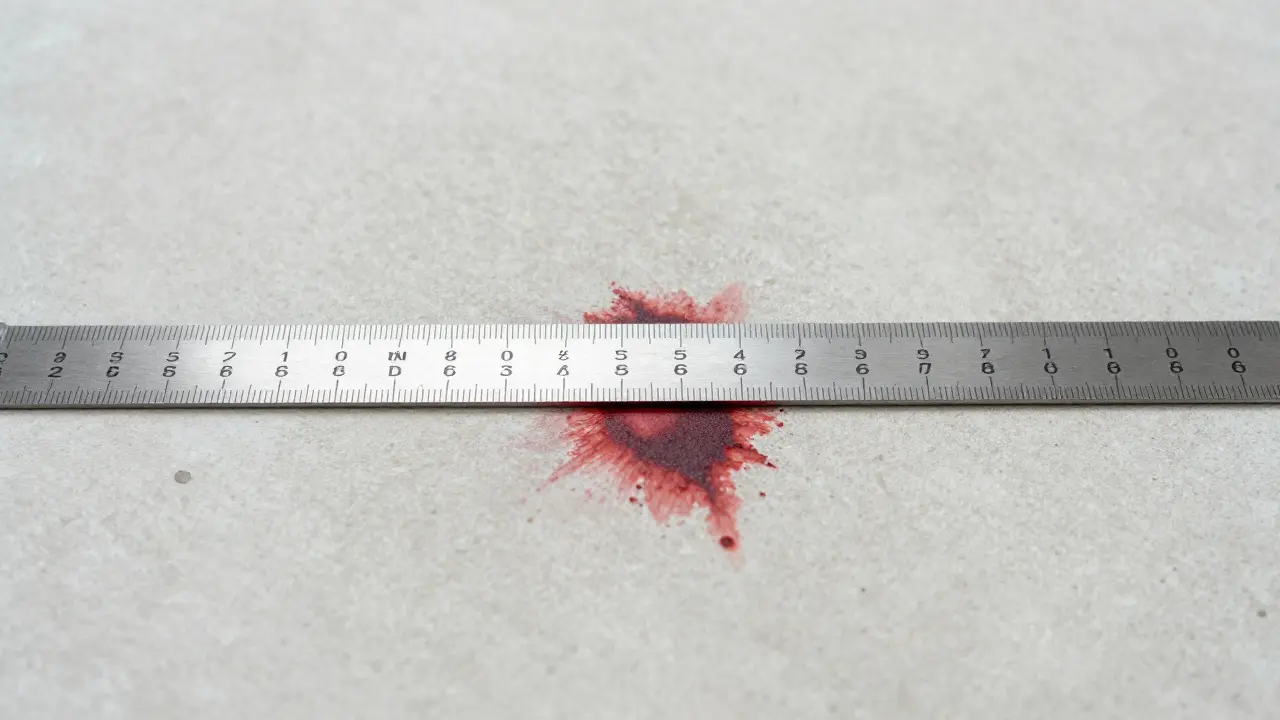
You snap a photo of a bloodstain. It looks clear. The lighting is perfect. But in court, the defense attorney asks, "How big was that stain?" If you can't prove it with a scale, your photo is just an opinion. In forensic work, scale isn't just a nice-to-have; it's the bridge between a picture and evidence.
Most people think legal requirements are about where you take the photo or how many angles you need. They're not. They're about measurement. Without accurate, standardized measurement, your images lose their evidentiary weight. This guide breaks down exactly what the law expects from your scale usage, why certain rulers fail in court, and how to avoid the mistakes that get photos thrown out.
The Core Legal Standard: Accuracy Over Aesthetics
Courts don't care if your photo is beautiful. They care if it's truthful. Under general evidentiary rules, like those found in the Federal Rules of Evidence (Rule 702) and state equivalents, expert testimony and visual aids must be relevant and reliable. For a photograph to be admitted as evidence showing size or distance, it must demonstrate a known reference point.
This means every critical image needs a scale marker. But not just any marker. The scale must be:
- Visible: Clearly in focus and unobstructed.
- Standardized: Using a recognized unit of measurement (inches or centimeters).
- Properly Placed: Parallel to the object being measured to avoid parallax errors.
If you use a tape measure that bends or a ruler that sits at an angle, the measurement is distorted. Judges and juries may accept the photo as illustrative, but they won't treat it as proof of specific dimensions unless the method is sound.
Choosing the Right Scale Tool
Not all rulers are created equal for forensics. You have three main options, each with specific legal implications.
| Tool Type | Best Use Case | Legal Risk | Accuracy Level |
|---|---|---|---|
| L-shaped Ruler | Small objects, fingerprints, shell casings | Low if placed flat; high if tilted | High (mm precision) |
| Tape Measure | Large scenes, body positions, vehicle distances | Medium; sagging tape causes error | Medium (cm/inch precision) |
| Digital Laser Measure | Room dimensions, height measurements | Low if logged correctly; requires calibration record | Very High (sub-mm precision) |
The L-shaped ruler is the gold standard for close-ups. It provides two axes of measurement in one frame. When documenting a bullet hole, place the ruler so the corner aligns with the center of the impact. This gives you both width and depth context immediately.
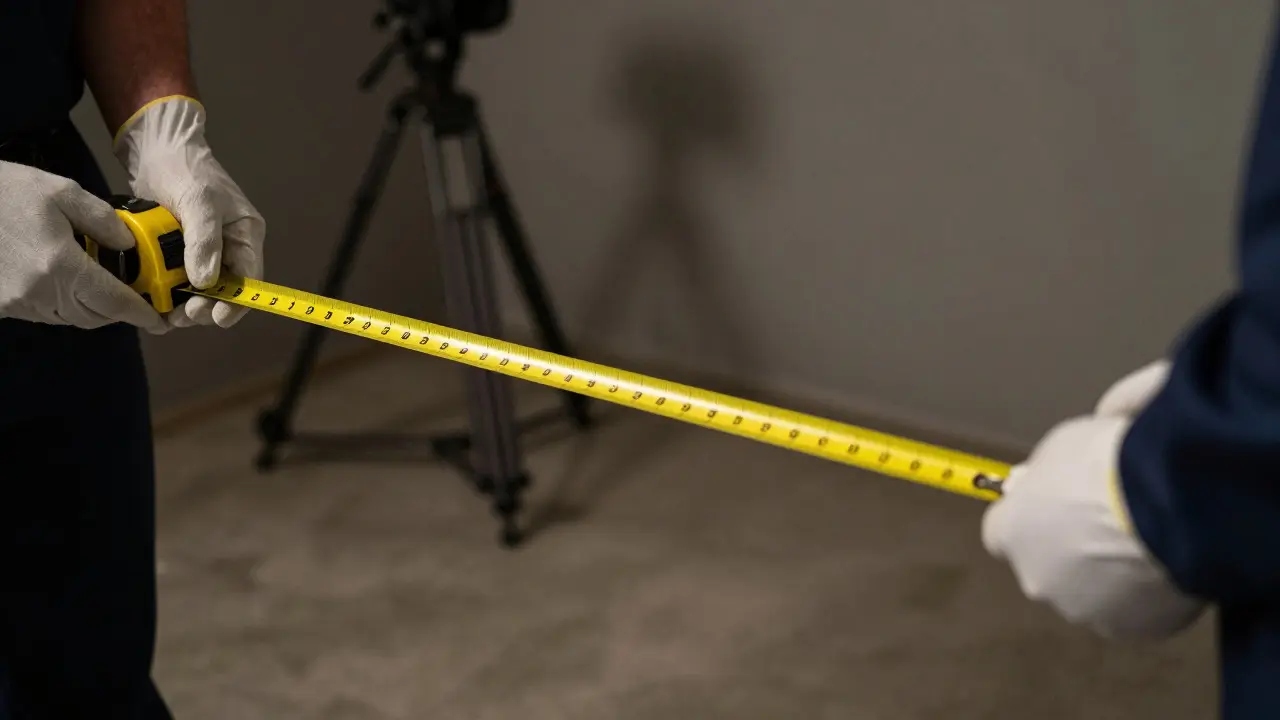
Tape measures are tricky. If you stretch a 50-foot tape across a room, gravity pulls it down. That sag creates a curve, meaning the straight-line distance on the tape is longer than the actual horizontal distance. To mitigate this, keep the tape taut and level, or use a string line for long distances and mark the endpoints clearly.
Placement Techniques That Hold Up in Court
How you position the scale matters more than the tool itself. Here are the non-negotiables:
- Parallel Alignment: The edge of the ruler must run parallel to the object’s longest dimension. If you’re measuring a knife blade, the ruler should lie alongside the spine, not across the tip.
- Focus Plane: Ensure the scale is in the same plane of focus as the object. If the background is blurry but the ruler is sharp, or vice versa, it suggests depth inconsistency. Use a small aperture (f/8 to f/16) to maximize depth of field.
- No Occlusion: The scale should not cover the key features of the evidence. If you’re photographing a bruise, place the ruler next to it, not over the center of the injury.
- Reference Point Zeroing: Always start your measurement at zero. Don’t guess. Align the zero mark with the starting point of the object.
A common mistake is using a scale that is too large for the subject. Measuring a fingerprint with a yardstick makes the print look tiny and loses detail. Match the scale size to the object size. For objects under 6 inches, use a millimeter-scale ruler. For rooms, use a meter stick or laser.
Documentation: The Paper Trail Matters
Your photo is only half the story. The other half is your notes. If you don’t write down how you took the measurement, you can’t defend it later.
In your case notes, record:
- The type of scale used (e.g., "L-shaped aluminum ruler, 30cm").
- The specific camera settings (aperture, shutter speed, ISO).
- The distance from the camera to the subject.
- Any environmental factors (e.g., "tape held taut by assistant").
Why does this matter? Because if the defense challenges your measurement, you need to reconstruct the conditions. If you didn’t note that the tape was held by a second person, they might argue it wasn’t level. Specificity protects you.
Common Pitfalls That Get Photos Excluded
Even experienced investigators make these mistakes. Watch out for them:
1. Parallax Error. This happens when the camera is not directly above the scale. If you shoot from an angle, the scale appears shorter or longer than it is. Rule of thumb: Keep the camera lens perpendicular to the plane of the object. Use a tripod with a bubble level if possible.
2. Reflections. Shiny surfaces like glass or metal reflect light, making it hard to see the scale markings. Use polarizing filters to cut glare, or change your angle slightly to reduce reflection without losing parallel alignment.
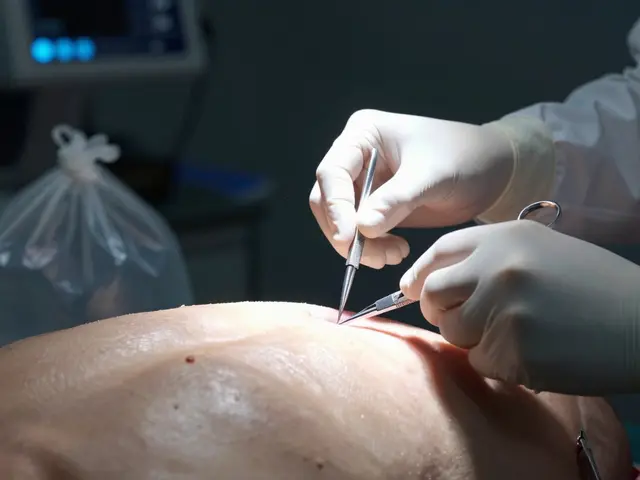
3. Moving Objects. If you’re measuring a wound on a live patient, movement blurs the image. Stabilize the area first. Take multiple shots to ensure at least one is sharp.
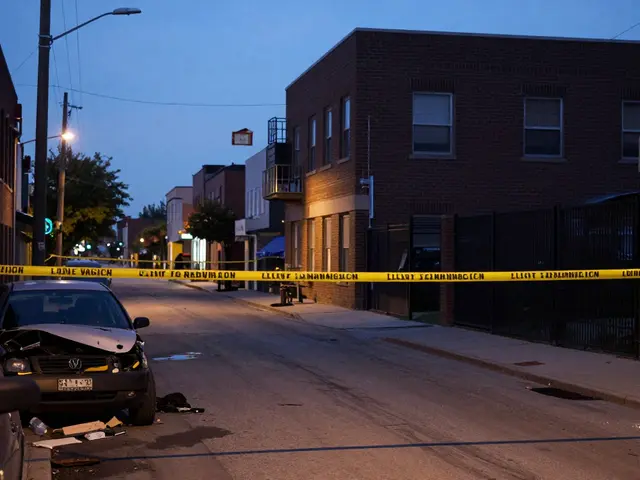
4. Ignoring Context. A scale photo of a tire tread is useless if you don’t also show where the tire was relative to the skid marks. Always pair close-up scale shots with mid-range and wide-angle context shots.
State-Specific Variations and Best Practices
While federal rules provide a baseline, states have their own standards. Some jurisdictions require dual units (both inches and centimeters) on the scale. Others mandate the use of certified tools. Check your local prosecutor’s office guidelines before your next assignment.
In Oregon, for example, courts generally accept standard metric and imperial scales as long as they are legible. However, some judges prefer metric for scientific consistency. When in doubt, use a dual-unit ruler. It satisfies both camps and avoids translation errors during testimony.
Also, consider digital documentation. Many agencies now use software that overlays a virtual scale onto images. While convenient, these digital scales must be calibrated against a physical reference. If you use software, keep the original RAW file and the calibration log. Courts are skeptical of manipulated images, even if the manipulation is for measurement purposes.
Building a Defensible Photo Set
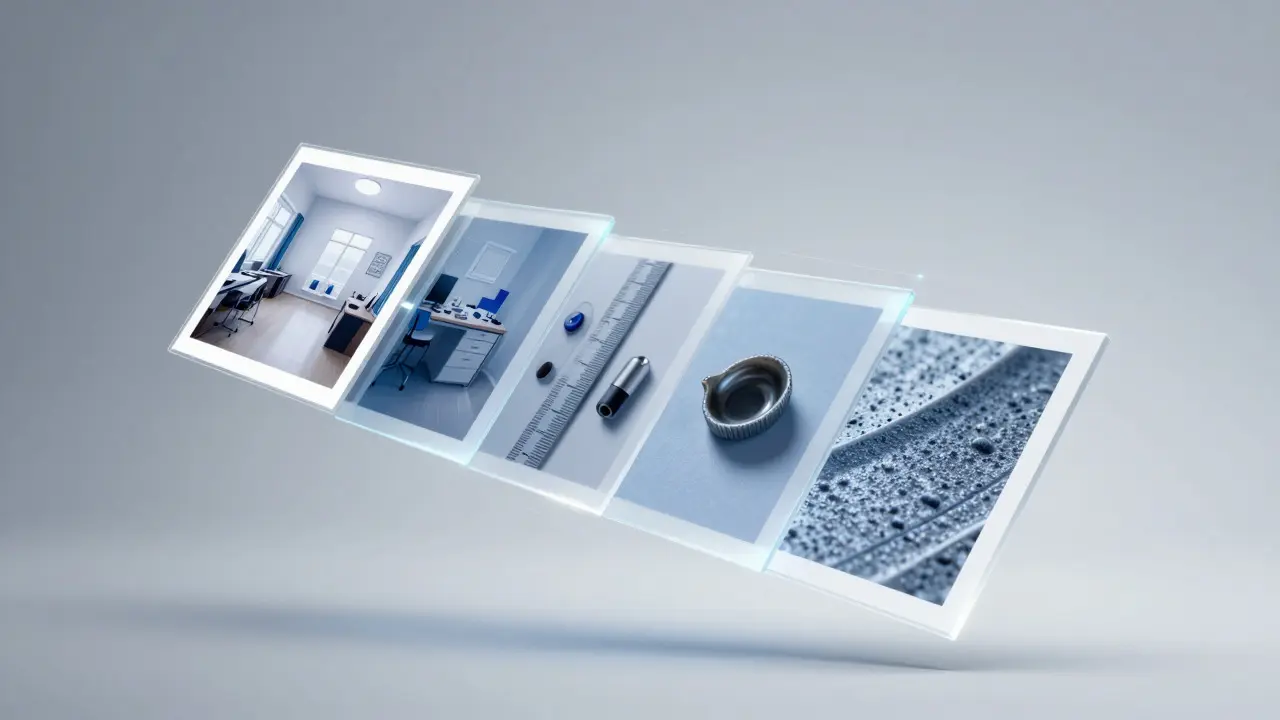
A single scale photo rarely tells the whole story. Build a sequence:
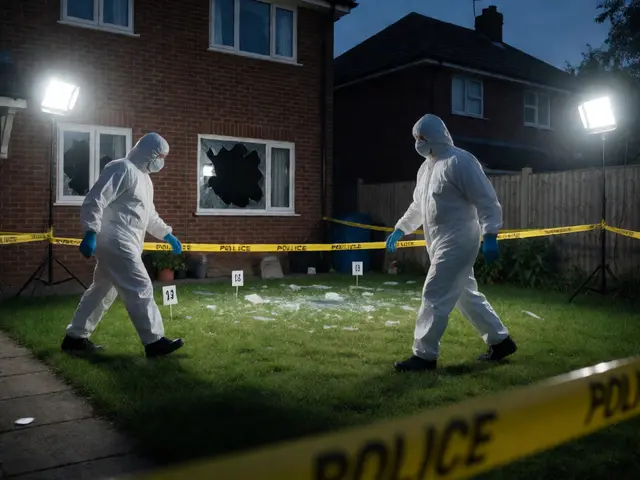
- Wide Shot: Shows the location of the evidence in the scene.
- Mid-Range Shot: Shows the relationship between the evidence and nearby objects.
- Close-Up with Scale: The critical measurement shot.
- Extreme Close-Up: Detail shot without scale, for texture and pattern analysis.
This four-step approach ensures that if one photo is challenged, the others support it. It creates a narrative that is difficult to dispute.
Do I need a scale in every photo?
No. Scales are required for photos intended to demonstrate size, distance, or proportion. Wide-angle context shots do not need scales. Only include a scale when the measurement is relevant to the case facts.
What if the scale is partially hidden by the object?
Take another photo. A partially obscured scale reduces clarity and can lead to disputes about accuracy. Ideally, the entire length of the measurement should be visible and unobstructed.
Is a smartphone ruler app acceptable in court?
Generally, no. Smartphone apps lack the calibration records and physical stability required for legal evidence. Use physical tools for primary documentation. Apps can be used for preliminary estimates but should not replace physical scales in official reports.
How precise does my measurement need to be?
Precision depends on the object. For bullets and fingerprints, use millimeter precision. For room layouts, centimeter or inch precision is sufficient. Match the tool’s resolution to the significance of the measurement.
Can I use a credit card as a scale?
Avoid it. Credit cards vary in size and wear over time. Unless you verify the exact dimensions of that specific card on the day of the incident, it introduces unnecessary variables. Use standardized forensic rulers instead.